
Why You Should Consider Condos as Part of Your Home Search

The historically low inventory over the past few years led to challenges for many buyers trying to find a home that met their needs and their budget. If you’re in the same boat, you should know the recent shift in the housing market may have opened up doors for you to restart your search.
The inventory of homes for sale has increased this year, and that’s giving buyers much-needed options. As Danielle Hale, Chief Economist at realtor.com, says:
“. . . today’s shoppers have more than 5 homes to consider for every 4 they had at this time a year ago.”
But perspective is important. Overall, the housing supply is still low. If you need even more choices, expanding your search by adding additional housing types, like condominiums, could help.
Exploring Condos Could Add Options That Fit Your Budget
One thing to consider is condos generally differ from single-family homes in average space and floorplans. But that size difference is one reason why condos can be a more affordable option. According to a recent report from realtor.com, condo buyers paid roughly 7% less for their homes than buyers of other housing types last year. With rising mortgage rates and home prices, the relative affordability of a condo could be worth considering.
Remember, your first home doesn’t have to be your forever home. The important thing is to get your foot in the door as a homeowner. Buying a condo now can springboard you into a bigger home later on. An article from the Urban Institute explains:
“Because condos and co-ops are generally more affordable, they tend to help first-time homebuyers step onto the first rung of the homeownership ladder. These buyers often use the equity on their condo to then purchase a larger single-family home.”
In other words, owning a condo will help you start building wealth in the form of home equity. In time, the equity you build can fuel a future purchase should you decide you want to buy a home with more space or different amenities.
Condo Living Provides Several Great Perks
Boosting the number of options in your budget during your home search is just one reason to consider condos, but there are several other benefits to condo living.
First, they tend to require minimal upkeep and lower maintenance – and that can give you more time to spend doing the things you enjoy. A recent article from Bankrate highlights this, saying:
“Condos can be a good option for anyone who wants to keep home maintenance to a minimum . . . if the roof is leaking or the carpet in the lobby needs to be replaced, that’s not your responsibility — the condo association handles those duties.”
Plus, since many condos are located in or near city centers, they offer the added benefit of being in close proximity to work and leisure. Again, realtor.com explains:
“Buying a condo, which is generally less expensive than a single-family home, enables a household to afford to own in the middle of it all, and often means a newer-built home with less maintenance responsibility.”
Ultimately, owning and living in a condo can be a lifestyle choice. And if that appeals to you, they could give you the added options you need to buy your first home.
Bottom Line
Adding condominiums to your housing search could be a great move. If you’re ready to search for condos in our area, let’s connect today at 734-761-3060 or info@condohotline.com.
Looking for a Place To Call Home? Consider a Condominium.

It’s no secret that one of the top stories in today’s real estate market is low housing supply and high buyer demand. If you’re a first-time buyer looking for a starter home or are someone who’s interested in downsizing, it may be worth considering a condominium (condo) as a worthwhile option.
In fact, trends indicate condos are gaining popularity among buyers. In the latest Existing Homes Sales Report from the National Association of Realtors (NAR), the data shows condo sales rising throughout the first half of this year (see graph below):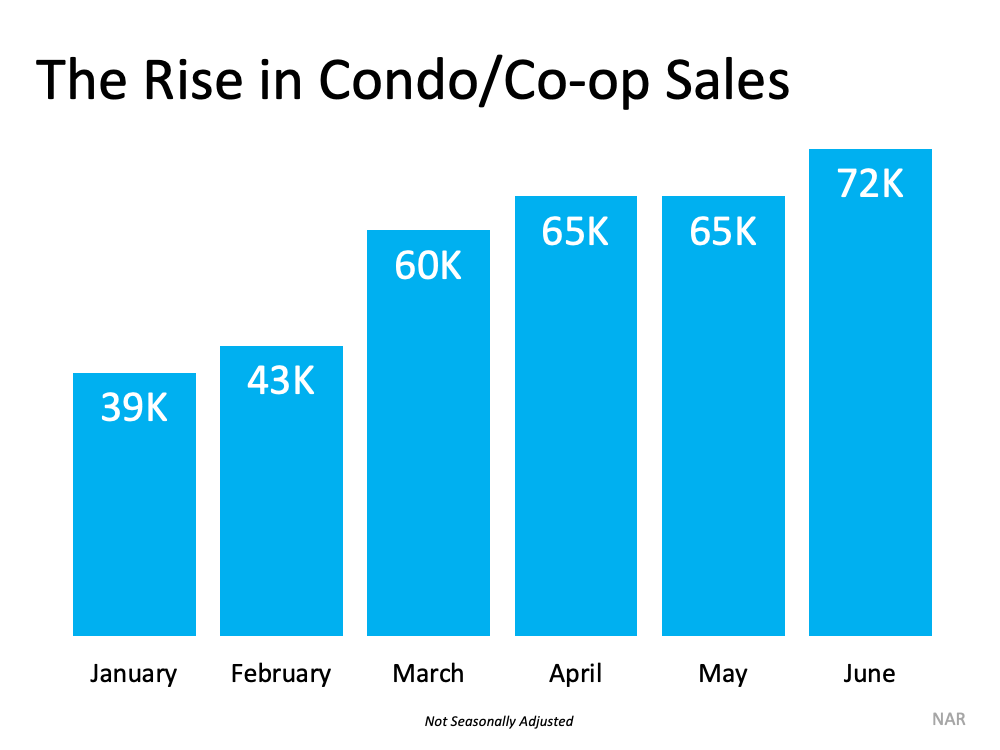
There are a few reasons more and more people are opting to buy condos – the benefits of condo life can be quite compelling. Let’s explore the main perks to find out if a condo is a good fit for you.
Affordability
According to the NAR report, the median sales price of a condo is roughly $59,000 less than the median price of a single-family detached home (see graph below). This makes condos a great option for first-time homebuyers, those with limited down payment savings, or those looking to save money by downsizing.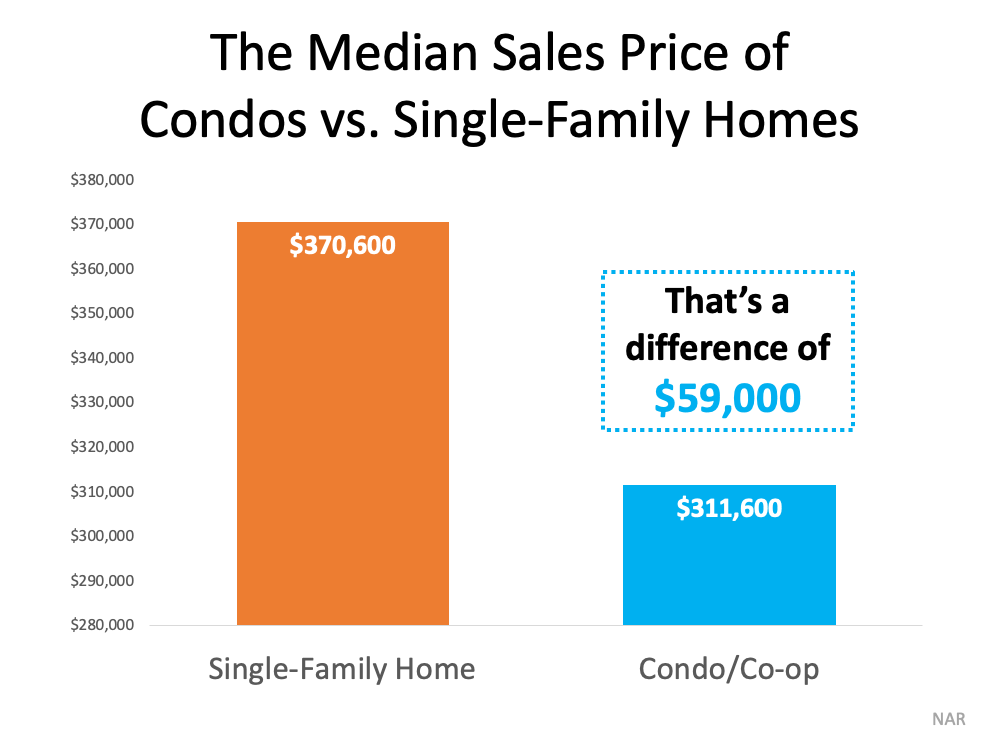
Maintenance
A recent article from BankRate adds low maintenance as another perk of a condo lifestyle. Generally, exterior maintenance for condos is handled by a Homeowner’s Association (HOA). This can include things like landscaping and upholding a certain standard of cleanliness and condition for walkways, siding, and roofs. If you’re looking for a lower-maintenance option or see the appeal in being hands-off with upkeep, condos may be a good choice for you. With exterior maintenance off your plate, you’ll have more time for yourself and your hobbies.
Amenities
You can use that free time to enjoy some of the value-adding features your condo community may have, which could include dog parks, pools, a rentable clubhouse and grilling area for events, and more. If being able to host or attend community social outings is important to you, condos may give you more opportunities to enjoy the company of your neighbors. As a bonus, some condos even have gyms and on-site security teams.
Ultimately, the choice is yours. Condos are great options that often come with various features and benefits that may be important for your lifestyle. Fannie Mae sums up the appeal nicely:
“Condominiums, or condos, can be great alternatives to detached homes. City dwellers, singles, couples, seniors, and many others may find condos that suit their needs and budgets. Others may simply prefer low-maintenance living. Buyers who feel ‘priced out’ of homes may discover condos offer an affordable homeownership alternative.”
Bottom Line
If you’re looking for a home, it may be time to consider a condo as an option. Let’s connect today at 734-761-3060 or info@condohotline.com to explore if one would be a good fit for your homeownership needs.
Is It Enough To Offer Asking Price in Today’s Housing Market?

If you’re planning to buy a home or condo this season, you’re probably thinking about what you’ll need to do to get your offer accepted. In previous years, it was common for buyers to try and determine how much less than the asking price they could offer to still get the property. The buyer and seller would then negotiate and typically agree on a revised price that was somewhere between the buyer’s bid and the home’s initial asking price.
In today’s real estate market, buyers shouldn’t shop for a home with the same expectations.
Things Are Different Today
Today’s housing market is anything but normal. According to the National Association of Realtors (NAR), the average property that’s sold today:
- Receives 4.8 offers
- Sells in just 17 days
Homes and condos selling quickly and receiving multiple offers show how competitive the market is for buyers right now. This is because there are more buyers on the market than properties for sale. When the number of homes available can’t keep up with demand, they often sell for more than the asking price.
How Does This Impact You When It’s Time To Submit an Offer?
Market conditions should help guide your decisions throughout the process. Today, the asking price is often the floor of the negotiation rather than the ceiling. Knowing this is important when it’s time to submit an offer, but you should also use that information as you’re searching too. After all, you don’t want to fall in love with a condo or home that ultimately sells for a price higher than what you’ve budgeted for.
The Mortgage Reports has advice if you’re looking to purchase a home or condo in a competitive market. The article encourages you to be realistic with your housing search, saying:
“The best thing to do is set your budget and expectations ahead of time so you know how much you can afford to offer — and when to walk away. This will make negotiations a lot easier.”
Of course, when you’ve found your dream home, you’ll want to do everything you can to submit your best offer upfront and win a potential bidding war. Knowing the current market is key to crafting a winning offer. That’s where working with an expert real estate advisor becomes critical.
A real estate professional will draw from their experience and expert-level knowledge of today’s housing market throughout the process. They’ll also balance conditions in your area to make sure your offer stands out above the rest.
Bottom Line
Understanding how to approach the asking price of a condo or home and what’s happening in today’s real estate market are critical for buyers. Let’s connect so we can work together to create a winning plan for you. Contact us today at 734-761-3060 or info@condohotline.com!
Here’s Why You Shouldn’t Wait Any Longer to Invest in Real Estate
Key Takeaways:
- Even as home prices continue to climb, there’s never been a better time to get your foot in the door when it comes to real estate investing.
- You don’t need a lot of money to diversify your portfolio—in fact, you have more options than you might think!
- Whether you’re an experienced investor or a first-timer, you’ll want to work with the right agent to score a great deal.
What Buyers Need to Know About Real Estate Investing
Even if you haven’t bought or sold a house this year, you’ve probably heard wild predictions and statistics about the real estate market. As prices keep skyrocketing, would-be and experienced investors alike are wondering if now is the right time to add to their portfolios. Believe it or not, now might be a once-in-a-lifetime opportunity to purchase an income-generating property—and there are countless options from which to choose.
Still on the fence? Here are a few quick tips and tricks you need to know before investing in real estate.
Real estate investment isn’t only for the rich

Despite what popular shows on HGTV might tell you, real estate investing is something anyone can accomplish with careful planning and saving. You don’t even need any experience to get started—but having the help of a real estate agent will make all the difference.
Start by working with an agent who knows your local investment market. Based on your budget and goals, they’ll help you select a property that meets your needs and offers a high return on investment. Don’t just limit yourself to fixer-uppers—it’s worth considering land, single- or multi-family homes and condos, office space, or warehouses, too.
With a little sweat equity, you can easily turn any investment into an income-generating property that will help you pay off your mortgage. The easiest way to do this involves renting your property out to tenants. Over the last decade, the average rent has increased by more than 30%—so if you plan on keeping your property for a long time, you’ll be able to turn an impressive profit while building equity.
Mortgage rates remain low

One of the biggest mistakes that any investor can make is trying to time the market. While it may seem tempting to wait until a recession for prices to decrease, it’s impossible to predict how the market will fluctuate over time. And even as prices continue rising, you’ll want to factor low mortgage rates into the equation.
Lower mortgage rates make real estate investing more affordable. As of November 2021, the average 30-year fixed mortgage rate hovers around 3.4%, which is roughly a full percentage point lower than it was in 2018. Let’s put that into perspective—if you purchase a $400,000 property with a 20% down payment, you’d pay around $1,419 per month. But if you bought the same asset with a 4.4% rate, that monthly payment would skyrocket by more than $200, which adds up over time.
First-timers can start small

Even if you aren’t a current homeowner, real estate investing isn’t out of your reach. Some smart investors actually use their primary residence to generate extra money on the side. Once you establish a cash flow, you can start saving up for an even bigger investment down the line.
Wondering how you can start investing in real estate without a lot of capital? Real estate investment trusts (REITs) let you pool your money together with other investors and earn dividends, so you won’t have to buy or manage your own property. Many millennials have even tried “house hacking,” which involves buying a home and renting out rooms to offset a mortgage. And for an even simpler way to invest, consider land—some plots are available for just a few thousand dollars, and they’ll likely increase in value over time.
Work with Real Estate Investment Experts
Even if you already have a few assets under your belt, now is the time to diversify your investment portfolio! We have ample experience helping investors just like you, and we’d love to help you find an income-generating property that checks all the boxes.
Need to sell an investment property? We can certainly help with that, too! Get in touch with us today at 734-761-3060 or info@condohotline.com.
How Much Do You Need for Your Down Payment?
As you set out on your home or condo buying journey, you likely have a plan in place, and you’re working on saving for your purchase. But do you know how much you actually need for your down payment?
If you think you have to put 20% down, you may have set your goal based on a common misconception. Freddie Mac says:
“The most damaging down payment myth—since it stops the homebuying process before it can start—is the belief that 20% is necessary.”
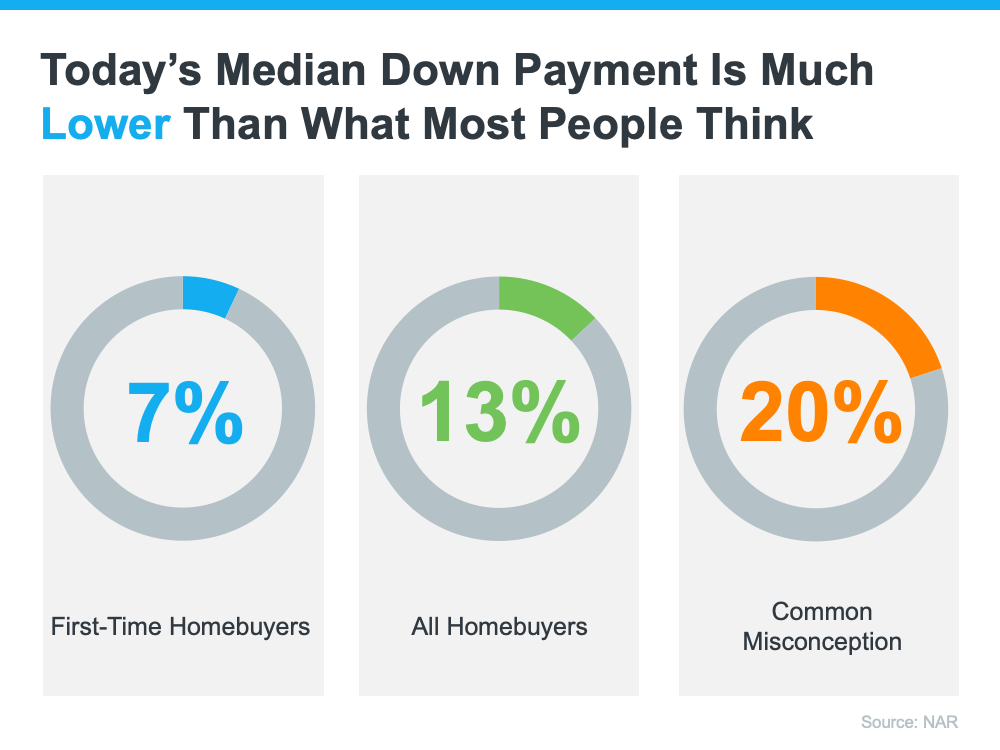
Unless specified by your loan type or lender, it’s typically not required to put 20% down. According to the Profile of Home Buyers and Sellers from the National Association of Realtors (NAR), the median down payment hasn’t been over 20% since 2005. It may sound surprising, but today, that number is only 13%. And it’s even lower for first-time homebuyers, whose median down payment is only 7% (see graph below):
What Does This Mean for You?
While a down payment of 20% or more does have benefits, the typical buyer is putting far less down. That’s good news for you because it means you could be closer to your home or condo buying dream than you realize.
If you’re interested in learning more about low down payment options, there are several places to go. There are programs for qualified buyers with down payments as low as 3.5%. There are also options like VA loans and USDA loans with no down payment requirements for qualified applicants.
To understand your options, you need to do your homework. If you’re interested in learning more about down payment assistance programs, information is available through sites like downpaymentresource.com. Be sure to also work with a real estate advisor from the start to learn what you may qualify for in the homebuying process.
Bottom Line
Remember: a 20% down payment isn’t always required. If you want to purchase a condo this year, let’s connect to start the conversation and explore your down payment options. Contact us today at 734-761-3060 or info@condohotline.com, we’re here to help!
4 Things Every Renter Needs To Consider

As a renter, you’re constantly faced with the same dilemma: keep renting for another year or purchase a condo or home? Your answer depends on your current situation and future plans, but there are a number of benefits to homeownership every renter needs to consider.
Here are a few things you should think about before you settle on renting for another year.
1. Rents Are Rising Quickly
Rent increasing each year isn’t new. Looking back at Census data confirms rental prices have gone up consistently for decades (see graph below):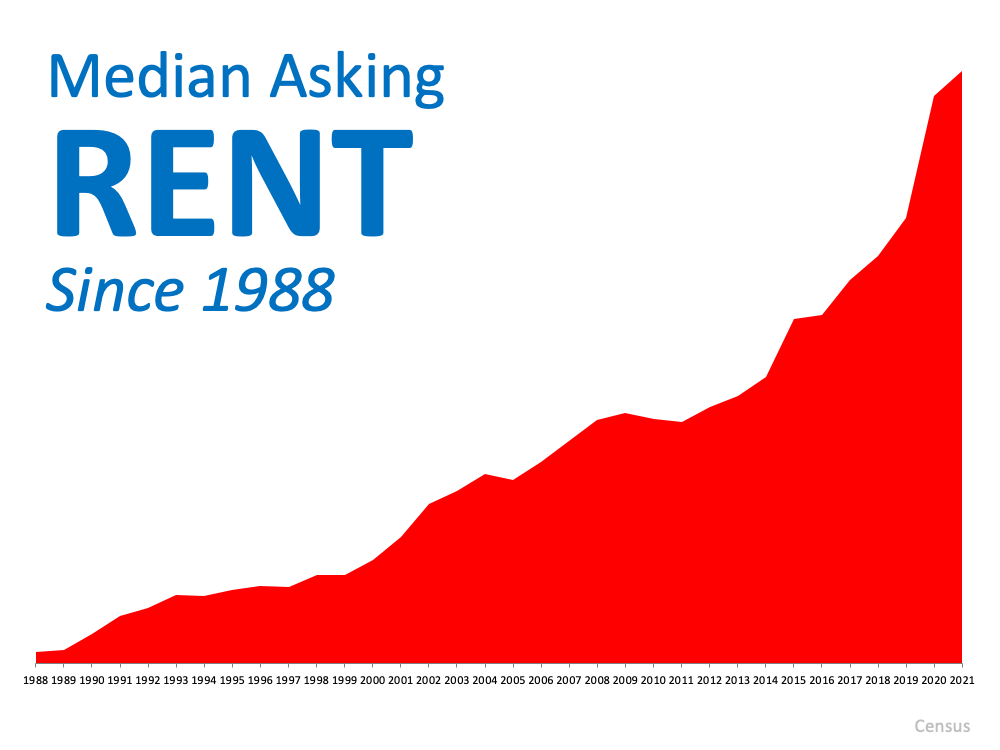
If you’re a renter, you’re faced with payments that continue to climb each year. Realtor.com recently shared the September Rental Report, and it shows price increases accelerating from August to September (see graph below):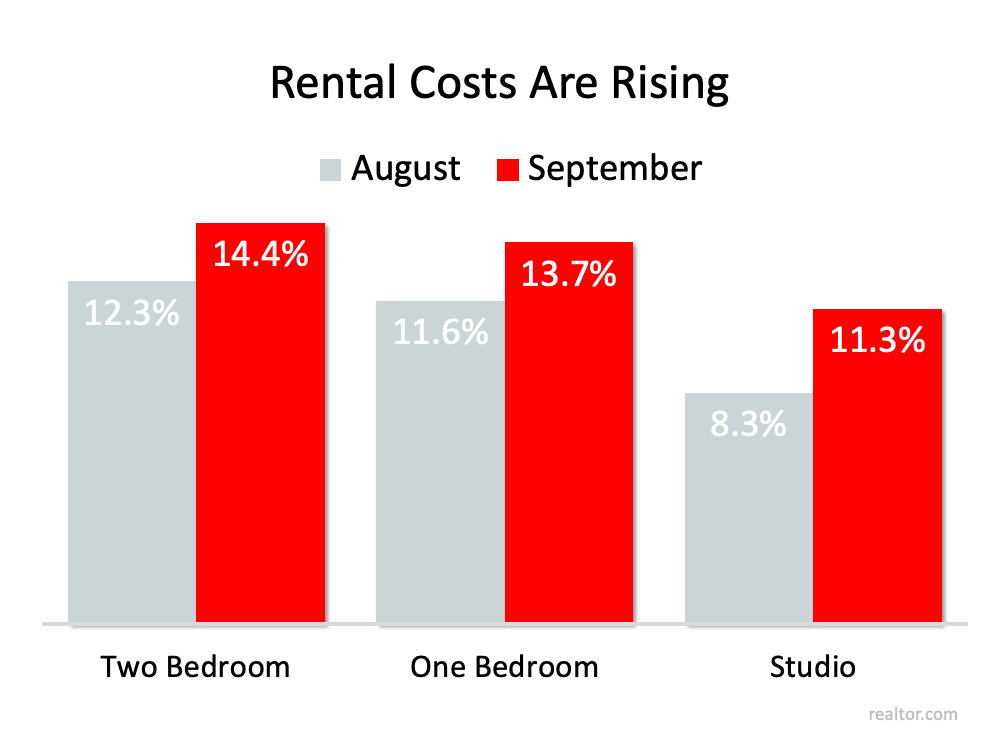
As the graph shows, rents are still on the rise. It’s important to keep this in mind when the time comes for you to sign a new lease, as your monthly rental payment may increase substantially when you do.
2. Renters Miss Out on Equity Gains
One of the most significant advantages of buying a condo or home is the wealth you build through equity. This year alone, homeowners gained a substantial amount of equity, which, in turn, grew their net worth. As a renter, you miss out on this wealth-building tool that can be used to fund your retirement, buy a bigger home, downsize, or even achieve personal goals like paying for an education or starting a new business.
3. Homeowners Can Customize to Their Heart’s Content
This is a big decision-making point if you want to be able to paint, renovate, and make home upgrades. In many cases, your property owner determines these selections and prefers you don’t alter them as a renter. As a homeowner, you have the freedom to decorate and personalize your home to truly make it your own.
4. Owning a Condo or Home May Provide Greater Mobility than You Think
You may choose to rent because you feel it provides greater flexibility if you need to move for any reason. While it’s true that selling a home may take more time than finding a new rental, it’s important to note how quickly condos and houses are selling in today’s market. According to the National Association of Realtors (NAR), the average home is only on the market for 17 days. That means you may have more flexibility than you think if you need to relocate as a homeowner.
Bottom Line
Deciding if it’s the right time for you to buy is a personal decision, and the timing is different for everyone. However, if you’d like to learn more about the benefits of homeownership, let’s connect so you can make a confident, informed decision and have a trusted advisor along the way. Contact us today at 734-761-3060 or info@bouma.com.
What Do Supply and Demand Tell Us About Today’s Housing Market?

There’s a well-known economic theory – the law of supply and demand – that explains what’s happening with prices in the current real estate market. Put simply, when demand for an item is high, prices rise. When the supply of the item increases, prices fall. Of course, when demand is very high and supply is very low, prices can rise significantly.
Understanding the impact both supply and demand have can provide the answers to a few popular questions about today’s housing market:
- Why are prices rising?
- Where are prices headed?
- What does this mean for homebuyers?
Why Are Prices Rising?
According to the latest Home Price Insights report from CoreLogic, condo and home prices have risen 18.1% since this time last year. But what’s driving the increase?
Recent buyer and seller activity data from the National Association of Realtors (NAR) helps answer that question. When we take NAR’s buyer activity data and compare it to the seller traffic during the same timeframe, we can see buyer demand continues to outpace seller activity by a wide margin. In other words, the demand for homes is significantly greater than the current supply that’s available to buy (see maps below): This combination of low supply and high demand is what’s driving condo and home prices up. Bill McBride, author of the Calculated Risk blog, puts it best, saying:
“By some measures, house prices seem high, but the recent price increases make sense from a supply and demand perspective.”
Where Are Prices Headed?
The supply of condos and homes for sale will greatly affect where prices head over the coming months. Many experts forecast prices will continue to increase, but they’ll likely appreciate at a slower rate.
Buyers hoping to purchase the home of their dreams may see this as welcome news. In this case, perspective is important: a slight moderation of prices does not mean prices will depreciate or fall. Price increases may occur at a slower pace, but experts still expect them to rise.
Five major entities that closely follow the real estate market forecast home prices will continue appreciating through 2022 (see graph below):
What Does This Mean for Buyers?
If you’re waiting to enter the market because you’re expecting prices to drop, you may end up paying more in the long run. Even if price increases occur at a slower rate next year, prices are still projected to rise. That means the home of your dreams will likely cost even more in 2022.
Bottom Line
The truth is, high demand and low supply are what’s driving up condo and home prices in today’s housing market. And while prices may increase at a slower pace in the coming months, experts still expect them to rise. If you’re a potential homebuyer, let’s connect today to discuss what that could mean for you if you wait even longer to buy.
Keep Calm and Move On: How to Tackle a Long-Distance Relocation
Whether you’re heading down the street or to a new town, moving is always a tough transition. However, a long distance relocation presents a whole new set of challenges you might not have considered. Picking up your life can be an exciting change, but it’s also a bit overwhelming.
Need some help navigating the process? Take a deep breath and get ready—we’ve got some quick tips for you!
Stay on Top of Your Schedule

Sometimes a cross-country move can come out of nowhere, especially if it’s due to a job or major life change. Even if you’ve been planning your long distance relocation for a while, it can still be exhausting. Before you start tearing your hair out, it’s crucial to start planning ahead of time.
Once you’ve figured out your moving date, be sure to stay on top of your calendar. It’s easy for your schedule to fill up with appointments, going-away parties, and other obligations. It might help to create to-do lists or invest in a good planner (digital or paper!). However, as you get busier, be sure to plan some time for yourself, too. Tackling a move is impossible without some self-care!
Declutter & Organize

Let’s face it—organizing everything you own and moving it thousands of miles is no easy feat. Start lightening the load right away, and get rid of things you won’t need once you move. You might even want to have a garage sale or donate your gently used objects to charity. Remember, if you don’t use it regularly, you should probably lose it.
Looking for a simple way to tackle the decluttering process? Try going room by room and sorting things as you go. It’s easy to get overwhelmed as you pare down your possessions, so having a system will help ease the burden. Here are a few helpful tips.
Pack Everything Up

When it comes to packing, it’s essential that all of your belongings are secure. Check that all boxes are reinforced, and invest in some heavy duty tape and wrapping materials. Moving supplies don’t have to be expensive, though—check social media or local stores to find a bargain on some good quality boxes.
Your stuff is in for a long haul if you’re moving across the country, so you might want to take extra steps to prevent any damage. If you’re looking for some good padding, old t-shirts and socks will do the trick in a pinch! Don’t be afraid to get creative—jewelry boxes, small containers, and extra suitcases can help you save some space.
Make Travel Arrangements

When you’re making a long distance relocation, getting to your new condo or home is one of the most difficult parts of the process. Be sure to make travel arrangements in advance—this means you should research hotels, book rentals, and reserve plane tickets ahead of time. As you’re packing, be sure to set aside any essentials that you might need as you travel to your new place.
Wondering what you should keep on hand? Think of it like packing for a vacation—you’ll want toiletries, extra clothing, medication, and all your other “must-haves.” Don’t forget to keep important paperwork, such as birth certificates and passports, with you in case you need them.
Connect with a Local Agent

Unless you have a friend or family member in your new city, it can be tough to scope out the area. Nobody will know your future condo or home quite as well as a local, and connecting with the right real estate agent can help.
Aside from helping you find a place, your agent can also help you navigate your new surroundings with ease. Working with an area expert comes with a lot of perks, including relocation packages, personalized guidance, and specialized tools…not to mention the local knowledge to recommend anything from the top school district to the best pizza joint! When you’re choosing a real estate agent, be sure to do your research and reach out to a few before making your decision. You want to make sure you gel with whomever you choose!
Ready to Conquer Your Move?
Although relocating can be stressful, it doesn’t have to be as difficult as you might think. Remember, staying organized and prepared will make the entire process that much easier! If you’re new to the area or are looking for some long-distance buying resources, feel free to reach out to us at 734-761-3060 or info@condohotline.com. We’d love to ease the burden of your cross-country move!
Exposing the 4 Factors Agents Use to Price Your Condo Right
Key Takeaways:
- Before you list your condo, it’s crucial to understand how much a buyer would be willing to pay for it.
- Your agent will use a variety of factors to determine a competitive list price—and some of them might be a little unexpected.
- If you’re looking for a fast and accurate way to price your condo, we’re here to help. Contact us today for a complimentary estimate!
4 Surprising Factors That Go Into Pricing a Condo or Home
Pricing your condo to sell quickly—even in today’s hot real estate market—is all about balance. You want to price low enough to attract potential buyers, but high enough to profit from your equity. And while it may be tempting to use automatic estimators, it’s best to leave the number-crunching to your agent.
Need help determining the perfect price? Here are a few factors your agent will take into consideration when valuing your place.
Your condo’s size and condition

This may seem like a given, but a condo’s size, condition, and features play a huge role in how much it’s worth. Before you list, your agent will perform a walk-through to thoroughly evaluate its saleability. If your space is move-in ready and well-maintained, you’ll have more luck setting a higher asking price.
Many sellers are under the impression that big-ticket upgrades will drastically increase their home’s value, but this isn’t always the case. Before you make a significant change, ask your agent for their professional opinion. Believe it or not, smaller touches (like updating hardware or repainting) can have a better return on investment than a full-scale renovation.
Location

Real estate is all about location, and there are a few general factors that tend to boost property values. Typically, agents will price a condo or home based on local schools, nearby employment opportunities, and proximity to amenities. Houses in more desirable neighborhoods or communities also tend to command a higher list price.
Above all, most buyers are looking for condos that offer the perfect blend of privacy and convenience. Being close to (but not right next to!) highways or public transportation is another huge plus.
Other recently sold condos

One of the best indicators of your home’s value is the sale price of other listings in your complex or neighborhood. Your real estate agent should conduct a comparative market analysis—abbreviated as CMA—to see how your home stacks up against the competition. By looking at recently sold listings that are similar to yours, they can calculate a fair and accurate price.
After your agent has assessed your condo, they’ll likely send you a CMA report that contains their projected price, along with data from other comparable condos. A great agent will also be available to answer any questions, too!
Current market trends

Even if your condo is in perfect condition, in the best location, and boasts quite a few upgrades, the current state of the market can have a huge impact on its overall value. And in today’s seller-driven market, many homes and condos are now worth more than ever before.
In most areas we are seeing a large upswing in average sale prices. If you want to take advantage of these unbelievable conditions, now is the time to list—and we’d love to help!
Get Your Updated Home Value
Whether you’re just curious or are ready to sell, you can trust our team to calculate your condo’s true market value. Request a free valuation today, or reach out to us at 734-761-3060 or info@condohotline.com to learn more about 2021’s hot real estate market. There’s never been a better time to list!
Searching for a Smaller Home or Condo? Here are the Top Tips for Downsizing

Downsizing can be a great choice for homeowners looking to make a financial or lifestyle change. After all, a smaller amount of space means less money on utility bills and less stress from clutter.
Are you a recent empty-nester? Moving for financial reasons? Or maybe you’ve watched a few episodes of Tidying Up with Marie Kondo and feel inspired? No matter your motivation, you’re not alone—downsizing has become an increasingly popular trend for homeowners everywhere.
If you’re making the move to a smaller place, here are the top tips for a Marie Kondo-style downsizing experience.
Know What You Have
Walk through your place room by room, and make a detailed list of your belongings. A helpful tip for keeping track? If you aren’t in a rush to downsize, take note of each item and how often you use it over the course of a few weeks or a month. That way, you learn exactly what you’d miss most and what you could go without.
Some downsizers use a color-coded sticker system, some jot notes in a notebook, and some just sort things into piles. Find the method that works best for you, and go from there.
…And What You Don’t Need

Once you’ve found out what items aren’t essentials, it’s time to toss them out. Try to focus on things like duplicate items, such as more than one kitchen utensil, and large collections that have accumulated over the years. To paraphrase the aforementioned organizing consultant Marie Kondo: keep the things that spark joy….but get rid of the rest.
There are plenty of great options for rehoming your unwanted items. Try making a little extra money by selling online, donating things to a good cause, or giving items to friends and family.
Maximize Your Space

When your overall amount of space goes down, you’re required to think of ways to use what you have more efficiently. Storage gadgets such as wall racks, built-in shelves, and pull-out cabinets can tuck belongings out of the way and give you a surprising amount of real estate to work with.
You might also have some furniture that can do double duty. Lots of kitchen or coffee tables either come with or can be customized to include drawers underneath, and bed frames are great for hiding away sliding storage units.
Measure, Measure, Measure

Hopefully, you’ll have a solid idea of the space you’ll be moving into—at least as far as square footage goes—so you’ll know exactly how much room you have for all of your belongings.
Once you know the size of your space, break out the measuring tape, and take note of the dimensions of the furniture you’re bringing along. The last thing you want is to haul your couch all the way to your new home only to discover that it doesn’t fit in the living room.
Ready to Make a Move?
We know that paring down your possessions can be tough, and moving comes with a wide range of emotions. Try taking pictures of the things you’ll miss most, so you can keep the memories around in your new space.
Once you’re ready to get started on your new home or condo search, give our team at The Bouma Group a call. With over 35 years of local experience and a wide range of professional expertise, we’re here to make sure your real estate experience is successful and stress-free. 734-761-3060 or info@bouma.com.