
What Should You Know About Condo Inspections in Ann Arbor?
Quick answer: A condo inspection in Ann Arbor evaluates the unit’s interior systems, including electrical, plumbing, HVAC, and structural elements. It excludes exterior building components typically maintained by the HOA. Buyers should always get one to avoid costly surprises, while sellers benefit from pre-listing inspections that build buyer confidence and speed up closings. Reviewing HOA documents and reserve funds alongside the inspection gives you the full picture of a condo’s true condition.
Buying or selling a condo in Ann Arbor comes with its own unique rhythm compared to single-family homes. You’re not just evaluating four walls and a roof; you’re stepping into a shared community with collective responsibilities, shared amenities, and a homeowners association that plays a significant role in your day-to-day living experience. That’s why condo inspections matter so much, yet they’re often misunderstood or overlooked entirely.
Whether you’re eyeing a stylish loft near Kerrytown or a low-maintenance unit near campus, understanding what a condo inspection covers can help you avoid unpleasant surprises down the road. This guide outlines everything Ann Arbor condo buyers and sellers need to know, including a few often-overlooked details: HOA documents, reserve funds, and how Michigan’s condo laws shape the entire process.

Why Should a Buyer Get a Condo Inspection?
A condo inspection gives buyers a clear, professional assessment of a unit’s actual condition before closing. Even a beautifully staged unit can hide plumbing issues, electrical quirks, or HVAC systems nearing the end of their lifespan.
For Ann Arbor buyers specifically, inspections matter because some older condo buildings, especially those in historic areas like the Old West Side or converted buildings downtown, may have older infrastructure. An inspection helps you:
- Avoid costly surprises: Identifying issues before closing means you can negotiate repairs or price adjustments rather than footing the bill after you’ve already signed.
- Gain negotiating leverage: A detailed inspection report gives you concrete data to request credits or repairs from the seller.
- Protect your investment: Condos are a significant financial commitment. An inspection confirms you’re paying a fair price for the unit’s actual condition, not just its curb appeal.
- Understand ongoing maintenance needs: Knowing what’s aging or nearing replacement helps you budget for future repairs.
Skipping this step is one of the most common mistakes a condo buyer can make.
What Does a Condo Inspector Actually Look For?
A condo inspector focuses primarily on the interior of the unit, since exterior structures and common areas typically fall under the HOA’s maintenance responsibilities. During a standard inspection, expect the inspector to evaluate:
Interior Systems and Structure
- Electrical systems: Outlets, wiring, panel condition, and code compliance.
- Plumbing: Water pressure, pipe condition, signs of leaks, and water heater functionality.
- HVAC systems: Furnace and air conditioning performance, age, and maintenance history.
- Structural elements: Walls, ceilings, and flooring for signs of damage, settling, or water intrusion.
Safety and Function
- Smoke and carbon monoxide detectors
- Windows and doors for proper sealing and function
- Signs of mold, pest activity, or moisture damage
- Kitchen and bathroom fixtures and appliances
What’s Typically Excluded
Unlike a single-family home inspection, a condo inspection generally won’t cover the roof, exterior siding, shared hallways, elevators, or landscaping. These fall under the HOA’s purview and are usually addressed separately through HOA maintenance records and reserve fund reports.
How Does a Condo Inspection Benefit Buyers?
Beyond simply identifying problems, a condo inspection gives Ann Arbor buyers real peace of mind. Here’s what that looks like in practice:
- Informed decision-making: You’ll know exactly what you’re buying before you commit, reducing buyer’s remorse.
- Financial protection: Catching issues early prevents unexpected repair costs after move-in.
- Stronger negotiating position: Inspection findings often translate into price reductions, repair credits, or seller-funded fixes.
- Confidence in your purchase: Especially for first-time condo buyers, an inspection report demystifies the condition of the property and builds confidence in the final decision.
How Does a Condo Inspection Benefit Sellers?
Sellers often overlook the value of a pre-listing inspection, but it can be one of the smartest moves in a competitive Ann Arbor market. Consider these advantages:
- Faster closings: Addressing issues before listing reduces the chance of last-minute negotiations derailing your sale.
- Increased buyer confidence: A clean inspection report (or one paired with completed repairs) reassures buyers and can lead to stronger offers.
- Fewer surprises during buyer inspections: Knowing what a buyer’s inspector will find allows you to address issues on your terms and timeline, rather than reactively.
- Potential for a smoother sale price: Units with documented, resolved issues tend to sell closer to asking price than those with unresolved inspection findings that emerge mid-negotiation.
For sellers preparing to list, working with a knowledgeable Realtor who understands Ann Arbor’s condo market can help you decide whether a pre-listing inspection makes sense for your specific building and situation.
How Is a Condo Inspection Different From a Home Inspection?
While both inspections aim to assess a property’s condition, condo inspections differ from single-family home inspections in a few key ways:
|
Aspect |
Condo Inspection |
Home Inspection |
|---|---|---|
|
Scope |
Interior unit only |
Entire property, including exterior |
|
Roof & Exterior |
Excluded (HOA responsibility) |
Included |
|
Shared Systems |
Not typically inspected |
N/A |
|
HOA Documents |
Reviewed separately |
Not applicable |
|
Common Areas |
Assessed through HOA records, not physical inspection |
N/A |
Choose a condo-specific inspector if the property is part of an HOA-managed building, since they’ll understand which elements fall outside their scope and can direct you toward reviewing the right HOA documentation instead.
What Else Should Buyers and Sellers Consider?
A physical inspection only tells part of the story. To fully understand a condo’s condition and financial health, buyers and sellers alike should also pay attention to:
Reviewing HOA Documents
HOA documents reveal a building’s financial stability, rules, and any pending litigation or special assessments. Request meeting minutes, budgets, and bylaws before finalizing a purchase; these documents often reveal issues that a physical inspection simply can’t detect.
Understanding Reserve Funds
A condo association’s reserve fund covers major future repairs, like roof replacements or elevator upgrades. A poorly funded reserve can mean higher HOA fees or unexpected special assessments down the road. Ask for the most recent reserve study to see whether the fund is adequately prepared for upcoming expenses.
Common Area Responsibilities
Understand what the HOA maintains versus what falls on individual owners. This distinction affects both your inspection scope and your long-term maintenance budget.
Michigan-Specific Condo Laws
Michigan’s Condominium Act (MCL 559.101 et seq.) governs how associations operate, including disclosure requirements sellers must follow. Buyers should ask whether the association has provided a disclosure statement as required under Michigan law, since this document often includes financial and legal details relevant to your decision.
Ready to Move Forward With Confidence?
Condo inspections in Ann Arbor go beyond a simple checklist. They’re about understanding not just the unit itself, but the community and financial structure behind it. Buyers who combine a thorough inspection with careful review of HOA documents and reserve funds walk into their purchase with clarity and confidence. Sellers who prepare ahead of time position their condo for a smoother, faster, more profitable sale.
If you’re navigating a condo purchase or sale in Ann Arbor, partnering with the right Realtor makes all the difference. The Bouma Group, Realtors, are Ann Arbor’s condo experts who are known for selling more condos in Ann Arbor than anyone else. Reach out today at 734-761-3060 or info@condohotline.com, and let’s make sure your next move is backed by the right information and expert guidance every step of the way.
Frequently Asked Questions
Do I need a special inspector for a condo, or can I use a regular home inspector?
Look for an inspector with condo experience specifically, since they’ll understand the limited scope of what’s covered, interior systems only, and won’t waste time (or your money) evaluating exterior elements maintained by the HOA.
How much does a condo inspection cost in Ann Arbor?
Condo inspections generally cost less than full home inspections since they cover a smaller scope, though exact pricing varies by inspector and unit size. Contact a local inspector for a quote specific to your property. Call us for a list of our favorites!
Can a condo sale fall through because of inspection findings?
Yes. Significant issues uncovered during an inspection can lead buyers to renegotiate, request repairs, or walk away entirely. Pre-listing inspections benefit sellers because they reduce the chance of surprises derailing a deal.
What’s the difference between HOA fees and reserve funds?
HOA fees cover day-to-day operating costs like landscaping and staffing, while reserve funds are set aside specifically for major future repairs, such as roof replacements or structural upgrades.
Are sellers in Michigan required to disclose known issues with a condo?
Yes. Michigan law requires sellers to provide certain disclosures, and condo associations may also need to share financial and legal documents under the Michigan Condominium Act. Buyers should request these documents early in the process.
Would You Let $80 a Month Hold You Back from Buying a Condo or Home?
Should $80 a Month Stop You From Investing?

A lot of buyers are stuck in “wait and see” mode right now. They’re watching rates hover a little above 6% and thinking, I’ll buy once they hit the 5s. Because who doesn’t want a better rate?
But here’s the thing: that 5.99% number might not save you as much as you think.
Affordability is still a challenge. There’s no question about that. But the market has given savvy buyers a head start. Mortgage rates have already come down over the past few months. And the drop we’ve seen saves you more than you’d think.
How Much You’ve Already Saved, Without Realizing It
Let’s put some real numbers to it. Rates peaked for the year in May when they inched above 7%. But since then, they’ve been slowly declining. Now, they’re sitting in the low 6s. And while that may not sound like a big deal, that change translates to real dollars.
According to data coming out of Redfin, the typical monthly payment on a $400,000 home is already down almost $400 since May.
That means if you’re buying a home now, you’re saving hundreds of dollars every month compared to what you would have been able to get earlier this spring. That’s real money that makes a real difference for buyers who paused their plans because they thought homeownership was out of reach.
And while it may be tempting to wait even longer to see bigger savings, that’s a gamble that could cost you. Here’s why.
Where Experts Say Rates Are Headed
For starters, most experts say mortgage rates are likely to stay pretty much where we are today throughout 2026. So, there’s no guarantee we’ll see a rate much lower than what we have now. Only one expert forecaster is saying rates could fall into the upper 5s next year (see graph below):
 And even if rates do dip below 6%, the extra savings you’re holding out for won’t move the needle as much as you might expect.
The Real Math Behind a 5.99% Rate
Let’s break it down. If rates come down to 5.99% from where they’ve been lately that’s a difference of only about $80 a month on an average priced home – give or take a bit based on your price point and the rate your lender quotes you (see chart below):
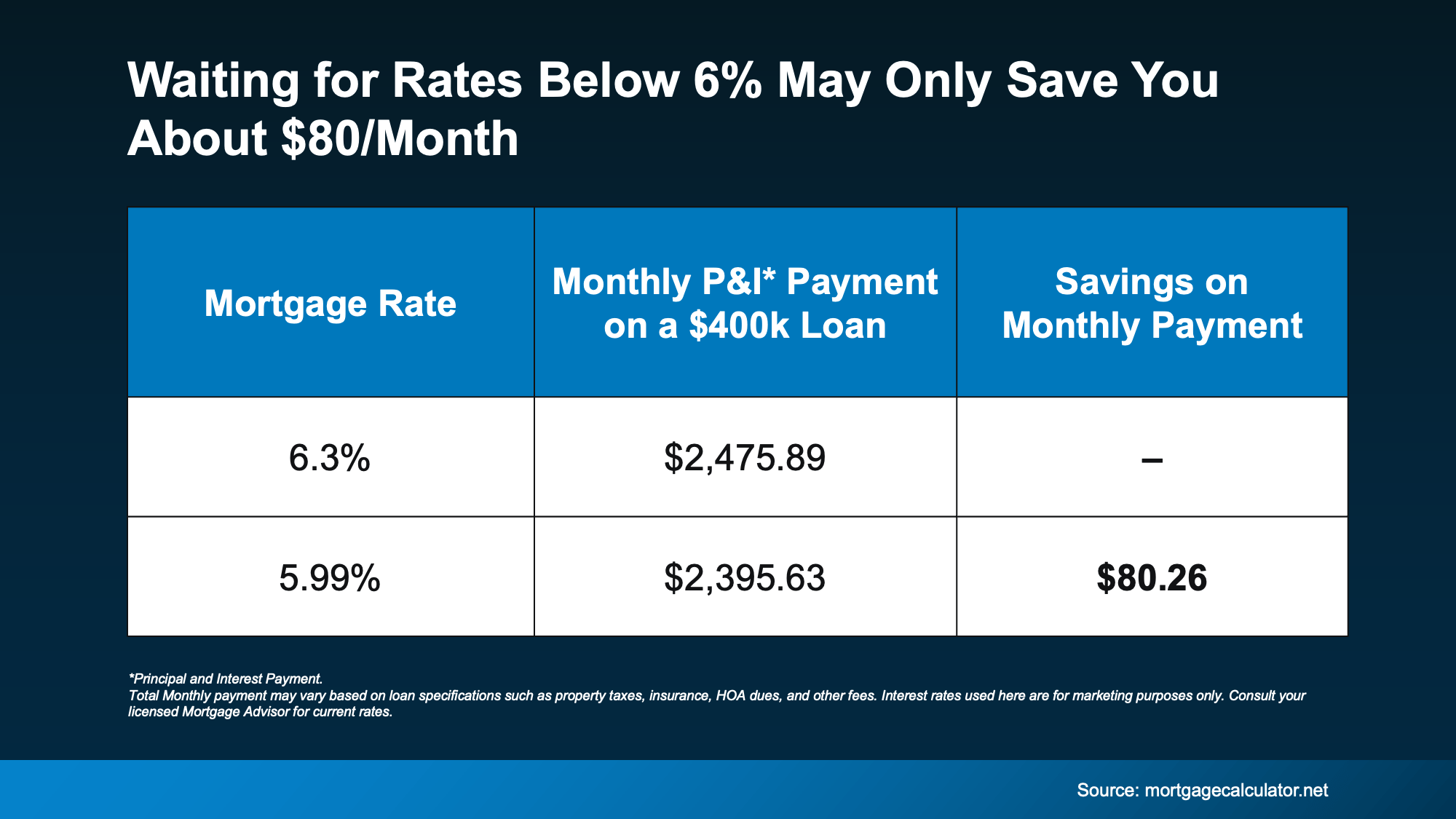 Eighty dollars. That’s it. And for the typical family, that’s about one dinner out (or one dinner in, if you have it delivered). That’s not enough to change the game for most buyers. But the savings of nearly $400 we already have compared to when you paused your search in the spring? That might be.
So, the question to ask yourself is this:
Is an extra $80 savings really worth the wait?
Because while you’re holding out for that small dip, the bigger opportunity might be slipping away.
When Rates Fall, Competition Follows
Right now, you have more homes to choose from, sellers who are ready to negotiate to get a deal done, and fewer buyers to compete with. But once rates fall below 6%, buyer mindsets will shift and all of that will change.
The National Association of Realtors (NAR) reports that if rates hit 6%, about 5.5 million more households will be able to afford the median-priced home. Even if only a small fraction of them decide to buy, that could mean hundreds of thousands of buyers getting back into the market.
That creates more competition for you, which would push home prices even higher – maybe high enough to cancel out the extra savings you waited for.
So, if you’re waiting for rates below 6%, just keep in mind… that extra $80 may not be worth it in the grand scheme of things.
Bottom Line
You don’t have to wait for 5.99%. You have the chance to move (and save) right now. So, ask yourself: Would you let $80 hold you back from buying a condo or home?
If you find a home you love and the math makes sense, getting ahead may be the best strategy. Let’s run your numbers so you can see what you’re working with in our market.
Why Pre-Approval Is More Important Than Ever This Spring

Spring is here, and so is the busiest season in real estate. More buyers are out looking for homes, which means more competition for you. If you want to put yourself in the best position to buy, there’s one step you can’t afford to skip, and that’s getting a pre-approval letter for a mortgage.
Some buyers think they can wait until they’ve found a home they love before talking to a lender. But in a season where homes can sell fast, that’s a risky move. Getting pre-approved before you start your search is a much better bet.
Here’s what you need to know about this early step in the buying process.
What Is a Pre-Approval Letter?
Pre-approval gives you a sense of how much a lender is willing to let you borrow for your home loan. To determine that number, a lender starts by looking at your financial history. Here are some of the things that can have an impact, according to Yahoo Finance:
- Your debt-to-income (DTI) ratio: This is how much money you owe divided by how much money you make. Usually, you can borrow more if you have a lower DTI.
- Your income and employment status: They’re looking to verify you have a steady income coming in – that way they feel confident in your ability to repay the loan.
- Your credit score: If your score is higher, you may qualify to borrow more.
- Your payment history: Do you consistently pay your bills on time? Lenders want to know you’re not a risky borrower.
After their review, you’ll get a pre-approval letter showing what you can borrow. Having this peace of mind is a big deal – it helps you feel a lot more confident in your ability to get a home loan. And the fringe benefit is it can also speed up the road to closing day because the lender will already have a lot of your information.
It Helps You Figure Out Your Budget
Spring is a competitive season, and emotions can run high if you find yourself up against other buyers. Having a firm budget in mind is so important. You don’t want to get too attached and end up maxing out what you can borrow. As Freddie Mac explains:
“Keep in mind that the loan amount in the pre-approval letter is the lender’s maximum offer. Ultimately, you should only borrow an amount you are comfortable repaying.”
So, use this time to really buckle down on your numbers. And be sure to factor in other homeownership costs – like property taxes, insurance, and maybe even homeowner’s association fees – so you know what you can comfortably afford.
Then, partner with your agent to tailor your search to homes that match your budget. That way, you don’t fall in love with a condo or house that’s out of your financial comfort zone.
It Helps Your Offer Stand Out During the Busy Season
Spring buyers aren’t just competing for homes. They’re competing for the seller’s attention, too. And a pre-approval letter can help you stand out by showing sellers you’ve already gone through a financial check. Zillow explains it like this:
“Having a pre-approval letter handy while you’re shopping for a home can also help you act quickly once you’ve found a home you love. The letter shows potential sellers that you’re a serious buyer who has the financial means to close on the home. In a competitive market, an offer with a pre-approval letter attached will stand out among other offers that don’t include one — increasing the chances of your offer being accepted.”
That means when sellers are choosing among multiple offers, yours could rise to the top simply because you’ve already taken this step.
And here’s one final tip for you. After you receive your letter, avoid switching jobs, applying for new credit cards or other loans, co-signing for loans, or moving money in or out of your savings. That’s because any changes to your finances can affect your pre-approval status.
Bottom Line
If you’re thinking about buying a home this spring, getting pre-approved should be your first move. It’ll help you understand your budget, show sellers you’re serious, and keep you from falling in love with a house that’s out of reach. Talk to a lender to get started, we have a list of trusted people we’ve worked with that we’d be happy to share. To get started on your condo or home buying journey, contact us today at The Bouma Group, Realtors at 734-761-3060 or info@condohotline.com. Search for Ann Arbor area condos here!
Buying Your First Home? It’s Okay to Feel Nervous

Buying your first home or condo is exciting, but let’s be real – it can also feel overwhelming. It’s a big step, and with that comes plenty of questions. Am I making the right decision? Can I really afford this right now? Will I be able to make ends meet if I have unexpected repairs? What if I lose my job?
Here’s the thing: every first-time homebuyer has these thoughts.
The homebuying process has always been a mix of excitement and nerves, and that’s completely normal. Here’s some information that can give you a bit of perspective, so you don’t have these concerns.
Focus on What You Can Control
Since homeownership is new to you, you’re probably feeling like it’s hard to know what to budget for. And that can be a bit scary. You’ll have the mortgage, home insurance, and maintenance to think about – maybe even lawn care or homeowner’s association (HOA) fees. It’s easy to let the dollar signs be overwhelming. As Zillow says:
“Buying a house is a big decision, and you might feel confused and indecisive as you assess your current financial situation and try to work through whether or not the timing is right. Making big life choices might come with some self-doubt, but crunching the numbers and thinking about what you want your life to look like will help guide you down the right path.”
The important thing is to focus on what you can control. By partnering with a local agent and a trusted lender, you can get a clear understanding of what you can borrow for your home loan, what your monthly payment would be, and how your mortgage rate can impact it. And since that payment will likely be your biggest recurring expense, the key is to make sure the number works for you.
Don’t Stress About Repairs
The maintenance and repairs? Those can be a little bit harder to anticipate. But don’t forget you’ll get an inspection during the homebuying process to give you a better look at the condition of your future house. And with your inspection report in hand, you’ll have a good idea of what needs work. This way, you can start saving up so that you’re ready if and when something breaks.
But even then, if this is something that’s still really nagging at you, talk to your agent about asking the seller to throw in a home warranty. Those can cover repairs for some of the bigger systems in the house, like the HVAC, if they break within a specific time frame. While this isn’t a huge expense for the seller, the likelihood of a seller agreeing to one depends on what’s happening in your local market and how competitive it is right now.
It’s Okay To Stretch – Just Not Too Far
And remember, chances are that money will be a little tight – at least at first. And that’s kind of to be expected. A lot of times when someone buys their first home, they cut down on things like shopping and eating out for a while until they get a better idea of how their expenses will shake out in the new home.
But if you’re crunching the numbers and you won’t have enough money left for things like gas, food, etc. – it’s a sign you’d be stretching yourself too far. The last thing you want is to take on a payment that’s too much to handle. But stretching a little? That’s different. That’s normal.
Your Job Will Probably Change – And That’s Okay
And don’t forget, you’ll likely earn more down the road, so that slight stretch now won’t seem so bad as time wears on. As you advance in your career, you’ll probably start to make more money too. So, as your paycheck grows, the payments will get easier. Renting is a short-term option – and it’s one you deserve to get out of. Buying a home is a long-term play.
And just in case you’re worried about what happens if you do lose your job, you should know there are options, like forbearance, designed to help you temporarily pause payments on your home loan due to hardship.
Bottom Line
Buying your first home or condo is a big decision, and it’s okay to feel a little nervous about it. But if you’re financially ready, don’t let fear keep you from moving forward. These emotions are normal, and great agents help their buyers get through them.
What makes you nervous when you think about buying your first home?
Let’s connect so you have an expert on your side to explain everything along the way. From finding the perfect community for your needs to guiding you through the process, we’re here to help! Contact us today at The Bouma Group, Realtors at 734-761-3060 or info@condohotline.com.
Time in the Market Beats Timing the Market
Timing the Market – Is it Possible?

Does it make more sense to buy a home now or wait? There’s a lot to consider, from what’s happening in the market to your changing needs. But generally speaking, timing the market isn’t a good strategy – there are too many factors at play for that to even be possible.
That’s why experts usually say time in the market is better than timing the market.
In other words, if you want to buy a home and you’re able to make the numbers work, doing it sooner rather than later is usually worth it. Bankrate explains why:
“No matter which way the real estate market is leaning, though, buying now means you can start building equity immediately.”
Benefits of Buying Now vs. Later
Here’s some data to break this down so you can really see the benefit of buying now versus later. Each quarter, Fannie Mae releases the Home Price Expectations Survey. It asks over one hundred economists, real estate experts, and investment and market strategists what they forecast for home prices over the next five years. In the latest release, experts are projecting home prices will continue to rise through at least 2029 – just at a slower, more normal pace than they did over the past few years (see the graph below):
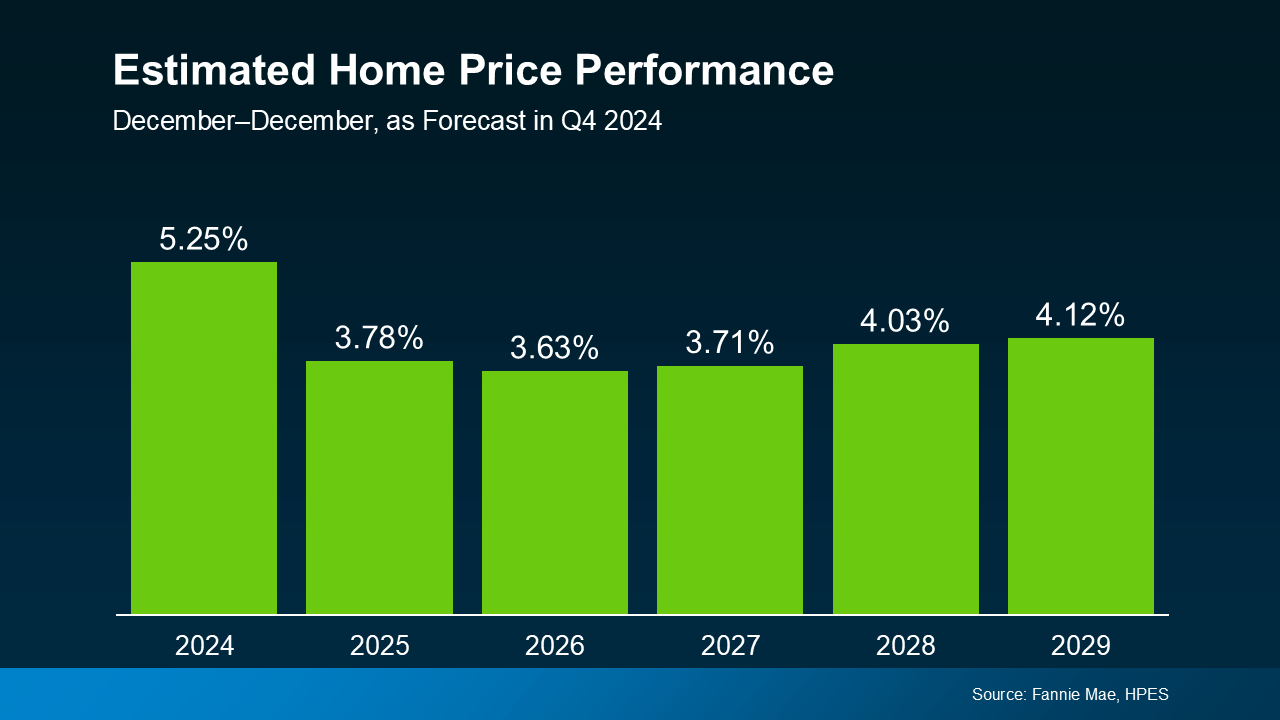
But what does that really mean for you? To give these numbers context, the graph below uses a typical home value to show how it could appreciate over the next few years using those HPES projections. This is what you could start to earn in equity if you buy a home in early 2025.
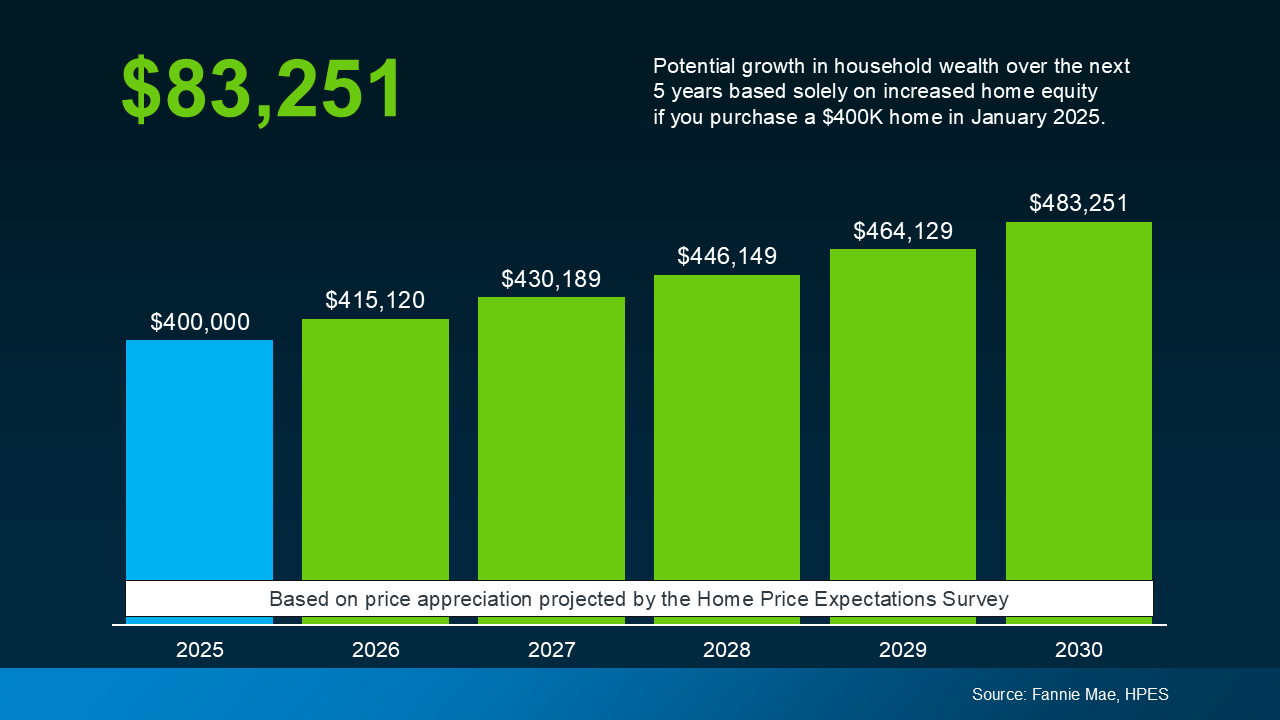
In this example, let’s say you go ahead and buy a $400,000 home this January. Based on the expert forecasts from the HPES, you could gain more than $83,000 in household wealth over the next five years. That’s not a small number. If you keep on renting, you’re losing out on this equity gain.
And while today’s market has its fair share of challenges, this is why buying is going to be worth it in the long run. If you want to buy a home, don’t give up. There are creative ways we can make your purchase possible. From looking at more affordable areas, to considering condos or townhomes, or even checking out down payment assistance programs, there are options to help you make it happen.
So sure, you could wait. But if you’re just waiting it out to perfectly time the market, this is what you’re missing out on. And that decision is up to you.
Bottom Line
If you’re torn between buying now or waiting, don’t forget that it’s time in the market, not timing the market that truly matters. Let’s connect if you want to talk about what you need to do to get the process started today. Contact us today at The Bouma Group, Realtors and let’s discuss what timing makes sense for your next move! 734-761-3060 or info@bouma.com.
What’s Behind Today’s Mortgage Rate Volatility?

If you’ve been keeping an eye on mortgage rates lately, you might feel like you’re on a roller coaster ride. One day rates are up; the next they dip down a bit. So, what’s driving this constant change? Let’s dive into just a few of the major reasons why we’re seeing so much volatility, and what it means for you.
The Market’s Reaction to the Election
A significant factor causing fluctuations in mortgage rates is the general reaction to the political landscape. Election seasons often bring uncertainty to financial markets, and this one is no different. Markets tend to respond not only to who won but also to the economic policies they are expected to implement. And when it comes to what’s been happening with mortgage rates over the past couple of weeks, as the National Association of Home Builders (NAHB) says:
“. . . the primary reason interest rates have been on the rise pertains to the uncertainty surrounding the presidential election. Although the election is now complete, there continue to be growing concerns over budget deficits.”
In the short term, this anticipation has caused a slight uptick in mortgage rates as the markets adjust and react. Additionally, factors like international tensions, supply chain disruptions, and trade policies can drive investor sentiment, causing them to seek safer assets like bonds, which can indirectly impact mortgage rates. Essentially, the more global or domestic uncertainty, the greater the chance that mortgage rates may shift.
The Economy and the Federal Reserve
Inflation and unemployment are two other big drivers of mortgage rates. The Federal Reserve (the Fed) has been working to bring inflation under control, and has been closely monitoring the economy as they do. And as long as inflation continues to moderate and the job market shows signs of maximum employment, the Fed will continue its plans to cut the Federal Funds Rate.
Although the Fed doesn’t set mortgage rates, their decisions do have an impact, and typically a cut leads to a mortgage rates response. And in their November 6-7th meeting, the Fed had the data they needed to make another cut to the Federal Funds Rate. And while that decision was expected and much of the mortgage rate movement happened prior to that meeting, there was a slight dip in rates.
What To Expect in the Coming Months
As we look ahead, mortgage rates will respond to changes in the Fed’s policies and other economic indicators. The markets will likely remain in a wait-and-see mode, reacting to each new development. And, with the transition of a new administration comes an element of unpredictability. A recent article from The Mortgage Reports explains:
“Today’s economic indicators come with mixed pressures on mortgage rates and we’re likely to be in for a good amount of volatility as markets adjust and respond to the election . . .”
The best way to navigate this landscape is to have a team of real estate experts by your side. Professionals will help you understand what’s happening and can provide you with the guidance you need to make informed housing market decisions along the way.
Bottom Line
The takeaway? Today’s mortgage rate volatility is going to continue to be driven by economic factors and political changes.
Now is the time to lean on experienced professionals. A trusted real estate agent and mortgage lender can help you navigate through it. And with the right guidance, you can make informed decisions. Contact us today at 734-761-3060 or info@condohotline.com.
What You Need to Know About Today’s Down Payment Programs
Down Payment Programs Aren’t Just for First-Time Homebuyers

There’s no denying it’s gotten more challenging to buy a condo or home, especially with today’s mortgage rates and home price appreciation. And that may be one of the big reasons you’re eager to look into grants and assistance programs to see if there’s anything you qualify for that can help. But unfortunately, many homebuyers feel like they don’t know where to start.
A recent Bank of America Institute study asked prospective buyers where they lack confidence in the process and need more information. And this is what topped the list:
53% said they need help understanding home-buying grant programs.
So, here’s some information that can help you close that gap.
What Is Down Payment Assistance?
As the Mortgage Reports explains:
“Down payment assistance (DPA) programs offer loans and grants that can cover part or all of a home buyer’s down payment and closing costs. More than 2,000 of these programs are available nationwide. . . DPA programs vary by location, but many home buyers could be in line for thousands of dollars in down payment assistance if they qualify.”
And here’s some more good news, you probably don’t need to save as much for your down payment as you think. Contrary to what you may have heard, typically you don’t have to put 20% down unless it’s specified by your loan type or lender. So, you likely don’t need to save as much upfront, and there are programs designed to make your down payment more achievable. Sounds like a win-win.
First-Time and Repeat Buyers Are Often Eligible
It’s also worth mentioning, that it’s not just first-time homebuyers that are eligible for many of these programs. That means whether you’re looking to buy your first house or your fifth, there could be an option for you. As Down Payment Resource notes:
“You don’t have to be a first-time buyer. Over 39% of all [homeownership] programs are for repeat homebuyers who have owned a home in the last 3 years.”
Additional Down Payment Resources That Can Help
Here are a few down payment assistance programs that help buyers achieve their dream of homeownership:
- Teacher Next Door is designed to help teachers, first responders, health providers, government employees, active-duty military personnel, and Veterans reach their down payment goals.
- Fannie Mae provides down payment assistance to eligible first-time homebuyers living in majority-Latino communities.
- Freddie Mac also has options designed specifically for homebuyers with modest credit scores and limited funds for a down payment.
- The 3By30 program lays out actionable strategies to add 3 million new Black homeowners by 2030. These programs offer valuable resources for potential buyers, making it easier to secure down payments and realize their dream of homeownership.
- For Native Americans, Down Payment Resource highlights 42 U.S. homebuyer assistance programs across 14 states that ease the path to homeownership by providing support with down payments and other associated costs.
If you want more information on any of these, the best place to start is by contacting a trusted real estate professional.
We’ll share more details about what may be available, including any other programs designed to serve specific professions or communities. And even if you don’t qualify for these types of programs, we can help find out if there are any other federal, state, and local options available you should look into.
Bottom Line
Affordability is still a challenge, so if you’re looking to buy, you will want to make sure you’re taking advantage of any and all resources available.
Connect with us at The Bouma Group at 734-761-3060 or info@bouma.com and let’s explore your options!
Why a Condo May Be a Great Option for Your First Home

An Ann Arbor Condo is a Great First Home
Having a hard time finding a first home that’s right for you and your wallet, especially in Ann Arbor? Well, here’s a tip – think about condominiums, or condos for short.
They’re usually smaller than single-family homes, but that’s exactly why they can be easier on your budget. According to the latest data from the National Association of Realtors (NAR), condos are typically less expensive than single-family homes (see graph below):
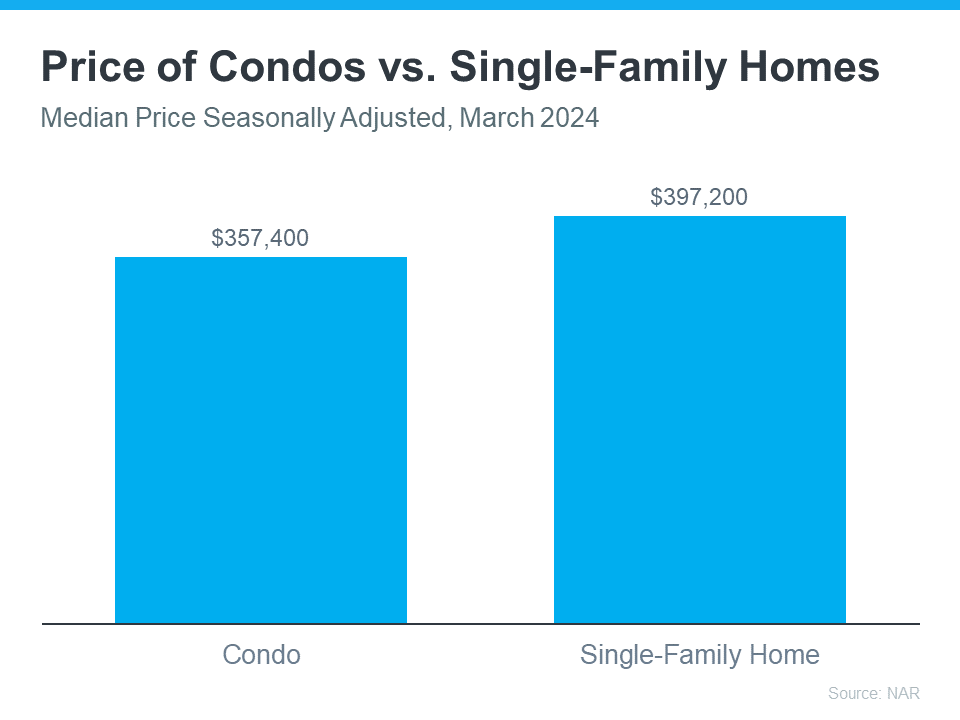
So, if you’re comfortable with a smaller space and want to buy your first home this year, adding condos to your search might be easier on your wallet.
Besides giving you more options for your home search and maybe fitting your budget better, living in a condo has many other perks. According to Rocket Mortgage:
“From community living to walkable urban areas, condos are great options for first-time home buyers and people looking to enjoy homeownership without extensive upkeep.”
Benefits of Condo Living
Let’s dive into a few of the draws of condos for first-time buyers from Bankrate:
- They require less maintenance. Condos are great if you want to own your place but don’t want to mow the lawn, shovel snow, or fix the roof. Your real estate agent can help explain any associated fees and details for the condos you’re interested in.
- They allow you to start building equity. When you buy a condo, you build equity and your net worth as you make your mortgage payments and as your condo’s value goes up over time.
- They often come with added amenities. Your condo might have access to amenities like a pool, dog park, or parking. And the best part? You don’t have to take care of any of them.
- They provide you with a sense of community. Buying a condo means you’ll be living close to other people, which is nice if you enjoy having neighbors around and making friends. Many condo communities hold fun events like barbecues and holiday parties for everyone to enjoy.
Remember, your first home doesn’t have to be the one you stay in forever. The important thing is to get your foot in the door as a homeowner so you can start to gain home equity. Later on, that equity can help you buy another place if you need something different.
Ultimately, owning and living in a condo is a lifestyle choice. And if it’s one that appeals to you, they could provide the added options you need in today’s market.
Bottom Line
It might be a good idea to think about condos in your home search. If you’re ready to see what’s out there, let’s get in touch today. Contact us at The Bouma Group, Realtors at 734-761-3060 or info@condohotline.com.
Unpacking the Real Cost of Condo Living: A Guide to Understanding Condo HOA Fees
A Condo Buyers Guide to HOA Fees
For potential condo buyers, the allure of low-maintenance luxury living often comes with a not-so-glamorous caveat—monthly condo association fees, otherwise known as HOA (Homeowners’ Association) fees. Beyond the catchy “lock-and-leave” lifestyle advertised, these fees can significantly impact your financial obligations and the value you receive from your investment. In this comprehensive guide, we’ll demystify the sometimes murky waters of HOA fees so you can make the most informed decisions about your future condo purchase.

The ABCs of Condo HOA Fees
Defining the Terms
Before you can truly grasp the implications of HOA fees, it’s essential to understand what they are. These fees are recurring payments made by condo or single-family home owners within a particular community or building. The fees cover shared expenses, from maintenance and repairs to community amenities and even insurance for common areas.
The Financial Breakdown
Condo fees can vary significantly based on various factors such as the location, age, and building amenities. The key is transparency—potential buyers should be provided with a detailed breakdown of these costs before closing day. Remember, not all HOA fees are created equal. Some may seem hefty at first glance, but if they include utilities and significant community perks, they could actually offer a better deal than seemingly lower fees that hide additional costs.

Understanding the Purpose
What exactly are you paying for with your HOA fees? Typically, these funds are allocated to address the following:
- Maintenance: Routine upkeep of the building’s exterior, common areas, and shared amenities is a non-negotiable component of HOA fees.
- Utilities: Heating, water, waste removal, and electricity for common areas may be covered, reducing individual expenses.
- Reserve Funds: For future repairs and major projects, the association should set aside a portion of fees to avoid special assessments.
- Amenities: Pools, gyms, community rooms, and other facilities often require ongoing maintenance and insurance.
The Condo Association: Your Fee Guardians
The Role of the Association Board
The condo association board is a critical player in the management of your HOA fees. Elected by unit owners, the board establishes the annual budget, enforces community rules, and makes both minor and major decisions about the building’s operations. Engage with the board and attend meetings to ensure that your financial contributions are being used effectively and reflect your needs and desires as a member of the community.
Decoding the Association Documents
Before you even start calculating your budget with HOA fees in mind, it’s essential to review the association’s financial documents. The master deed and bylaws will detail how fees are determined, any limitations on increasing fees, and what rights and responsibilities the association has in spending these funds.
Special Assessments and Your Pocket
In some instances, HOA fees won’t be enough to cover significant unforeseen expenses, or the association may decide to undertake a large-scale improvement project. This is where special assessments come in, extra fees charged to unit owners to cover these costs. To protect your finances, ensure the association maintains a solid reserve fund and has a clear policy on when special assessments may be levied.
Additional Considerations for Prospective Condo Buyers
Planning for Future HOA Fee Hikes
HOA fees are not stagnant. They can—and often do—increase over time. It’s crucial to understand the underlying reasons for increases and budget for these changes. Factors that may lead to fee hikes include rising insurance costs, aging building infrastructure, or new amenities.
The Fine Print on Pet Policies and Parking
Some fees may not be explicitly labeled as HOA fees and can contribute significantly to your living expenses. Non-refundable pet deposits, monthly pet rent, or charges for dedicated parking spaces can add up quickly and should be factored into your housing budget.
The Social and Lifestyle Value of HOA Fees
While the financial aspects of these fees are critical, don’t overlook the social and lifestyle benefits they can offer. Access to well-maintained amenities and the community’s shared environment are significant perks. They can enhance your quality of life and often justify the associated costs.
In conclusion, condo HOA fees can be a source of contention or a ticket to a fulfilling housing experience. It all comes down to knowledge and participation. You can turn what might seem like a financial burden into a wise investment in your future home by understanding what HOA fees encompass, being well-informed about your association’s practices, and making choices that align with your financial and lifestyle goals. Take the time to dig deep and when the time comes to commit, do so with confidence and a complete understanding of what you’re getting into. Your dream condo may be waiting for you – HOA fees and all. So, carefully consider all aspects before making a decision. To learn more about the condo-buying process, contact us at 734-761-3060 or info@condohotline.com. Search for your dream condo here!
What Is Pre-Approval And Why Is It So Important?
Why Pre-Approval Is Your Homebuying Game Changer

If you’re thinking about buying a condo or home, pre-approval is a crucial part of the process you definitely don’t want to skip. So, before you start picturing yourself in your new living room or dining on your future all-season patio, be sure you’re working with a trusted lender to prioritize this essential step. Here’s why.
While home price growth is moderating and mortgage rates have been coming down in recent weeks, affordability is still tight. At the same time, there’s a limited number of homes and condos for sale right now, and that means ongoing competition among hopeful buyers. But, if you’re strategic, there are ways to navigate these waters – and pre-approval is the game changer.
What Pre-Approval Does for You
To understand why it’s such an important step, you need to know more about pre-approval. As part of the homebuying process, a lender looks at your finances to determine what they’re willing to loan you. From there, your lender will give you a pre-approval letter to help you understand how much money you can borrow. Freddie Mac explains it like this:
“A pre-approval is an indication from your lender that they are willing to lend you a certain amount of money to buy your future home. . . . Keep in mind that the loan amount in the pre-approval letter is the lender’s maximum offer. Ultimately, you should only borrow an amount you are comfortable repaying.”
Getting pre-approved starts to put you in the mindset of seeing the bigger financial picture, one step at a time. And the key is actually more than just getting a pre-approval letter from your lender. The combination of pre-approval and strategic budgeting is your golden ticket to understanding what you can actually afford. It saves you from painful heartaches down the road so you don’t fall in love with a place that might be out of reach.
Pre-Approval Helps Show Sellers You’re a Serious Buyer
But that’s just the beginning. Let’s face it, there are more people looking to buy than there are homes available for sale, and that creates competition among homebuyers. That means you could see yourself in a multiple-offer scenario when you get ready to make your move. However, getting pre-approved for a mortgage can help you stand out from other buyers.
In today’s fast-moving housing market, having that pre-approval in your back pocket can be your secret weapon. When sellers see you’re pre-approved, it tells them you’re a strategic and serious buyer. In a world of multiple offers, that’s a big deal. As an article from the Wall Street Journal (WSJ) says:
“If you plan to use a mortgage for your home purchase, preapproval should be among the first steps in your search process. Not only can getting preapproved help you zero in on the right price range, but it can give you a leg up on other buyers, too.”
Pre-approval shows sellers you’re more than just a window shopper. You’re a buyer who’s already undergone a credit and financial check, making it more likely that the sale will move forward without unexpected delays or issues. Sellers love that because they see your offer as a reliable one. A win-win, right?
Bottom Line
So, before you start mentally arranging furniture in your dream home or condo, work with a trusted lender to get your pre-approval set. It’ll save you time, stress, and a lot of headaches that could come up along the way without it. The reality is, that the more prepared you are, the more likely you are to land the property you’re longing for. Not sure how to find a trusted lender? We work with many and can give you a list of the best in the area. Contact us today at 734-761-3060 or info@condohotline.com.