Mortgage 101: What To Know Before You Apply
Everybody loves talking about mortgages. They’re fun, easy to understand, and a great icebreaker, right?….Wrong. Thanks to their lengthy process, technical jargon, and confusing options, mortgages have a bit of an intimidating reputation—but it doesn’t have to be that way!
If you’re in the process of buying a new condo and dreading the mortgage application process, here’s what you need to know to keep things running smoothly.
Know How Much You Can Spend

If you’re feeling antsy about getting started and want a general idea of how much loan you might qualify for, consider the 28/36 rule, or the Debt-to-Income ratio—AKA what most lenders use to help calculate your mortgage.
Essentially, the 28/36 rule means that your monthly mortgage payment shouldn’t be more than 28% of your gross income. Additionally, your outstanding debts—like mortgage, car loans, student loans—shouldn’t account for more than 36% of your gross income.
Get Your Finances in Order

Not seeing the numbers you were hoping for after calculating your Debt-to-Income ratio? Then, hopefully, you’ve given yourself a little time to shift things in your favor. Paying off loans, improving your credit score, avoiding big purchases—these will all help you change those numbers.
Of course, completing those tasks is a little harder to do in practice than in theory, so you may have to take a look at your budget and see where you can cut out some extras—at least temporarily!
What You’ll Need to Apply

In the weeks before you plan on applying for a mortgage, you should start collecting all of the documents you need. Since a lender will be telling you exactly how much money they’re willing to loan, they’ll need a comprehensive understanding of your finances beforehand. Start gathering things like:
- W2s/tax returns
- Photo ID
- Your two most recent pay stubs
- Current and prior addresses
- Asset information (retirement funds, 401(k), stocks and bonds, other investments)
- Gift letters
Depending on the lender you choose, you may need additional documents, so consider calling in to double-check beforehand.
Find the Right Mortgage

Once it’s time to start thinking more concretely about applying for a mortgage, you have several options to consider. While all the mortgage options out there could easily fill a whole blog post on their own, here’s a quick rundown to give you a general idea:
- Conventional/Fixed-rate: The interest rate of a fixed-rate loan won’t change over time, making it a popular choice for its predictability. Conventional loans typically require a 20% down payment or mortgage insurance for smaller down payments.
- Adjustable-rate: The interest rate of adjustable-rate mortgage will fluctuate over time, sometimes lower than fixed-rate, sometimes higher. There is a cap in place so the rate doesn’t get too out of control, but ARMs are typically more popular with those who plan to refinance.
- FHA: If you are struggling to come up with a down payment, you may have options with an FHA mortgage. Provided by the Federal Housing Administration, these loans come with a low down payment requirement and built-in mortgage insurance.
- USDA: Live in a rural area? Then check out your USDA eligibility! A surprising amount of areas qualify for USDA loans, even if you aren’t living in the countryside. Plus, USDA loans don’t require a down payment and offer lower insurance premiums.
These aren’t the only options you’ll have, just the most common. If none of these sound right or you aren’t sure which to choose, just ask your lender!
Choose the Right Lender
When it comes time to decide who to work with, you’ll have to do your research. Each lender is different, meaning they’ll likely offer you different rates, charges, and loan options.
Luckily, we’ve been working in real estate around the area for years, so we know exactly which lenders are right for which buyers. If you need a few suggestions before you kick off your search, just let us know!
Still Have Questions?
That’s okay—we get it. Applying for mortgage is confusing and challenging, especially if it’s your first time. If you have any questions about the process, we’re here to help, give us a call at The Bouma Group, Realtors at 734-761-3060 or info@condohotline.com.
Ready to start looking at a few homes in your price range? We can help with that, too! Check out our specialized search tool to narrow down your options, and give us a call to start seeing a few in person! Start your Search here!
Homeowners Are Happy! Renters? Not So Much.

When people talk about homeownership and the American Dream, much of the conversation revolves around the financial benefits of owning a home or condominium. However, two recent studies show that the non-financial benefits might be even more valuable.
In a recent survey, Bank of America asked homeowners: “Does owning a home make you happier than renting?” 93% of the respondents answered yes, while only 7% said no. The survey also revealed:
- More than 80% said they wouldn’t go back to renting
- 88% agreed that buying a home or condo is the “best decision they have ever made”
- 79% believed owning a home or condo has changed them for the better
Those surveyed talked about the “emotional equity” that is built through homeownership. The study says more than half of current homeowners define a home as a place to make memories, compared to 42% who view a home as a financial investment. Besides building wealth, the survey also showed that homeownership enhances quality of life:
- 67% of current homeowners believed their relationships with family and loved ones have changed for the better since they bought a home
- 78% are satisfied with the quality of their social life
- 82% of homeowners said they were satisfied with the amount of time they spend on their hobbies and passions since purchasing a home
- 75% of homeowners pursued new hobbies after buying a home
Homeowners seem to be very happy.
Renters Tell a Different Story…
According to the latest Zillow Housing Aspirations Report, 45% of renters regret renting rather than buying — more than five times the share of homeowners (8%) who regret buying instead of renting. Here are the four major reasons people regret renting, according to the report:
- 52% regret not being able to build equity
- 52% regret not being able to customize or improve their rentals
- 50% regret that the rent is so high
- 49% regret that they lack private outdoor space
These two studies prove that renting is just not the same as owning.
Bottom Line
There are both financial and non-financial benefits to homeownership. As good as the “financial equity” is, it doesn’t compare to the “emotional equity” gained through owning your own home. Thinking of starting your search for the perfect place to call your own? Contact the Ann Arbor Condo specialists with The Bouma Group at 734-761-3060 or info@condohotline.com today!
Stop Wondering What Your Budget Is & Get Pre-Approved!

In many markets across the country, the number of buyers searching for their dream home or condo outnumbers the number for sale. This has led to a competitive marketplace where buyers often need to stand out. One way to show that you are serious about purchasing is to get pre-approved for a mortgage before starting your search.
Even if you are not in an incredibly competitive market, understanding your budget will give you the confidence of knowing whether or not your dream condo is within your reach.
Freddie Mac lays out the advantages of pre-approval in the ‘My Home’ section of their website:
“It’s highly recommended that you work with your lender to get pre-approved before you begin house hunting. Pre-approval will tell you how much home you can afford and can help you move faster, and with greater confidence, in competitive markets.”
One of the many advantages of working with a local real estate professional is that many have relationships with lenders who will be able to help you through this process. Once you have selected a lender, you will need to fill out their loan application and provide them with important information regarding “your credit, debt, work history, down payment and residential history.”
Freddie Mac describes the ‘4 Cs’ that help determine the amount you will be qualified to borrow:
- Capacity: Your current and future ability to make your payments
- Capital or cash reserves: The money, savings, and investments you have that can be sold quickly for cash
- Collateral: The home, or type of home, that you would like to purchase
- Credit: Your history of paying bills and other debts on time
Getting pre-approved is one of many steps that will show sellers that you are serious about buying, and it often helps speed up the process once your offer has been accepted.
Bottom Line
Many potential buyers overestimate the down payment and credit scores necessary to qualify for a mortgage. If you are ready and willing to buy, you may be pleasantly surprised at your ability to do so today. Contact us at The Bouma Group, Realtors and we can give you a list of local mortgage lenders that have wowed our clients! 734-761-3060 or info@condohotline.com Check out Ann Arbor Condos here!
2 Myths Holding Back Condo Buyers
Freddie Mac recently released a report entitled, “Perceptions of Down Payment Consumer Research.” Their research revealed that,
“For many prospective homebuyers, saving for a down payment is the largest barrier to achieving the goal of homeownership. Part of the challenge for those planning to purchase a home is their perception of how much they will need to save for the down payment…
…Based on our recent survey of individuals planning to purchase a home in the next three years, nearly a third think they need to put more than 20% down.”
Myth #1: “I Need a 20% Down Payment”
Buyers often overestimate the funds needed to qualify for a home loan. According to the same report:
22% of renters and 31% of homeowners believe lenders require 20% or more of a sale price as a down payment for a typical mortgage today. And,
“If a 20% down payment was required, 70% of those who were planning to buy a home in the next three years said it would delay them from purchasing and nearly 30% indicated they would never be able to afford a home.”
While many believe at least 20% down is necessary to buy the home or condo of their dreams, they do not realize programs are available which permit as little as 3%. Many renters may actually be able to enter the housing market sooner than they ever imagined!
Myth #2: “I Need a 780 FICO® Score or Higher to Buy”
Many either don’t know or are misinformed concerning the FICO® score necessary to qualify, believing a ‘good’ credit score is 780 or higher.
To debunk this myth, let’s take a look at Ellie Mae’s latest Origination Insight Report, which focuses on recently closed (approved) loans. As indicated in the chart above, 52.4% of approved mortgages had a credit score of 600-749.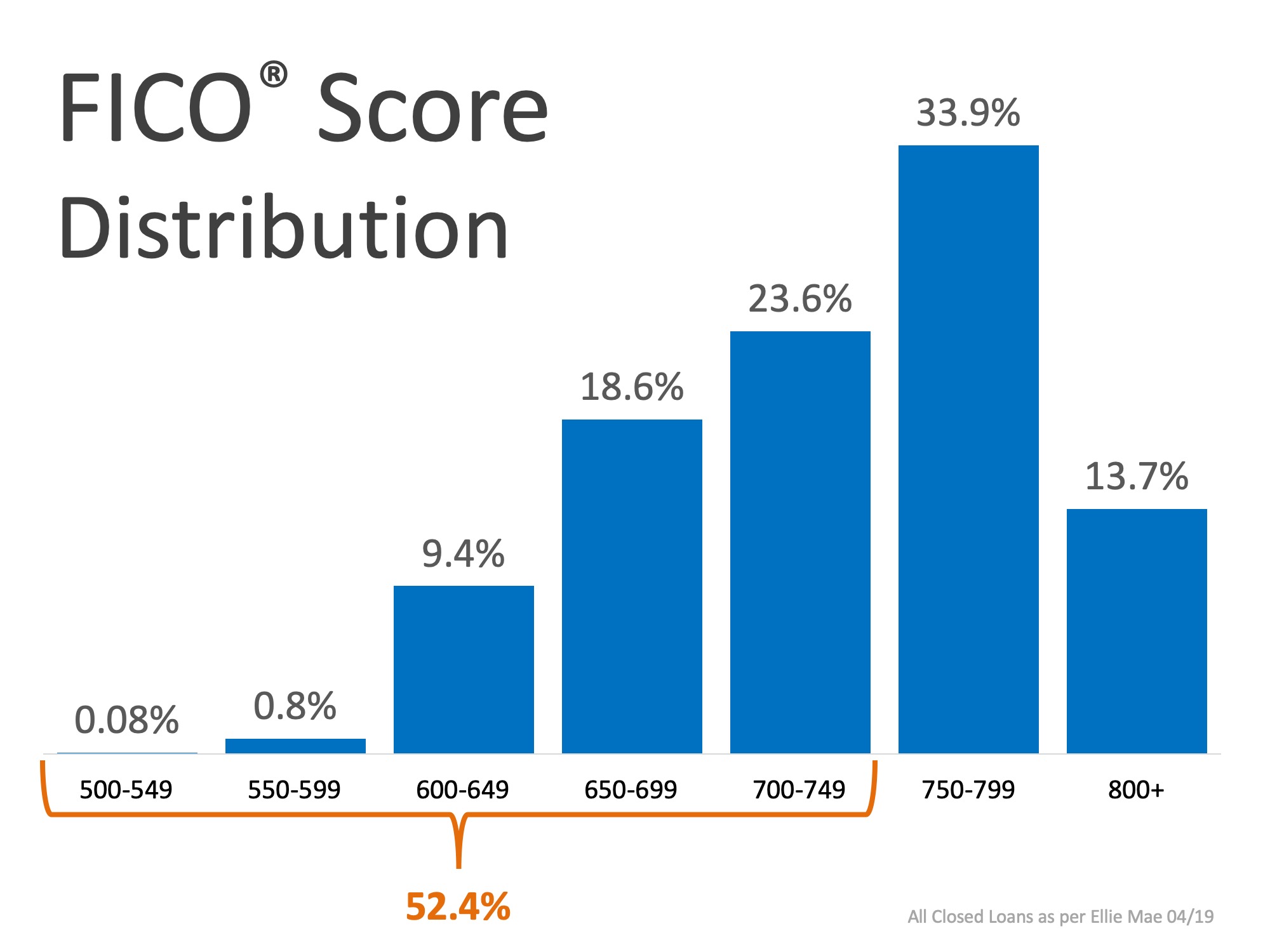
Bottom Line
Whether buying your first condo or moving up to your dream home, knowing your options will make the mortgage process easier. Your dream may already be within your reach! Contact us, the Ann Arbor Condo specialists to begin your new condo search at 734-761-3060 or info@condohotline.com.
4 Tips for Making a Competitive Offer

So, you’ve been searching for that perfect place to call ‘home,’ and you’ve finally found it! The price is right and in such a competitive market you want to make sure you make a good offer so that you can guarantee that your dream of making this condo yours comes true!
Below are 4 steps provided by Freddie Mac to help buyers make offers, along with some additional information for your consideration:
1. Determine Your Price
“You’ve found the perfect condo and you’re ready to buy. Now what? Your real estate agent will be by your side, helping you determine an offer price that is fair.”
Based on your agent’s experience and key considerations (like similar condos recently sold in the same area or the condition of the condo and what you can afford), your agent will help you to determine the offer that you are going to present.
Getting pre-approved will not only show the sellers that you are serious about buying, but it will also allow you to make your offer with confidence because you’ll know that you have already been approved for a mortgage in that amount.
2. Submit an Offer
“Once you’ve determined your price, your agent will draw up an offer, or purchase agreement, to submit to the seller’s real estate agent. This offer will include the purchase price and terms and conditions of the purchase.”
Talk with your agent to find out if there are any ways in which you can make your offer stand out in this competitive market! A licensed real estate agent who is active in the complexes you are considering will be instrumental in helping you put in a solid offer.
3. Negotiate the Offer
“Oftentimes, the seller will counter the offer, typically asking for a higher purchase price or to adjust the closing date. In these cases, the seller’s agent will submit a counteroffer to your agent, detailing their desired changes, at this time, you can either accept the offer or decide if you want to counter.
Each time changes are made through a counteroffer, you or the seller have the option to accept, reject or counter it again. The contract is considered final when both parties sign the written offer.”
If your offer is approved, Freddie Mac urges you to “always get an independent home inspection, so you know the true condition of the unit.” If the inspector uncovers undisclosed problems or issues, you can discuss any repairs that may need to be made with the seller or even cancel the contract altogether.
4. Act Fast
The inventory of condos listed for sale has remained well below the 6-month supply that is needed for a ‘normal’ market. Buyer demand has continued to outpace the supply of homes for sale, causing buyers to compete with each other for their dream homes.
Make sure that as soon as you decide that you want to make an offer, you work with your agent to present it as quickly as possible.
Bottom Line
Whether buying your first home or condo or your fifth, having a local real estate professional who is an expert in his or her market on your side is your best bet in making sure the process goes smoothly. Let’s talk about how we can make your dream of home ownership a reality! We are the Ann Arbor Condo specialists, give us a call today at 734-761-3060 or info@condohotline.com.
How to Buy a Condo in One Year: A Step-by-Step Guide
Let’s start the Spring off right. If you’ve been dreaming of a new condo, it’s time to get started! Here’s a month-by-month guide to planning for and buying a new condo.
Month 1: Brush Up on Your Market Knowledge
 The best way to get started? Brush up on your real estate knowledge. Scour the market with a fine-tooth comb. Check out things like current inventory in your city, average sales prices, and the listing-to-sales-price ratio.
This research will help you familiarize yourself with the market. Check out Ann Arbor Condo complexes here!
Month 2: Address Your Budget
Let’s finalize our budget shall we? The easiest way to do this is to get pre-approved for a mortgage.
Meet with a lender (let us know if you’d like a recommendation) to review your finances. The lender will go over your financial history, and then let you know what the bank is willing to lend you.
Now you have an idea of what your mortgage will be and what you can afford in a condo.
Month 3: Find Your Perfect Location
 Do some soul searching. Where will you be happiest? Explore locations based on their job market, housing affordability, and overall quality of life. The goal is to narrow down your search to one city.
If you have the means, try to take some time off to go and visit a few areas. Once you find an area, it’s time to narrow your search down even further by pinpointing specific complexes or parts of town that will best meet your needs.
Month 4: Find the Right Agent
Find the right real estate agent to help you buy a condo. Trust us: they’ll save you time, money, and more than a few headaches.
If you need any recommendations, let us know. We have more than a few ideas.
Month 5: Define Your Dream Home
 Now is the fun part! Start putting together a list of everything you want in your dream home. We recommend starting by defining your “must-have” features. Think of the things you can’t live without. That’s a great place to start.
It’s also important to know the difference between “must-have” (i.e. you need 3 bedrooms and 2 bathrooms) and “nice-to-haves” (it would be nice to have granite countertops, but you can also live without them.)
Month 6-7: Begin Searching
Use a handy home search tool like ours to begin browsing homes for sale in your target area. Once you find a home that you like, it’s time to schedule a tour.
Private tours are often better than traditional open houses because you have more time to walk through the unit, without the pressure of competing with other potential buyers.
At some point in your home-search journey, you’re likely to come across at least one that calls your name.
Month 8: Fall in Love and Make an Offer
 You’ve found the one; now make an offer!
Work closely with your agent to compare recently sold condos in the area and craft the perfect offer.
Ask your agent for their advice—like whether or not they think the price is right for this home, as well as what other contingencies you might want to include in your offer. This is when your real estate agent will prove truly valuable: they’ll be able to provide useful insight in order to help you get the home of your dreams for the best possible price.
Month 9: Schedule All the Things
Let’s get down to business. It’s time to negotiate with the seller, schedule an inspection, have your real estate agent complete any re-negotiations (based on that inspection), and get the condo appraised by a professional.
You’ll also have to take care of some more paperwork to finalize your mortgage loan.
Month 10 – 12: Let’s Start Closing
 Next, you’ll start the closing process.
Buckle up, because we’re in it for the long haul! Here’s where you’ll finalize your mortgage approval (this requires a ton of paperwork) and meet with an attorney to set closing dates and sign paperwork prior to closing. This is also the time when you’ll review closing fees and the exact monthly costs for your condo.
At the end of it all comes the close. You’ll pay the remaining closing fees, sign all the paperwork, and collect your keys Congratulations! You just bought a home!!!
Ready to Begin?
We’re ready to help. Give us a call today at 734-761-3060 or info@condohotline.com to get started.
Saving up for a New Home or Condo? Here Are All the Costs You Need to Know
Once you’ve found the perfect home or condo and secured the loan, all that’s left to do is start chipping away at those mortgage payments…right? In actuality, there are a handful of other, often-overlooked expenses that come with buying, but as long as you know what you’re getting into, they’re plenty manageable.
Take a look at our comprehensive list of all the costs of buying a home or condo.
One-Time Payments & Closing Costs

Closing Costs
For buyers, closing costs are typically low and range from 2-5% of your purchase price. A lot of these costs are one-time expenses, and totals can vary from state-to-state.
If you want a better idea of what closing costs could be for you, check out this helpful guide on the average payments for each state.
Miscellaneous Fees
There are quite a bit of one-time fees bundled into your closing costs, but most of them are pretty inexpensive. Some of the most common expenses include the home inspection, appraisal, credit report, deed recording, land survey, notary fees, title insurance, and document prep fees.
Recurring Payments

Mortgage Payments
Mortgage payments are the most obvious cost when buying a home. These are your predictable, monthly payments decided by both the final price of your home and your down payment—in addition to a few other bundled costs. A larger down payment means a smaller mortgage payment, and it’s a good idea to pay this off quickly, since it will accumulate interest.
Property Taxes
Property tax payments don’t go towards just one thing—they actually cover quite a bit, like road construction, community maintenance, public works, and local government salaries. The exact amount you’ll pay in property tax is calculated by the county based on your home’s value, and the rates tend to rise and fall over time. Many buyers pay their property taxes through an escrow account set up by the lender.
Homeowner’s Insurance
It’s better to have insurance and not need it than need insurance and not have it, so homeowner’s insurance is pretty crucial to home owning. While it’s almost always required when you get a mortgage and then bundled into your monthly payments, be sure to double-check that you’re covered.
Private Mortgage Insurance
If you can’t afford a 20% down payment on your home, you’ll have to pay PMI as a way to ensure that the lender won’t go under if you default on your loan. You don’t have to pay PMI forever—it ends once you pay off 78% or more of the principal amount—but until then, expect to pay up to 2% of your loan amount annually.
HOA Fees
Moving to a neighborhood with an HOA? Your dues can range anywhere from under a hundred dollars to over a thousand, but they come with perks like landscaping and exterior maintenance, and some even include added benefits like swimming pools and fitness centers. Not all neighborhoods have an HOA, but your agent can tell you what your payments will be if yours does.
Utilities
Lastly, utility fees can come as a surprise to new homeowners who are used to renting. Depending on the size of your home, you can expect to pay a few hundred dollars per month for water, electricity, heating and cooling, and trash services. If you’re curious what your utility bills might look like, just ask your agent, and they can likely secure a few statements from the past owners.
Ready to Make an Offer?
When it comes to buying a home, the most important thing you can do is be prepared. While there are a handful of costs to keep in mind, the satisfaction of calling a place your own is well-worth it in the end.
Are you ready to get started on your home-buying journey? With years of professional and local experience, our condo professionals at The Bouma Group knows all about navigating the expenses that come with buying. Give us a call today at 734-761-3060 or info@condohotline.com to get a better idea of your costs, and let’s get started!
Condo Buying Terminology: A Cheat Sheet
Buying a condo shouldn’t be rocket science. You find the perfect place, make an offer to the seller, pay a couple of fees, and bam! You just bought a home.
However, buying a condo actually has a lot of moving parts which include a number of funny real estate terms you’ve probably never heard before. Are Realtors and real estate agents even speaking English anymore?
To help you out, we’ve come up with a cheat sheet so you’ll know exactly what we are talking about when we explain the home-buying process.
Pre-Approval
If you meet with an agent before you begin looking for condos, they’ll likely recommend you get pre-approved for a mortgage. Mortgage pre-approval is the best first step to buying a condo, because it essentially sets your budget for you.
Pre-approval involves sitting down with a lender to discuss your financial portfolio. This includes your credit score, borrowing history, outstanding debts, annual income, and any assets you have. After reviewing all of this, the lender gives you an exact number: that’s how much the bank is willing to lend you.
Not only is your budget set, sellers will take you more seriously because they know you can qualify for enough loan to support your offer.
Earnest Money
Defined loosely, earnest money is the money you pay to confirm a contract. When you’re buying a condo, this is essentially a good faith deposit. It lets the seller know that you’re serious—serious enough to go ahead and put money down.
This money sits in a joint account (called an “escrow” account) held by both the buyer and seller. When the purchase is finalized, the earnest money goes toward the buyer’s down payment.
Due Diligence
Due diligence refers to the period of time after the seller has accepted a buyer’s offer. This is the time when you as the buyer can schedule inspections, confirm financing, and make sure that buying this unit is in your best interest.
Now’s the time to do some research! Have it inspected by a professional to ensure nothing is wrong with it, consult public records to learn more about its past home ownership, as well as any environmental issues in the neighborhood, and work with your lender to make sure this is a good financial decision.
So…. Are Realtors and Agents the Same Thing?
Yes and no. The primary difference between REALTOR®s and real estate agents is the National Association of Realtors, also known as the NAR. The NAR is a professional organization of real estate brokers that abides by a specific Code of Ethics that all REALTOR®s are required to follow.
A real estate agent works under a brokerage, but is not necessarily a licensed NAR member.
Let’s Find Your Dream Condo Together
We’ll never hide behind big words when it comes to helping you find the place that’s right for you.
Give us a call today at 734-761-3060 or email info@condohotline.com to begin your home-buying journey.
Ann Arbor Condo Report – September 2018
Good News for Ann Arbor Condo Buyers, Selling Prices are Well Below Listing Prices
Listing prices are higher than last year, but luckily for those looking to buy an Ann Arbor condo, the selling price is at least 15% below the listing price! Asking prices are a significant 27.6% more than September 2017, $252,922 versus $322,848 currently. This may be because of the decrease in the amount of listings entered, from 60 condos to 52, which is a difference of 15.4%. Although the sale prices may seem unfortunate for condo sellers, there is some good news for them! 50 units sold this September, which means that almost as many units sold as were entered into the system. This is also an increase of 6.4% compared to the 47 condos sold in last September. Additionally, condos are on the market for less days, from 33 average days on the market to 24 currently. The average selling price is $233,240, which is a decrease of 8.9% compared to the ASP $255,912 in the previous September. Looking at year-to-date statistics, there has been a rise in the amount of condos entered into the multiple listings service but a decline in the amount of sales. From 611 units sold last year at this time to 629 units sold as of now, this is an increase of 21.3%. The average listing price has risen 19.5% to $347,344 so far this year, compared to $292,271. Thus far in 2018, 427 condos have been sold, which is a decline of 13.5% from the 494
condos sold last year at this time. The ASP has seen an increase of 14.3%, from $252,867 to $288,938 at the moment.
Whether you are looking to buy or sell an Ann Arbor condo, contact the condo specialists today at 888-581-6923 or email info@condohotline.com. Stay tuned for more updated market statistics!
Rents Are on The Rise: Don’t Get Caught in The Rental Trap!
There are many benefits to homeownership, but one of the top benefits is protecting yourself from rising rents by locking in your housing cost for the life of your mortgage.
Don’t Become Trapped
A recent article by Apartment List addressed rising rents by stating:
“Our national rent index is up 0.1 percent month-over-month, marking the sixth straight month of increasing rents. Year-over-year growth now stands at 1.2 percent.”
The article continues, explaining that:
“Rents increased month-over-month in 62 of the nation’s 100 largest cities, down significantly from the 85 cities that saw rents rise last month. That said, rents are still up year-over-year in most of the nation’s largest markets — 77 of the 100 largest cities have seen rents increase over the past twelve months.”
Additionally, Urban Land Magazine explained that,
“Currently, nearly half (47 percent) of renter households are cost burdened (i.e., paying more than 30 percent of income for housing), while 25 percent (totaling 11 million households) are severely cost burdened, paying over 50 percent of their total household income for rent.”
These households struggle to save for a rainy day and pay other bills, including groceries and healthcare.
It’s Cheaper to Buy Than Rent
As we have previously mentioned, the results of the latest Rent vs. Buy Report from Trulia show that homeownership remains cheaper than renting with a traditional 30-year fixed rate mortgage in the 100 largest metro areas in the United States.
The updated numbers show that the range is an average of 2% less expensive in Honolulu (HI), all the way up to 48.9% less expensive in Detroit (MI), and 26.3% nationwide!
Know Your Options
Perhaps you have already saved enough to buy your first home. A nationwide survey of about 1,166 renters found that 34% said they rent because they cannot afford to buy, 29% said they cannot afford to buy where they live, and nearly a quarter (24%) were saving to buy.
Many first-time homebuyers who believe that they need a large down payment may be holding themselves back from their dream homes. As we have reported before, in many areas of the country, a first-time homebuyer can save for a 3% down payment in less than two years. You may have already saved enough!
Bottom Line
Don’t get caught in the trap that so many renters are currently in. If you are ready and willing to buy a home, find out if you are able. Let’s get together to determine if you can qualify for a mortgage today!