
Priced Out of the Market? A Condo or Townhome Could Be Your Way In

Today’s home prices have a lot of buyers, especially first-time buyers, wondering if there’s even anything out there that’s in their budget. But owning a home may be more within reach than you think. Sometimes, it just means considering a different type of home.
Condos and townhomes can be a great way to buy without stretching every last dollar. And right now, two things make them worth a serious look.
There Are More Condos and Townhomes To Choose From
Maybe you feel like there’s just nothing out there for you, and you’ve exhausted all your options. But have you considered condos or townhomes? A lot of buyers start by looking for a single-family, detached home without even realizing what that search omits from their pool of choices.
According to HousingWire Data, nationally there were 233,030 condos and townhomes for sale this June. That’s more than any June in at least the past decade, and more than double the number available back in 2022 (see graph below):
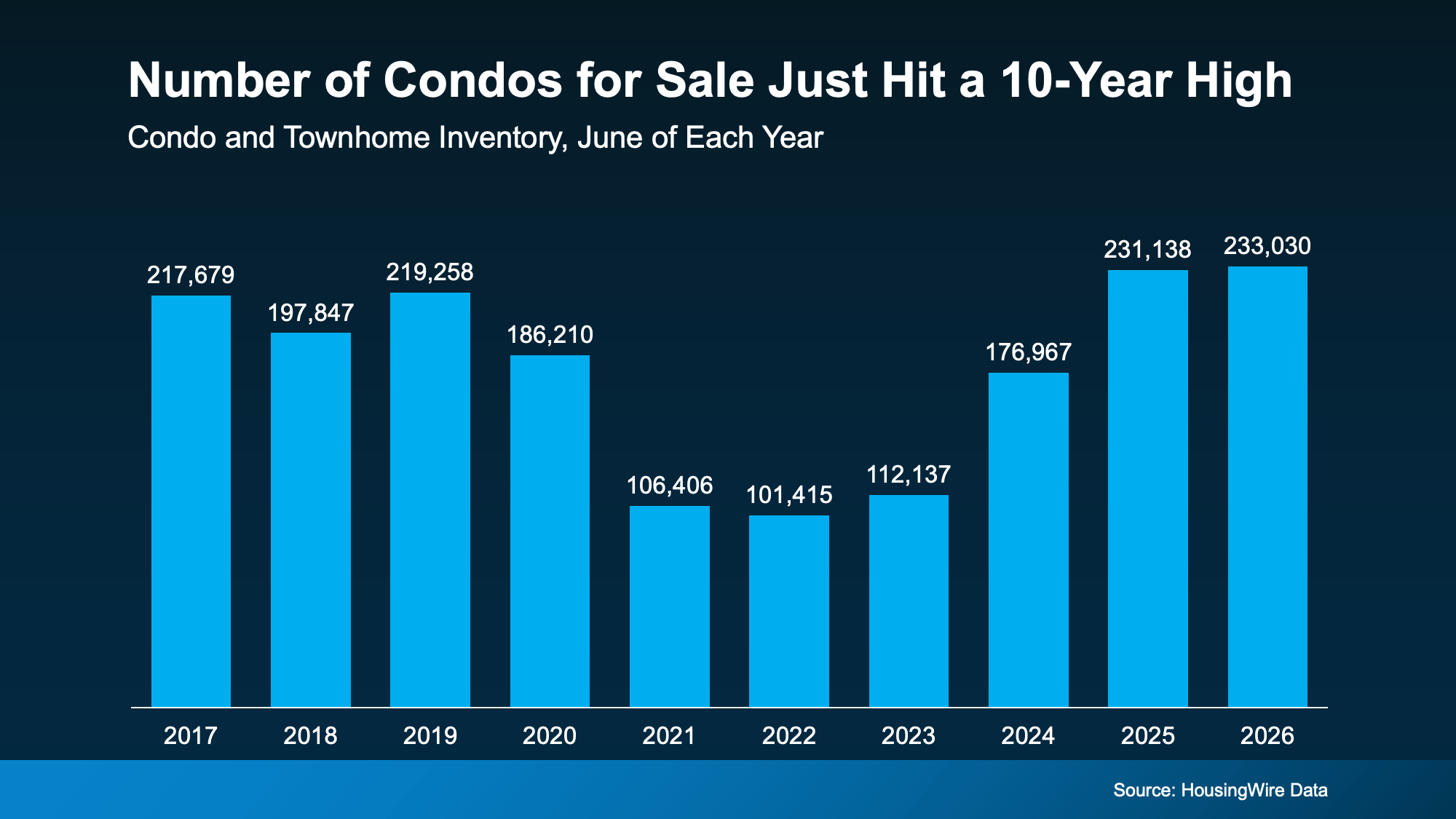
That means there are more options out there in this segment of the market, and that’s especially good news for first-time buyers. These types of homes can be a great way to break into the market for less.
Just remember, that’s the national number. What’s available will depend on where you’re looking. But generally speaking, more options means less competition, more time to decide, and more room to negotiate.
What’s Happening with Ann Arbor Condos
Good news if you’re shopping for a condo in Ann Arbor: the market is opening up in your favor. Through the end of July, new listings climbed to 594 in 2026 from 563 last year, giving you more choices to explore. At the same time, pending sales eased to 343 (down from 389) and closed sales dipped to 345 (from 359), while homes now sit for 49 days on average versus just 29 a year ago. With median prices sliding slightly to $335,000 from $340,000, this shift toward more supply and a calmer pace means you have room to compare options, negotiate with confidence, and lean on expert guidance to find the right fit.
They Also Tend To Cost Less Than Single-Family Homes
Price is the other big draw. According to the National Association of Realtors (NAR), the median condo price was $380,000 in June. In contrast, the median single-family home price was $446,400 (see graph below):
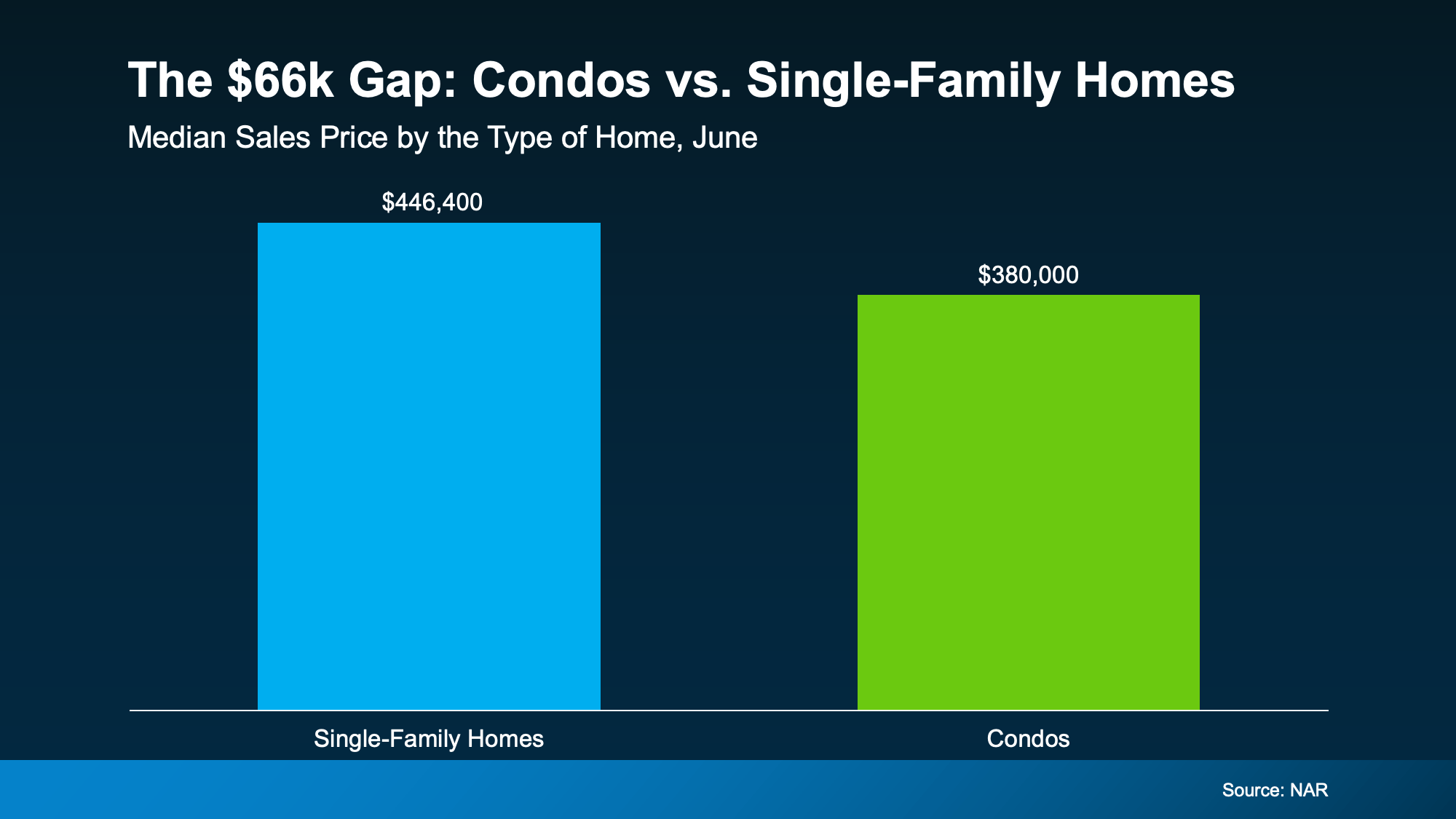
That’s a difference of more than $66,000.
A big reason why? Condos are usually smaller than single-family homes. And smaller homes can come with smaller price tags.
And if you don’t need all that extra space, that lower entry price could be exactly what gets you through the door.
What’s Happening with Condos vs. Homes in Ann Arbor
Here’s where the numbers get exciting for anyone eyeing an entry into the Ann Arbor market: through July 2026, the median home sold for $586,500 while the median condo came in at $335,000, a gap of over $250,000. That difference carries into averages too, with homes at $678,466 versus $448,299 for condos. Even a year ago, Ann Arbor condos began experiencing more price reductions. For you, this means a condo can be a smart, more accessible way to plant roots in a neighborhood you love, without stretching your budget to single-family territory. With expert Realtor guidance and clear market insights on your side, you can turn that price advantage into a vibrant, low-maintenance lifestyle right where you want to be.
Condo or Townhome? How They’re Different.
For buyers who feel priced out of the market, a condo or townhome could be a way in. But there are some things to know. Before you start checking out homes, it’s good to understand how these two compare to each other, and to a single-family home.
- With a single-family detached home, you own the house and the land it sits on, and you don’t share any walls with neighbors. That means the most space and privacy. But it also usually comes with a higher tag, and all the maintenance is on you.
- With a townhome, typically you own the building you live in and the lot it sits on. They’re usually multi-level, so you get more space, and you share two walls at most. You’ll also have more say over how your home looks and how repairs get done, but more of that upkeep falls on you.
- With a condo, you own just the inside of your unit and may have access to community features like a pool or gym. The building and shared space belong to everyone who lives there, which means you have less maintenance responsibilities. But you’ll also likely have more neighbors around you, less control over building decisions, and higher HOA fees since the HOA handles the exterior and common areas.
Bottom Line
Ready to make your move in Ann Arbor? A condo or townhome could be your path to owning a home without blowing your budget. The Bouma Group, Realtors knows this market inside and out, from the walkable downtown condos to the tucked-away neighborhoods you’ll love calling home. Our team pairs deep local expertise with personalized guidance, listening to your budget, your must-have features, and the lifestyle you’re after, then matching you with properties that truly fit. Whether you’re drawn to low-maintenance condo living or a place with a little more room to grow, we’ll walk you through financing options, honest market insights, and every step in between so you feel confident from first tour to closing day.
Let’s find the right spot for you together, reach out today at 734-761-3060 or info@bouma.com. Let’s turn your Ann Arbor plans into keys in your hand.
What Are Contingencies in a Condo Purchase?
Quick answer: Contingencies are conditions written into a Real Estate purchase agreement that must be met before the sale can close. They protect both buyers and sellers by creating defined exit points if specific circumstances, like a failed inspection or financing issue, arise during the transaction.
Buying a condo in Ann Arbor is an exciting step. But between signing the offer and getting the keys, there’s a lot that can happen. That’s where contingencies come in.
If you’ve been browsing listings on Condo Hotline or talking with a Realtor, you’ve probably heard the term thrown around. But what does it actually mean, and why does it matter so much when purchasing a condo specifically? This guide breaks it all down: what contingencies are, why they exist, which types apply to condo purchases, and how they protect everyone at the table.

What Does “Contingency” Mean in Real Estate?
A contingency is a clause in a purchase agreement that makes the sale conditional on certain events or criteria being met. Think of it as a built-in safety net. If the condition isn’t satisfied within the agreed timeframe, the buyer typically has the right to walk away from the deal. Often, their earnest money deposit will be returned.
Contingencies aren’t a sign of distrust. They’re standard practice. They simply acknowledge that real estate transactions are complex, and things don’t always go as expected.
Why Are Contingencies Necessary When Buying an Ann Arbor Condo?
Purchasing a condo differs from buying a single-family home in important ways. You’re not just buying the unit itself. You’re also buying into a homeowners association (HOA), shared amenities, and a collectively managed building or complex. That adds layers of due diligence that make contingencies especially valuable.
For example, a condo association might have underfunded reserves, pending special assessments, or restrictions that affect your ability to finance the purchase. Without contingencies in place, you could find yourself legally obligated to complete a purchase that no longer makes financial sense.
Contingencies give you time to uncover these issues, and an exit strategy if you find them.
What Are the Most Common Types of Contingencies in a Condo Transaction?
Financing Contingency
Also called a mortgage contingency. This clause gives you a set period, typically 21 to 30 business days, to secure financing for the purchase. If your loan falls through, the financing contingency allows you to cancel the contract without forfeiting your earnest money.
This is particularly relevant in condo transactions because lenders evaluate not just your financial profile, but also the condo association itself. Factors like the percentage of owner-occupied units, the association’s financial health, and pending litigation can all affect loan approval.
Inspection Contingency
A home inspection contingency gives you the right to have the property professionally inspected within a defined window, usually 5-7 business days after the offer is accepted. If the inspection reveals significant issues, you can negotiate repairs, request a price reduction, or back out of the deal entirely.
For condos, inspections typically cover the interior of the unit, including HVAC systems, plumbing, electrical, and appliances. Common areas and building structure are often the association’s responsibility, but that doesn’t mean you shouldn’t ask questions about their condition.
Condo Document Review Contingency
This one is unique to condo purchases and is among the most important. Michigan law entitles buyers to receive the condo association’s governing documents. This includes bylaws, rules and regulations, the master deed, and the most recent budget and meeting minutes. You then have a defined period, per the contract, to review them.
During this review, you’re looking for red flags such as:
- High delinquency rates among unit owners
- Inadequate reserve funds
- Pending or recent special assessments
- Restrictions on rentals, pets, or renovations
- Ongoing litigation involving the association
If you discover something that changes your decision, this contingency gives you a legal path to exit the contract.
Appraisal Contingency
If you’re financing your purchase, your lender will require an appraisal to confirm the property’s market value. An appraisal contingency protects you if the home appraises for less than the agreed purchase price. Without it, you’d be required to make up the difference in cash or risk losing your earnest money by walking away.
In a competitive Ann Arbor market, some buyers choose to waive this contingency to make their offer more attractive. That’s a decision best made with guidance from an experienced local Realtor who understands current market conditions.
Sale of Current Home Contingency
If you’re purchasing while simultaneously selling your current home, a home sale contingency allows you to back out if your existing property doesn’t sell within a specified timeframe. Sellers are generally less favorable to this type of contingency, especially in a hot market, so it’s important to discuss your options with your agent before including it.
Attorney Approval Contingency
The attorney review contingency gives you a set window of time, usually a few days after signing, to have a Real Estate Attorney review the contract. If your attorney spots something they don’t like, they can request changes or even cancel the deal. You’d walk away with your earnest money intact. It’s a smart layer of protection, especially for a big purchase. Not every buyer uses one, but it can give you real peace of mind. Your Realtor can help you decide if it’s the right move for your situation.
How Do Contingencies Protect the Buyer?
Contingencies are primarily designed with the buyer’s interests in mind. They create structured off-ramps that allow you to exit a transaction, without financial penalty, if something unexpected comes up. Whether that’s a lender declining your mortgage application, an inspector uncovering water damage, or the condo documents revealing a looming $15,000 special assessment, contingencies ensure you’re never trapped.
They also create negotiating leverage. If an inspection reveals needed repairs, for instance, you can use the inspection contingency to re-open discussions rather than simply accepting the property as-is.
How Do Contingencies Protect the Seller?
Sellers benefit from contingencies too, perhaps less obviously, but meaningfully. Clear contingency terms define exactly what conditions must be met and by when. This reduces ambiguity and the risk of a buyer backing out late in the process for reasons not outlined in the contract.
Sellers can also negotiate the terms of contingencies, including timeframes and what outcomes are acceptable, to minimize disruption to their sale timeline. A well-structured offer with defined contingencies is often more reliable than one with vague or open-ended conditions.
What Happens When a Contingency Isn’t Met?
So, what happens if a contingency isn’t met in time? Don’t worry, you’ve got options. You can ask for an extension, or you can walk away from the contract. If you choose to leave, you’ll usually get your full earnest money deposit back. Just be sure to follow the steps laid out in your contract.
But here’s the important part. If you try to back out for a reason your contingencies don’t cover, things get tricky. You could lose your earnest money. In some cases, you might even face legal trouble. That’s exactly why having a great Realtor in your corner matters so much. A knowledgeable Realtor makes sure your contingencies are written clearly and timed just right. It’s one more way we help you buy with confidence and peace of mind.
Start Your Ann Arbor Condo Search with Confidence
Understanding contingencies is one of the most important steps you can take before making an offer. They give you room to breathe, do your due diligence, and make a fully informed decision, without putting your earnest money or financial future at risk.
At The Bouma Group, Realtors, we’ve been the Ann Arbor condo experts for 41 years. We know the local market, the condo associations, and exactly how to structure an offer that protects your interests. Whether you’re buying your first condo or your fifth, we’re here to guide you through the entire process.
Ready to get started? Contact The Bouma Group today:
📞 734-761-3060
✉️ info@condohotline.com
🌐 condohotline.com
What Is an Escrow Account? A Condo Buyer’s Guide
Quick answer: An escrow account is a neutral, third-party account that holds money, documents, and instructions during a Real Estate transaction. It protects both buyers and sellers by making sure no funds or property change hands until every agreed-upon condition has been met. It gives everyone peace of mind on the way to closing day.
Buying a condo in Ann Arbor is exciting, but the paperwork and unfamiliar terms can make even the savviest buyer pause. One phrase you’ll hear early and often is “escrow account.” What is it, exactly? Who controls the money? And what happens to those funds when you finally get the keys?
The good news is that escrow accounts exist to protect you. They’re one of the most buyer-friendly parts of any real estate deal, designed to keep your money safe while every condition of the sale is checked off the list.
In this guide, we’ll break down what an escrow account is, why real estate brokers use them, how they work step by step, and how they connect to another term you’ll see in your purchase agreement: earnest money. By the end, you’ll feel confident navigating this part of your condo purchase like a pro.

What Is an Escrow Account?
An escrow account is a deposit of funds, a deed, or another asset that one party in a contract delivers to a neutral third party, who holds it until a specific condition or event is completed. That third party is independent, they don’t represent the buyer or the seller, which is exactly what makes the arrangement so fair.
In real estate, you’ll actually run into two different types of escrow accounts during the homebuying process:
- Real estate (pre-closing) escrow account: This account holds the funds, instructions, and paperwork needed to complete your condo sale, including your earnest money deposit and the deed to the property. It’s designed to protect both the buyer and the seller until the deal closes. This is the account most people mean when they talk about “being in escrow.”
- Mortgage escrow account: Sometimes called an impound account, this one is set up by your mortgage lender after you buy. It collects a portion of your monthly payment to cover property taxes and homeowners insurance, then pays those bills for you when they come due.
For this guide, we’re focusing on the first type: the pre-closing escrow account that plays a starring role in your condo purchase.
Why Do Real Estate Brokers Have Escrow Accounts?
Think about how much money moves during a condo sale. You’re not going to hand a personal check directly to a seller you just met and simply hope everything works out. That’s where escrow accounts come in.
A Real Estate escrow account provides protection for the buyer, the seller, and the lender. It guarantees that no funds or property will be transferred until every term and condition of the sale has been satisfied.
Here’s a real-world example. Say a condo inspection reveals that the plumbing needs repairs, and the seller agrees to fix it as a condition of the sale. If the seller doesn’t actually complete those repairs, the buyer can stop the process because the money is safely held in escrow rather than already in the seller’s pocket. Neither side can take advantage of the other.
Brokers are also held to strict standards when handling these funds. In Michigan, Real Estate brokers must keep client money in a dedicated trust or escrow account, kept separate from their own business funds. Under Michigan law (MCL 339.2512), a broker may deposit no more than $2,000 of its own money into a trust account, and only to cover bank service charges or minimum balance requirements. Mixing client money with business money, known as commingling, is strictly prohibited. These rules exist to keep your deposit secure and accounted for at all times.
How Escrow Accounts Work in a Real Estate Transaction
The escrow process might sound complicated, but it follows a clear, logical path. Here’s how it typically works when you buy a condo:
- The offer is accepted. Once the seller accepts your offer and you complete the purchase agreement, the wheels start turning.
- The escrow account is opened. Generally, the buyer’s or seller’s Realtor opens the escrow account. It’s typically held by the company Broker.
- The initial deposit goes in. Your agent places an initial deposit, usually your earnest money, often around 1% to 2% of the purchase price, into the escrow account.
- The terms are drafted and signed. The buyer, seller, and lender work together to draft the escrow agreement. Everyone signs it, and it’s sent to the escrow agent, who is separate from your lender.
- Conditions are met one by one. The escrow officer processes funds and documents according to the agreed-upon instructions. Inspections happen, repairs get made, title insurance is issued, and financing is finalized.
- Funds are released only when conditions are satisfied. The escrow officer releases funds only after all conditions are met, title insurance is issued, and the seller’s deed is signed.
Escrow isn’t complete until every term has been fully satisfied and all parties have signed the appropriate paperwork. That’s the whole point, nothing moves forward until everything checks out.
How Escrow Accounts and Earnest Money Work Together
If escrow accounts and earnest money feel closely linked, that’s because they are. Your earnest money is one of the very first deposits to land in your escrow account, and it sets the tone for the rest of the transaction.
Earnest money is a “good faith” deposit that signals to the seller you’re serious about buying. Instead of going straight to the seller, that money sits safely in the escrow account while the deal moves forward. A larger earnest money deposit can even strengthen your offer in a competitive market. It shows the seller you’re committed and unlikely to walk away without reason.
Read our companion post, What Is Earnest Money and Why Do I Need It?, for a full breakdown of how much to offer and how it protects you.
Your earnest money typically gets applied toward your down payment or closing costs. It’s not an extra expense, just an early piece of the puzzle. If the deal falls through, what happens to that money depends on the terms of your purchase agreement. This is one more reason to read it carefully.
What Happens to the Escrow Account at Closing?
Disbursing the funds and closing the escrow account is one of the final steps in buying your condo. In fact, this is why the meeting where you sign the last of the paperwork is called the “closing.”
Here’s how it wraps up. After both parties sign all the necessary instructions and documents, the escrow officer returns your loan paperwork to the lender for a final review. Once that’s done, the lender grants permission to fund your mortgage. The funds are then transferred from buyer to seller, and the now-empty escrow account is closed.
That closing marks the official end of your real estate transaction and the legal transfer of the title from the seller to you. All documents and funds have been collected and properly distributed. Now, you own your condo!
But what if the sale doesn’t close? A deal can fall out of escrow for several reasons, such as a buyer not qualifying for a mortgage or a home inspection turning up serious issues. When that happens:
- If the buyer backs out without a valid reason (like an inspection contingency), the earnest money in escrow may go to the seller.
- If the seller cancels the sale or causes the deal to collapse, the buyer’s funds are typically returned.
Because outcomes vary, most purchase agreements spell out exactly what happens to the escrow funds in different situations. Always read yours closely so there are no surprises.

Frequently Asked Questions
Is an escrow account required when buying a condo?
A pre-closing escrow account is standard practice in nearly every real estate transaction. It protects both the buyer and the seller. Using a neutral third party to hold funds is considered essential for a safe, smooth purchase, while exact requirements can vary.
Who holds the money in a real estate escrow account?
A neutral, independent third party, often an escrow officer or title company, holds the money. They don’t represent the buyer or the seller, which keeps the process fair. In Michigan, brokers must keep these funds in a dedicated trust account, fully separate from their own business money.
How much earnest money should I put in escrow?
Earnest money typically runs about 1% to 2% of the purchase price, though it can vary by market and how competitive your offer needs to be. A larger deposit can make your offer stand out. For a deeper look, see our guide, What Is Earnest Money and Why Do I Need It?
Can I get my escrow money back if the deal falls through?
It depends on why the deal collapsed. If you back out for a reason covered by a contingency in your contract, you’ll usually get your earnest money back. If you walk away without a valid reason, the seller may keep it. Your purchase agreement holds the specifics.
What’s the difference between a real estate escrow account and a mortgage escrow account?
A real estate (pre-closing) escrow account holds funds and documents during the purchase itself. A mortgage escrow account is set up afterward by your lender to collect and pay your property taxes and insurance over time. They serve two completely different purposes.
Ready to Buy Your Ann Arbor Condo?
Escrow accounts are one of the smartest safeguards in real estate. It quietly works behind the scenes to keep your money protected from offer to closing. Once you understand how they connect to your earnest money, the whole process feels far less intimidating.
You don’t have to navigate it alone. The Bouma Group, Realtors brings expert guidance, local market insight, and a friendly, hands-on approach to every condo purchase in the Ann Arbor area. Whether you’re downsizing, relocating, or buying your very first place, we’re here to help every step of the way.
Have questions about escrow, earnest money, or finding the right condo? Reach out to The Bouma Group, Realtors today at 734-761-3060 or email info@condohotline.com. Let’s find your perfect home.
Pre-Qual vs. Pre-Approval for Ann Arbor Condos
Pre-Qualification vs. Pre-Approval for Condos

Buying a condo is an exciting milestone, but navigating the financial requirements can feel overwhelming. If you are eyeing the market for Ann Arbor condos, you have likely heard the terms “pre-qualification” and “pre-approval” thrown around by real estate professionals and lenders. While they sound similar, they serve very distinct purposes in your home-buying journey.
Understanding the differences between these two financial checkpoints can save you time, reduce stress, and give you a competitive edge. This guide will break down pre-qualification vs. pre-approval, highlight when each is most beneficial, and provide practical condo buying tips to help you secure your dream property in Ann Arbor.
What is Pre-Qualification?
Pre-qualification is the first step in the mortgage process. It provides a basic estimate of how much house you can afford. To get pre-qualified, you supply a lender with an overview of your financial picture. This includes your income, assets, and debts.
The lender reviews this information and gives you an estimated loan amount. This process is usually quick, often happening over the phone or online. It rarely requires a hard credit check or deep verification of your documents. Think of pre-qualification as a helpful financial snapshot. It sets your budget expectations but does not guarantee a loan.
What is Pre-Approval?
Pre-approval is a much more rigorous process. It carries significantly more weight than a pre-qualification. When you seek pre-approval, you must complete an official mortgage application and supply the lender with extensive documentation. This includes recent pay stubs, W-2s, bank statements, and tax returns.
The lender will also pull a hard credit report to assess your credit score and history. Once the underwriter reviews your financial background, they will offer a specific loan amount at a specific interest rate. A pre-approval letter proves to sellers that you have the financial backing to follow through on an offer.
Key Differences: Pre-Qualification vs. Pre-Approval
To make the best decisions while shopping for Ann Arbor condos, you must understand how these two steps differ.
- Verification: Pre-qualification relies on self-reported data. Pre-approval requires strict verification of your income, assets, and credit history by a financial institution.
- Time and Effort: You can get pre-qualified in just a few minutes. Pre-approval takes several days or even weeks, as it involves gathering documents and undergoing underwriter review.
- Market Weight: Sellers do not view pre-qualification as a firm commitment. A pre-approval letter, however, shows you are a serious buyer with verified funds.
- Financial Impact: Pre-qualification usually involves a soft credit inquiry, which does not affect your credit score. Pre-approval requires a hard inquiry, which can slightly lower your score temporarily.
When to Use Each in the Ann Arbor Condo Market
The Ann Arbor real estate market is highly competitive. Knowing when to use a pre-qualification versus a pre-approval can dictate the success of your property search.
Early Stages: The Power of Pre-Qualification
Pre-qualification is highly beneficial when you are just starting to explore the idea of buying a condo. If you are browsing www.condohotline.com to see what types of properties are available, pre-qualification helps you set a realistic price range.
It prevents you from falling in love with a condo that sits outside your budget. Use this step to understand your financial boundaries before you officially hire a real estate agent or schedule property tours.
Ready to Buy: Why You Need Pre-Approval
Once you are ready to make offers on specific Ann Arbor condos, a pre-approval letter becomes mandatory. Sellers want assurance that a buyer can close the deal without financing falling through at the last minute.
If a highly desirable condo receives multiple offers, sellers will quickly dismiss bids from buyers who only have a pre-qualification. A solid pre-approval letter gives you negotiating power and demonstrates your credibility.
Essential Condo Buying Tips for Ann Arbor
Securing financing is just one piece of the puzzle. Use these condo buying tips to navigate your purchase smoothly:
Review the HOA Documents Carefully
Every condo association operates differently. Before finalizing your purchase, review the Homeowners Association (HOA) rules, fees, and financial health. Ensure the association has adequate reserves for future repairs so you avoid surprise special assessments.
Consider the Location and Lifestyle
Ann Arbor offers diverse neighborhoods. Decide whether you want a condo within walking distance of downtown dining, the University, Michigan Medicine, or something quieter on the outskirts of town. Factor your daily commute and lifestyle preferences into your location choice.
Partner with a Local Expert
Working with a Real Estate team that specializes in condos makes a massive difference. Local experts understand the nuances of specific condo communities and can guide you toward properties that fit your goals and budget.

Take the Next Step Toward Your Condo
Understanding pre-qualification vs. pre-approval puts you in a strong position to buy a condo. Start by getting pre-qualified to outline your budget, then secure a pre-approval when you are ready to shop seriously.
If you want expert guidance navigating the market for Ann Arbor condos, we are here to help. Reach out to The Bouma Group, Realtors today at 734-761-3060 or email us at info@bouma.com to begin your journey.
Secure Your University of Michigan Student’s Ann Arbor Condo: Why Early Planning Pays Off
Your Guide to Buying a University of Michigan Condo for Fall

Fall classes at the University of Michigan might seem months away, but the timeline to secure the perfect student housing is much shorter than you think. If you plan to buy a condo for the upcoming academic year, waiting until summer will leave you scrambling. The Ann Arbor real estate market moves quickly, and the best properties go to buyers who prepare early.
By starting your preparations right now, you position yourself to grab the ideal property as soon as it hits the market. This guide covers why early preparation matters, what the upcoming spring market means for your search, and the exact steps you need to take to get ready.
Why You Need to Prepare Now
Securing a condo before the fall semester requires a strategic head start. Real estate transactions take time. Between getting pre-approved for a mortgage, hunting for the right property, negotiating an offer, and closing the deal, the entire process can take several months.
If you wait until June or July to start looking, you risk running into tight deadlines. A delayed closing could mean paying for a temporary hotel or moving belongings multiple times. By starting your preparations now, you give yourself a comfortable buffer to handle any unexpected delays. You also give yourself the luxury of time to explore different neighborhoods, compare building amenities, and make an informed decision without the pressure of a looming move-in date.

The Spring Market Advantage
The real estate market operates on a distinct seasonal cycle, and Ann Arbor is no exception. While the winter months usually see lower inventory, the spring market is right around the corner. Spring is traditionally the busiest time for real estate, bringing a surge of new condo listings to the area.
Many current students and property owners wait until the end of the academic year approaches to list their condos. This means a wave of fresh inventory will hit the market soon. If you have your finances and strategy organized before this influx of properties arrives, you can act immediately when the right condo becomes available. Buyers who wait until the spring to begin their preparations often miss out on the best units because other, more prepared buyers beat them to the punch.
Steps to Get Ready for Your Condo Search
Taking action now ensures you are ready to strike when the spring inventory arrives. Follow these essential steps to set yourself up for a successful purchase.

1. Organize Your Finances
Your first step is understanding your buying power. If you plan to finance the condo, connect with a mortgage lender to get pre-approved. A pre-approval letter shows sellers that you are a serious, qualified buyer, which is crucial in a competitive market.
If you plan to pay in cash, gather your proof of funds. You should also outline your budget for closing costs, homeowners association (HOA) fees, property taxes, and potential renovations or furnishings. Knowing your exact budget helps narrow down your search and prevents you from falling in love with a property outside your price range.

2. Define Your Must-Haves
Sit down with your student and determine what features are most important. Consider how close the condo needs to be to specific campus buildings, the medical center, libraries, or bus routes. Think about the building amenities that matter most. Do you need secure parking, on-site laundry, or a fitness center?
Make a list of non-negotiable features and a separate list of nice-to-have bonuses. This clarity will make your property search much more efficient and help your real estate agent find the best matches for your needs. Check out our condo complex map.
3. Partner with a Local Expert
Navigating the Ann Arbor condo market requires insider knowledge. You need a real estate partner who understands the nuances of different condo communities, the rules of local HOAs, and the true market value of these properties. Connecting with an agent now allows them to start monitoring the market on your behalf and alert you the moment a suitable property is listed.
The Bouma Group Difference
When it comes to the downtown Ann Arbor condo market, no one knows it better than The Bouma Group, Realtors. We have decades of experience helping parents and students find the perfect home base near the University of Michigan.
We understand the unique needs of student housing and the specific dynamics of the local market. Our unparalleled expertise means we can guide you toward the best investments, negotiate strongly on your behalf, and ensure a smooth closing process before the fall semester begins. We keep our finger on the pulse of the market so you never miss an opportunity.
Get Started Today
The spring market will be here before you know it. Take the stress out of your fall housing search by taking the first step today.
Contact us at The Bouma Group, Realtors to request our latest condo report and discuss your specific needs. Reach out to us at 734-761-3060 or email us at info@bouma.com. Let our team help you secure the ideal Ann Arbor condo so you can focus on a successful academic year ahead.
Featured Ann Arbor Condos for Sale in December 2025
Featured Condos for Sale in Ann Arbor
Ann Arbor offers a unique blend of vibrant city life and peaceful neighborhood charm, making it a fantastic place to call home. If you’re looking for the convenience of condo living without sacrificing style or location, you’ve come to the right place. Here are five exceptional condos currently available, each offering its own distinct character and benefits.
Find Your Perfect Ann Arbor Condo
From exclusive retreats just minutes from downtown to stylish studios in the heart of the action, there’s a perfect match for every lifestyle. Here are some of our featured listings that you won’t want to miss.
285 Mulholland Ave: A Private Treetop Retreat
Price: $599,000

Imagine living in a serene, park-like setting while being just minutes from the energy of downtown Ann Arbor. This stunning unit at the exclusive Treehouse Condominiums makes it possible. As one of only four residences in this boutique community, it offers a rare combination of privacy and accessibility. This 2-bedroom, 2.5-bath home feels both spacious and inviting.
As you step inside, you’ll love the beautiful maple hardwood floors and the natural light that pours through large windows in every room. The living room is perfect for cozy evenings, centered around a gorgeous wood-burning fireplace with hand-picked Turkish tile. From there, you can step out onto a large covered balcony to enjoy the tranquil scenery. The bright kitchen features cork flooring and lovely views of the backyard. Upstairs, the primary bedroom’s soaring cathedral ceilings create an airy escape, complete with a spa-like ensuite bath. A second primary suite, a two-car garage, and low HOA fees complete this incredible package.
531 Liberty Pointe Dr: Contemporary and Convenient
Price: $325,000

Welcome to this fabulous 2-story townhouse in the sought-after Liberty Pointe community. This home has been meticulously maintained and boasts numerous recent updates, including a brand-new AC (2025), a new furnace (2019), and a new water heater (2019), giving you peace of mind for years to come. With its private entrance and attached garage, this condo feels like a single-family home.
The light-filled living room features a cozy fireplace and is perfect for relaxing or entertaining. The well-designed kitchen flows into a dining area that opens onto a private deck, ideal for enjoying meals outdoors while overlooking the central greenspace. The upstairs primary suite is a true retreat, offering a walk-in closet and an ensuite bath with a dual-sink vanity and spa tub. A partially finished basement adds even more living space, with a room perfect for a home office or gym, plus a third full bath. Located right on the AATA bus line, it’s an easy commute to the University of Michigan and downtown.
922 W Summerfield Glen Circle: Stylish First-Floor Living
Price: $298,500

This stunning first-floor ranch-style condo in the popular Summerfield Glen community offers a perfect blend of modern style and everyday function. The open floor plan creates a seamless flow, ideal for contemporary living. The kitchen is a true highlight, featuring dark granite countertops, a glass tile backsplash, and sleek graphite stainless steel appliances.
Warm hardwood floors extend throughout the main living areas and bedrooms. The inviting living room includes an electric fireplace and opens to a screened-in porch, where you can enjoy peaceful courtyard views. The spacious primary suite features double closets and an attached bath. This home also includes the convenience of an in-unit washer and dryer, a new water heater, and a detached one-car garage. With its location on Ann Arbor’s west side, you’ll have easy access to I-94, downtown, shopping, and dining.
555 E William St. 17B: Modern Downtown Studio
Price: $214,000

Are you looking for a vibrant downtown lifestyle? This bright, south-facing studio condo is located just one block from the University of Michigan campus in Tower Plaza. It’s been beautifully updated with modern flooring and a stylish white kitchen featuring granite counters. The building itself offers fantastic amenities, including soundproof walls for peaceful living, on-site laundry, and a dedicated storage area.
With attentive on-site maintenance, you can enjoy a worry-free lifestyle. This unit is a perfect home base for students, professionals, or anyone wanting a chic and affordable retreat in the heart of Ann Arbor. It represents an incredible value for downtown living.
555 E William St. 3K: A Value-Packed City Pad
Price: $210,000
Also located in the secure and quiet building at Tower Plaza, this south-facing studio offers many of the same fantastic features as unit 17B. It boasts stylish updates, including modern flooring and a white kitchen with granite countertops, creating a bright and welcoming space. The spacious bathroom vanity adds a touch of practical luxury.
This condo provides an amazing opportunity to live just steps from campus and all the excitement of downtown Ann Arbor. It’s an ideal choice for those seeking a convenient and low-maintenance lifestyle without compromising on style or location. If you’re looking for a smart investment or the perfect urban retreat, this studio is an excellent choice.
Your Ann Arbor Condo Awaits
Each of these properties offers a unique opportunity to enjoy the best of Ann Arbor living. Whether you’re drawn to a quiet, park-like setting or the buzz of downtown, we are here to help you find the perfect fit.
Are you ready to see one of these incredible condos in person? Don’t wait! Contact The Bouma Group, Realtors today at 734-761-3060 or email us at info@bouma.com to schedule a showing or to learn more about other available properties. See more Ann Arbor Condo complexes here and find your perfect community!
Condos Could Be a Win for Today’s Buyers
Condos Could Be a Win for Today’s Buyers
Not every homebuyer wants the biggest house on the block. Some want something simpler, more affordable, and easier to maintain, especially in a market where every dollar counts. That’s where condos come in.
For first-time buyers, they can be a smart way to get into homeownership without stretching your budget. For downsizers, they offer less space to maintain, with the flexibility to stay in a great location.
And right now, condos are one of the most buyer-friendly parts of the market.
Condo Inventory Is Up, And That Means More Choice
According to the National Association of Realtors (NAR), there are 194,000 condos for sale right now. That’s the second highest amount we’ve seen in the last three years (see graph below):
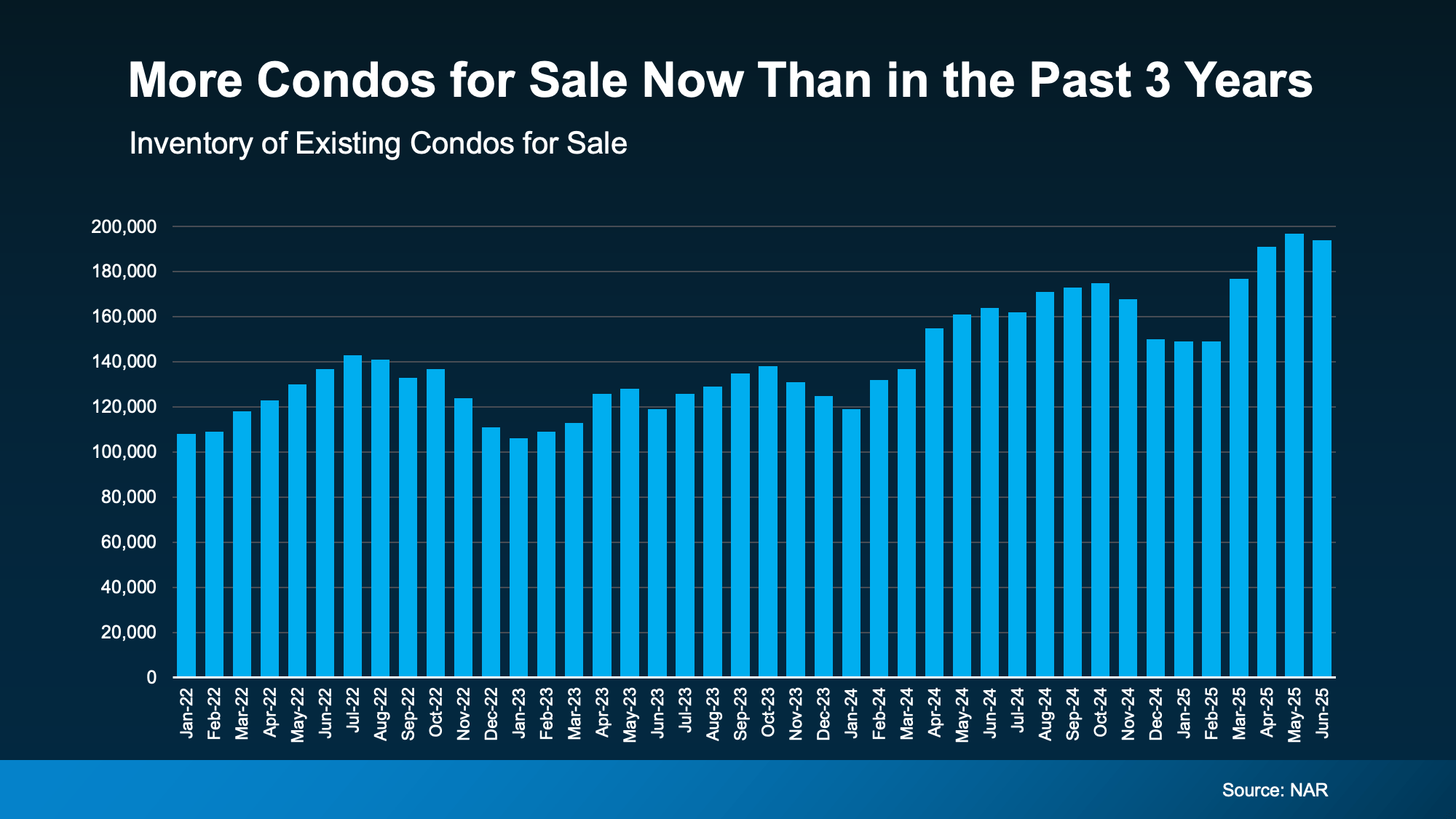
Just remember, this is the national figure. The exact number is going to vary based on where you’re looking to buy. But, generally speaking, you have more options and less competition. In Ann Arbor right now, there are 140 condos for sale ranging in price from $174,900-$2,950,000 with a median price of $399,950, and an average of 85 days on the market. 25 of these units are new construction that range from $501,863-$2,858,000. If you’re looking for a good value, an existing condo in Ann Arbor is your best bet. See all Ann Arbor Condos currently for sale
You’re not stuck waiting for something to pop up or rushing into an offer just to beat someone else to it. You’ve got plenty to choose from. And if you’re particular about layout, location, or amenities, this is your chance to be selective. See Ann Arbor complex details
That’s a big shift from the market frenzy of just a few years ago. Compared to early 2022, we’ve got nearly double the condos available now. That gives you more breathing room to find the right fit.
Prices Are Cooling, and Buyers Hold More Negotiating Power
And since there are more for sale, many sellers are more open to negotiating right now. So, you may be able to get a better price. As Redfin explains:
“. . . condo buyers in many cities may be able to find sellers who are willing to give concessions and/or sell for less than their asking price.”
Condo prices are starting to ease in many markets. According to Intercontinental Exchange (ICE), condo prices dipped 1.3% in June compared to last year. And over half of the top 100 U.S. metros saw condo prices drop slightly year-over-year. Ann Arbor has seen a drop of 3.3% in the median price year-to-date and 1.5% decrease in the average sales price.
Data from Redfin shows what the recent dip in prices looks like (see graph below):
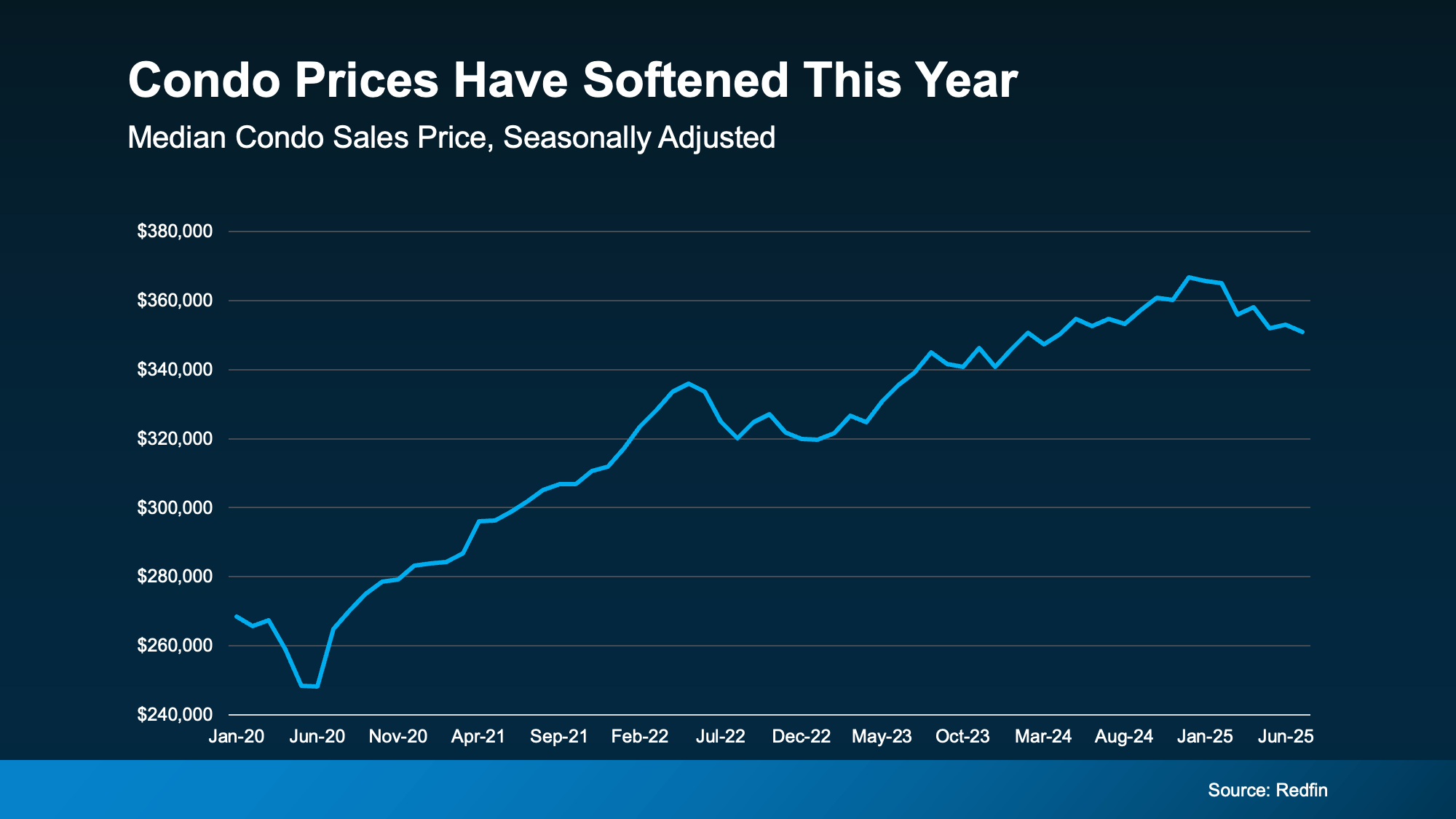 That doesn’t just help with affordability, it also shifts the power dynamic. Condo buyers in many markets are now in a position to negotiate on price and ask for concessions, like help with closing costs.
Bottom Line
Condos aren’t just a fallback option. In today’s market, they’re one of the most strategic ways to buy. With more options, softening prices, and more room to negotiate, now could be the right time to make your move.
Could a condo check more boxes than you expected? Let’s talk through your options and find out. Contact us today at The Bouma Group, Realtors at 734-761-3060 or info@condohotline.com.
What Is Pop-Up Tax? A Guide for Homebuyers in Ann Arbor
A Buyer’s Guide to Pop-up Tax

When buying a home or condo in Ann Arbor, there’s a term that often catches homebuyers, particularly first-time buyers, off guard: the pop-up tax. This little-known factor can have a significant impact on your property tax bill after closing. But what is it, exactly, and how does it work? More importantly, how can you prepare for it?
This guide will explain the concept of pop-up tax, clarify how it affects your property taxes, and provide tips for navigating this cost so you can approach your home purchase with confidence.
What Is Pop-Up Tax?
The pop-up tax is a term used to describe the increase in property tax assessments that occurs when a property changes ownership. Under Michigan law, the taxable value of a home or condo—used to calculate property taxes—remains capped while the same owner holds the title. This means the property taxes typically increase only slightly each year due to limits set by the state.
However, when a property is sold, this cap is removed, and the taxable value is “uncapped,” triggering a reassessment. The property’s taxable value is reset to match its state equalized value (SEV), which is typically about 50% of the property’s market value. This reassessment can result in a significant jump in property taxes, hence the colloquial name “pop-up tax.”
For example, if the previous homeowner’s taxable value was $125,000 but the state equalized value after the sale is $200,000, your taxable value as the new owner will “pop up” to the higher figure. Consequently, your property tax bill will also spike.
How Does the Pop-Up Tax Work?
To understand the pop-up tax in practice, it’s essential to differentiate between two figures:
- Taxable Value – This is the value used to calculate your property taxes. For continuing homeowners, it increases annually at the rate of inflation or 5%, whichever is lower, thanks to Michigan’s property tax cap (Proposal A).
- State Equalized Value (SEV) – This is an estimate of 50% of your home’s market value, determined by local assessors. SEV fluctuates with the property’s appraised market value.
When a property changes hands, the taxable value is uncapped and reset to the SEV. Property taxes are then recalculated based on the new taxable value. Depending on how long the previous owner held the property—and how dramatically property values have risen in the area—the difference between the old and new taxable value can be substantial.
Example Scenario:
Imagine you’re buying a condo in Ann Arbor:
- The seller purchased the property 15 years ago for $150,000. Over time, with Michigan’s tax cap, their taxable value crept up to $100,000.
- You’re purchasing the condo today for $300,000. The SEV would be half of that, or $150,000. Now that the taxable value is uncapped, it will rise to $150,000.
- If the local property tax rate is 2%, your annual taxes increase from $2,000 (2% of $100,000) to $3,000 (2% of $150,000), meaning you’re paying $1,000 more each year.
The key takeaway here? Even if the previous owner’s property taxes seemed affordable, they may not reflect what you’ll pay after buying the home.
What Makes Ann Arbor Unique?
Ann Arbor’s dynamic real estate market plays a big role in the impact of pop-up taxes. With a mix of high-demand areas and steadily increasing property values, SEVs (and consequently property taxes) can rise dramatically over time. Homes owned for many years may have taxable values well below their market values, leading to a more significant adjustment when ownership changes.
It’s also worth noting that millage rates—or local tax rates—add to this. Ann Arbor has a variety of millages supporting schools, parks, and local services that contribute to the city’s thriving community but also increase property tax obligations compared to surrounding areas.
For new homeowners, this means it’s especially important to account for the potential tax adjustment when determining your budget.
How Can Buyers Prepare for the Pop-Up Tax?
Understanding and planning for the pop-up tax can save you from unwelcome surprises after closing. Here are some practical tips:
1. Estimate Your Adjusted Property Taxes
Before committing to a purchase, use the home’s SEV to estimate what your property taxes will look like after the sale. The easiest way to find this value is through the local assessor’s website or by contacting their office directly. Multiply the SEV by two to approximate the home’s market value, then apply the local millage rate to calculate your potential tax bill.
2. Use Online Tax Estimation Tools
Many municipalities, including those in Washtenaw County, provide online property tax calculators. These tools can help you determine your estimated tax liability based on the property’s sale price and applicable millages.
3. Talk to Your Realtor
Working with an experienced realtor in Ann Arbor ensures you’re not navigating these complexities alone. A local real estate agent can provide detailed tax insights for specific neighborhoods and recent properties they’ve sold.
4. Include Taxes in Your Budget
When calculating your monthly housing costs, be sure to include the adjusted property tax estimate along with mortgage payments, homeowners’ insurance, utilities, and association dues (if applicable). This full financial picture will prevent you from overextending your budget.
5. Appeal Your SEV if Necessary
If you believe the assessor overestimates your property’s market value after the sale, you have the right to appeal the new SEV. Consult the city or county guidelines for filing an appeal, and be prepared to submit supporting documentation.
Resources for Ann Arbor Homebuyers
Navigating property taxes can be daunting, but there are plenty of resources available to help:
- City of Ann Arbor Assessor’s Office – Provides property records, tax rates, and guidance for tax-related questions.
- Washtenaw County Website – Offers access to property tax calculators and assessor information.
- Michigan State Tax Commission – Publishes detailed guides on property taxes, SEVs, and appeals processes.
- Local Realtors – Many agents specialize in helping buyers understand pop-up taxes and other costs unique to the area.
Additionally, consider attending local homebuyer workshops or consulting with a real estate attorney for a deeper understanding of the process.
Final Thoughts
The pop-up tax may not sound like the most exciting part of buying a home or condo in Ann Arbor, but it’s a critical factor to plan for. By understanding how it works, estimating your property taxes, and leveraging the right resources, you can avoid any financial shocks and confidently take the next step in your homebuying journey.
Remember, buying a property is not just a financial investment—it’s a personal milestone. Preparing for the pop-up tax ensures that this moment remains as exciting and stress-free as possible. To learn more about the home buying journey and to start your, contact us at The Bouma Group today at 734-761-3060 or info@condohotline.com.
Downtown Ann Arbor Condo Market Update – Q2 2025
Second Quarter Stats for Downtown Condos

The second quarter of 2025 has brought noteworthy changes to the downtown Ann Arbor condo market, presenting both opportunities and challenges for buyers and sellers. With a sharp 90% increase in inventory, longer average Days on Market (DOM), and exciting new developments in the Kerrytown area, the market is buzzing with activity. Whether you’re looking to buy or sell, understanding these shifts and knowing how to navigate them can make all the difference.
Key Market Trends for the Second Quarter
1. Inventory Expansion
The number of active condo listings in downtown Ann Arbor surged by 90% compared to Q2 2024. Last year, only 11 units were available; this year, that number rose to 21.
For buyers, this increase means more options and stronger negotiating power. For sellers, however, it creates a more competitive environment, making pricing strategy and property presentation critical to standing out.
2. Longer Days on Market (DOM)
The average DOM for active listings has climbed to 76 days, up significantly from the 22-day average of recently sold properties. This trend suggests that higher inventory is giving buyers more time to weigh their options.
Sellers should take note: pricing accurately, investing in professional staging, and leveraging targeted marketing are key to capturing buyer interest and reducing time on the market.

N Fourth Condo building in the Kerrytown district
3. Noteworthy Sales Highlights
Despite market challenges, Q2 2025 saw some remarkable sales activity:
- A total of 19 condos were sold during the quarter.
- Ashley Terrace led the way with five sales, though all closed below their listed prices.
- The highest sale of the quarter occurred at 401 N. 4th Avenue, selling for $2.15 million—$165,000 above list price.
This shows that while competition is fierce, unique and desirable properties can still command premium prices and strong buyer interest.
4. Increase in Price Reductions
Price reductions rose by 86% in June compared to the same month in 2024. Furthermore, only 25% of condos sold above list price—a notable drop from 38% in 2024 and 66% in 2023.
For buyers, this cooling trend signals opportunities to negotiate, especially for properties that have been on the market longer or require updates. Sellers, on the other hand, must adapt with competitive pricing and appealing home presentation to attract today’s more cautious buyers.

Detroit Street Condos Under Construction in the Kerrytown District
Exciting Developments in Kerrytown
Kerrytown continues to thrive as a vibrant urban neighborhood, with two exciting new condo projects on the horizon:
- The Market Place building at 303 Detroit Street is being transformed into 14 modern condos.
- Braun Court is set to become a seven-story building featuring 36 condos.
These developments will not only add inventory but also reinforce Kerrytown’s reputation as a sought-after location for urban living.
Advice for Sellers
Adapting to the evolving market is essential for sellers. Here’s how to stay ahead:
- Price competitively: Overpricing can lead to longer DOM, which dampens buyer interest. Use real-time market data to set an accurate price.
- Invest in presentation: Professional staging can enhance your property’s appeal, showcasing its best features to potential buyers.
- Market strategically: Partner with an experienced Realtor to craft targeted marketing campaigns that highlight your property’s strengths and attract serious buyers.
Keep in mind, securing an offer within the first 7–10 days is crucial. Homes that sit on the market longer may struggle to maintain buyer interest or achieve full-price offers.
Opportunities for Buyers
For buyers, the current market offers enticing possibilities:
- More options: The expanded inventory provides a wider range of properties to choose from, with varying layouts, price points, and locations.
- Greater negotiating power: Longer DOM and increased listings give buyers leverage to negotiate favorable deals or request updates as part of the purchase.
- Act quickly for top properties: Turnkey condos in prime locations are still selling quickly, often above list price. Knowing what you want and acting decisively is key.
The Value of Expert Representation
Navigating a dynamic market requires expertise. Working with a knowledgeable Realtor can give you a significant advantage:
- In-depth market insight: Expert Realtors understand the downtown Ann Arbor and Kerrytown markets, providing the data and trends you need to make informed decisions.
- Strategic planning: Realtors help sellers position their properties for success and guide buyers toward the best opportunities and deals.
At The Bouma Group, we specialize in the downtown Ann Arbor condo market. From accurate market analysis to strategic marketing and skilled negotiation, we provide the tools and expertise you need to achieve your goals.
Looking Ahead
Whether you’re preparing to sell or exploring buying opportunities, staying informed about Ann Arbor’s shifting condo market is essential. With more inventory, new developments, and changing buyer behavior, the landscape is evolving rapidly. With the right strategies and expert guidance, you can seize these opportunities and succeed in Q2 2025 and beyond.
When you’re ready to make your move, reach out to The Bouma Group for personalized support. We’re here to help you navigate every step of your condo journey.
Now is the perfect time to take advantage of the downtown Ann Arbor market—connect with us today at 734-761-3060 or info@condohotline.com!
Mastering the Ann Arbor Condo Market: Seller Strategies for 2025
Ann Arbor Condo Seller Strategies to Use Now
The Ann Arbor condo market, once a hotbed of activity, has entered a phase of transformation. Sellers are navigating a more nuanced landscape shaped by changing buyer behavior, economic pressures, and evolving priorities. If you’re looking to sell your condo in 2025, understanding these challenges—and knowing how to tackle them—can make all the difference. Here, we’ll break down the key hurdles sellers are facing and share actionable seller strategies to help you succeed in today’s shifting market.

Challenge #1: Cooling Market & Price Reductions
The Ann Arbor condo market has slowed after years of rapid growth. Elevated interest rates, currently between 6–7%, have increased borrowing costs, limiting buyer budgets and dampening demand. At the same time, new developments, particularly around campus, have driven a rise in inventory—June 2025 listings are up about 14.5% compared to the same time last year. The rise of student apartments, combined with the above factors, have slowed the purchasing of condos by parents for their college students.
This combination of factors is leading many sellers to reduce prices to attract buyers in a competitive market.
How to Tackle This
- Price Strategically: Start with a realistic comparison of recent sales in your neighborhood to set a competitive price. Buyers are hyper-aware of value in the current climate, so pricing right from the beginning can reduce the need for reductions later on.
- Leverage Expertise: Work with a reliable real estate agent who understands Ann Arbor’s micro-markets. They can guide you on pricing trends and help maximize your condo’s appeal.
Challenge #2: Longer Time on Market
Gone are the days when condos would sell within hours of listing. Today, properties are sitting longer as buyers take their time exploring their options. With more inventory available, buyers feel less urgency to make impulsive offers. Active listings in Ann Arbor are averaging 76 days on market, compared with 22 days this spring.
How to Tackle This
- Stand Out With Staging: A well-staged condo can leave a lasting impression. Modern, inviting spaces that appeal to buyer preferences—such as neutral tones, tidy layouts, and up-to-date fixtures—can make your property shine.
- Invest in Marketing: Professional photography and a strong online presence are crucial for grabbing attention. Aggressive, tailored marketing campaigns can also help set your listing apart from the competition.
Challenge #3: Affordability and Economic Pressure
High interest rates aren’t the only financial hurdle in Ann Arbor. The city’s property taxes remain a significant factor for buyers. Combined with economic uncertainty, these costs are pushing many buyers to prioritize affordability, even at the expense of luxury features.
How to Tackle This
- Highlight Cost-Saving Features: Showcase aspects of your condo that reduce long-term expenses, such as energy-efficient appliances or updated insulation. Small upgrades like thesecan appeal to budget-conscious buyers.
- Stay Flexible: Be prepared for negotiations, whether it’s adjusting your price or offering concessions like covering part of the buyer’s closing costs. Flexibility communicates a willingness to work with potential buyers, which can help move a sale forward.
Challenge #4: Michigan-Specific Disincentives
Michigan sellers face unique financial hurdles, including the state’s “pop-up” tax policy. This rule reassesses property taxes at the time of sale, often resulting in a steep increase for new buyers. This may influence a buyer’s offer and negotiations, possibly affecting the seller’s final sale price. Additionally, Realtor commissions in Ann Arbor can eat into sellers’ profits.
How to Tackle This
- Plan for Tax Impacts: Consult with a local real estate expert to fully understand how taxes might affect your sale. Timing can be crucial—it might make sense to sell during periods of peak buyer interest when competition intensifies.
- Maximize Your Proceeds: Every dollar counts when dealing with costs like commissions. Skilled agents can help position your home to sell faster and at a better price, mitigating these concerns.
Challenge #5: Shifting Buyer Priorities
Today’s buyers are putting an emphasis on turnkey properties. Features like flexible layouts, modern finishes, and energy efficiency are top of mind. Condos that require updates or renovations are often overlooked in favor of move-in-ready homes.
How to Tackle This
- Upgrade Strategically: Focus on affordable yet impactful updates, such as modern lighting, fresh paint, or stainless-steel appliances. Even small changes can enhance buyer interest.
- Highlight Walkability: Proximity to walkable amenities, such as restaurants, retail spaces, and parks, remains a key driver in Ann Arbor. Play up these features in your listing and marketing efforts.
Final Thoughts
The Ann Arbor condo market in 2025 is complex, but it’s not without opportunity. Sellers willing to approach this evolving landscape with strategy, flexibility, and the guidance of local experts can still achieve success. Understanding the factors shaping the market—rising inventory, shifting buyer preferences, and financial hurdles—will help you prepare and adapt.
Whether it’s pricing competitively, staging effectively, or upgrading intelligently, taking deliberate action using these seller strategies is key to standing out in this highly selective market. Partnering with professionals who understand Ann Arbor’s real estate dynamics can also make the process less daunting and more rewarding. Remember, with the right focus and adaptability, the right buyer is out there for your condo.
Looking to list your Ann Arbor condo? The Bouma Group is here to help you succeed every step of the way. Reach out today for advice tailored to your specific goals at 734-761-3060 or info@condohotline.com.