
What Should You Know About Condo Inspections in Ann Arbor?
Quick answer: A condo inspection in Ann Arbor evaluates the unit’s interior systems, including electrical, plumbing, HVAC, and structural elements. It excludes exterior building components typically maintained by the HOA. Buyers should always get one to avoid costly surprises, while sellers benefit from pre-listing inspections that build buyer confidence and speed up closings. Reviewing HOA documents and reserve funds alongside the inspection gives you the full picture of a condo’s true condition.
Buying or selling a condo in Ann Arbor comes with its own unique rhythm compared to single-family homes. You’re not just evaluating four walls and a roof; you’re stepping into a shared community with collective responsibilities, shared amenities, and a homeowners association that plays a significant role in your day-to-day living experience. That’s why condo inspections matter so much, yet they’re often misunderstood or overlooked entirely.
Whether you’re eyeing a stylish loft near Kerrytown or a low-maintenance unit near campus, understanding what a condo inspection covers can help you avoid unpleasant surprises down the road. This guide outlines everything Ann Arbor condo buyers and sellers need to know, including a few often-overlooked details: HOA documents, reserve funds, and how Michigan’s condo laws shape the entire process.

Why Should a Buyer Get a Condo Inspection?
A condo inspection gives buyers a clear, professional assessment of a unit’s actual condition before closing. Even a beautifully staged unit can hide plumbing issues, electrical quirks, or HVAC systems nearing the end of their lifespan.
For Ann Arbor buyers specifically, inspections matter because some older condo buildings, especially those in historic areas like the Old West Side or converted buildings downtown, may have older infrastructure. An inspection helps you:
- Avoid costly surprises: Identifying issues before closing means you can negotiate repairs or price adjustments rather than footing the bill after you’ve already signed.
- Gain negotiating leverage: A detailed inspection report gives you concrete data to request credits or repairs from the seller.
- Protect your investment: Condos are a significant financial commitment. An inspection confirms you’re paying a fair price for the unit’s actual condition, not just its curb appeal.
- Understand ongoing maintenance needs: Knowing what’s aging or nearing replacement helps you budget for future repairs.
Skipping this step is one of the most common mistakes a condo buyer can make.
What Does a Condo Inspector Actually Look For?
A condo inspector focuses primarily on the interior of the unit, since exterior structures and common areas typically fall under the HOA’s maintenance responsibilities. During a standard inspection, expect the inspector to evaluate:
Interior Systems and Structure
- Electrical systems: Outlets, wiring, panel condition, and code compliance.
- Plumbing: Water pressure, pipe condition, signs of leaks, and water heater functionality.
- HVAC systems: Furnace and air conditioning performance, age, and maintenance history.
- Structural elements: Walls, ceilings, and flooring for signs of damage, settling, or water intrusion.
Safety and Function
- Smoke and carbon monoxide detectors
- Windows and doors for proper sealing and function
- Signs of mold, pest activity, or moisture damage
- Kitchen and bathroom fixtures and appliances
What’s Typically Excluded
Unlike a single-family home inspection, a condo inspection generally won’t cover the roof, exterior siding, shared hallways, elevators, or landscaping. These fall under the HOA’s purview and are usually addressed separately through HOA maintenance records and reserve fund reports.
How Does a Condo Inspection Benefit Buyers?
Beyond simply identifying problems, a condo inspection gives Ann Arbor buyers real peace of mind. Here’s what that looks like in practice:
- Informed decision-making: You’ll know exactly what you’re buying before you commit, reducing buyer’s remorse.
- Financial protection: Catching issues early prevents unexpected repair costs after move-in.
- Stronger negotiating position: Inspection findings often translate into price reductions, repair credits, or seller-funded fixes.
- Confidence in your purchase: Especially for first-time condo buyers, an inspection report demystifies the condition of the property and builds confidence in the final decision.
How Does a Condo Inspection Benefit Sellers?
Sellers often overlook the value of a pre-listing inspection, but it can be one of the smartest moves in a competitive Ann Arbor market. Consider these advantages:
- Faster closings: Addressing issues before listing reduces the chance of last-minute negotiations derailing your sale.
- Increased buyer confidence: A clean inspection report (or one paired with completed repairs) reassures buyers and can lead to stronger offers.
- Fewer surprises during buyer inspections: Knowing what a buyer’s inspector will find allows you to address issues on your terms and timeline, rather than reactively.
- Potential for a smoother sale price: Units with documented, resolved issues tend to sell closer to asking price than those with unresolved inspection findings that emerge mid-negotiation.
For sellers preparing to list, working with a knowledgeable Realtor who understands Ann Arbor’s condo market can help you decide whether a pre-listing inspection makes sense for your specific building and situation.
How Is a Condo Inspection Different From a Home Inspection?
While both inspections aim to assess a property’s condition, condo inspections differ from single-family home inspections in a few key ways:
|
Aspect |
Condo Inspection |
Home Inspection |
|---|---|---|
|
Scope |
Interior unit only |
Entire property, including exterior |
|
Roof & Exterior |
Excluded (HOA responsibility) |
Included |
|
Shared Systems |
Not typically inspected |
N/A |
|
HOA Documents |
Reviewed separately |
Not applicable |
|
Common Areas |
Assessed through HOA records, not physical inspection |
N/A |
Choose a condo-specific inspector if the property is part of an HOA-managed building, since they’ll understand which elements fall outside their scope and can direct you toward reviewing the right HOA documentation instead.
What Else Should Buyers and Sellers Consider?
A physical inspection only tells part of the story. To fully understand a condo’s condition and financial health, buyers and sellers alike should also pay attention to:
Reviewing HOA Documents
HOA documents reveal a building’s financial stability, rules, and any pending litigation or special assessments. Request meeting minutes, budgets, and bylaws before finalizing a purchase; these documents often reveal issues that a physical inspection simply can’t detect.
Understanding Reserve Funds
A condo association’s reserve fund covers major future repairs, like roof replacements or elevator upgrades. A poorly funded reserve can mean higher HOA fees or unexpected special assessments down the road. Ask for the most recent reserve study to see whether the fund is adequately prepared for upcoming expenses.
Common Area Responsibilities
Understand what the HOA maintains versus what falls on individual owners. This distinction affects both your inspection scope and your long-term maintenance budget.
Michigan-Specific Condo Laws
Michigan’s Condominium Act (MCL 559.101 et seq.) governs how associations operate, including disclosure requirements sellers must follow. Buyers should ask whether the association has provided a disclosure statement as required under Michigan law, since this document often includes financial and legal details relevant to your decision.
Ready to Move Forward With Confidence?
Condo inspections in Ann Arbor go beyond a simple checklist. They’re about understanding not just the unit itself, but the community and financial structure behind it. Buyers who combine a thorough inspection with careful review of HOA documents and reserve funds walk into their purchase with clarity and confidence. Sellers who prepare ahead of time position their condo for a smoother, faster, more profitable sale.
If you’re navigating a condo purchase or sale in Ann Arbor, partnering with the right Realtor makes all the difference. The Bouma Group, Realtors, are Ann Arbor’s condo experts who are known for selling more condos in Ann Arbor than anyone else. Reach out today at 734-761-3060 or info@condohotline.com, and let’s make sure your next move is backed by the right information and expert guidance every step of the way.
Frequently Asked Questions
Do I need a special inspector for a condo, or can I use a regular home inspector?
Look for an inspector with condo experience specifically, since they’ll understand the limited scope of what’s covered, interior systems only, and won’t waste time (or your money) evaluating exterior elements maintained by the HOA.
How much does a condo inspection cost in Ann Arbor?
Condo inspections generally cost less than full home inspections since they cover a smaller scope, though exact pricing varies by inspector and unit size. Contact a local inspector for a quote specific to your property. Call us for a list of our favorites!
Can a condo sale fall through because of inspection findings?
Yes. Significant issues uncovered during an inspection can lead buyers to renegotiate, request repairs, or walk away entirely. Pre-listing inspections benefit sellers because they reduce the chance of surprises derailing a deal.
What’s the difference between HOA fees and reserve funds?
HOA fees cover day-to-day operating costs like landscaping and staffing, while reserve funds are set aside specifically for major future repairs, such as roof replacements or structural upgrades.
Are sellers in Michigan required to disclose known issues with a condo?
Yes. Michigan law requires sellers to provide certain disclosures, and condo associations may also need to share financial and legal documents under the Michigan Condominium Act. Buyers should request these documents early in the process.
What is Earnest Money? A Condo Buyer’s Guide
What is Earnest Money and Why Do I Need It?
You have finally found the perfect property after weeks of searching. The location is ideal, the amenities match your lifestyle, and you are ready to make an offer. As you sit down to draft the purchase agreement, your real estate agent mentions you need to provide an earnest money deposit. If this is your first time navigating the home-buying process, you might feel slightly overwhelmed.
Purchasing a condo involves navigating a maze of new terms and financial requirements. Earnest money is one of the first and most critical components of your real estate transaction. It shows the seller you are a serious buyer and helps secure your offer.
In this insightful guide, we will break down exactly what earnest money is, why you need it, and how to protect your funds. You will learn how much you should expect to pay, under what conditions you can get your money back, and how these funds apply to your final closing costs.

What Exactly is Earnest Money?
At its core, earnest money is a “good faith” deposit you make when signing a purchase agreement. When you submit an offer on a condo, this deposit proves to the seller that you are genuinely interested in buying the property.
Think of it as a security deposit for purchasing a home. When a seller accepts your offer, they must take their property off the market. This creates a period of risk for the seller. If you suddenly decide to walk away from the deal simply because you changed your mind, the seller loses valuable time and potential other buyers. Your earnest money provides them with financial reassurance.
Once you and the seller sign the contract, you do not hand this money directly to the seller. Instead, you deposit the funds into a secure escrow account managed by a neutral third party, such as a title company or real estate brokerage. The money stays in this account until the sale finalizes.
Why Do I Need Earnest Money for a Condo Purchase?
If you want to secure your dream condo in a competitive market, an earnest money deposit is practically mandatory. While the law rarely requires it, sellers will almost never accept an offer without one.
Here are the primary reasons you need to provide an earnest money deposit:
It Makes Your Offer Competitive
A strong earnest money deposit helps your offer stand out. If a seller receives multiple offers with similar purchase prices, they will look at the terms. A buyer offering a larger good faith deposit appears more financially stable and committed to the purchase.
It Protects the Seller
As mentioned, sellers take a significant risk when they accept an offer. They halt their marketing efforts and stop showing the condo to other potential buyers. If the deal falls through without a valid contractual reason, the seller keeps the earnest money as compensation for their lost time and effort.
It Keeps the Transaction Moving
Putting your own cash on the line creates a strong incentive to complete your financing applications, schedule your inspections, and follow through on the purchase timeline. It ensures a seamless progression from the accepted offer to the closing table.
How Much Earnest Money is Typical?
The amount of earnest money you need to put down varies depending on the local real estate market, the condition of the property, and the overall purchase price.
Generally, you can expect to pay between 1% and 3% of the total purchase price. For example, if you are purchasing a $400,000 condo, your deposit would typically range from $4,000 to $12,000.
However, in highly competitive markets where multiple buyers are bidding on the same properties, buyers often increase their earnest money to 5% or even 10% to make their offer more attractive. A higher deposit signals strong financial health and firm intent. Your Realtor can provide expert market insights to help you determine the exact amount that makes sense for your specific situation.
Is My Earnest Money Deposit Refundable?
One of the biggest concerns buyers have is whether they can lose their deposit. Fortunately, standard real estate contracts include built-in protections called contingencies. These contingencies outline specific conditions that must be met for the transaction to proceed. If a condition fails, you can back out of the deal and receive a full refund of your earnest money.
Here are the most common contingencies that protect your deposit:
The Home Inspection Contingency
Even if a condo looks perfect during a virtual tour or an in-person visit, hidden issues might exist. The inspection contingency gives you a specific window of time to hire a professional to evaluate the property. If the inspector finds significant structural issues, plumbing problems, or electrical faults, you can ask the seller to make repairs. If the seller refuses, you can cancel the contract and get your deposit back.
The Financing Contingency
Unless you are paying in cash, you will need to secure a mortgage. The financing contingency protects you if your lender ultimately denies your loan application. Even with a pre-approval letter, your final financing depends on various factors, including a final review of your credit and income. If you cannot secure financing within the agreed-upon timeframe, your earnest money remains safe.
The Appraisal Contingency
Lenders require an appraisal to ensure the condo is worth the amount you agreed to pay. If you offer $350,000 but the appraiser determines the market value is only $320,000, the lender will not finance the full amount. A comparative market analysis early in the process helps predict this, but if a low appraisal happens, you can renegotiate the price or walk away with your deposit intact.
The Condo Association Document Review
When buying a condo, you are also buying into a community governed by a Homeowners Association (HOA). You typically have a contingency period to review the association’s bylaws, financial health, and community rules. If you discover the association has massive debt, pending lawsuits, or restrictive rules that you cannot live with, you can withdraw your offer and retain your earnest money.
What Happens to the Earnest Money at Closing?
Your earnest money does not just disappear, and it is not an extra fee paid on top of your purchase price. When you reach the closing table, the funds held in the escrow account are applied directly toward your final financial obligations.
Usually, the title company applies the earnest money to your down payment or your closing costs. For instance, if you provided a $5,000 earnest money deposit and your total down payment is $40,000, you will only need to bring $35,000 to closing. It acts as an early, accessible installment toward your new home.
Common Earnest Money Mistakes to Avoid
Navigating the real estate market requires sharp attention to detail. Avoid these common pitfalls to keep your deposit safe:
- Waiving Contingencies Blindly: In a hot market, you might feel tempted to waive your inspection or financing contingencies to win a bidding war. Do this only under expert Realtor guidance, as waiving these protections means you could lose your deposit if something goes wrong.
- Missing Contract Deadlines: Purchase agreements include strict timelines for inspections, appraisals, and financing approvals. If you miss a deadline and try to back out later, the seller has the right to keep your money.
- Giving Money Directly to the Seller: Never hand a personal check or cash directly to the seller. Always ensure your funds go to a verified escrow account managed by a reputable third party.
- Making Emotional Decisions: Always rely on comparative market data rather than emotion when deciding how much earnest money to offer.
Frequently Asked Questions
What happens if the seller backs out of the contract?
If the seller decides to cancel the sale for a reason not covered in the contract, you will receive a full refund of your earnest money. In some cases, you may also have legal grounds to sue the seller for breach of contract.
Can I use a credit card for earnest money?
Typically, no. Title companies and brokerages usually require a certified check, a personal check, or a wire transfer to accept earnest money deposits.
How long does it take to get earnest money back if a deal falls through?
If you back out for a valid reason covered by a contingency, both you and the seller must sign a release form. Once signed, the escrow holder usually returns the funds within a few business days.
Is an earnest money deposit the same as a down payment?
No. Earnest money is an upfront deposit to show good faith when making an offer. A down payment is the total cash amount you pay toward the property’s purchase price at closing. However, your earnest money is usually applied toward your down payment when the sale finalizes.
Secure Your Ideal Condo with Confidence
Understanding how earnest money works is a crucial step in your condo purchasing journey. It empowers you to make strong, competitive offers while ensuring your hard-earned savings remain protected by the right contract contingencies.
You do not have to navigate the complex world of real estate alone. Expert Realtor guidance makes all the difference when drafting purchase agreements, negotiating terms, and exploring accessible financing options.
If you are looking to explore vibrant condos in the Ann Arbor area and want a seamless buying experience, our team is ready to help you every step of the way. Contact us at The Bouma Group, Realtors today at 734-761-3060 or info@condohotline.com to start your journey toward your perfect place.
Mortgage Rates Just Saw Their Biggest Drop in a Year

You’ve been waiting for what feels like forever for mortgage rates to finally budge. And last week, they did – in a big way.
On Friday, September 5th, the average 30-year fixed mortgage rate fell to the lowest level since October 2024. It was the biggest one-day decline in over a year.
What Sparked the Drop?
According to Mortgage News Daily, this was a reaction to the August jobs report, which came out weaker-than-expected for a second month in a row. That sent signals across the financial markets, and then mortgage rates came down as a result.
Basically, we’re seeing signs the economy may be slowing down, and as certainty grows in the direction the economy is going, the markets are reacting to what is likely ahead. That historically brings mortgage rates down.
Why Buyers Should Pay Attention Now
But this isn’t just about one day of headlines or one report. It’s about what the drop means for you.
This recent change saves you money when you buy a home or condo. The chart below shows you an example of what a monthly mortgage payment (principal and interest) would be at 7% (where mortgage rates were in May) versus where rates roughly are now:
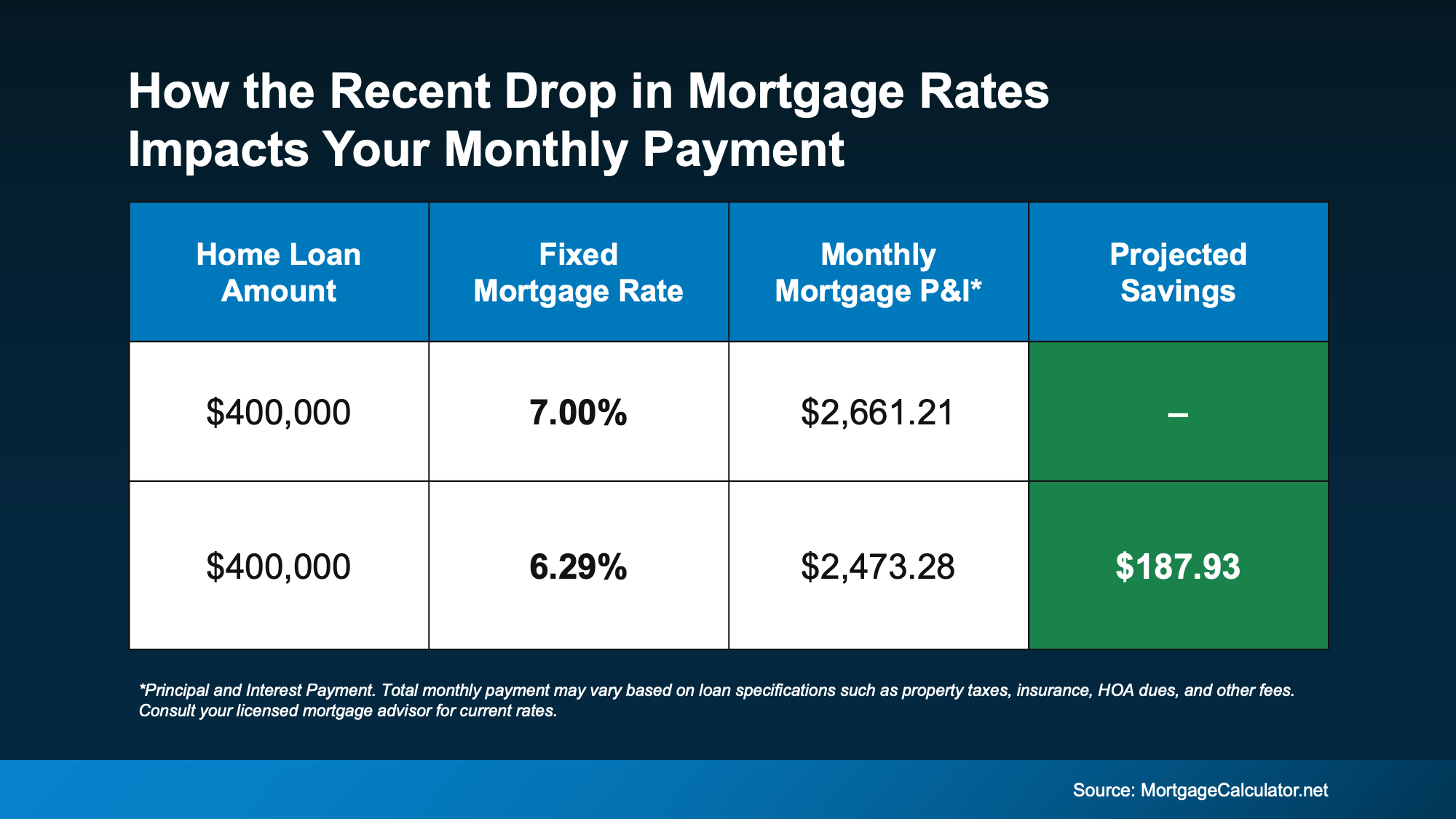
Compared to just 4 months ago, your future monthly payment would be almost $200 less per month. That’s close to $2,400 a year in savings.
How Long Will It Last?
That really depends on where the economy and inflation go from here. Rates could drop lower, or they could inch up slightly.
So, make sure you’re connected with a good agent and trusted lender. We keep a close eye on inflation indicators, job market updates, and reactions to upcoming Fed policy to gauge where mortgage rates may go from here.
But for now, focus on this. While no one can say for sure where rates are headed, the fact that rates broke out of their months-long rut is a good thing. If you’ve been feeling stuck, this could make the start of a new chapter. As Diana Olick, Senior Real Estate and Climate Correspondent at CNBC, says:
“Rates are finally breaking out of the high 6% range, where they’ve been stuck for months.”
And that’s gives you more reason to hope than you’ve had in quite some time.
Bottom Line
This is the shift you’ve been waiting for.
Mortgage rates just saw their biggest decline in over a year. And if rates stay near this level, it could make a home or condo you couldn’t afford just a few months ago feel possible again.
What would today’s rates save you on your future monthly payment? Let’s connect so you can find out. Contact us today at The Bouma Group, Realtors at 734-761-3060 or info@condohotline.com and we’ll make a plan together. See what condo communities Ann Arbor has to offer and start dreaming about your new home!
Are Higher Mortgage Rates Here To Stay?
Higher Mortgage Rates Are Affecting Purchase Power

Mortgage rates have been back on the rise recently and that’s getting a lot of attention from the press. If you’ve been following the headlines, you may have even seen rates recently reached their highest level in over two decades (see graph below):

That can feel like a little bit of a gut punch if you’re thinking about making a move. If you’re wondering whether or not you should delay your plans, here’s what you really need to know.
How Higher Mortgage Rates Impact You
There’s no denying rates are higher right now than they were in recent years. And, when rates are up, that affects overall home affordability. It works like this. The higher the rate, the more expensive it is to borrow money when you buy a home. That’s because, as rates trend up, your monthly mortgage payment for your future home loan also increases.
Urban Institute explains how this is impacting buyers and sellers right now:
“When mortgage rates go up, monthly housing payments on new purchases also increase. For potential buyers, increased monthly payments can reduce the share of available affordable homes . . . Additionally, higher interest rates mean fewer homes on the market, as existing homeowners have an incentive to hold on to their home to keep their low interest rate.”
Basically, some people are deciding to put their plans on hold because of where mortgage rates are right now. But what you want to know is: is that a good strategy?
Where Will Mortgage Rates Go From Here?
If you’re eager for rates to drop, you’re not alone. A lot of people are waiting for that to happen. But here’s the thing. No one knows when it will. Even the experts can’t say with certainty what’s going to happen next.
Forecasts project rates will fall in the months ahead, but what the latest data says is that rates have been climbing lately. This disconnect shows just how tricky mortgage rates are to project.
The best advice for your move is this: don’t try to control what you can’t control. This includes trying to time the market or guess what the future holds for mortgage rates. As CBS News states:
“If you’re in the market for a new home, experts typically recommend focusing your search on the right home purchase — not the interest rate environment.”
Instead, work on building a team of skilled professionals, including a trusted lender and real estate agent, who can explain what’s happening in the market and what it means for you. If you need to move because you’re changing jobs, want to be closer to family, or are in the middle of another big life change, the right team can help you achieve your goal, even now.
Bottom Line
The best advice for your move is: don’t try to control what you can’t control – especially mortgage rates. Even the experts can’t say for certain where they’ll go from here. Instead, focus on building a team of trusted professionals who can keep you informed. When you’re ready to get the process started, let’s connect today at 734-761-3060 or info@condohotline.com.
Mortgage Rates Are Dropping. What Does That Mean for You?
Mortgage Rates Are Dropping. What Does That Mean for You?

Mortgage rates have been a hot topic in the housing market over the past 12 months. Compared to the beginning of 2022, rates have risen dramatically. Now they’re dropping, and that has to do with everything happening in the economy.
Nadia Evangelou, Senior Economist and Director of Forecasting at the National Association of Realtors (NAR), explains it well by saying:
“Mortgage rates dropped even further this week as two main factors affecting today’s mortgage market became more favorable. Inflation continued to ease while the Federal Reserve switched to a smaller interest rate hike. As a result, according to Freddie Mac, the 30-year fixed mortgage rate fell to 6.31% from 6.33% the previous week.”
So, what does that mean for your homeownership plans? As mortgage rates fluctuate, they impact your purchasing power by influencing the cost of buying a home. Even a small dip can help boost your purchasing power. Here’s how it works.
The median-priced home according to the National Association of Realtors (NAR) is $379,100. So, let’s assume you want to buy a $400,000 home. If you’re trying to shop at that price point and keep your monthly payment about $2,500-2,600 or below, here’s how your purchasing power can change as mortgage rates move up or down (see chart below). The red shows payments above that threshold and the green indicates a payment within your target range.
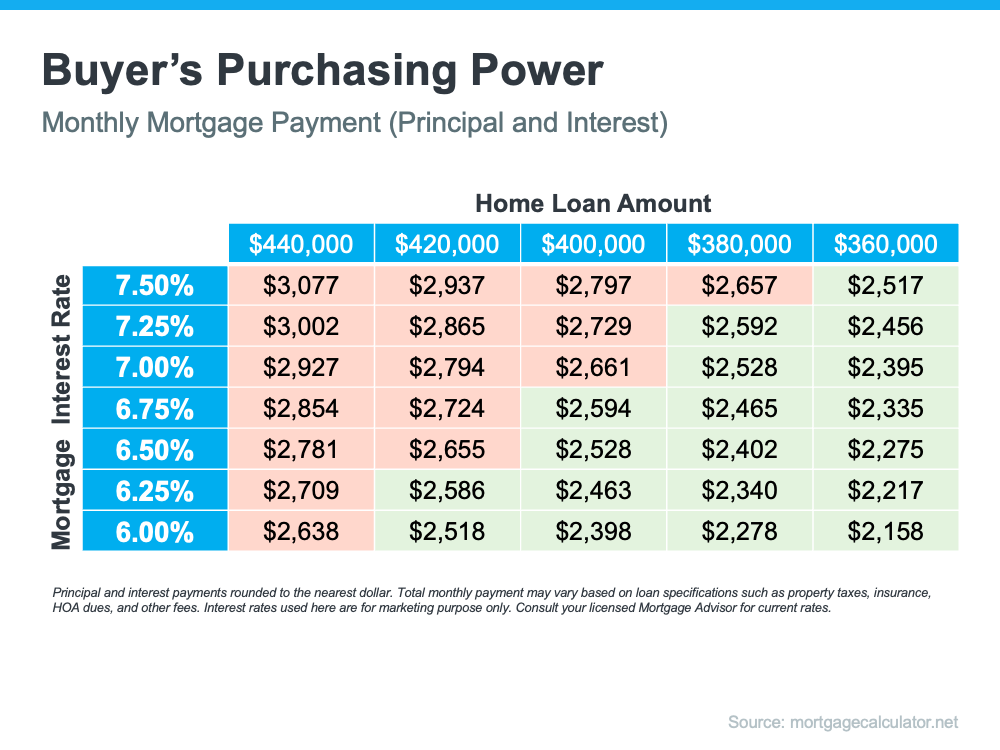
This goes to show, even a small quarter-point change in mortgage rates can impact your monthly mortgage payment. That’s why it’s important to work with a trusted real estate professional who follows what the experts are projecting for mortgage rates for the days, months, and year ahead.
Bottom Line
Mortgage rates are likely to fluctuate depending on what happens with inflation moving forward, but they have dropped slightly in recent weeks. If a 7% rate was too high for you, it may be time to contact a lender to see if the current rate is more in line with your goal for a monthly housing expense. Contact us today at 734-761-3060 to discuss your condo or home-owning plans and let our team of specialists help you achieve them! 734-761-3060 or info@condohotline.com.
How Much Do You Need for Your Down Payment?
As you set out on your home or condo buying journey, you likely have a plan in place, and you’re working on saving for your purchase. But do you know how much you actually need for your down payment?
If you think you have to put 20% down, you may have set your goal based on a common misconception. Freddie Mac says:
“The most damaging down payment myth—since it stops the homebuying process before it can start—is the belief that 20% is necessary.”
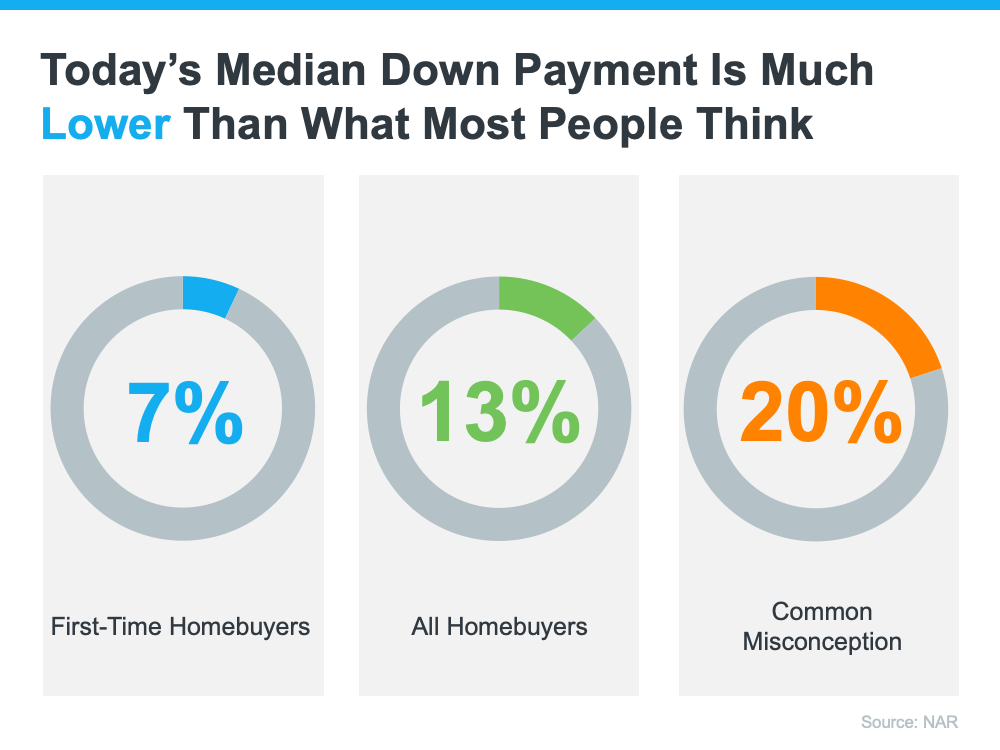
Unless specified by your loan type or lender, it’s typically not required to put 20% down. According to the Profile of Home Buyers and Sellers from the National Association of Realtors (NAR), the median down payment hasn’t been over 20% since 2005. It may sound surprising, but today, that number is only 13%. And it’s even lower for first-time homebuyers, whose median down payment is only 7% (see graph below):
What Does This Mean for You?
While a down payment of 20% or more does have benefits, the typical buyer is putting far less down. That’s good news for you because it means you could be closer to your home or condo buying dream than you realize.
If you’re interested in learning more about low down payment options, there are several places to go. There are programs for qualified buyers with down payments as low as 3.5%. There are also options like VA loans and USDA loans with no down payment requirements for qualified applicants.
To understand your options, you need to do your homework. If you’re interested in learning more about down payment assistance programs, information is available through sites like downpaymentresource.com. Be sure to also work with a real estate advisor from the start to learn what you may qualify for in the homebuying process.
Bottom Line
Remember: a 20% down payment isn’t always required. If you want to purchase a condo this year, let’s connect to start the conversation and explore your down payment options. Contact us today at 734-761-3060 or info@condohotline.com, we’re here to help!
Is Homeownership Still Considered Part of the American Dream?

Since the birth of our nation, homeownership has always been considered a major piece of the American Dream. As Frederick Peters reports in Forbes:
“The idea of a place of one’s own drives the American story. We became a nation out of a desire to slip the bonds of Europe, which was still in many respects a collection of feudal societies. Old rich families, or the church, owned all the land and, with few exceptions, everyone else was a tenant. The magic of America lay not only in its sense of opportunity, but also in the belief that life could in every way be shaped by the individual. People traveled here not just for religious freedom, but because in America anything seemed possible.”
Additionally, a research paper released just prior to the shelter-in-place orders issued last year concludes:
“Homeownership is undeniably the cornerstone of the American Dream, and is inseparable from our national ethos that, through hard work, every American should have opportunities for prosperity and success. It is the stability and wealth creation that homeownership provides that represents the primary mechanism through which many American families are able to achieve upward socioeconomic mobility and greater opportunities for their children.”
Has the past year changed the American view on homeownership?
Definitely not. A survey of prospective buyers released by realtor.com last week reveals that becoming a homeowner is still the main reason this year’s first-time buyers want to purchase a condo or home. When asked why they want to buy, three of the top four responses center on the financial benefits of owning a condo or home. The top four reasons for buying are:
- 59% – “I want to be a homeowner”
- 33% – “I want to live in a space that I can invest in improving”
- 31% – “I need more space”
- 22% – “I want to build equity”
Millennials believe most strongly in homeownership.
The survey also reports that 62% of millennials say a desire to be a homeowner is the main reason they’re buying. This contradicts the thinking of some experts who had believed millennials were going to be the first “renter generation” in our nation’s history.
While reporting on the survey, George Ratiu, Senior Economist at realtor.com, said:
“Americans, even millennials who many thought would never buy, have a strong preference for homeownership for the same reasons many generations before them have — to invest in a place of their own and in their communities, and to build a solid financial foundation for themselves and their families.”
Odeta Kushi, Deputy Chief Economist for First American, also addresses millennial homeownership:
“Millennials have delayed marriage and having children in favor of investing in education, pushing marriage and family formation to their early-to-mid thirties, compared with previous generations, who primarily made these lifestyle choices in their twenties…Delayed lifestyle choices delay the desire for homeownership.”
Kushi goes on to explain:
“As more millennials get married and form families, millennials remain poised to transform the housing market. In fact, the housing market is already experiencing the earliest gusts of the tailwind.”
Bottom Line
As it always has been and very likely always will be, homeownership continues to be a major component in every generation’s pursuit of the American Dream. Contact us today at 734-761-3060 or info@condohotline.com and we can help you find your dream condo and guide you through this market. Start your new condo search here!
What Are the Benefits of a 20% Down Payment?

If you’re thinking of buying a condo this year, you may be wondering how much money you need to come up with for your down payment. Many people may think it’s 20% of the loan to secure a mortgage. While there are plenty of lower down payment options available for qualified buyers who don’t want to put 20% down, it’s important to understand how a larger down payment can have great benefits too.
The truth is, there are many programs available that allow you to put down as little as 3.5%, which can be a huge benefit to those who want to purchase a condo sooner rather than later. Those who have served our country may also qualify for a Veterans Affairs Home Loan (VA) and may not need a down payment. These programs have really cut down the savings time for many potential buyers, enabling them to start building family wealth sooner.
Here are four reasons why putting 20% down is a good plan if you can afford it.
1. Your interest rate may be lower.
A 20% down payment vs. a 3-5% down payment shows your lender you’re more financially stable and not a large credit risk. The more confident your lender is in your credit score and your ability to pay your loan, the lower the mortgage interest rate they’ll likely be willing to give you.
2. You’ll end up paying less for your condo.
The larger your down payment, the smaller your loan amount will be for your mortgage. If you’re able to pay 20% of the cost of your new home at the start of the transaction, you’ll only pay interest on the remaining 80%. If you put down 5%, the additional 15% will be added to your loan and will accrue interest over time. This will end up costing you more over the lifetime of your home loan.
3. Your offer will stand out in a competitive market.
In a market where many buyers are competing for the same property, sellers like to see offers come in with 20% or larger down payments. The seller gains the same confidence as the lender in this scenario. You are seen as a stronger buyer with financing that’s more likely to be approved. Therefore, the deal will be more likely to go through.
4. You won’t have to pay Private Mortgage Insurance (PMI)
What is PMI? According to Freddie Mac:
“PMI is an insurance policy that protects the lender if you are unable to pay your mortgage. It’s a monthly fee, rolled into your mortgage payment, that is required for all conforming, conventional loans that have down payments less than 20%. Once you’ve built equity of 20% in your home, you can cancel your PMI and remove that expense from your mortgage payment.”
As mentioned earlier, when you put down less than 20% when buying a condo or home, your lender will see your loan as having more risk. PMI helps them recover their investment in you if you’re unable to pay your loan. This insurance isn’t required if you’re able to put down 20% or more.
Many times, sellers looking to move up to a larger or more expensive home are able to take the equity they earn from the sale of their property to put down 20% on their next. With the equity homeowners have today, it creates a great opportunity to put those savings toward a 20% or greater down payment on a new condo or home.
If you’re looking to buy your first place, you’ll want to consider the benefits of 20% down versus a smaller down payment option.
Bottom Line
If you’re thinking of buying a condo and are already saving for your down payment, let’s connect to discuss what fits best with your long-term plans. Contact us today at 734-761-3060 or info@condohotline.com.
Do You Have Enough Money Saved for a Down Payment?

One of the biggest misconceptions for first-time condo or home buyers is how much you’ll need to save for a down payment. Contrary to popular belief, you don’t always have to put 20% down to buy a condo or house. Here’s how it breaks down.
A recent survey by Point2Homes mentions that 74% of millennials (ages 25-40) say they’re interested in purchasing over the next 12 months. The study notes, “88% say they have significantly less savings than the average national down payment amount, which is $62,600.”
Thankfully, $62,600 is not the amount every buyer needs for a down payment in the United States. There are many different options available, especially for first-time buyers (millennial or not). That amount can also be significantly less, depending on the purchase price of the condo or house.
According to the National Association of Realtors (NAR), “The median existing price for all housing types in August was $310,600.” (These are the latest numbers available). NAR also indicates that:
“In 2019, the median down payment was 12 percent for all buyers, six percent for first-time buyers, and 16 percent for repeat buyers.” (See graph below):
 That means if a qualified first-time buyer purchases a home at today’s median price, $310,600, with a 6% down payment, in reality, the down payment only amounts to $18,636. That’s nowhere near $62,600.
Knowing there are also programs like FHA where the down payment can be as low as 3.5% of the purchase price for a first-time buyer, that up-front cost could be significantly less – as little as $10,871 for the same home noted above. There are also other programs like USDA and loans for Veterans that waive down payment requirements.
The Point2Homes study also shares how much millennials have indicated they’ve saved for a down payment. As we can see in the graph below, 39% have already saved enough for a down payment on a median-priced condo or home. Another 47% are close to reaching that goal, depending on the purchase price. Unfortunately, the lack of knowledge about the buying process is keeping many motivated first-time buyers on the sidelines. That’s why it’s important to contact a local real estate professional to understand the requirements in your local area if you want to buy a condo or home. A trusted agent and your lender can guide you through the process.
Bottom Line
Be careful not to let big myths about buying keep you and your family out of the housing market. Let’s connect to discuss your options today. Give us a call at The Bouma Group at 734-761-3060 or email info@condohotline.com.
Condo Buying Terminology: A Cheat Sheet
Buying a condo or home shouldn’t be rocket science. You find the perfect place, make an offer to the seller, pay a couple of fees, and bam! You just bought a home.
However, buying a condo actually has a lot of moving parts which include a number of funny real estate terms you’ve probably never heard before. Are Realtors and real estate agents even speaking English anymore?
To help you out, we’ve come up with a cheat sheet so you’ll know exactly what we are talking about when we explain the buying process.
Pre-Approval

If you meet with an agent before you begin looking for condos, they’ll likely recommend you get pre-approved for a mortgage. Mortgage pre-approval is the best first step, because it essentially sets your budget for you.
Pre-approval involves sitting down with a lender to discuss your financial portfolio. This includes your credit score, borrowing history, outstanding debts, annual income, and any assets you have. After reviewing all of this, the lender gives you an exact number: that’s how much the bank is willing to lend you.
Not only is your budget set, sellers will take you more seriously because they know you can qualify for enough loan to support your offer. (more…)