
Understanding Today’s Mortgage Rates: Is 3% Coming Back?
Are 3% Mortgage Rates Coming Back?

Many buyers are holding off on their plans these days, hoping that mortgage rates will drop – perhaps even back to the historic low of 3% from a few years ago. But here’s the thing: those rates were never meant to last. They were a short-term response to a very specific moment in time. And as the market finds its footing again, it’s time to reset expectations.
Back in 2020 and 2021, 3% mortgage rates gave buyers a serious boost: more affordability, more buying power, and more opportunity. But those rates were a result of emergency economic policies during the height of a global pandemic. Now that the economy is in a different place, we’re seeing mortgage rates in the high 6% to low 7% range.
And while experts currently project a slight easing in the months ahead, most industry leaders agree: rates are not going back to 3%.
Instead, many forecasts suggest mortgage rates will settle in the mid-6% range by the end of the year, pending any major economic shifts. As Kara Ng, Senior Economist at Zillow, says:
“While Zillow expects mortgage rates to end the year near mid-6%, barring any unforeseen shocks, that path might be bumpy.”
What Buyers Should Know
Basically, waiting for 3% rates might mean waiting longer than you’d expect – and missing out along the way. Instead of putting off homebuying indefinitely, make a plan to get there and focus on what you can control: your budget, your credit, and working with a trusted professional who can explain exactly what’s happening in the current market – and how to navigate it.
Your local real estate agent and a trusted lender make all the difference in this process. The experts have insights into down payment assistance programs, alternative financing options, negotiation strategies, and overall – the experience you need on your side to understand creative ways that will make your plans work.
And here’s the biggest thing to keep in mind. Since rates are projected to ease slightly later this year, if that happens, it could bring some more buyers back into the market. Acting now gives you a head start, especially with more homes on the market than we’ve seen in years.
Think about it: if mortgage rates do come down, what do you think everyone else is going to do? That’s right – they’ll jump back in too.
Getting ahead of that rush could put you in a stronger position to find the right home with less competition. Realtor.com sums it up well:
“Staying out of the market in hopes of a rate drop that never comes can lead to missed opportunities . . . Rising home prices, rent increases, and inflation might outpace any future savings on interest. And if rates do fall sharply again, buyers could face an entirely different challenge: surging competition.”
Bottom Line
Those 3% rates everyone remembers from a few years ago were the exception, not the rule.
Now that they’re settling into new territory, it’s a good time to adjust your expectations and learn more about where things are heading as this market shifts.
A local real estate agent and a trusted lender will be your best resources, always keeping you up-to-date and informed, so you can make sense of your options and build a game plan that works for you. See Ann Arbor Condo complexes here and start dreaming about your new home! Contact The Bouma Group today at 734-761-3060 or info@condohotline.com.
Don’t Miss Out on the Growing Number of Down Payment Assistance Programs

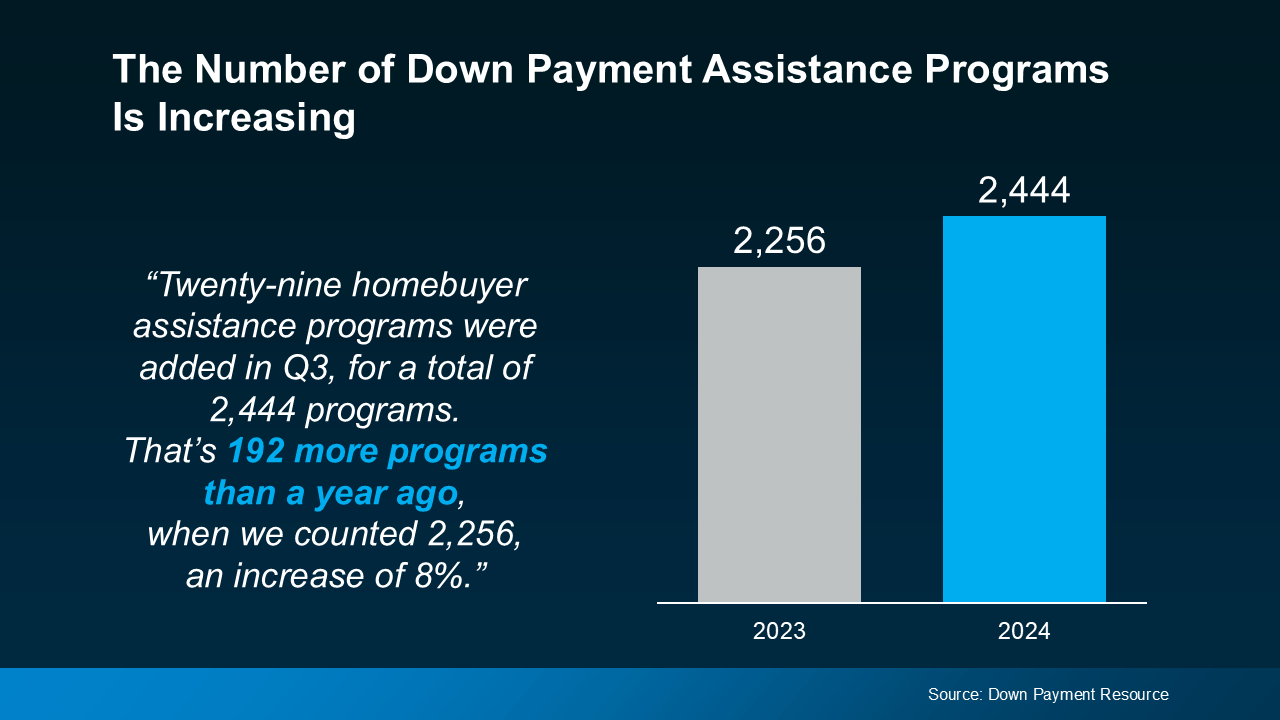
With rising home prices and volatile mortgage rates, it’s important you know about every resource that could help make buying a condo or home possible. One thing you’ll want to be aware of is how much the number of down payment assistance (DPA) programs has grown lately.
Take a look at the graph below to see how many new programs have been added in the last year, according to data from Down Payment Resource:
More Programs, More Opportunities for You
So, what does this increase mean for you? With more programs available, there’s a higher likelihood that one of them could help you reach your homeownership goals.
And these programs aren’t small-scale help either – the benefits can go a long way toward covering a chunk of your costs. As Rob Chrane, Founder and CEO of Down Payment Resource, shares:
“We are pleased to see a growing number of these programs, and think they are becoming a targeted way to help first-time and first-generation homebuyers struggling to save for a down payment get into a home they can afford. Our data shows the average DPA benefit is roughly $17,000. That can be a nice jump-start for saving for a down payment and other costs of homeownership.”
Imagine being able to qualify for $17,000 toward your down payment. That’s a big boost, especially if you’re looking to buy your first place. With that level of help, buying a condo or home may be more within reach than you think.
But it’s worth calling out that the growth in DPA options isn’t just focused on first-time and first-generation buyers. Many of the new programs are also aimed at supporting affordable housing initiatives, which include manufactured and multi-family homes. This means that more people, and a wider variety of home types, can qualify for down payment assistance. This will make it easier for you to find an option that fits your needs.
Talk to a Real Estate Expert About What’s Available for You
With so many DPA programs out there, you need to make sure you’re finding the right one for you. That’s why it’s key to lean on your real estate and lending professionals for guidance. The Mortgage Reports says:
“The best way to find down payment assistance programs for which you qualify is to speak with your loan officer or broker. They should know about local grants and loan programs that can help you out.”
A great loan officer will know what’s available in your area and can point you toward programs that align with your goals. We work with some fantastic lenders and can help match you with the perfect one.
Bottom Line
With more down payment assistance programs than ever before, now’s a great time to explore how these options can help on your homebuying journey. Let’s work together to make sure you’ve got a team of expert advisors in place. Contact us today at The Bouma Group, Realtors at 734-761-3060 or info@bouma.com.
Start your search now!
Tips for Younger Homebuyers: How To Make Your Dream a Reality

Tips for Younger Homebuyers in Today’s Real Estate Market
If you’re a member of a younger generation, like Gen Z, you may be asking the question: will I ever be able to buy a home? And chances are, you’re worried that’s not going to be in the cards with inflation, rising home prices, mortgage rates, and more seemingly stacked against you.
While there’s no arguing this housing market is challenging for first-time homebuyers, it is still achievable, especially if you have professionals on your side.
Here are some helpful tips:
1. Explore Your Options for a Down Payment
If a down payment is your #1 hurdle, you may have options to give your savings a boost. There are over 2,000 down payment assistance programs designed to make homeownership more achievable. And, that’s not the only place you may be able to get a helping hand. While it may not be an option for everyone, 49% of Gen Z homebuyers got money from loved ones that they used toward a down payment, according to LendingTree.
And chances are you won’t need to put 20% down (unless specified by your loan type or lender). So be sure to work with a trusted mortgage professional to explore your options, find out how much you’ll really need, and learn about any guidelines on getting a gift from loved ones.
2. Live with Loved Ones To Boost Your Savings
Another thing a number of Gen Z buyers are doing is ditching their rental and moving back in with friends or family. This can help cut down your housing costs so you can build your savings a whole lot faster. As Bankrate explains:
“. . . many have opted to stop renting and live with family in order to boost their savings. Thirty percent of Gen Z homebuyers move directly from their family member’s home to a home of their own, according to NAR.”
3. Cast a Broad Net for Your Search
When you’ve saved up enough, here’s how a pro will help you approach your search. Since the supply of condos and homes for sale is still low and affordability is tight, they’ll give you strategies and avenues you may not have considered to open up your pool of options.
For example, it’s usually more affordable if you consider a rural or suburban area versus an urban one. So, while the city may be livelier and more energetic, the cost of living may be reason enough to look at something further out. And if you consider smaller homes and condos or townhouses, you’ll give yourself even more ways to break into the market. As Colby Stout, Research Analyst at Bright MLS, explains:
“Being flexible on the types of home (e.g., a condo or townhome versus a single-family home) and exploring more affordable neighborhoods is important for first-time buyers.”
4. Take a Close Look at Your Wants and Needs
And lastly, an agent can help you really think about your must-have’s and nice-to-have’s. Remember, your first home doesn’t have to be your forever home. You just need to get your foot in the door to start building equity. If you want to buy, you may find making some compromises is worth it. As Chase says:
“An open-minded approach to house-hunting may be one way for Gen Z homebuyers to maintain some edge. This could mean buying in areas that are less expensive. Differentiating needs vs. wants may help in this area as well.”
An agent will help you prioritize your list of home features and find places that can deliver on the top ones. And they’ll be able to explain how equity can benefit you in the long run and make it possible to move into that dream home down the line.
Bottom Line
Real estate professionals have expertise on what’s working for other buyers like you. Lean on them for tips and advice along the way. As Directors Mortgage says, with that support you can make it happen:
“The path to homeownership may not be a straightforward one for Gen Z, but it’s undoubtedly within reach. By adopting the right strategies, like exploring down payment assistance programs and sharing living costs with relatives, you can bring your dream of owning a home closer to reality.”
Let’s connect to get you set up for long-term success. You can reach The Bouma Group, Ann Arbor’s Condo Specialists at 734-761-3060 or info@condohotline.com.
Check out the top 10 most affordable condo complexes in Ann Arbor and see if one may be a good fit for you!
What You Need to Know About Today’s Down Payment Programs
Down Payment Programs Aren’t Just for First-Time Homebuyers
There’s no denying it’s gotten more challenging to buy a condo or home, especially with today’s mortgage rates and home price appreciation. And that may be one of the big reasons you’re eager to look into grants and assistance programs to see if there’s anything you qualify for that can help. But unfortunately, many homebuyers feel like they don’t know where to start.
A recent Bank of America Institute study asked prospective buyers where they lack confidence in the process and need more information. And this is what topped the list:
53% said they need help understanding home-buying grant programs.
So, here’s some information that can help you close that gap.
What Is Down Payment Assistance?
As the Mortgage Reports explains:
“Down payment assistance (DPA) programs offer loans and grants that can cover part or all of a home buyer’s down payment and closing costs. More than 2,000 of these programs are available nationwide. . . DPA programs vary by location, but many home buyers could be in line for thousands of dollars in down payment assistance if they qualify.”
And here’s some more good news, you probably don’t need to save as much for your down payment as you think. Contrary to what you may have heard, typically you don’t have to put 20% down unless it’s specified by your loan type or lender. So, you likely don’t need to save as much upfront, and there are programs designed to make your down payment more achievable. Sounds like a win-win.
First-Time and Repeat Buyers Are Often Eligible
It’s also worth mentioning, that it’s not just first-time homebuyers that are eligible for many of these programs. That means whether you’re looking to buy your first house or your fifth, there could be an option for you. As Down Payment Resource notes:
“You don’t have to be a first-time buyer. Over 39% of all [homeownership] programs are for repeat homebuyers who have owned a home in the last 3 years.”
Additional Down Payment Resources That Can Help
Here are a few down payment assistance programs that help buyers achieve their dream of homeownership:
- Teacher Next Door is designed to help teachers, first responders, health providers, government employees, active-duty military personnel, and Veterans reach their down payment goals.
- Fannie Mae provides down payment assistance to eligible first-time homebuyers living in majority-Latino communities.
- Freddie Mac also has options designed specifically for homebuyers with modest credit scores and limited funds for a down payment.
- The 3By30 program lays out actionable strategies to add 3 million new Black homeowners by 2030. These programs offer valuable resources for potential buyers, making it easier to secure down payments and realize their dream of homeownership.
- For Native Americans, Down Payment Resource highlights 42 U.S. homebuyer assistance programs across 14 states that ease the path to homeownership by providing support with down payments and other associated costs.
If you want more information on any of these, the best place to start is by contacting a trusted real estate professional.
We’ll share more details about what may be available, including any other programs designed to serve specific professions or communities. And even if you don’t qualify for these types of programs, we can help find out if there are any other federal, state, and local options available you should look into.
Bottom Line
Affordability is still a challenge, so if you’re looking to buy, you will want to make sure you’re taking advantage of any and all resources available.
Connect with us at The Bouma Group at 734-761-3060 or info@bouma.com and let’s explore your options!
Buying a Condo vs. Renting in Ann Arbor, MI: What’s Best for You?
Buying a Condo vs. Renting in Ann Arbor
In the vibrant city of Ann Arbor, Michigan, making a decision between buying a condo or renting can seem daunting at first. However, the prospect of buying becomes increasingly attractive when you look at the long-term benefits of homeownership, particularly in a city as promising as Ann Arbor. If you’re sitting on the fence, wondering if buying a condo is the right move for you, consider the following benefits and how they address common concerns.

Key Benefits of Buying a Condo in Ann Arbor
- Gain Equity Over Time: Unlike rent, which is an expense, each mortgage payment on your condo increases your equity, essentially investing in your future.
- Create Your Ideal Living Space: Owning a condo means you have the freedom to decorate, renovate, and modify your space to match your personal style and needs without needing landlord approval.
- Stable Payments: Fixed-rate mortgages mean your payment remains consistent throughout the life of the loan, unlike rent, which can increase unexpectedly.
- First Step Towards Future Homeownership: Buying a condo can be an excellent entry point into the housing market, allowing you to build equity and credit that can help you purchase a larger home later on.
- Avoid Making Your Landlord’s Mortgage Payment: Why contribute to someone else’s investment when you could be building your own wealth?
- Shield Yourself From Rent Increases: In Ann Arbor, as in many places, rent prices are on the rise. Purchasing a condo locks in your housing costs.
- Security of Tenure: Owning your home means not having to worry about lease renewals or being asked to vacate on short notice.
Addressing Common Concerns
Despite these benefits, many potential buyers remain hesitant, often due to a few common concerns:
- Affordability: Although the initial costs of buying a condo can be higher than entering a rental agreement, numerous financing options are available. Programs exist to help first-time buyers with down payments or to secure loans even with less-than-perfect credit. See the Top 10 Most Affordable Condos in Ann Arbor.
- Credit and Down Payment: Organizations and lenders in Ann Arbor offer support for those with credit issues or down payment concerns. Furthermore, investing time to repair credit and explore loan options tailored for differing finances can reveal surprising opportunities.
- Flexibility: If you’re unsure how long you’ll be in Ann Arbor, remember that owning a condo doesn’t mean you’re stuck there forever. The equity you build can be turned into a profit if you decide to sell down the line. If you move elsewhere you can rent it out and turn it into an income-generating asset.
- Mortgage Commitment: Entering into a mortgage is a significant commitment and an investment in your future. Plus, if your financial situation improves, you can make additional payments to shorten your loan’s term or reduce the total interest paid.
Conclusion
For many, the dream of homeownership seems just out of reach. However, when considering the long-term financial and personal benefits, buying a condo in Ann Arbor can be a smart investment that outweighs the perceived convenience of renting. By addressing common concerns upfront and exploring all options, you may find that owning a home is more achievable than you initially thought. In a city as dynamic and growth-oriented as Ann Arbor, investing in your own piece of property could be the decision that sets you up for a bright future. View the many different types of condo communities Ann Arbor has to offer here! To request a private showing or receive instant notification when a new condo comes to the market, contact us at The Bouma Group today at 734-761-3060 or info@condohotline.com.
Keys to Success for First-Time Homebuyers
Keys to Success for First-Time Homebuyers

Buying your first home is an exciting decision and a major milestone that has the power to change your life for the better. As a first-time homebuyer, it’s a vision you can bring to life, but, as the National Association of Realtors (NAR) shares, you’ll have to overcome some factors that have made it more challenging in recent years:
“Since 2011, the share of first-time home buyers has been under the historical norm of 40% as buyers face tight inventory, rising home prices, rising rents and high student debt loads.”
That said, if you’re looking to purchase your first home, here are two things you can consider to help make your dreams a reality.
1. Save Money with First-Time Homebuyer Programs
As a first-time homeowner, the initial costs and fees can seem overwhelming and insurmountable. From securing a loan to putting together a down payment and covering closing costs, the expenses can feel like a significant obstacle to overcome.
Fortunately, there are a lot of public and private first-time homebuyer programs that can help you get a loan with little-to-no money upfront. CNET explains:
“A first-time homebuyer program can help make homeownership more affordable and accessible by offering lower mortgage rates, down payment assistance and tax incentives.”
As Bankrate says, many of these programs are offered by state and local governments:
“Many states and local governments have programs that offer down payment or closing cost assistance – either low-interest-rate loans, deferred loans or even forgivable loans (aka grants) – to people looking to buy their first house . . .”
To take advantage of these programs, contact the housing authority in your state and browse sites like Down Payment Resource.
2. The Supply of Homes for Sale Is Low, So Explore Every Possibility
In today’s real estate market, it’s a challenge for buyers to find the right home due to limited supply. However, there are ways to expand your options and increase your chances of finding a home that fits your needs. One option is to consider townhomes or condominiums, which are often more affordable than single-family homes. While they may be smaller, they still offer the opportunity to own a home and build equity. Additionally, they typically require less maintenance, which can be a major advantage. To ensure a successful home-buying experience, especially if you’re a first-time buyer, it’s wise to seek the guidance of a trusted real estate agent. They can provide valuable insights about the home buying process, help you locate suitable options in your area, and assist you in making competitive offers.
Bottom Line
If you are a first-time homebuyer, navigating today’s seller’s market can be difficult. However, there are solutions available to help you achieve your goals, such as utilizing first-time homebuyer programs and exploring all of your housing options. If you need guidance, feel free to reach out to us at The Bouma Group, Realtors at 734-761-3060 or info@condohotline.com. We’re here to provide expert assistance and support throughout the process.
Have You Considered Adding Condos to Your Home Search?
Reasons To Consider Condos in Your Home Search
Are you having trouble finding a home that fits your needs and your budget? If so, you should know there’s an option worth considering – condominiums, also known as condos. According to Bankrate:
“A condo can be a more affordable entry point to homeownership than a single-family home. And as a homeowner, you’ll build equity over time and have access to tax benefits that a renter wouldn’t.”
That’s why expanding your search to include additional housing types, like condominiums, could help you accomplish your homeownership goals this spring, especially if you can be flexible about the space you need. Condos are typically smaller than a single-family home, but that’s part of what can make them more budget-friendly (see graph below):

In addition to providing more options in your home search and possibly your price point, there are several other benefits to condo living. They tend to require less upkeep and lower maintenance – and that can give you more time to spend doing the things you enjoy. Plus, since many condos are in or near city centers, they offer the added benefit of being in close proximity to work and leisure.
Condo Price vs. Home Price in the Ann Arbor Area
In the Ann Arbor Area, we are seeing the median sales price a bit lower than nationally. For sales in 2023 Year to Date, condos have a Median Sales Price of $269,500 vs. $350,000 for Single Family Homes.
Remember, your first home doesn’t have to be your forever home. The important thing is to get your foot in the door as a homeowner so you can start building wealth in the form of home equity. In time, the equity you develop can fuel a future purchase if your needs change.
Ultimately, owning and living in a condo can be a lifestyle choice. And if that appeals to you, they could provide the added options you need in today’s market.
Bottom Line
It could make a lot of sense to add condos to your home search. Let’s connect today at 734-761-3060 or info@condohotline.com if you’re ready to check out the options in the Ann Arbor area!
Taking the Fear out of Saving for a Condo or Home

If you’re planning to buy a condo or home, knowing what to budget for and how to save may sound scary at first. But it doesn’t have to be. One way to take the fear out of budgeting is to understand some of the costs you might encounter. And to do that, turn to trusted real estate professionals. They can help you plan your finances and prepare your budget.
Here are just a few costs experts say you can expect.
1. Down Payment
Saving for your down payment is likely top of mind as you set out to buy a condo or home. But do you know how much you’ll need to save? While each situation is different, there’s a common misconception that putting 20% down toward your purchase is required. An article from the Mortgage Reports explains why that’s not always the case:
“The idea that you have to put 20% down on a house is a myth. . . . The right amount depends on your current savings and your home buying goals.”
To understand your options, partner with a trusted real estate professional to go over the various loan types, down payment assistance programs, and what each one requires.
2. Closing Costs
Make sure you also budget for closing costs, which are a collection of fees and payments made to the various people involved in your transaction. Bankrate explains:
“Closing costs are the fees you pay when finalizing a real estate transaction, whether you’re refinancing a mortgage or buying a new home. These costs can amount to 2 to 5 percent of the mortgage so it’s important to be financially prepared for this expense.”
The best way to understand what you’ll need at the closing table is to work with a trusted lender. They can provide you with answers to the questions you might have.
3. Earnest Money Deposit
If you want to cover all your bases, you can also consider saving for an earnest money deposit (EMD). An EMD is money you pay as a show of good faith when you make an offer on a house. According to realtor.com, it’s usually between 1% and 2% of the total home price.
This deposit works like a credit. It’s not an added expense – it’s paying a portion of your costs upfront. You’re using some of the money you already saved for your purchase to show the seller you’re committed and serious about their house. Realtor.com describes how it works as part of your sale:
“It tells the real estate seller you’re in earnest as a buyer, . . . . Assuming that all goes well and the buyer’s good-faith offer is accepted by the seller, the earnest money funds go toward the down payment and closing costs. In effect, earnest money is just paying more of the down payment and closing costs upfront.”
Keep in mind, an EMD isn’t required, and it doesn’t guarantee your offer will be accepted. It’s important to work with a real estate advisor to understand what’s best for your situation and any specific requirements in your area. They’ll help you determine what moves you should make in the home-buying process to have the greatest success.
Bottom Line
Budgeting for your condo or home purchase doesn’t have to be scary! Let’s connect so you’ll have an expert on your side to answer any questions you have along the way. Contact us today at The Bouma Group, Realtors to learn more at 734-761-3060 or info@bouma.com.
What You Should Know About Closing Costs
How to Plan Ahead for Closing Costs

Before you buy a home, it’s important to plan ahead. While most buyers consider how much they need to save for a down payment, many are surprised by the extra fees they have to pay. To ensure you aren’t caught off guard when it’s time to close on your home, you need to understand what closing costs are and how much you should budget for.
What Are Closing Costs?
People are sometimes surprised by closing costs because they don’t know what they are. According to Bankrate:
“Closing costs are the fees and expenses you must pay before becoming the legal owner of a house, condo or townhome . . . Closing costs vary depending on the purchase price of the home and how it’s being financed . . .”
In other words, your closing costs are a collection of fees and payments involved with your transaction. According to Freddie Mac, while they can vary by location and situation, they typically include:
- Government recording costs
- Appraisal fees
- Credit report fees
- Lender origination fees
- Title services
- Tax service fees
- Survey fees
- Attorney fees
- Underwriting Fees
How Much Will You Need To Budget for Closing Costs?
Understanding what they include is important, but knowing what you’ll need to budget to cover them is critical, too. According to the Freddie Mac article mentioned above, the costs to close are typically between 2% and 5% of the total purchase price of your condo or home. With that in mind, here’s how you can get an idea of what you’ll need to cover your closing costs.
Let’s say you find a condo or home you want to purchase for the median price of $366,900. Based on the 2-5% Freddie Mac estimate, your closing fees could be between roughly $7,500 and $18,500.
Keep in mind, if you’re in the market for a condo or home above or below this price range, your closing costs will be higher or lower.
What’s the Best Way To Make Sure You’re Prepared at Closing Time?
Freddie Mac provides great advice for homebuyers, saying:
“As you start your homebuying journey, take the time to get a sense of all costs involved – from your down payment to closing costs.”
Work with a team of trusted real estate professionals to understand exactly how much you’ll need to budget for everything. We can help connect you with a trusted, local lender, and together we can answer any questions you might have.
Bottom Line
It’s important to plan for the fees and payments you’ll be responsible for at closing. Let’s connect so I can help you feel confident throughout the process. Contact us today at The Bouma Group, Realtors at 734-761-3060 or info@condohotline.com.
Mortgage Rates Are Dropping. What Does That Mean for You?
Mortgage Rates Are Dropping. What Does That Mean for You?

Mortgage rates have been a hot topic in the housing market over the past 12 months. Compared to the beginning of 2022, rates have risen dramatically. Now they’re dropping, and that has to do with everything happening in the economy.
Nadia Evangelou, Senior Economist and Director of Forecasting at the National Association of Realtors (NAR), explains it well by saying:
“Mortgage rates dropped even further this week as two main factors affecting today’s mortgage market became more favorable. Inflation continued to ease while the Federal Reserve switched to a smaller interest rate hike. As a result, according to Freddie Mac, the 30-year fixed mortgage rate fell to 6.31% from 6.33% the previous week.”
So, what does that mean for your homeownership plans? As mortgage rates fluctuate, they impact your purchasing power by influencing the cost of buying a home. Even a small dip can help boost your purchasing power. Here’s how it works.
The median-priced home according to the National Association of Realtors (NAR) is $379,100. So, let’s assume you want to buy a $400,000 home. If you’re trying to shop at that price point and keep your monthly payment about $2,500-2,600 or below, here’s how your purchasing power can change as mortgage rates move up or down (see chart below). The red shows payments above that threshold and the green indicates a payment within your target range.
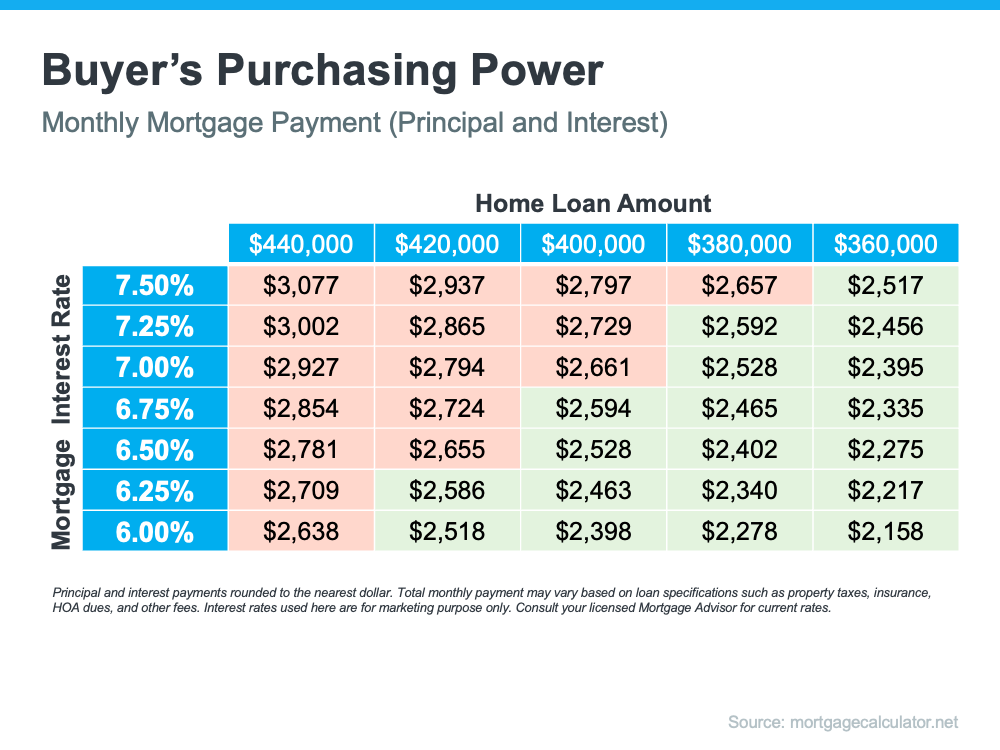
This goes to show, even a small quarter-point change in mortgage rates can impact your monthly mortgage payment. That’s why it’s important to work with a trusted real estate professional who follows what the experts are projecting for mortgage rates for the days, months, and year ahead.
Bottom Line
Mortgage rates are likely to fluctuate depending on what happens with inflation moving forward, but they have dropped slightly in recent weeks. If a 7% rate was too high for you, it may be time to contact a lender to see if the current rate is more in line with your goal for a monthly housing expense. Contact us today at 734-761-3060 to discuss your condo or home-owning plans and let our team of specialists help you achieve them! 734-761-3060 or info@condohotline.com.