


Four Things That Help Determine Your Mortgage Rate

Four Things That Help Determine Your Mortgage Rate | MyKCM

Four Things That Help Determine Your Mortgage Rate

If you’re looking to buy a condo or a home, you probably want to secure the lowest interest rate possible for your mortgage loan. Over the last couple of years, that was easier to do as the housing market saw record-low mortgage rates, but this year rates have risen dramatically.

If you’re looking for ways to combat today’s higher rates and lock in the lowest one you can, here are a few factors to focus on. Since approval opportunities can vary, connect with a trusted lender for customized advice.

Your Credit Score

Credit scores can play a big role in your mortgage rate. Freddie Mac explains:

“When you build and maintain strong credit, mortgage lenders have greater confidence when qualifying you for a mortgage because they see that you’ve paid back your loans as agreed and used your credit wisely. Strong credit also means your lender is more apt to approve you for a mortgage that has more favorable terms and a lower interest rate.”

That’s why it’s important to maintain a good credit score. If you want to focus on improving your score, your trusted advisor can give you expert advice to help.

Your Loan Type

There are many types of loans, each offering different terms for qualified buyers. The Consumer Financial Protection Bureau (CFPB) says:

“There are several broad categories of mortgage loans, such as conventional, FHA, USDA, and VA loans. Lenders decide which products to offer, and loan types have different eligibility requirements. Rates can be significantly different depending on what loan type you choose.”

When working with your real estate advisor, make sure you find out what’s available in your area and which types of loans you may qualify for.

Your Loan Term

Another factor to consider is the term of your loan. Just like with location and loan types, you have options. Freddie Mac says:

“When choosing the right home loan for you, it’s important to consider the loan term, which is the length of time it will take you to repay your loan before you fully own your home. Your loan term will affect your interest rate, monthly payment, and the total amount of interest you will pay over the life of the loan.”

Depending on your situation, the length of your loan can also change your mortgage rate.

Your Down Payment

If you’re a current homeowner looking to sell and make a move, you can use the home equity you’ve built over time toward the down payment on your next home. The CFPB explains:

“In general, a larger down payment means a lower interest rate, because lenders see a lower level of risk when you have more stake in the property. So if you can comfortably put 20 percent or more down, do it—you’ll usually get a lower interest rate.”

To learn more, connect with a lender to find out the difference a higher down payment can make for your new mortgage. We have a terrific list of local lenders, just ask us!

Bottom Line

These are just a few factors that can help determine your mortgage rate if you’re buying a condo or home. The best thing you can do is have a team of professionals on your side. Connect with us, The Bouma Group, your local real estate professionals, and a trusted lender so you have the expert advice you need at each step of the process. Contact us today at 734-761-3060 or info@condohotline.com.

How Much Do You Need for Your Down Payment?

How Much Do You Need for Your Down Payment? | MyKCM

As you set out on your home or condo buying journey, you likely have a plan in place, and you’re working on saving for your purchase. But do you know how much you actually need for your down payment?

If you think you have to put 20% down, you may have set your goal based on a common misconception. Freddie Mac says:

“The most damaging down payment myth—since it stops the homebuying process before it can start—is the belief that 20% is necessary.”

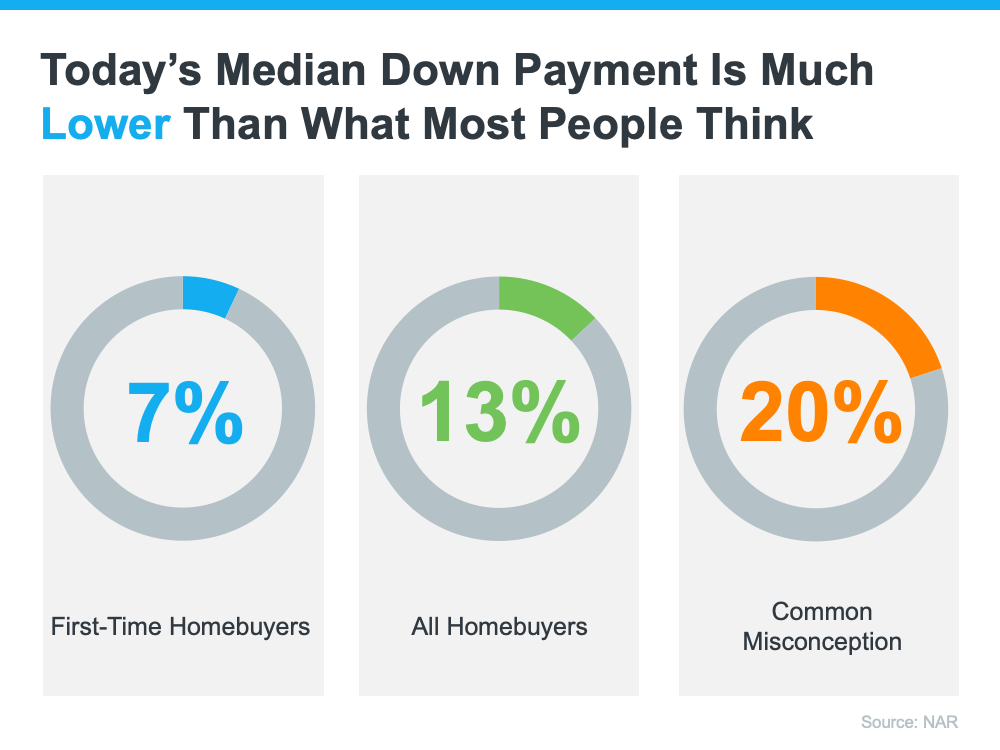
Unless specified by your loan type or lender, it’s typically not required to put 20% down. According to the Profile of Home Buyers and Sellers from the National Association of Realtors (NAR), the median down payment hasn’t been over 20% since 2005. It may sound surprising, but today, that number is only 13%. And it’s even lower for first-time homebuyers, whose median down payment is only 7% (see graph below):

How Much Do You Need for Your Down Payment? | MyKCM

What Does This Mean for You?

While a down payment of 20% or more does have benefits, the typical buyer is putting far less down. That’s good news for you because it means you could be closer to your home or condo buying dream than you realize.

If you’re interested in learning more about low down payment options, there are several places to go. There are programs for qualified buyers with down payments as low as 3.5%. There are also options like VA loans and USDA loans with no down payment requirements for qualified applicants.

To understand your options, you need to do your homework. If you’re interested in learning more about down payment assistance programs, information is available through sites like downpaymentresource.com. Be sure to also work with a real estate advisor from the start to learn what you may qualify for in the homebuying process.

Bottom Line

Remember: a 20% down payment isn’t always required. If you want to purchase a condo this year, let’s connect to start the conversation and explore your down payment options. Contact us today at 734-761-3060 or info@condohotline.com, we’re here to help!

What Are the Benefits of a 20% Down Payment?

What Are the Benefits of a 20% Down Payment? | MyKCM

If you’re thinking of buying a condo this year, you may be wondering how much money you need to come up with for your down payment. Many people may think it’s 20% of the loan to secure a mortgage. While there are plenty of lower down payment options available for qualified buyers who don’t want to put 20% down, it’s important to understand how a larger down payment can have great benefits too.

The truth is, there are many programs available that allow you to put down as little as 3.5%, which can be a huge benefit to those who want to purchase a condo sooner rather than later. Those who have served our country may also qualify for a Veterans Affairs Home Loan (VA) and may not need a down payment. These programs have really cut down the savings time for many potential buyers, enabling them to start building family wealth sooner.

Here are four reasons why putting 20% down is a good plan if you can afford it.

1. Your interest rate may be lower.

A 20% down payment vs. a 3-5% down payment shows your lender you’re more financially stable and not a large credit risk. The more confident your lender is in your credit score and your ability to pay your loan, the lower the mortgage interest rate they’ll likely be willing to give you.

2. You’ll end up paying less for your condo.

The larger your down payment, the smaller your loan amount will be for your mortgage. If you’re able to pay 20% of the cost of your new home at the start of the transaction, you’ll only pay interest on the remaining 80%. If you put down 5%, the additional 15% will be added to your loan and will accrue interest over time. This will end up costing you more over the lifetime of your home loan.

3. Your offer will stand out in a competitive market.

In a market where many buyers are competing for the same property, sellers like to see offers come in with 20% or larger down payments. The seller gains the same confidence as the lender in this scenario. You are seen as a stronger buyer with financing that’s more likely to be approved. Therefore, the deal will be more likely to go through.

4. You won’t have to pay Private Mortgage Insurance (PMI)

What is PMI? According to Freddie Mac:

“PMI is an insurance policy that protects the lender if you are unable to pay your mortgage. It’s a monthly fee, rolled into your mortgage payment, that is required for all conforming, conventional loans that have down payments less than 20%. Once you’ve built equity of 20% in your home, you can cancel your PMI and remove that expense from your mortgage payment.”

As mentioned earlier, when you put down less than 20% when buying a condo or home, your lender will see your loan as having more risk. PMI helps them recover their investment in you if you’re unable to pay your loan. This insurance isn’t required if you’re able to put down 20% or more.

Many times, sellers looking to move up to a larger or more expensive home are able to take the equity they earn from the sale of their property to put down 20% on their next. With the equity homeowners have today, it creates a great opportunity to put those savings toward a 20% or greater down payment on a new condo or home.

If you’re looking to buy your first place, you’ll want to consider the benefits of 20% down versus a smaller down payment option.

Bottom Line

If you’re thinking of buying a condo and are already saving for your down payment, let’s connect to discuss what fits best with your long-term plans. Contact us today at 734-761-3060 or info@condohotline.com.

Do You Have Enough Money Saved for a Down Payment?

Do You Have Enough Money Saved for a Down Payment? | MyKCM

One of the biggest misconceptions for first-time condo or home buyers is how much you’ll need to save for a down payment. Contrary to popular belief, you don’t always have to put 20% down to buy a condo or house. Here’s how it breaks down.

A recent survey by Point2Homes mentions that 74% of millennials (ages 25-40) say they’re interested in purchasing over the next 12 months. The study notes, “88% say they have significantly less savings than the average national down payment amount, which is $62,600.”

Thankfully, $62,600 is not the amount every buyer needs for a down payment in the United States. There are many different options available, especially for first-time buyers (millennial or not). That amount can also be significantly less, depending on the purchase price of the condo or house.

According to the National Association of Realtors (NAR), “The median existing price for all housing types in August was $310,600.” (These are the latest numbers available). NAR also indicates that:

“In 2019, the median down payment was 12 percent for all buyers, six percent for first-time buyers, and 16 percent for repeat buyers.” (See graph below):

Do You Have Enough Money Saved for a Down Payment? | MyKCMThat means if a qualified first-time buyer purchases a home at today’s median price, $310,600, with a 6% down payment, in reality, the down payment only amounts to $18,636. That’s nowhere near $62,600.

Knowing there are also programs like FHA where the down payment can be as low as 3.5% of the purchase price for a first-time buyer, that up-front cost could be significantly less – as little as $10,871 for the same home noted above. There are also other programs like USDA and loans for Veterans that waive down payment requirements.

The Point2Homes study also shares how much millennials have indicated they’ve saved for a down payment. As we can see in the graph below, 39% have already saved enough for a down payment on a median-priced condo or home. Another 47% are close to reaching that goal, depending on the purchase price.Do You Have Enough Money Saved for a Down Payment? | MyKCMUnfortunately, the lack of knowledge about the buying process is keeping many motivated first-time buyers on the sidelines. That’s why it’s important to contact a local real estate professional to understand the requirements in your local area if you want to buy a condo or home. A trusted agent and your lender can guide you through the process.

Bottom Line

Be careful not to let big myths about buying keep you and your family out of the housing market. Let’s connect to discuss your options today. Give us a call at The Bouma Group at 734-761-3060 or email info@condohotline.com.

(more…)

Stop Wondering What Your Budget Is & Get Pre-Approved!

In many markets across the country, the number of buyers searching for their dream home or condo outnumbers the number for sale. This has led to a competitive marketplace where buyers often need to stand out. One way to show that you are serious about purchasing is to get pre-approved for a mortgage before starting your search.

Even if you are not in an incredibly competitive market, understanding your budget will give you the confidence of knowing whether or not your dream condo is within your reach.

Freddie Mac lays out the advantages of pre-approval in the ‘My Home’ section of their website:

“It’s highly recommended that you work with your lender to get pre-approved before you begin house hunting. Pre-approval will tell you how much home you can afford and can help you move faster, and with greater confidence, in competitive markets.”

One of the many advantages of working with a local real estate professional is that many have relationships with lenders who will be able to help you through this process. Once you have selected a lender, you will need to fill out their loan application and provide them with important information regarding “your credit, debt, work history, down payment and residential history.”

Freddie Mac describes the ‘4 Cs’ that help determine the amount you will be qualified to borrow:

  1. Capacity: Your current and future ability to make your payments
  2. Capital or cash reserves: The money, savings, and investments you have that can be sold quickly for cash
  3. Collateral: The home, or type of home, that you would like to purchase
  4. Credit: Your history of paying bills and other debts on time

Getting pre-approved is one of many steps that will show sellers that you are serious about buying, and it often helps speed up the process once your offer has been accepted.

Bottom Line

Many potential buyers overestimate the down payment and credit scores necessary to qualify for a mortgage. If you are ready and willing to buy, you may be pleasantly surprised at your ability to do so today. Contact us at The Bouma Group, Realtors and we can give you a list of local mortgage lenders that have wowed our clients! 734-761-3060 or info@condohotline.com Check out Ann Arbor Condos here!