
Priced Out of the Market? A Condo or Townhome Could Be Your Way In

Today’s home prices have a lot of buyers, especially first-time buyers, wondering if there’s even anything out there that’s in their budget. But owning a home may be more within reach than you think. Sometimes, it just means considering a different type of home.
Condos and townhomes can be a great way to buy without stretching every last dollar. And right now, two things make them worth a serious look.
There Are More Condos and Townhomes To Choose From
Maybe you feel like there’s just nothing out there for you, and you’ve exhausted all your options. But have you considered condos or townhomes? A lot of buyers start by looking for a single-family, detached home without even realizing what that search omits from their pool of choices.
According to HousingWire Data, nationally there were 233,030 condos and townhomes for sale this June. That’s more than any June in at least the past decade, and more than double the number available back in 2022 (see graph below):
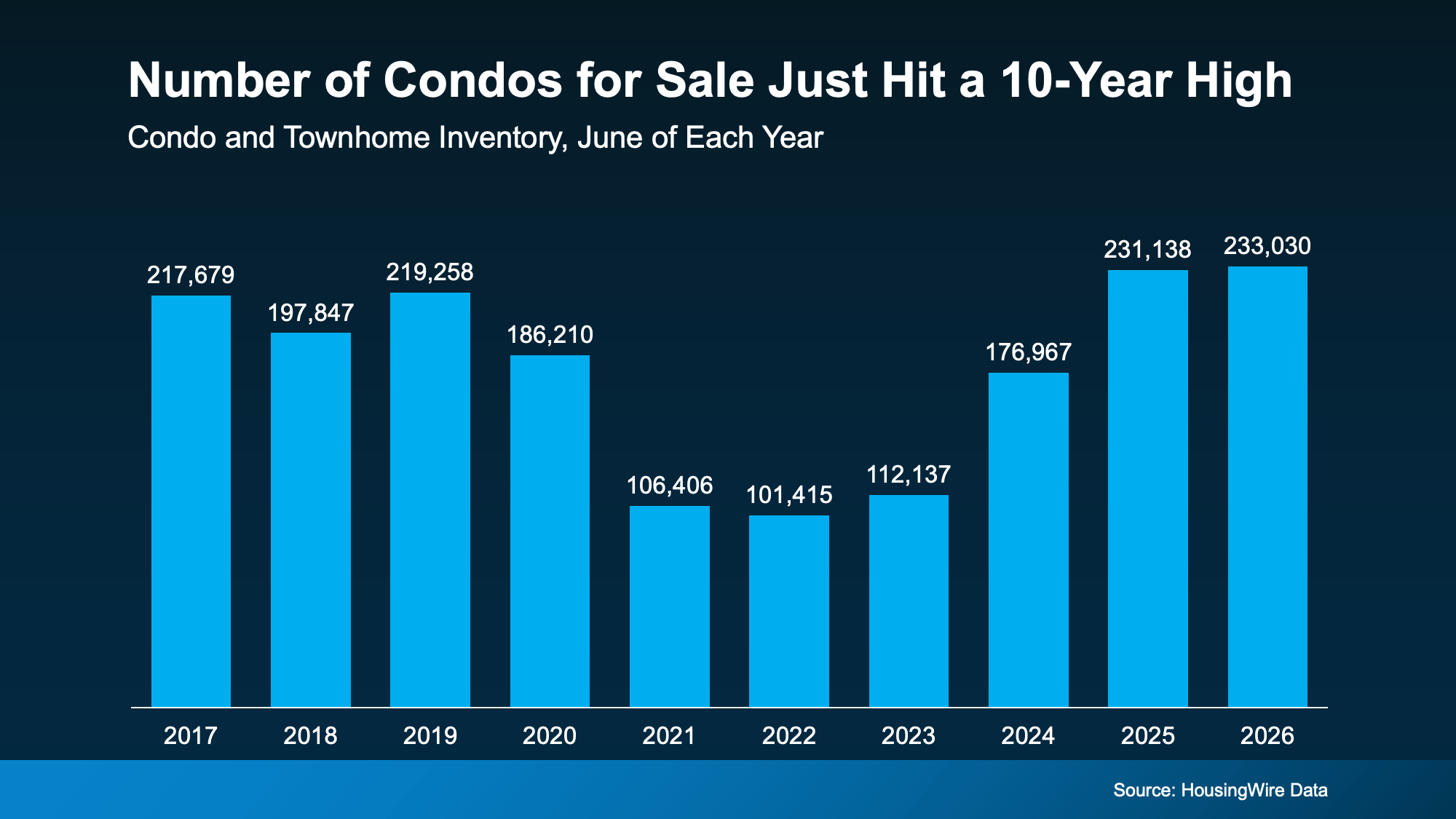
That means there are more options out there in this segment of the market, and that’s especially good news for first-time buyers. These types of homes can be a great way to break into the market for less.
Just remember, that’s the national number. What’s available will depend on where you’re looking. But generally speaking, more options means less competition, more time to decide, and more room to negotiate.
What’s Happening with Ann Arbor Condos
Good news if you’re shopping for a condo in Ann Arbor: the market is opening up in your favor. Through the end of July, new listings climbed to 594 in 2026 from 563 last year, giving you more choices to explore. At the same time, pending sales eased to 343 (down from 389) and closed sales dipped to 345 (from 359), while homes now sit for 49 days on average versus just 29 a year ago. With median prices sliding slightly to $335,000 from $340,000, this shift toward more supply and a calmer pace means you have room to compare options, negotiate with confidence, and lean on expert guidance to find the right fit.
They Also Tend To Cost Less Than Single-Family Homes
Price is the other big draw. According to the National Association of Realtors (NAR), the median condo price was $380,000 in June. In contrast, the median single-family home price was $446,400 (see graph below):
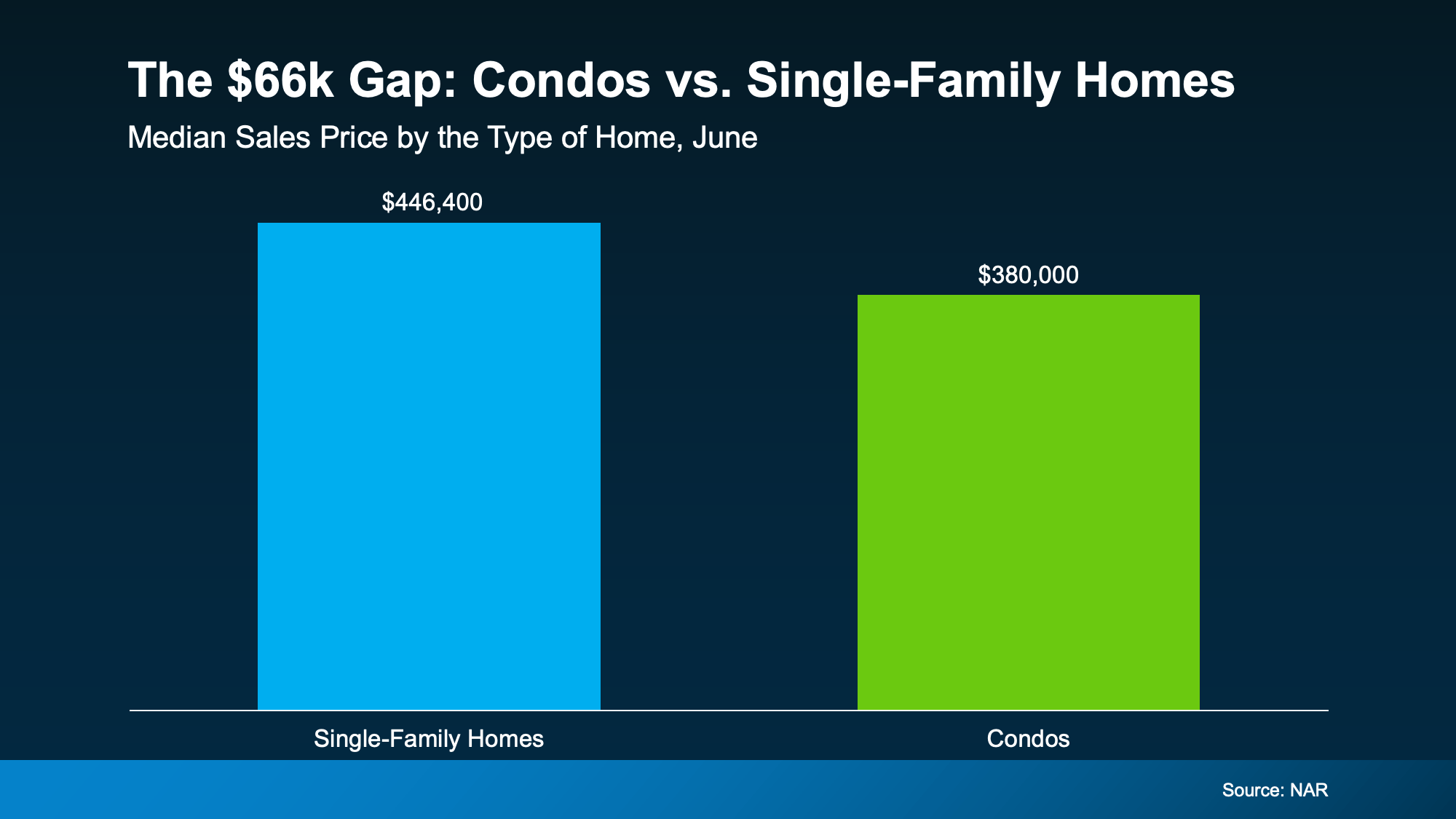
That’s a difference of more than $66,000.
A big reason why? Condos are usually smaller than single-family homes. And smaller homes can come with smaller price tags.
And if you don’t need all that extra space, that lower entry price could be exactly what gets you through the door.
What’s Happening with Condos vs. Homes in Ann Arbor
Here’s where the numbers get exciting for anyone eyeing an entry into the Ann Arbor market: through July 2026, the median home sold for $586,500 while the median condo came in at $335,000, a gap of over $250,000. That difference carries into averages too, with homes at $678,466 versus $448,299 for condos. Even a year ago, Ann Arbor condos began experiencing more price reductions. For you, this means a condo can be a smart, more accessible way to plant roots in a neighborhood you love, without stretching your budget to single-family territory. With expert Realtor guidance and clear market insights on your side, you can turn that price advantage into a vibrant, low-maintenance lifestyle right where you want to be.
Condo or Townhome? How They’re Different.
For buyers who feel priced out of the market, a condo or townhome could be a way in. But there are some things to know. Before you start checking out homes, it’s good to understand how these two compare to each other, and to a single-family home.
- With a single-family detached home, you own the house and the land it sits on, and you don’t share any walls with neighbors. That means the most space and privacy. But it also usually comes with a higher tag, and all the maintenance is on you.
- With a townhome, typically you own the building you live in and the lot it sits on. They’re usually multi-level, so you get more space, and you share two walls at most. You’ll also have more say over how your home looks and how repairs get done, but more of that upkeep falls on you.
- With a condo, you own just the inside of your unit and may have access to community features like a pool or gym. The building and shared space belong to everyone who lives there, which means you have less maintenance responsibilities. But you’ll also likely have more neighbors around you, less control over building decisions, and higher HOA fees since the HOA handles the exterior and common areas.
Bottom Line
Ready to make your move in Ann Arbor? A condo or townhome could be your path to owning a home without blowing your budget. The Bouma Group, Realtors knows this market inside and out, from the walkable downtown condos to the tucked-away neighborhoods you’ll love calling home. Our team pairs deep local expertise with personalized guidance, listening to your budget, your must-have features, and the lifestyle you’re after, then matching you with properties that truly fit. Whether you’re drawn to low-maintenance condo living or a place with a little more room to grow, we’ll walk you through financing options, honest market insights, and every step in between so you feel confident from first tour to closing day.
Let’s find the right spot for you together, reach out today at 734-761-3060 or info@bouma.com. Let’s turn your Ann Arbor plans into keys in your hand.
What Is Pop-Up Tax? A Guide for Homebuyers in Ann Arbor
A Buyer’s Guide to Pop-up Tax

When buying a home or condo in Ann Arbor, there’s a term that often catches homebuyers, particularly first-time buyers, off guard: the pop-up tax. This little-known factor can have a significant impact on your property tax bill after closing. But what is it, exactly, and how does it work? More importantly, how can you prepare for it?
This guide will explain the concept of pop-up tax, clarify how it affects your property taxes, and provide tips for navigating this cost so you can approach your home purchase with confidence.
What Is Pop-Up Tax?
The pop-up tax is a term used to describe the increase in property tax assessments that occurs when a property changes ownership. Under Michigan law, the taxable value of a home or condo—used to calculate property taxes—remains capped while the same owner holds the title. This means the property taxes typically increase only slightly each year due to limits set by the state.
However, when a property is sold, this cap is removed, and the taxable value is “uncapped,” triggering a reassessment. The property’s taxable value is reset to match its state equalized value (SEV), which is typically about 50% of the property’s market value. This reassessment can result in a significant jump in property taxes, hence the colloquial name “pop-up tax.”
For example, if the previous homeowner’s taxable value was $125,000 but the state equalized value after the sale is $200,000, your taxable value as the new owner will “pop up” to the higher figure. Consequently, your property tax bill will also spike.
How Does the Pop-Up Tax Work?
To understand the pop-up tax in practice, it’s essential to differentiate between two figures:
- Taxable Value – This is the value used to calculate your property taxes. For continuing homeowners, it increases annually at the rate of inflation or 5%, whichever is lower, thanks to Michigan’s property tax cap (Proposal A).
- State Equalized Value (SEV) – This is an estimate of 50% of your home’s market value, determined by local assessors. SEV fluctuates with the property’s appraised market value.
When a property changes hands, the taxable value is uncapped and reset to the SEV. Property taxes are then recalculated based on the new taxable value. Depending on how long the previous owner held the property—and how dramatically property values have risen in the area—the difference between the old and new taxable value can be substantial.
Example Scenario:
Imagine you’re buying a condo in Ann Arbor:
- The seller purchased the property 15 years ago for $150,000. Over time, with Michigan’s tax cap, their taxable value crept up to $100,000.
- You’re purchasing the condo today for $300,000. The SEV would be half of that, or $150,000. Now that the taxable value is uncapped, it will rise to $150,000.
- If the local property tax rate is 2%, your annual taxes increase from $2,000 (2% of $100,000) to $3,000 (2% of $150,000), meaning you’re paying $1,000 more each year.
The key takeaway here? Even if the previous owner’s property taxes seemed affordable, they may not reflect what you’ll pay after buying the home.
What Makes Ann Arbor Unique?
Ann Arbor’s dynamic real estate market plays a big role in the impact of pop-up taxes. With a mix of high-demand areas and steadily increasing property values, SEVs (and consequently property taxes) can rise dramatically over time. Homes owned for many years may have taxable values well below their market values, leading to a more significant adjustment when ownership changes.
It’s also worth noting that millage rates—or local tax rates—add to this. Ann Arbor has a variety of millages supporting schools, parks, and local services that contribute to the city’s thriving community but also increase property tax obligations compared to surrounding areas.
For new homeowners, this means it’s especially important to account for the potential tax adjustment when determining your budget.
How Can Buyers Prepare for the Pop-Up Tax?
Understanding and planning for the pop-up tax can save you from unwelcome surprises after closing. Here are some practical tips:
1. Estimate Your Adjusted Property Taxes
Before committing to a purchase, use the home’s SEV to estimate what your property taxes will look like after the sale. The easiest way to find this value is through the local assessor’s website or by contacting their office directly. Multiply the SEV by two to approximate the home’s market value, then apply the local millage rate to calculate your potential tax bill.
2. Use Online Tax Estimation Tools
Many municipalities, including those in Washtenaw County, provide online property tax calculators. These tools can help you determine your estimated tax liability based on the property’s sale price and applicable millages.
3. Talk to Your Realtor
Working with an experienced realtor in Ann Arbor ensures you’re not navigating these complexities alone. A local real estate agent can provide detailed tax insights for specific neighborhoods and recent properties they’ve sold.
4. Include Taxes in Your Budget
When calculating your monthly housing costs, be sure to include the adjusted property tax estimate along with mortgage payments, homeowners’ insurance, utilities, and association dues (if applicable). This full financial picture will prevent you from overextending your budget.
5. Appeal Your SEV if Necessary
If you believe the assessor overestimates your property’s market value after the sale, you have the right to appeal the new SEV. Consult the city or county guidelines for filing an appeal, and be prepared to submit supporting documentation.
Resources for Ann Arbor Homebuyers
Navigating property taxes can be daunting, but there are plenty of resources available to help:
- City of Ann Arbor Assessor’s Office – Provides property records, tax rates, and guidance for tax-related questions.
- Washtenaw County Website – Offers access to property tax calculators and assessor information.
- Michigan State Tax Commission – Publishes detailed guides on property taxes, SEVs, and appeals processes.
- Local Realtors – Many agents specialize in helping buyers understand pop-up taxes and other costs unique to the area.
Additionally, consider attending local homebuyer workshops or consulting with a real estate attorney for a deeper understanding of the process.
Final Thoughts
The pop-up tax may not sound like the most exciting part of buying a home or condo in Ann Arbor, but it’s a critical factor to plan for. By understanding how it works, estimating your property taxes, and leveraging the right resources, you can avoid any financial shocks and confidently take the next step in your homebuying journey.
Remember, buying a property is not just a financial investment—it’s a personal milestone. Preparing for the pop-up tax ensures that this moment remains as exciting and stress-free as possible. To learn more about the home buying journey and to start your, contact us at The Bouma Group today at 734-761-3060 or info@condohotline.com.
Understanding Today’s Mortgage Rates: Is 3% Coming Back?
Are 3% Mortgage Rates Coming Back?

Many buyers are holding off on their plans these days, hoping that mortgage rates will drop – perhaps even back to the historic low of 3% from a few years ago. But here’s the thing: those rates were never meant to last. They were a short-term response to a very specific moment in time. And as the market finds its footing again, it’s time to reset expectations.
Back in 2020 and 2021, 3% mortgage rates gave buyers a serious boost: more affordability, more buying power, and more opportunity. But those rates were a result of emergency economic policies during the height of a global pandemic. Now that the economy is in a different place, we’re seeing mortgage rates in the high 6% to low 7% range.
And while experts currently project a slight easing in the months ahead, most industry leaders agree: rates are not going back to 3%.
Instead, many forecasts suggest mortgage rates will settle in the mid-6% range by the end of the year, pending any major economic shifts. As Kara Ng, Senior Economist at Zillow, says:
“While Zillow expects mortgage rates to end the year near mid-6%, barring any unforeseen shocks, that path might be bumpy.”
What Buyers Should Know
Basically, waiting for 3% rates might mean waiting longer than you’d expect – and missing out along the way. Instead of putting off homebuying indefinitely, make a plan to get there and focus on what you can control: your budget, your credit, and working with a trusted professional who can explain exactly what’s happening in the current market – and how to navigate it.
Your local real estate agent and a trusted lender make all the difference in this process. The experts have insights into down payment assistance programs, alternative financing options, negotiation strategies, and overall – the experience you need on your side to understand creative ways that will make your plans work.
And here’s the biggest thing to keep in mind. Since rates are projected to ease slightly later this year, if that happens, it could bring some more buyers back into the market. Acting now gives you a head start, especially with more homes on the market than we’ve seen in years.
Think about it: if mortgage rates do come down, what do you think everyone else is going to do? That’s right – they’ll jump back in too.
Getting ahead of that rush could put you in a stronger position to find the right home with less competition. Realtor.com sums it up well:
“Staying out of the market in hopes of a rate drop that never comes can lead to missed opportunities . . . Rising home prices, rent increases, and inflation might outpace any future savings on interest. And if rates do fall sharply again, buyers could face an entirely different challenge: surging competition.”
Bottom Line
Those 3% rates everyone remembers from a few years ago were the exception, not the rule.
Now that they’re settling into new territory, it’s a good time to adjust your expectations and learn more about where things are heading as this market shifts.
A local real estate agent and a trusted lender will be your best resources, always keeping you up-to-date and informed, so you can make sense of your options and build a game plan that works for you. See Ann Arbor Condo complexes here and start dreaming about your new home! Contact The Bouma Group today at 734-761-3060 or info@condohotline.com.
Don’t Miss Out on the Growing Number of Down Payment Assistance Programs

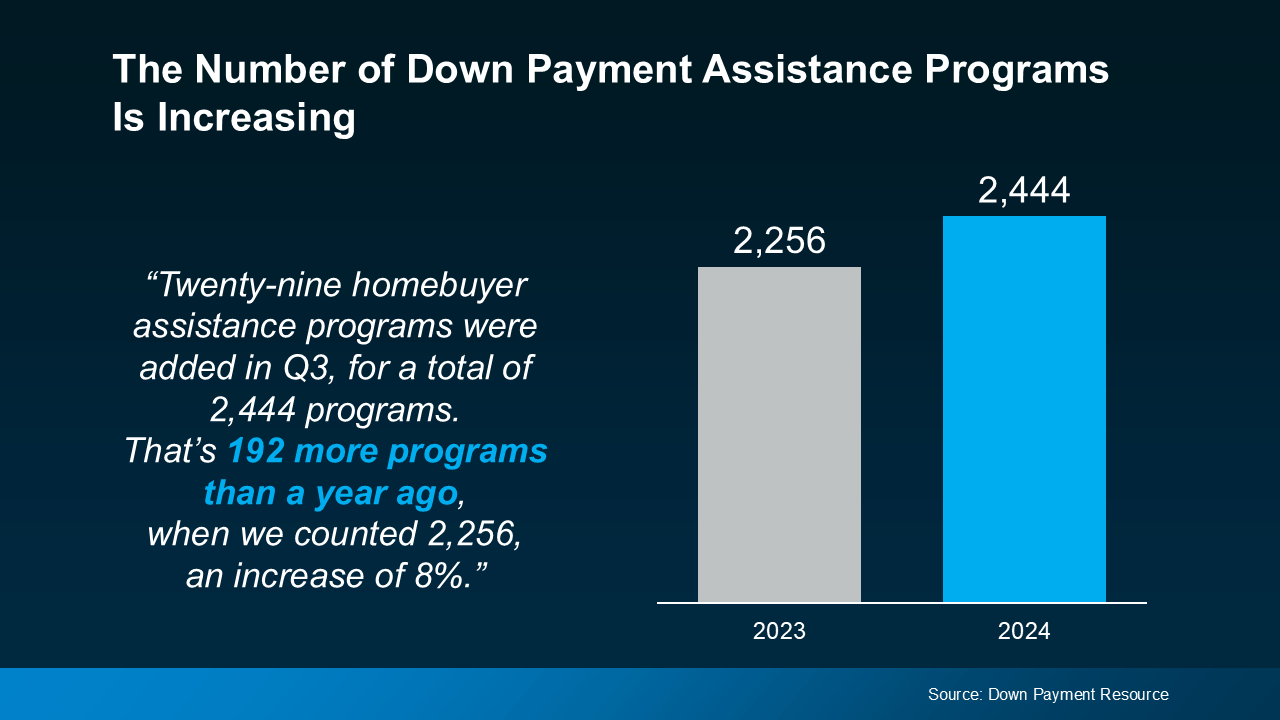
With rising home prices and volatile mortgage rates, it’s important you know about every resource that could help make buying a condo or home possible. One thing you’ll want to be aware of is how much the number of down payment assistance (DPA) programs has grown lately.
Take a look at the graph below to see how many new programs have been added in the last year, according to data from Down Payment Resource:
More Programs, More Opportunities for You
So, what does this increase mean for you? With more programs available, there’s a higher likelihood that one of them could help you reach your homeownership goals.
And these programs aren’t small-scale help either – the benefits can go a long way toward covering a chunk of your costs. As Rob Chrane, Founder and CEO of Down Payment Resource, shares:
“We are pleased to see a growing number of these programs, and think they are becoming a targeted way to help first-time and first-generation homebuyers struggling to save for a down payment get into a home they can afford. Our data shows the average DPA benefit is roughly $17,000. That can be a nice jump-start for saving for a down payment and other costs of homeownership.”
Imagine being able to qualify for $17,000 toward your down payment. That’s a big boost, especially if you’re looking to buy your first place. With that level of help, buying a condo or home may be more within reach than you think.
But it’s worth calling out that the growth in DPA options isn’t just focused on first-time and first-generation buyers. Many of the new programs are also aimed at supporting affordable housing initiatives, which include manufactured and multi-family homes. This means that more people, and a wider variety of home types, can qualify for down payment assistance. This will make it easier for you to find an option that fits your needs.
Talk to a Real Estate Expert About What’s Available for You
With so many DPA programs out there, you need to make sure you’re finding the right one for you. That’s why it’s key to lean on your real estate and lending professionals for guidance. The Mortgage Reports says:
“The best way to find down payment assistance programs for which you qualify is to speak with your loan officer or broker. They should know about local grants and loan programs that can help you out.”
A great loan officer will know what’s available in your area and can point you toward programs that align with your goals. We work with some fantastic lenders and can help match you with the perfect one.
Bottom Line
With more down payment assistance programs than ever before, now’s a great time to explore how these options can help on your homebuying journey. Let’s work together to make sure you’ve got a team of expert advisors in place. Contact us today at The Bouma Group, Realtors at 734-761-3060 or info@bouma.com.
Start your search now!
What You Need to Know About Today’s Down Payment Programs
Down Payment Programs Aren’t Just for First-Time Homebuyers
There’s no denying it’s gotten more challenging to buy a condo or home, especially with today’s mortgage rates and home price appreciation. And that may be one of the big reasons you’re eager to look into grants and assistance programs to see if there’s anything you qualify for that can help. But unfortunately, many homebuyers feel like they don’t know where to start.
A recent Bank of America Institute study asked prospective buyers where they lack confidence in the process and need more information. And this is what topped the list:
53% said they need help understanding home-buying grant programs.
So, here’s some information that can help you close that gap.
What Is Down Payment Assistance?
As the Mortgage Reports explains:
“Down payment assistance (DPA) programs offer loans and grants that can cover part or all of a home buyer’s down payment and closing costs. More than 2,000 of these programs are available nationwide. . . DPA programs vary by location, but many home buyers could be in line for thousands of dollars in down payment assistance if they qualify.”
And here’s some more good news, you probably don’t need to save as much for your down payment as you think. Contrary to what you may have heard, typically you don’t have to put 20% down unless it’s specified by your loan type or lender. So, you likely don’t need to save as much upfront, and there are programs designed to make your down payment more achievable. Sounds like a win-win.
First-Time and Repeat Buyers Are Often Eligible
It’s also worth mentioning, that it’s not just first-time homebuyers that are eligible for many of these programs. That means whether you’re looking to buy your first house or your fifth, there could be an option for you. As Down Payment Resource notes:
“You don’t have to be a first-time buyer. Over 39% of all [homeownership] programs are for repeat homebuyers who have owned a home in the last 3 years.”
Additional Down Payment Resources That Can Help
Here are a few down payment assistance programs that help buyers achieve their dream of homeownership:
- Teacher Next Door is designed to help teachers, first responders, health providers, government employees, active-duty military personnel, and Veterans reach their down payment goals.
- Fannie Mae provides down payment assistance to eligible first-time homebuyers living in majority-Latino communities.
- Freddie Mac also has options designed specifically for homebuyers with modest credit scores and limited funds for a down payment.
- The 3By30 program lays out actionable strategies to add 3 million new Black homeowners by 2030. These programs offer valuable resources for potential buyers, making it easier to secure down payments and realize their dream of homeownership.
- For Native Americans, Down Payment Resource highlights 42 U.S. homebuyer assistance programs across 14 states that ease the path to homeownership by providing support with down payments and other associated costs.
If you want more information on any of these, the best place to start is by contacting a trusted real estate professional.
We’ll share more details about what may be available, including any other programs designed to serve specific professions or communities. And even if you don’t qualify for these types of programs, we can help find out if there are any other federal, state, and local options available you should look into.
Bottom Line
Affordability is still a challenge, so if you’re looking to buy, you will want to make sure you’re taking advantage of any and all resources available.
Connect with us at The Bouma Group at 734-761-3060 or info@bouma.com and let’s explore your options!
The Benefits of Downsizing for Homeowners
The Benefits of Downsizing for Homeowners
There may come a time in your life when a variety of circumstances make it necessary to downsize your living space. Here are a few of the benefits of downsizing from your current condo or home.

Some Highlights
- Downsizing is a popular choice for homeowners when they retire or when their needs change, but with inflation still high, it’s also a way to reduce costs.
- Downsizing could help cut down on your expenses and your equity can fuel your move.
- A condo is a great option if the upkeep of your current home, yard, etc. is just too much.
If you’re thinking about moving to a condo or smaller home, let’s connect today at 734-761-3060 or info@condohotline.com to go over your housing goals and look at your options on our local market.
Keys to Success for First-Time Homebuyers
Keys to Success for First-Time Homebuyers

Buying your first home is an exciting decision and a major milestone that has the power to change your life for the better. As a first-time homebuyer, it’s a vision you can bring to life, but, as the National Association of Realtors (NAR) shares, you’ll have to overcome some factors that have made it more challenging in recent years:
“Since 2011, the share of first-time home buyers has been under the historical norm of 40% as buyers face tight inventory, rising home prices, rising rents and high student debt loads.”
That said, if you’re looking to purchase your first home, here are two things you can consider to help make your dreams a reality.
1. Save Money with First-Time Homebuyer Programs
As a first-time homeowner, the initial costs and fees can seem overwhelming and insurmountable. From securing a loan to putting together a down payment and covering closing costs, the expenses can feel like a significant obstacle to overcome.
Fortunately, there are a lot of public and private first-time homebuyer programs that can help you get a loan with little-to-no money upfront. CNET explains:
“A first-time homebuyer program can help make homeownership more affordable and accessible by offering lower mortgage rates, down payment assistance and tax incentives.”
As Bankrate says, many of these programs are offered by state and local governments:
“Many states and local governments have programs that offer down payment or closing cost assistance – either low-interest-rate loans, deferred loans or even forgivable loans (aka grants) – to people looking to buy their first house . . .”
To take advantage of these programs, contact the housing authority in your state and browse sites like Down Payment Resource.
2. The Supply of Homes for Sale Is Low, So Explore Every Possibility
In today’s real estate market, it’s a challenge for buyers to find the right home due to limited supply. However, there are ways to expand your options and increase your chances of finding a home that fits your needs. One option is to consider townhomes or condominiums, which are often more affordable than single-family homes. While they may be smaller, they still offer the opportunity to own a home and build equity. Additionally, they typically require less maintenance, which can be a major advantage. To ensure a successful home-buying experience, especially if you’re a first-time buyer, it’s wise to seek the guidance of a trusted real estate agent. They can provide valuable insights about the home buying process, help you locate suitable options in your area, and assist you in making competitive offers.
Bottom Line
If you are a first-time homebuyer, navigating today’s seller’s market can be difficult. However, there are solutions available to help you achieve your goals, such as utilizing first-time homebuyer programs and exploring all of your housing options. If you need guidance, feel free to reach out to us at The Bouma Group, Realtors at 734-761-3060 or info@condohotline.com. We’re here to provide expert assistance and support throughout the process.
3 Trends That Are Good News for Today’s Condo and Home Buyers

While higher mortgage rates are creating affordability challenges for condo and homebuyers this year, there is some good news for those people still looking to buy a home.
As the market has cooled this year, some of the intensity buyers faced during the peak frenzy of the pandemic has cooled too. Here are 3 trends that may benefit you when you buy a home today.
1. More Homes To Choose from
During the pandemic, housing supply hit a record low while buyer demand skyrocketed. This combination made finding a condo or home difficult because there just wasn’t enough to meet buyer demand. According to Calculated Risk, the supply of homes for sale increased by 39.5% for the week ending October 28 compared to the same week last year.
Even though it’s still a sellers’ market and supply is still lower than more normal levels, you have more to choose from in your home search. That makes finding your dream home a bit less difficult.
2. Bidding Wars Have Eased
One of the top stories in real estate over the past two years was the intensity and frequency of bidding wars. But today, things are different. With more options, you’ll likely see less competition from other buyers. According to the National Association of Realtors (NAR), the average number of offers on recently sold homes has declined. This September, the average was 2.5 offers per sale. In contrast, last September, the average was 3.7 offers per sale.
If you tried to buy a house or condo over the past two years, you probably experienced the bidding war frenzy firsthand and may have been outbid on several homes along the way. Now you have a chance to jump back into the market and enjoy searching with less competition.
3. More Negotiation Power
And when you have less competition, you also have more negotiating power as a buyer. Over the last two years, more buyers were willing to skip essential steps in the home buying process, like the appraisal or inspection, to try to win a bidding war. But the latest data from the National Association of Realtors (NAR) shows the percentage of buyers waiving those contingencies is going down.
As a buyer, this is good news. The appraisal and the inspection give you important information about the value and condition of the condo or home you’re buying. And if something turns up in the inspection, you have more power today to renegotiate with the seller.
A survey from realtor.com confirms more sellers are accepting offers that include contingencies today. According to that report, 95% of sellers said buyers requested a home inspection, and 67% negotiated with buyers on repairs as a result of the inspection findings.
Bottom Line
If you are on the fence about whether or not to begin your condo or home search, consider these 3 trends that favor the buyer! While buyers still face challenges today, they’re not necessarily the same ones you may have been up against just a year or so ago. If you were outbid or had trouble finding a condo or home in the past, now may be the moment you’ve been waiting for. Let’s connect to start the homebuying process today. Contact us at 734-761-3060 or info@condohotline.com to start your search!
Is It Enough To Offer Asking Price in Today’s Housing Market?

If you’re planning to buy a home or condo this season, you’re probably thinking about what you’ll need to do to get your offer accepted. In previous years, it was common for buyers to try and determine how much less than the asking price they could offer to still get the property. The buyer and seller would then negotiate and typically agree on a revised price that was somewhere between the buyer’s bid and the home’s initial asking price.
In today’s real estate market, buyers shouldn’t shop for a home with the same expectations.
Things Are Different Today
Today’s housing market is anything but normal. According to the National Association of Realtors (NAR), the average property that’s sold today:
- Receives 4.8 offers
- Sells in just 17 days
Homes and condos selling quickly and receiving multiple offers show how competitive the market is for buyers right now. This is because there are more buyers on the market than properties for sale. When the number of homes available can’t keep up with demand, they often sell for more than the asking price.
How Does This Impact You When It’s Time To Submit an Offer?
Market conditions should help guide your decisions throughout the process. Today, the asking price is often the floor of the negotiation rather than the ceiling. Knowing this is important when it’s time to submit an offer, but you should also use that information as you’re searching too. After all, you don’t want to fall in love with a condo or home that ultimately sells for a price higher than what you’ve budgeted for.
The Mortgage Reports has advice if you’re looking to purchase a home or condo in a competitive market. The article encourages you to be realistic with your housing search, saying:
“The best thing to do is set your budget and expectations ahead of time so you know how much you can afford to offer — and when to walk away. This will make negotiations a lot easier.”
Of course, when you’ve found your dream home, you’ll want to do everything you can to submit your best offer upfront and win a potential bidding war. Knowing the current market is key to crafting a winning offer. That’s where working with an expert real estate advisor becomes critical.
A real estate professional will draw from their experience and expert-level knowledge of today’s housing market throughout the process. They’ll also balance conditions in your area to make sure your offer stands out above the rest.
Bottom Line
Understanding how to approach the asking price of a condo or home and what’s happening in today’s real estate market are critical for buyers. Let’s connect so we can work together to create a winning plan for you. Contact us today at 734-761-3060 or info@condohotline.com!
What Do Supply and Demand Tell Us About Today’s Housing Market?

There’s a well-known economic theory – the law of supply and demand – that explains what’s happening with prices in the current real estate market. Put simply, when demand for an item is high, prices rise. When the supply of the item increases, prices fall. Of course, when demand is very high and supply is very low, prices can rise significantly.
Understanding the impact both supply and demand have can provide the answers to a few popular questions about today’s housing market:
- Why are prices rising?
- Where are prices headed?
- What does this mean for homebuyers?
Why Are Prices Rising?
According to the latest Home Price Insights report from CoreLogic, condo and home prices have risen 18.1% since this time last year. But what’s driving the increase?
Recent buyer and seller activity data from the National Association of Realtors (NAR) helps answer that question. When we take NAR’s buyer activity data and compare it to the seller traffic during the same timeframe, we can see buyer demand continues to outpace seller activity by a wide margin. In other words, the demand for homes is significantly greater than the current supply that’s available to buy (see maps below): This combination of low supply and high demand is what’s driving condo and home prices up. Bill McBride, author of the Calculated Risk blog, puts it best, saying:
“By some measures, house prices seem high, but the recent price increases make sense from a supply and demand perspective.”
Where Are Prices Headed?
The supply of condos and homes for sale will greatly affect where prices head over the coming months. Many experts forecast prices will continue to increase, but they’ll likely appreciate at a slower rate.
Buyers hoping to purchase the home of their dreams may see this as welcome news. In this case, perspective is important: a slight moderation of prices does not mean prices will depreciate or fall. Price increases may occur at a slower pace, but experts still expect them to rise.
Five major entities that closely follow the real estate market forecast home prices will continue appreciating through 2022 (see graph below):
What Does This Mean for Buyers?
If you’re waiting to enter the market because you’re expecting prices to drop, you may end up paying more in the long run. Even if price increases occur at a slower rate next year, prices are still projected to rise. That means the home of your dreams will likely cost even more in 2022.
Bottom Line
The truth is, high demand and low supply are what’s driving up condo and home prices in today’s housing market. And while prices may increase at a slower pace in the coming months, experts still expect them to rise. If you’re a potential homebuyer, let’s connect today to discuss what that could mean for you if you wait even longer to buy.