
Maximize Your Condo Sale with the Power of Home Equity
What is Home Equity and Why Does It Matter?
Key Points
- Understanding your home equity can be a game-changer when deciding to sell your condo or home, especially in today’s market of high mortgage rates.
- Nearly 70% of homeowners have significant equity, making it an opportune time to consider selling.
- Our expert real estate team is here to guide you through the process, offering free home value assessments and answering any questions.

Home equity is more than just a financial term; it’s your ticket to new opportunities. In simple terms, it is the difference between your home’s current market value and the remaining balance on your mortgage. But why should you care? Well, with today’s real estate market, understanding it can be a game-changer when you decide to move.
The Equity Boom: A Silver Lining in Today’s Market

You’re not alone if you’re hesitant to sell your condo due to high mortgage rates. However, there’s good news. According to data from ATTOM and the Census, nearly 68.7% of homeowners have either paid off their mortgages or have at least 50% equity in their homes. That’s right—almost 70% of homeowners are sitting on a goldmine of equity!
How Understanding Your Equity Can Ease the Selling Process

Knowing your home equity can remove a lot of the uncertainty around selling your condo or home. With significant equity, you’ll have more flexibility in choosing your next home, negotiating deals, and even covering moving expenses. And the best part? Our expert real estate team is here to guide you every step of the way.
Leveraging Equity: Your Hidden Asset

Understanding your home equity isn’t just about knowing numbers; it’s about leveraging this asset to your advantage. With our expertise, we can help you strategize on how to use your equity for a down payment on a new place, or even as a financial cushion for future investments. It’s not just about selling your condo or home; it’s about planning your financial future.
Take the Next Step: Unlock Your Home Equity Today
Ready to unlock the potential of your home equity? Don’t navigate this journey alone. Contact our expert real estate team today for a free home value assessment or with any questions you may have. Your future home awaits! 734-761-3060 or info@condohotline.com
Four Things That Help Determine Your Mortgage Rate

Four Things That Help Determine Your Mortgage Rate
If you’re looking to buy a condo or a home, you probably want to secure the lowest interest rate possible for your mortgage loan. Over the last couple of years, that was easier to do as the housing market saw record-low mortgage rates, but this year rates have risen dramatically.
If you’re looking for ways to combat today’s higher rates and lock in the lowest one you can, here are a few factors to focus on. Since approval opportunities can vary, connect with a trusted lender for customized advice.
Your Credit Score
Credit scores can play a big role in your mortgage rate. Freddie Mac explains:
“When you build and maintain strong credit, mortgage lenders have greater confidence when qualifying you for a mortgage because they see that you’ve paid back your loans as agreed and used your credit wisely. Strong credit also means your lender is more apt to approve you for a mortgage that has more favorable terms and a lower interest rate.”
That’s why it’s important to maintain a good credit score. If you want to focus on improving your score, your trusted advisor can give you expert advice to help.
Your Loan Type
There are many types of loans, each offering different terms for qualified buyers. The Consumer Financial Protection Bureau (CFPB) says:
“There are several broad categories of mortgage loans, such as conventional, FHA, USDA, and VA loans. Lenders decide which products to offer, and loan types have different eligibility requirements. Rates can be significantly different depending on what loan type you choose.”
When working with your real estate advisor, make sure you find out what’s available in your area and which types of loans you may qualify for.
Your Loan Term
Another factor to consider is the term of your loan. Just like with location and loan types, you have options. Freddie Mac says:
“When choosing the right home loan for you, it’s important to consider the loan term, which is the length of time it will take you to repay your loan before you fully own your home. Your loan term will affect your interest rate, monthly payment, and the total amount of interest you will pay over the life of the loan.”
Depending on your situation, the length of your loan can also change your mortgage rate.
Your Down Payment
If you’re a current homeowner looking to sell and make a move, you can use the home equity you’ve built over time toward the down payment on your next home. The CFPB explains:
“In general, a larger down payment means a lower interest rate, because lenders see a lower level of risk when you have more stake in the property. So if you can comfortably put 20 percent or more down, do it—you’ll usually get a lower interest rate.”
To learn more, connect with a lender to find out the difference a higher down payment can make for your new mortgage. We have a terrific list of local lenders, just ask us!
Bottom Line
These are just a few factors that can help determine your mortgage rate if you’re buying a condo or home. The best thing you can do is have a team of professionals on your side. Connect with us, The Bouma Group, your local real estate professionals, and a trusted lender so you have the expert advice you need at each step of the process. Contact us today at 734-761-3060 or info@condohotline.com.
3 Graphs To Show This Isn’t a Housing Bubble
With all the headlines and buzz in the media, some consumers believe the market is in a housing bubble. As the housing market shifts, you may be wondering what’ll happen next. It’s only natural for concerns to creep in that it could be a repeat of what took place in 2008. The good news is, there’s concrete data to show why this is nothing like the last time.
There’s a Shortage of Homes on the Market Today, Not a Surplus
The supply of inventory needed to sustain a normal real estate market is approximately six months. Anything more than that is an overabundance and will causes prices to depreciate. Anything less than that is a shortage and will lead to continued price appreciation.
For historical context, there were too many homes for sale during the housing crisis (many of which were short sales and foreclosures), and that caused prices to tumble. Today, supply is growing, but there’s still a shortage of inventory available.
The graph below uses data from the National Association of Realtors (NAR) to show how this time compares to the crash. Today, unsold inventory sits at just a 3.0-months supply at the current sales pace.
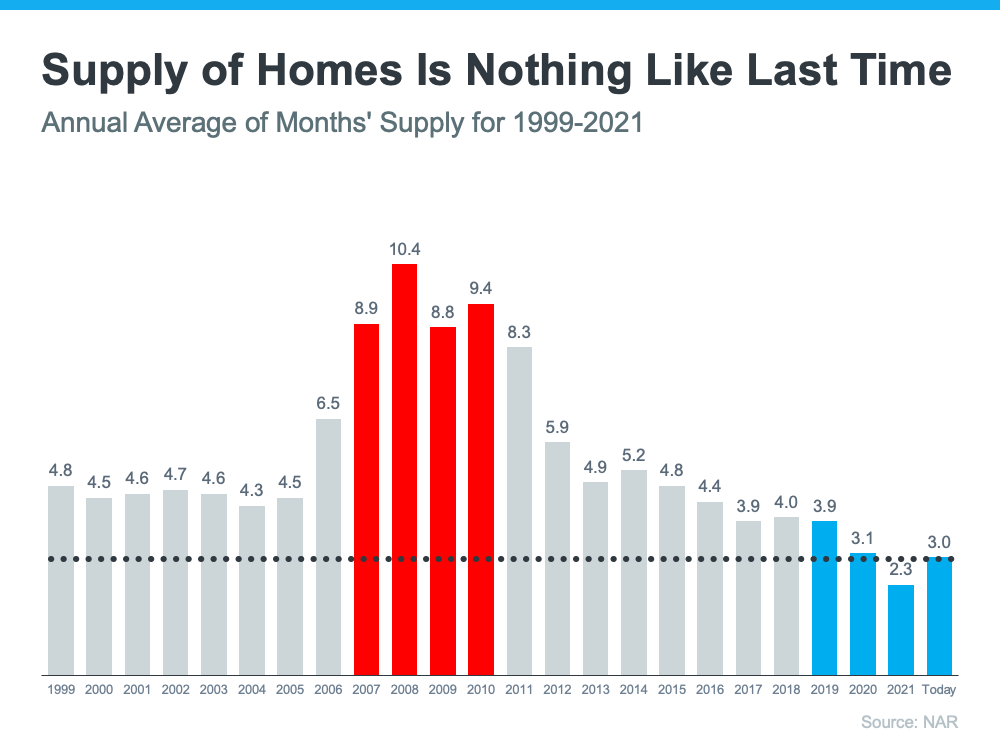
One of the reasons inventory is still low is because of sustained underbuilding. When you couple that with ongoing buyer demand as millennials age into their peak homebuying years, it continues to put upward pressure on home prices. That limited supply compared to buyer demand is why experts forecast home prices won’t fall this time.
Mortgage Standards Were Much More Relaxed During the Crash
During the lead-up to the housing crisis, it was much easier to get a home loan than it is today. The graph below showcases data on the Mortgage Credit Availability Index (MCAI) from the Mortgage Bankers Association (MBA). The higher the number, the easier it is to get a mortgage.
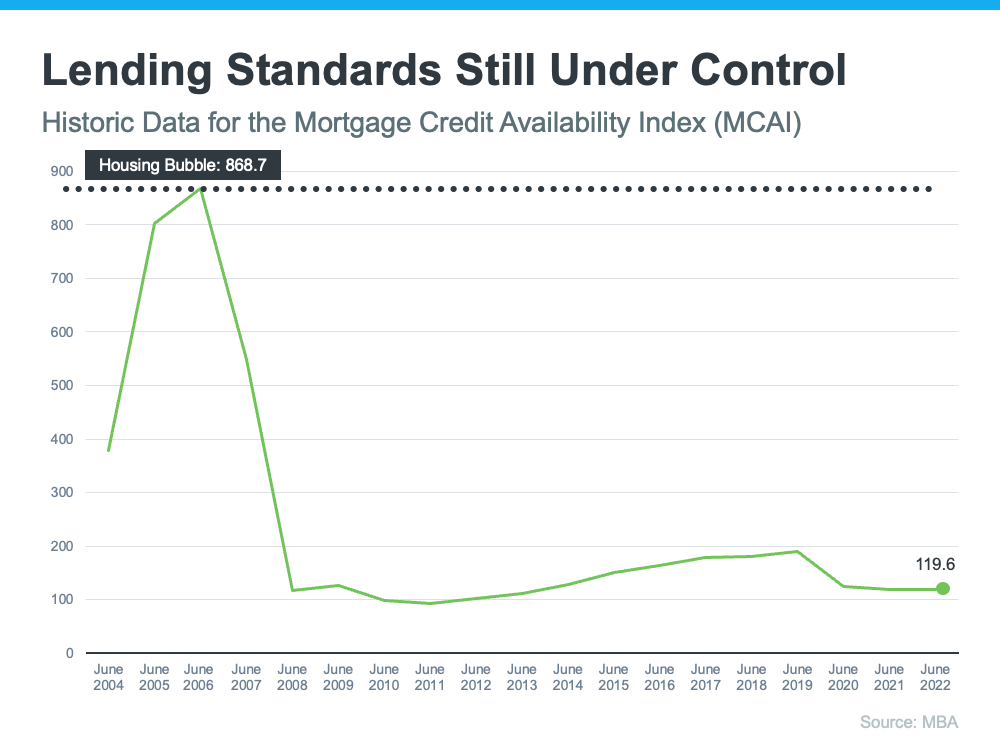
Running up to 2006, banks were creating artificial demand by lowering lending standards and making it easy for just about anyone to qualify for a home loan or refinance their current home. Back then, lending institutions took on much greater risk in both the person and the mortgage products offered. That led to mass defaults, foreclosures, and falling prices.
Today, things are different, and purchasers face much higher standards from mortgage companies. Mark Fleming, Chief Economist at First American, says:
“Credit standards tightened in recent months due to increasing economic uncertainty and monetary policy tightening.”
Stricter standards, like there are today, help prevent a risk of a rash of foreclosures like there was last time.
The Foreclosure Volume Is Nothing Like It Was During the Crash
The most obvious difference is the number of homeowners that were facing foreclosure after the housing bubble burst. Foreclosure activity has been on the way down since the crash because buyers today are more qualified and less likely to default on their loans. The graph below uses data from ATTOM Data Solutions to help tell the story:
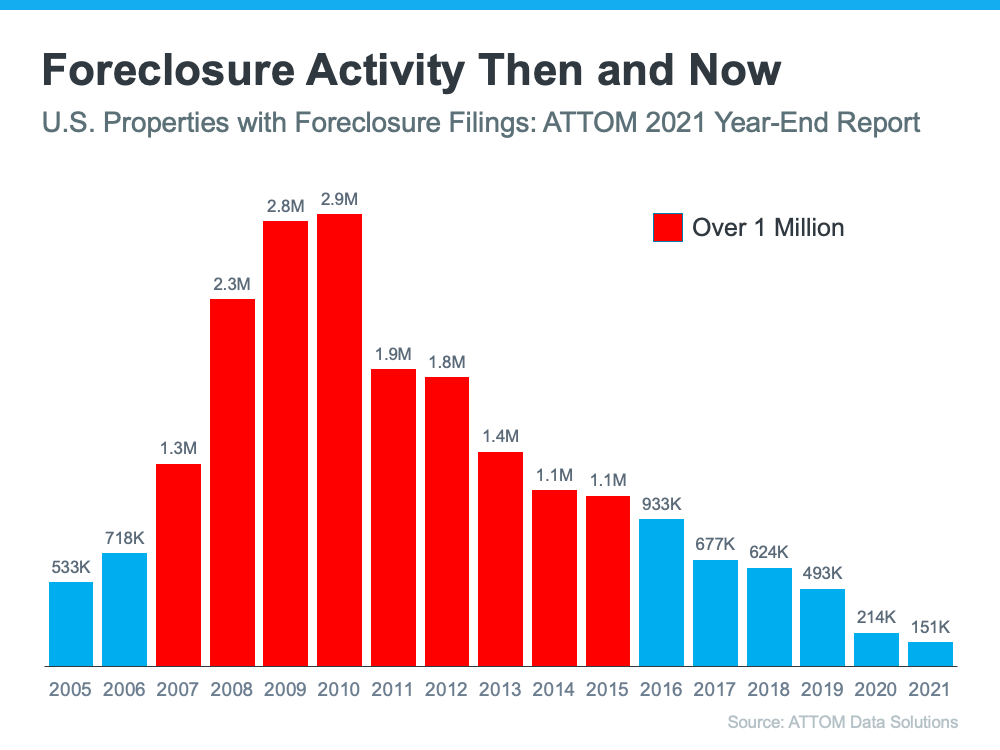
In addition, homeowners today are equity rich, not tapped out. In the run-up to the housing bubble, some homeowners were using their homes as personal ATMs. Many immediately withdrew their equity once it built up. When home values began to fall, some homeowners found themselves in a negative equity situation where the amount they owed on their mortgage was greater than the value of their home. Some of those households decided to walk away from their homes, and that led to a wave of distressed property listings (foreclosures and short sales), which sold at considerable discounts that lowered the value of other homes in the area.
Today, prices have risen nicely over the last few years, and that’s given homeowners an equity boost. According to Black Knight:
“In total, mortgage holders gained $2.8 trillion in tappable equity over the past 12 months – a 34% increase that equates to more than $207,000 in equity available per borrower. . . .”
With the average home equity now standing at $207,000, homeowners are in a completely different position this time.
Bottom Line
If you’re worried we’re making the same mistakes that led to the housing crash, the graphs above should help alleviate your concerns. Concrete data and expert insights clearly show why this is nothing like the last time. We study the real estate market every single day, so give us a call today at 734-761-3060 to talk about your particular condo or home buying or selling goals in today’s market at 734-761-3060 or email info@condohotline.com.
Sellers Have an Opportunity with Today’s Home and Condo Prices

As mortgage rates started to rise this year, many homeowners began to wonder if the value of their homes or condos would fall. Here’s the good news. Historically, when mortgage rates rise by a percentage point or more, home values continue to appreciate. The latest data on home and condo prices seems to confirm that trend.
According to data from CoreLogic, home price appreciation has been re-accelerating since November. The graph below shows this increase in home price appreciation in green:
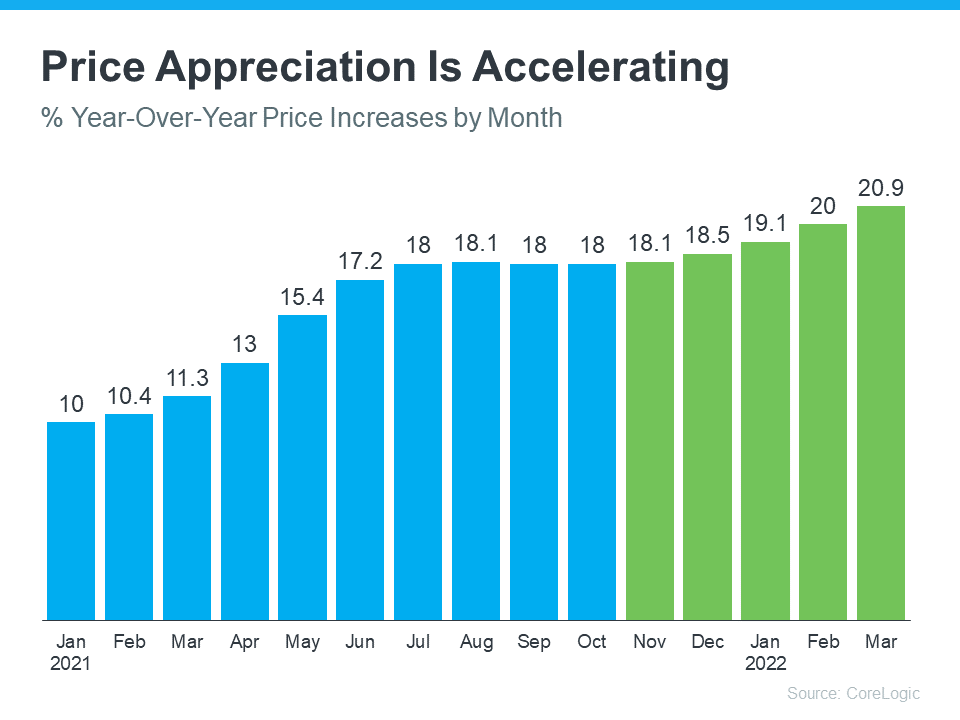 This is largely due to an ongoing imbalance in supply and demand. Specifically, housing supply is still low, and demand is high. As mortgage rates started to rise this year, many homebuyers rushed to make their purchases before those rates could climb higher. The increased competition drove prices up even more. Selma Hepp, Deputy Chief Economist at CoreLogic, explains:
“Home price growth continued to gain speed in early spring, as eager buyers tried to get in front of the mortgage rate surge.”
And experts say prices are forecast to continue appreciating, just at a more moderate pace moving forward. A recent article from Fortune says:
“. . . the swift move up in mortgage rates . . . doesn’t mean home prices are about to crash. In fact, every major real estate firm with a publicly released forecast model . . . still predicts home prices will climb further this year.”
What This Means for You
If you’re thinking about selling your condo or house, you should know you have a great opportunity to list your home and capitalize on today’s home price appreciation. As prices rise, so does the value of your condo or home, which gives your equity a big boost.
When you sell, you can use that equity toward the purchase of your next property. And at today’s record-level of appreciation, that equity may be enough to cover some (if not all) of your down payment.
Bottom Line
History shows rising mortgage rates have not had a negative impact on condo and home prices. Now is still a great time to sell thanks to ongoing price appreciation. When you’re ready to find out how much equity you have in your current property and what’s happening with home and condo prices in your local area, let’s connect at 734-761-3060 or info@condohotline.com.
What to Consider When Choosing Your Retirement Condo or Home

As more and more baby boomers enter retirement age, the question of whether they should sell their homes and move has become a hot topic. In today’s housing market climate, with low available inventory in the starter and trade-up home categories, it makes sense to evaluate your home’s ability to adapt to your needs in retirement.
According to the National Association of Exclusive Buyers Agents (NAEBA), there are 7 factors that you should consider when choosing your retirement home or condo.
1. Affordability
“It may be easy enough to purchase your home today but think long-term about your monthly costs. Account for property taxes, insurance, HOA fees, utilities – all the things that will be due whether or not you have a mortgage on the property.”
Would moving to a condo complex with homeowner association fees actually be cheaper than having to hire all the contractors you would need to maintain your home, lawn, etc.? Would your taxes go down significantly if you relocated? What is your monthly income going to be like in retirement?
2. Equity
“If you have equity in your current home, you may be able to apply it to the purchase of your next. Maintaining a healthy amount of equity gives you a source of emergency funds to tap, via a home equity loan or reverse mortgage.”
The equity you have in your current home may be enough to purchase your retirement home or condo with little to no mortgage. Homeowners in the US gained an average of over $9,700 in equity last year.
3. Maintenance
“As we age, our tolerance for cleaning gutters, raking leaves and shoveling snow can go right out the window. A condominium with low-maintenance needs can be a literal lifesaver, if your health or physical abilities decline.”
As we mentioned earlier, would a condo with an HOA fee be worth the added peace of mind of not having to do the maintenance work yourself?
4. Security
“Elderly homeowners can be targets for scams or break-ins. Living in a home with security features, such as a manned gate house, resident-only access and a security system can bring peace of mind.”
As scary as that thought may be, any additional security is helpful. An extra set of eyes looking out for you always adds to peace of mind.
5. Pets
“Renting won’t do if the dog can’t come too! The companionship of pets can provide emotional and physical benefits.”
Consider all of your options when it comes to bringing your ‘furever’ friend with you to a new home. Will there be necessary additional deposits if you are renting or in a condo? Is the backyard fenced in? How far are you from your favorite veterinarian?
6. Mobility
“No one wants to picture themselves in a wheelchair or a walker, but the home layout must be able to accommodate limited mobility.”
Sixty is the new 40, right? People are living longer and are more active in retirement, but that doesn’t mean that down the road you won’t need your home to be more accessible. Installing handrails and making sure your hallways and doorways are wide enough may be a good reason to look for a home that was built to accommodate these needs.
7. Convenience
“Is the new home close to the golf course, or to shopping and dining? Do you have amenities within easy walking distance? This can add to home value!”
How close are you to your children and grandchildren? Would relocating to a new area make visits with family easier or more frequent? Beyond being close to your favorite stores and restaurants, there are a lot of factors to consider.
Bottom Line
When it comes to your forever home, evaluating your current house for its ability to adapt with you as you age can be the first step to guaranteeing your comfort in retirement. If after considering all these factors you find yourself curious about your options, let’s get together to evaluate your ability to sell your house in today’s market and get you into your dream retirement home! Give us a call today at 734-761-3060 to discuss your options. Start your Ann Arbor Condo search here!