
What Is Pop-Up Tax? A Guide for Homebuyers in Ann Arbor
A Buyer’s Guide to Pop-up Tax

When buying a home or condo in Ann Arbor, there’s a term that often catches homebuyers, particularly first-time buyers, off guard: the pop-up tax. This little-known factor can have a significant impact on your property tax bill after closing. But what is it, exactly, and how does it work? More importantly, how can you prepare for it?
This guide will explain the concept of pop-up tax, clarify how it affects your property taxes, and provide tips for navigating this cost so you can approach your home purchase with confidence.
What Is Pop-Up Tax?
The pop-up tax is a term used to describe the increase in property tax assessments that occurs when a property changes ownership. Under Michigan law, the taxable value of a home or condo—used to calculate property taxes—remains capped while the same owner holds the title. This means the property taxes typically increase only slightly each year due to limits set by the state.
However, when a property is sold, this cap is removed, and the taxable value is “uncapped,” triggering a reassessment. The property’s taxable value is reset to match its state equalized value (SEV), which is typically about 50% of the property’s market value. This reassessment can result in a significant jump in property taxes, hence the colloquial name “pop-up tax.”
For example, if the previous homeowner’s taxable value was $125,000 but the state equalized value after the sale is $200,000, your taxable value as the new owner will “pop up” to the higher figure. Consequently, your property tax bill will also spike.
How Does the Pop-Up Tax Work?
To understand the pop-up tax in practice, it’s essential to differentiate between two figures:
- Taxable Value – This is the value used to calculate your property taxes. For continuing homeowners, it increases annually at the rate of inflation or 5%, whichever is lower, thanks to Michigan’s property tax cap (Proposal A).
- State Equalized Value (SEV) – This is an estimate of 50% of your home’s market value, determined by local assessors. SEV fluctuates with the property’s appraised market value.
When a property changes hands, the taxable value is uncapped and reset to the SEV. Property taxes are then recalculated based on the new taxable value. Depending on how long the previous owner held the property—and how dramatically property values have risen in the area—the difference between the old and new taxable value can be substantial.
Example Scenario:
Imagine you’re buying a condo in Ann Arbor:
- The seller purchased the property 15 years ago for $150,000. Over time, with Michigan’s tax cap, their taxable value crept up to $100,000.
- You’re purchasing the condo today for $300,000. The SEV would be half of that, or $150,000. Now that the taxable value is uncapped, it will rise to $150,000.
- If the local property tax rate is 2%, your annual taxes increase from $2,000 (2% of $100,000) to $3,000 (2% of $150,000), meaning you’re paying $1,000 more each year.
The key takeaway here? Even if the previous owner’s property taxes seemed affordable, they may not reflect what you’ll pay after buying the home.
What Makes Ann Arbor Unique?
Ann Arbor’s dynamic real estate market plays a big role in the impact of pop-up taxes. With a mix of high-demand areas and steadily increasing property values, SEVs (and consequently property taxes) can rise dramatically over time. Homes owned for many years may have taxable values well below their market values, leading to a more significant adjustment when ownership changes.
It’s also worth noting that millage rates—or local tax rates—add to this. Ann Arbor has a variety of millages supporting schools, parks, and local services that contribute to the city’s thriving community but also increase property tax obligations compared to surrounding areas.
For new homeowners, this means it’s especially important to account for the potential tax adjustment when determining your budget.
How Can Buyers Prepare for the Pop-Up Tax?
Understanding and planning for the pop-up tax can save you from unwelcome surprises after closing. Here are some practical tips:
1. Estimate Your Adjusted Property Taxes
Before committing to a purchase, use the home’s SEV to estimate what your property taxes will look like after the sale. The easiest way to find this value is through the local assessor’s website or by contacting their office directly. Multiply the SEV by two to approximate the home’s market value, then apply the local millage rate to calculate your potential tax bill.
2. Use Online Tax Estimation Tools
Many municipalities, including those in Washtenaw County, provide online property tax calculators. These tools can help you determine your estimated tax liability based on the property’s sale price and applicable millages.
3. Talk to Your Realtor
Working with an experienced realtor in Ann Arbor ensures you’re not navigating these complexities alone. A local real estate agent can provide detailed tax insights for specific neighborhoods and recent properties they’ve sold.
4. Include Taxes in Your Budget
When calculating your monthly housing costs, be sure to include the adjusted property tax estimate along with mortgage payments, homeowners’ insurance, utilities, and association dues (if applicable). This full financial picture will prevent you from overextending your budget.
5. Appeal Your SEV if Necessary
If you believe the assessor overestimates your property’s market value after the sale, you have the right to appeal the new SEV. Consult the city or county guidelines for filing an appeal, and be prepared to submit supporting documentation.
Resources for Ann Arbor Homebuyers
Navigating property taxes can be daunting, but there are plenty of resources available to help:
- City of Ann Arbor Assessor’s Office – Provides property records, tax rates, and guidance for tax-related questions.
- Washtenaw County Website – Offers access to property tax calculators and assessor information.
- Michigan State Tax Commission – Publishes detailed guides on property taxes, SEVs, and appeals processes.
- Local Realtors – Many agents specialize in helping buyers understand pop-up taxes and other costs unique to the area.
Additionally, consider attending local homebuyer workshops or consulting with a real estate attorney for a deeper understanding of the process.
Final Thoughts
The pop-up tax may not sound like the most exciting part of buying a home or condo in Ann Arbor, but it’s a critical factor to plan for. By understanding how it works, estimating your property taxes, and leveraging the right resources, you can avoid any financial shocks and confidently take the next step in your homebuying journey.
Remember, buying a property is not just a financial investment—it’s a personal milestone. Preparing for the pop-up tax ensures that this moment remains as exciting and stress-free as possible. To learn more about the home buying journey and to start your, contact us at The Bouma Group today at 734-761-3060 or info@condohotline.com.
Time in the Market Beats Timing the Market
Timing the Market – Is it Possible?
Does it make more sense to buy a home now or wait? There’s a lot to consider, from what’s happening in the market to your changing needs. But generally speaking, timing the market isn’t a good strategy – there are too many factors at play for that to even be possible.
That’s why experts usually say time in the market is better than timing the market.
In other words, if you want to buy a home and you’re able to make the numbers work, doing it sooner rather than later is usually worth it. Bankrate explains why:
“No matter which way the real estate market is leaning, though, buying now means you can start building equity immediately.”
Benefits of Buying Now vs. Later
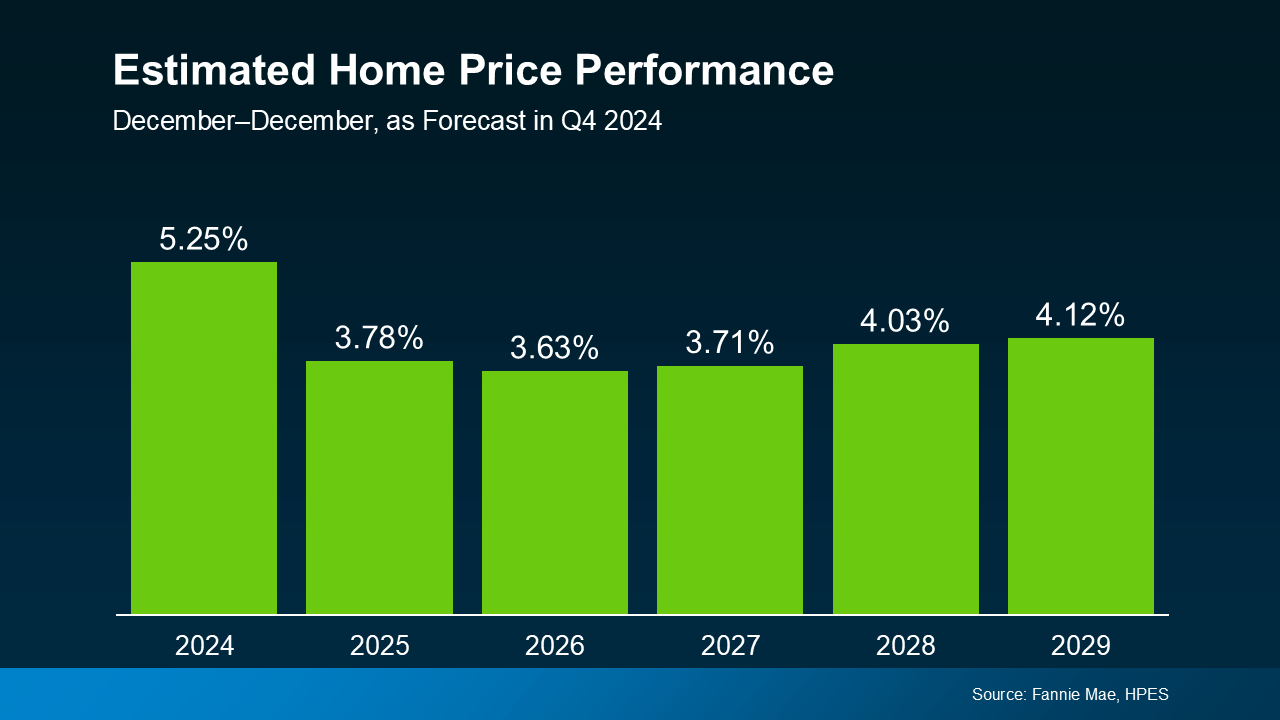
Here’s some data to break this down so you can really see the benefit of buying now versus later. Each quarter, Fannie Mae releases the Home Price Expectations Survey. It asks over one hundred economists, real estate experts, and investment and market strategists what they forecast for home prices over the next five years. In the latest release, experts are projecting home prices will continue to rise through at least 2029 – just at a slower, more normal pace than they did over the past few years (see the graph below):
But what does that really mean for you? To give these numbers context, the graph below uses a typical home value to show how it could appreciate over the next few years using those HPES projections. This is what you could start to earn in equity if you buy a home in early 2025.
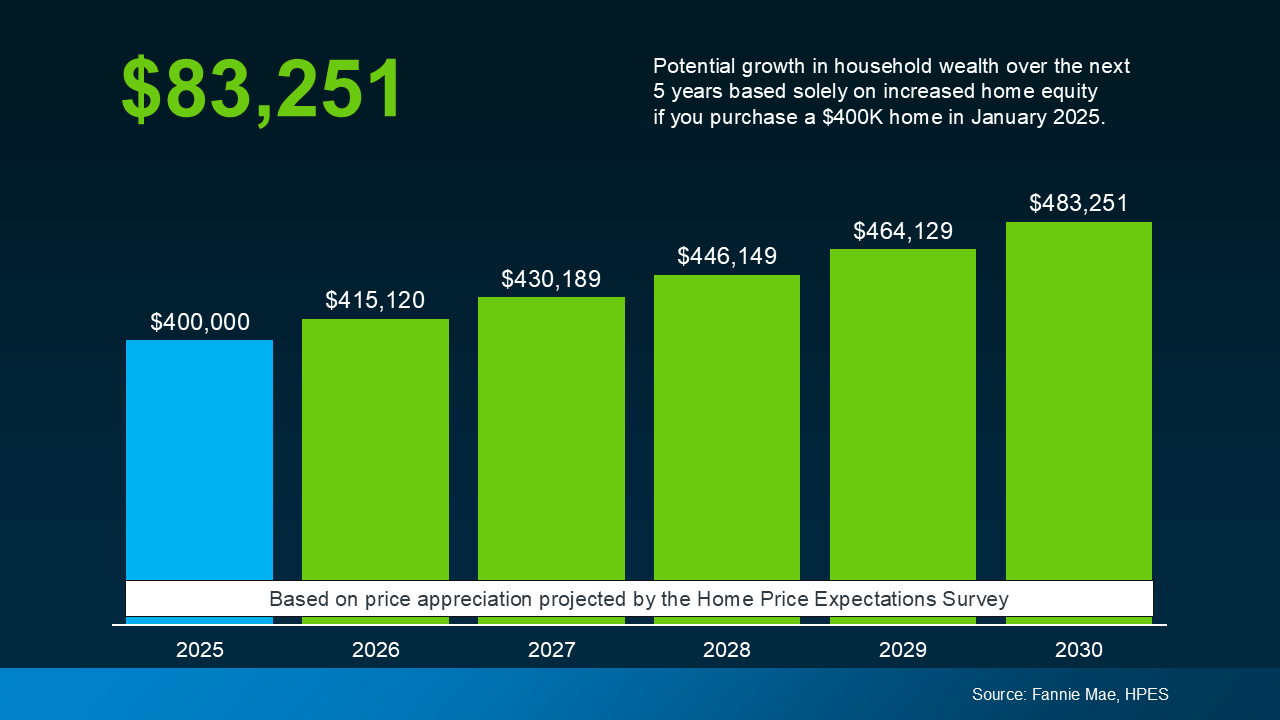
In this example, let’s say you go ahead and buy a $400,000 home this January. Based on the expert forecasts from the HPES, you could gain more than $83,000 in household wealth over the next five years. That’s not a small number. If you keep on renting, you’re losing out on this equity gain.
And while today’s market has its fair share of challenges, this is why buying is going to be worth it in the long run. If you want to buy a home, don’t give up. There are creative ways we can make your purchase possible. From looking at more affordable areas, to considering condos or townhomes, or even checking out down payment assistance programs, there are options to help you make it happen.
So sure, you could wait. But if you’re just waiting it out to perfectly time the market, this is what you’re missing out on. And that decision is up to you.
Bottom Line
If you’re torn between buying now or waiting, don’t forget that it’s time in the market, not timing the market that truly matters. Let’s connect if you want to talk about what you need to do to get the process started today. Contact us today at The Bouma Group, Realtors and let’s discuss what timing makes sense for your next move! 734-761-3060 or info@bouma.com.
Maximize Your Condo Sale with the Power of Home Equity
What is Home Equity and Why Does It Matter?
Key Points
- Understanding your home equity can be a game-changer when deciding to sell your condo or home, especially in today’s market of high mortgage rates.
- Nearly 70% of homeowners have significant equity, making it an opportune time to consider selling.
- Our expert real estate team is here to guide you through the process, offering free home value assessments and answering any questions.

Home equity is more than just a financial term; it’s your ticket to new opportunities. In simple terms, it is the difference between your home’s current market value and the remaining balance on your mortgage. But why should you care? Well, with today’s real estate market, understanding it can be a game-changer when you decide to move.
The Equity Boom: A Silver Lining in Today’s Market

You’re not alone if you’re hesitant to sell your condo due to high mortgage rates. However, there’s good news. According to data from ATTOM and the Census, nearly 68.7% of homeowners have either paid off their mortgages or have at least 50% equity in their homes. That’s right—almost 70% of homeowners are sitting on a goldmine of equity!
How Understanding Your Equity Can Ease the Selling Process

Knowing your home equity can remove a lot of the uncertainty around selling your condo or home. With significant equity, you’ll have more flexibility in choosing your next home, negotiating deals, and even covering moving expenses. And the best part? Our expert real estate team is here to guide you every step of the way.
Leveraging Equity: Your Hidden Asset

Understanding your home equity isn’t just about knowing numbers; it’s about leveraging this asset to your advantage. With our expertise, we can help you strategize on how to use your equity for a down payment on a new place, or even as a financial cushion for future investments. It’s not just about selling your condo or home; it’s about planning your financial future.
Take the Next Step: Unlock Your Home Equity Today
Ready to unlock the potential of your home equity? Don’t navigate this journey alone. Contact our expert real estate team today for a free home value assessment or with any questions you may have. Your future home awaits! 734-761-3060 or info@condohotline.com
Sellers Have an Opportunity with Today’s Home and Condo Prices
As mortgage rates started to rise this year, many homeowners began to wonder if the value of their homes or condos would fall. Here’s the good news. Historically, when mortgage rates rise by a percentage point or more, home values continue to appreciate. The latest data on home and condo prices seems to confirm that trend.
According to data from CoreLogic, home price appreciation has been re-accelerating since November. The graph below shows this increase in home price appreciation in green:
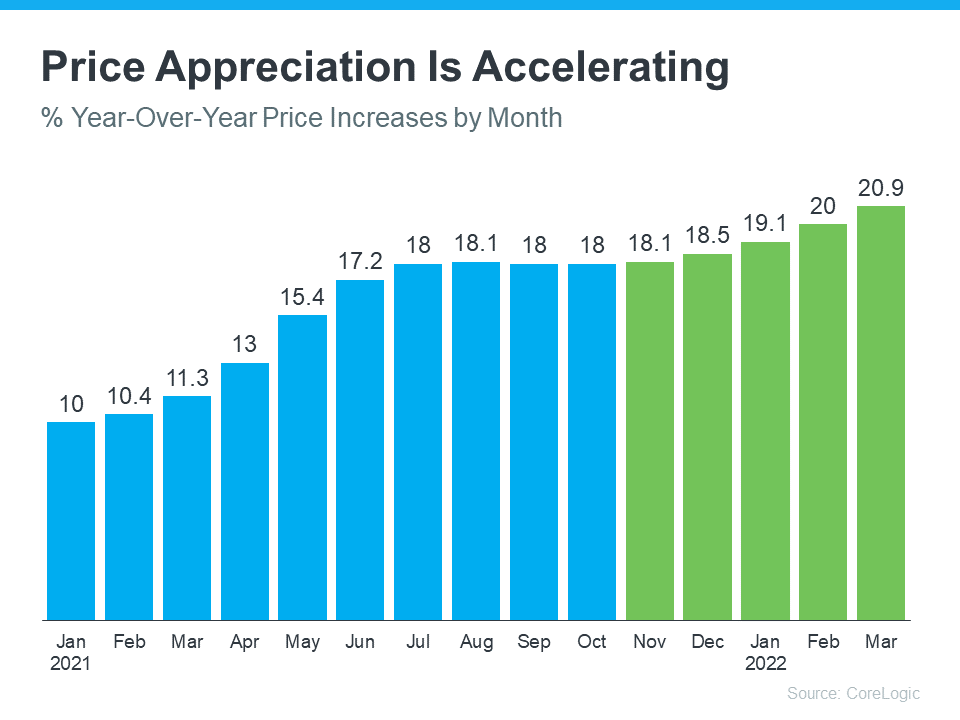 This is largely due to an ongoing imbalance in supply and demand. Specifically, housing supply is still low, and demand is high. As mortgage rates started to rise this year, many homebuyers rushed to make their purchases before those rates could climb higher. The increased competition drove prices up even more. Selma Hepp, Deputy Chief Economist at CoreLogic, explains:
“Home price growth continued to gain speed in early spring, as eager buyers tried to get in front of the mortgage rate surge.”
And experts say prices are forecast to continue appreciating, just at a more moderate pace moving forward. A recent article from Fortune says:
“. . . the swift move up in mortgage rates . . . doesn’t mean home prices are about to crash. In fact, every major real estate firm with a publicly released forecast model . . . still predicts home prices will climb further this year.”
What This Means for You
If you’re thinking about selling your condo or house, you should know you have a great opportunity to list your home and capitalize on today’s home price appreciation. As prices rise, so does the value of your condo or home, which gives your equity a big boost.
When you sell, you can use that equity toward the purchase of your next property. And at today’s record-level of appreciation, that equity may be enough to cover some (if not all) of your down payment.
Bottom Line
History shows rising mortgage rates have not had a negative impact on condo and home prices. Now is still a great time to sell thanks to ongoing price appreciation. When you’re ready to find out how much equity you have in your current property and what’s happening with home and condo prices in your local area, let’s connect at 734-761-3060 or info@condohotline.com.