How to Stop Renting and Become a First-Time Homebuyer
The First-Time Homebuyer Plan
Key Takeaways:
Renting doesn’t help build a future
Homeownership can be accessible
Contact your trusted local agents for more on being a first-time homebuyer
Many renters discover a universal truth—renting can often feel like it lacks long-term benefits. However, each monthly rent payment potentially reduces a landlord’s mortgage while increasing their home equity. This revelation may inspire some to transition from renters to first-time homebuyers. If you’re contemplating this life-changing decision, now is an opportune time to consider buying a home.
The appeal of escaping ever-increasing rental rates motivates many first-time condo buyers. Ready to join this progressive march towards homeownership? We are here to guide you through each step of the process. Here’s a simple guide to get you started on your homeownership journey.
Identify Your Ideal Location
Do you enjoy your current neighborhood? If you do, don’t assume that you can’t afford to buy in the same area simply because rental rates may be rising. In many cases, owning a home can be more affordable than renting, potentially allowing you to consider areas previously thought to be beyond your reach.
Once you’ve identified your preferred locales, let us know your chosen zip codes and specific preferences. We’ll compile a list of suitable properties for your personal viewing.
Examine Your Finances
Before embarking on your homeownership journey, take a comprehensive look at your financial situation. Here are some key steps:
Review your credit report and report any inaccuracies
Calculate your debts
Evaluate your savings and future saving capacity
Lenders consider your financial health when deciding on mortgage approval. Can you afford the mortgage payment and additional costs comfortably? Keeping a debt-to-income ratio of less than 40% is generally advisable, as it widens your opportunities.
Assemble Necessary Documents
While reviewing your finances, gather these important documents for potential lenders:
W-2 and 1099 forms
Monthly bank statements
Asset statements
401(k), 403(b), mutual funds, stocks, bonds, and IRAs
Last two tax returns
Landlord reference
Choose the Right Lender
Securing a lender is a crucial step that should be undertaken early in the process. A lender can accurately determine what you can afford and offer valuable advice on improving your financial profile and selecting the best mortgage plan. Some lenders also offer specific incentives for first-time homebuyers.
If you need recommendations for lenders, we can provide you with a list. Give us a call at 734-761-3060, and we’ll provide you with a list of lenders that may suit your needs.
Time Your Purchase Perfectly
Even when transitioning to homeownership, remember to fulfill the terms of your current lease. If it requires a 30-day notice of non-renewal, try to time your purchase so that your lease ends around the time you close on your new home. If the timing doesn’t align, consider discussing a month-to-month rental option with your landlord.
Embrace the Excitement of Homeownership
Stepping into the role of a first-time homebuyer is a thrilling milestone, and we’re delighted to be part of your journey. If you’ve considered buying a condo or home, now is the time to act. Follow this guide and reach out to us for expert assistance in navigating the rewarding adventure of homeownership. Contact us today at info@condohotline.com or 734-761-3060.
Owning Is More Affordable than Renting in the Majority of the Country
If you were thinking about buying a condo or home this year, but already pressed pause on your plans due to rising home prices and increasing mortgage rates, there’s something you should consider. According to the latest report from ATTOM Data, owning a home is more affordable than renting in the majority of the country. The 2022 Rental Affordability Report says:
“. . . Owning a median-priced home is more affordable than the average renton a three-bedroom property in 666, or 58 percent, of the 1,154 U.S. counties analyzed for the report. That means major home ownership expenses consume a smaller portion of average local wages than renting.”
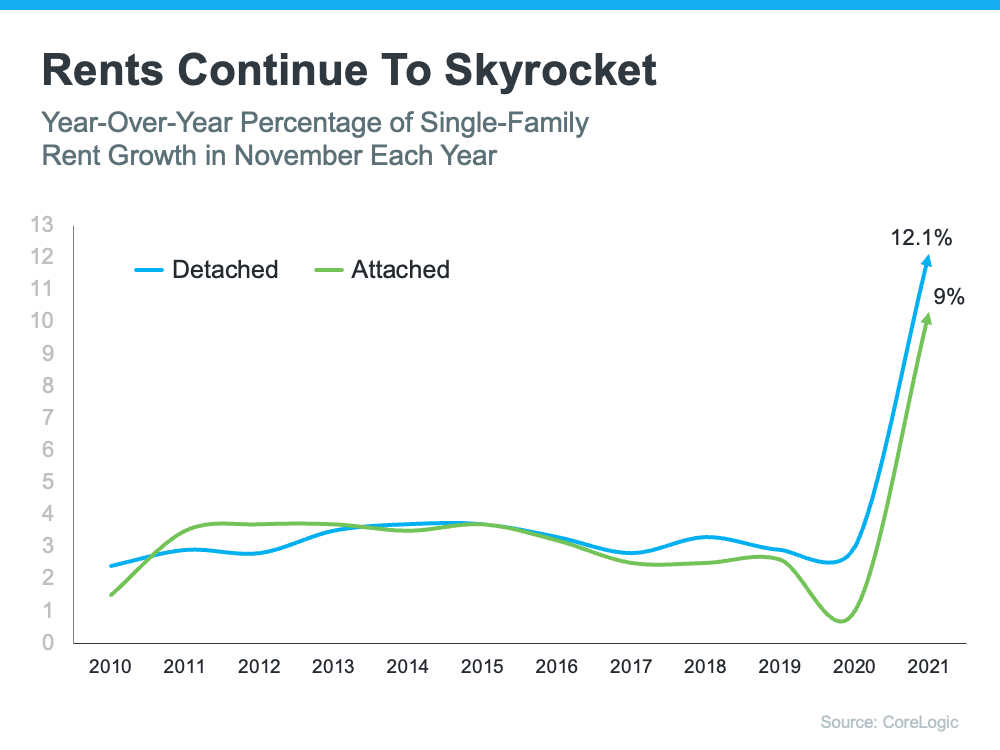
Other experts in the industry offer additional perspectives on renting today. In the latest Single-Family Rent Index from CoreLogic, single-family rent saw the fastest year-over-year growth in over 16 years when comparing data for November each year (see graph below):
Molly Boesel, Principal Economist at CoreLogic, stresses the importance of what the data shows:
“Single-family rent growth hit its sixth consecutive record high. . . . Annual rent growth . . . was more than three times that of a year earlier. Rent growth should continue to be robust in the near term, especially as the labor market continues to improve.”
What Does This Mean for You?
While it’s true home and condo prices and mortgage rates are rising, so are monthly rents. As a prospective buyer, rising rates and prices shouldn’t be enough to keep you on the sideline, though. As the chart above shows, rents are skyrocketing. The big difference is, when you rent, that rising cost benefits your landlord’s investment strategy, but it doesn’t deliver any sort of return for you.
In contrast, when you buy a condo or home, your monthly mortgage payment serves as a form of forced savings. Over time, as you pay down your loan and as home values rise, you’re building equity (and by extension, your own net worth). Not to mention, you’ll lock in your mortgage payment for the duration of your loan (typically 15 to 30 years) and give yourself a stable and reliable monthly payment.
When asking yourself if you should keep renting or if it’s time to buy, think about what Todd Teta, Chief Product Officer at ATTOM Data, says:
“. . . Home ownership still remains the more affordable option for average workers in a majority of the country because it still takes up a smaller portion of their pay.”
If buying takes up a smaller portion of your pay and has benefits renting can’t provide, the question really becomes: is renting really worth it?
Bottom Line
If you’re weighing your options between renting and buying, it’s important to look at the full picture. While buying a home can feel like a daunting process, having a trusted advisor on your side is key. Let’s connect to explore your options so you can learn more about the benefits of homeownership today. Contact us today at 734-761-3060 or info@condohotline.com.
4 Things Every Renter Needs To Consider
As a renter, you’re constantly faced with the same dilemma: keep renting for another year or purchase a condo or home? Your answer depends on your current situation and future plans, but there are a number of benefits to homeownership every renter needs to consider.
Here are a few things you should think about before you settle on renting for another year.
1. Rents Are Rising Quickly
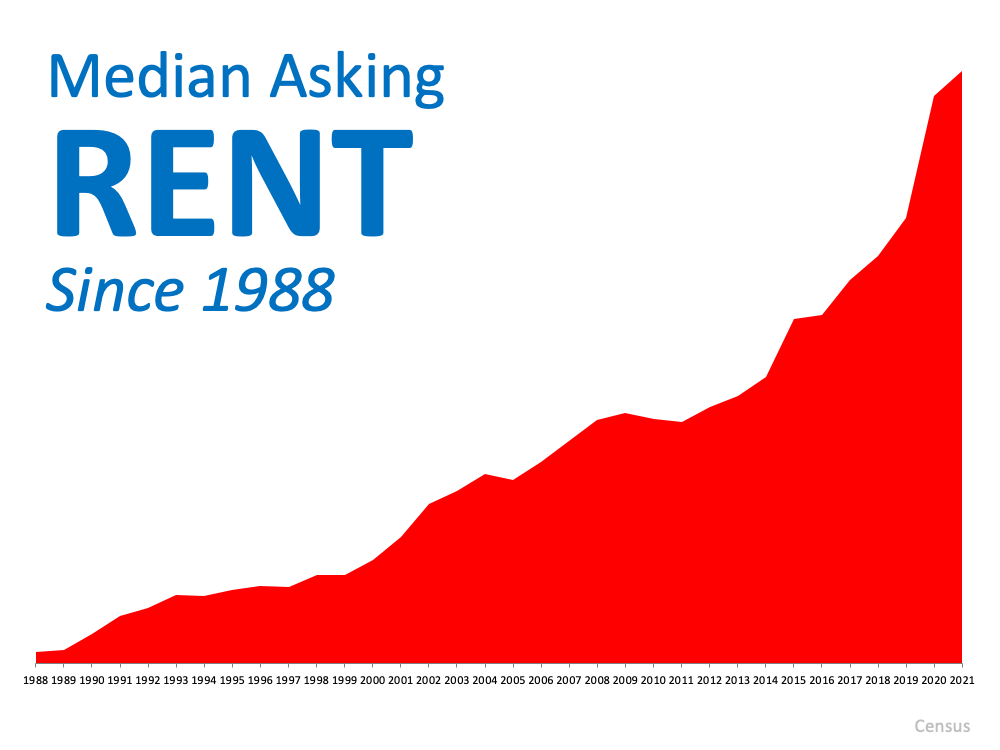
Rent increasing each year isn’t new. Looking back at Census data confirms rental prices have gone up consistently for decades (see graph below):
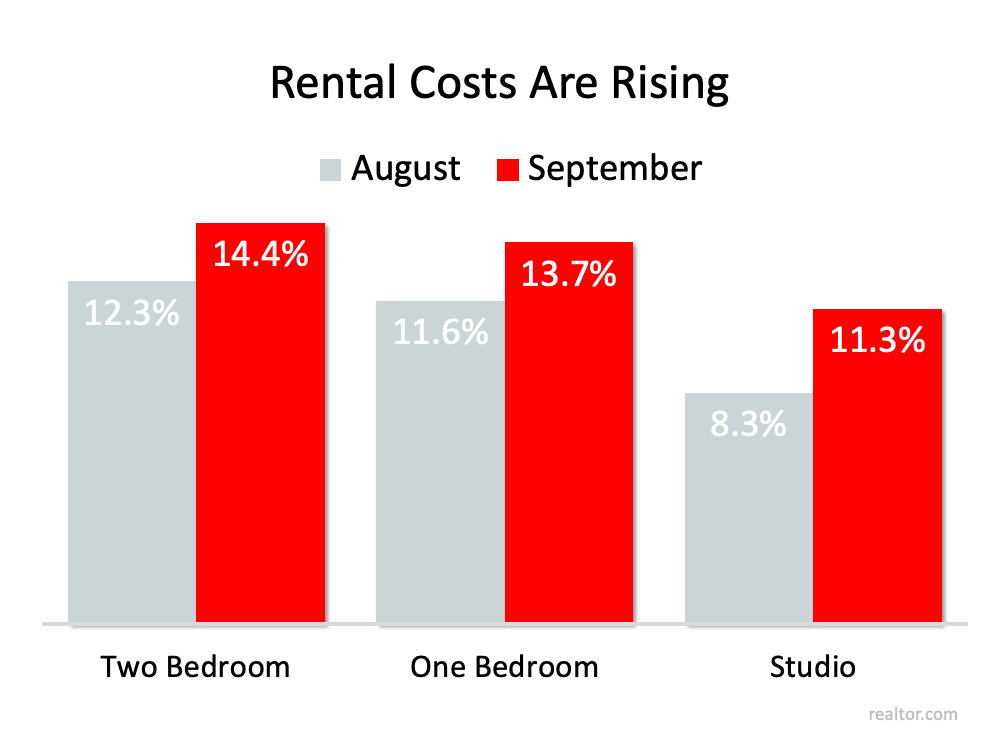
If you’re a renter, you’re faced with payments that continue to climb each year. Realtor.com recently shared the September Rental Report, and it shows price increases accelerating from August to September (see graph below):
As the graph shows, rents are still on the rise. It’s important to keep this in mind when the time comes for you to sign a new lease, as your monthly rental payment may increase substantially when you do.
2. Renters Miss Out on Equity Gains
One of the most significant advantages of buying a condo or home is the wealth you build through equity. This year alone, homeowners gained a substantial amount of equity, which, in turn, grew their net worth. As a renter, you miss out on this wealth-building tool that can be used to fund your retirement, buy a bigger home, downsize, or even achieve personal goals like paying for an education or starting a new business.
3. Homeowners Can Customize to Their Heart’s Content
This is a big decision-making point if you want to be able to paint, renovate, and make home upgrades. In many cases, your property owner determines these selections and prefers you don’t alter them as a renter. As a homeowner, you have the freedom to decorate and personalize your home to truly make it your own.
4. Owning a Condo or Home May Provide Greater Mobility than You Think
You may choose to rent because you feel it provides greater flexibility if you need to move for any reason. While it’s true that selling a home may take more time than finding a new rental, it’s important to note how quickly condos and houses are selling in today’s market. According to the National Association of Realtors (NAR), the average home is only on the market for 17 days. That means you may have more flexibility than you think if you need to relocate as a homeowner.
Bottom Line
Deciding if it’s the right time for you to buy is a personal decision, and the timing is different for everyone. However, if you’d like to learn more about the benefits of homeownership, let’s connect so you can make a confident, informed decision and have a trusted advisor along the way. Contact us today at 734-761-3060 or info@bouma.com.
Two Reasons Why Waiting a Year To Buy Could Cost You
If you’re a renter with a desire to become a homeowner or a homeowner who’s decided your current place no longer fits your needs, you may be hoping that waiting a year might mean better market conditions to purchase a condo or home.
To determine if you should buy now or wait, you need to ask yourself two simple questions:
What will home prices be like in 2022?
Where will mortgage rates be by the end of 2022?
Let’s shed some light on the answers to both of these questions.
What will home prices be like in 2022?
Three major housing industry entities project continued home price appreciation for 2022. Here are their forecasts:
Using the average of the three projections (6.27%), a condo that sells for $350,000 today would be valued at $371,945 by the end of next year. That means, if you delay, it could cost you more. As a prospective buyer, you could pay an additional $21,945 if you wait.
Where will mortgage rates be by the end of 2022?
Today, the 30-year fixed mortgage rate is hovering near historic lows. However, most experts believe rates will rise as the economy continues to recover. Here are the forecasts for the fourth quarter of 2022 by the three major entities mentioned above:
That averages out to 3.7% if you include all three forecasts, and it’s nearly a full percentage point higher than today’s rates. Any increase in mortgage rates will increase your cost.
What does it mean for you if both home values and mortgage rates rise?
You’ll pay more in mortgage payments each month if both variables increase. Let’s assume you purchase a $350,000 condo or home this year with a 30-year fixed-rate loan at 2.86% after making a 10% down payment. According to the mortgage calculator from Smart Asset, your monthly mortgage payment (including principal and interest payments, and estimated home insurance, taxes in your area, and other fees) would be approximately $1,899.
That same condo or home could cost $371,945 by the end of 2022, and the mortgage rate could be 3.7% (based on the industry forecasts mentioned above). Your monthly mortgage payment, after putting down 10%, would increase to $2,166.
The difference in your monthly mortgage payment would be $267. That’s $3,204 more per year and $96,120 over the life of the loan.
If you consider that purchasing now will also let you take advantage of the equity you’ll build up over the next calendar year, which is approximately $22,000 for a house with a similar value, then the total net worth increase you could gain from buying this year is over $118,000.
Bottom Line
When asking if you should buy a condo or home, you probably think of the non-financial benefits of owning property as a driving motivator. When asking when to buy, the financial benefits make it clear that doing so now is much more advantageous than waiting until next year.
Is Homeownership Still Considered Part of the American Dream?
Since the birth of our nation, homeownership has always been considered a major piece of the American Dream. As Frederick Peters reports in Forbes:
“The idea of a place of one’s own drives the American story. We became a nation out of a desire to slip the bonds of Europe, which was still in many respects a collection of feudal societies. Old rich families, or the church, owned all the land and, with few exceptions, everyone else was a tenant. The magic of America lay not only in its sense of opportunity, but also in the belief that life could in every way be shaped by the individual. People traveled here not just for religious freedom, but because in America anything seemed possible.”
Additionally, a research paper released just prior to the shelter-in-place orders issued last year concludes:
“Homeownership is undeniably the cornerstone of the American Dream, and is inseparable from our national ethos that, through hard work, every American should have opportunities for prosperity and success. It is the stability and wealth creation that homeownership provides that represents the primary mechanism through which many American families are able to achieve upward socioeconomic mobility and greater opportunities for their children.”
Has the past year changed the American view on homeownership?
Definitely not. A survey of prospective buyers released by realtor.com last week reveals that becoming a homeowner is still the main reason this year’s first-time buyers want to purchase a condo or home. When asked why they want to buy, three of the top four responses center on the financial benefits of owning a condo or home. The top four reasons for buying are:
59% – “I want to be a homeowner”
33% – “I want to live in a space that I can invest in improving”
31% – “I need more space”
22% – “I want to build equity”
Millennials believe most strongly in homeownership.
The survey also reports that 62% of millennials say a desire to be a homeowner is the main reason they’re buying. This contradicts the thinking of some experts who had believed millennials were going to be the first “renter generation” in our nation’s history.
While reporting on the survey, George Ratiu, Senior Economist at realtor.com, said:
“Americans, even millennials who many thought would never buy, have a strong preference for homeownership for the same reasons many generations before them have — to invest in a place of their own and in their communities, and to build a solid financial foundation for themselves and their families.”
Odeta Kushi, Deputy Chief Economist for First American, also addresses millennial homeownership:
“Millennials have delayed marriage and having children in favor of investing in education, pushing marriage and family formation to their early-to-mid thirties, compared with previous generations, who primarily made these lifestyle choices in their twenties…Delayed lifestyle choices delay the desire for homeownership.”
Kushi goes on to explain:
“As more millennials get married and form families, millennials remain poised to transform the housing market. In fact, the housing market is already experiencing the earliest gusts of the tailwind.”
Bottom Line
As it always has been and very likely always will be, homeownership continues to be a major component in every generation’s pursuit of the American Dream. Contact us today at 734-761-3060 or info@condohotline.com and we can help you find your dream condo and guide you through this market. Start your new condo search here!
What to Consider When Choosing Your Retirement Condo or Home
As more and more baby boomers enter retirement age, the question of whether they should sell their homes and move has become a hot topic. In today’s housing market climate, with low available inventory in the starter and trade-up home categories, it makes sense to evaluate your home’s ability to adapt to your needs in retirement.
According to the National Association of Exclusive Buyers Agents (NAEBA), there are 7 factors that you should consider when choosing your retirement home or condo.
1. Affordability
“It may be easy enough to purchase your home today but think long-term about your monthly costs. Account for property taxes, insurance, HOA fees, utilities – all the things that will be due whether or not you have a mortgage on the property.”
Would moving to a condo complex with homeowner association fees actually be cheaper than having to hire all the contractors you would need to maintain your home, lawn, etc.? Would your taxes go down significantly if you relocated? What is your monthly income going to be like in retirement?
2. Equity
“If you have equity in your current home, you may be able to apply it to the purchase of your next. Maintaining a healthy amount of equity gives you a source of emergency funds to tap, via a home equity loan or reverse mortgage.”
The equity you have in your current home may be enough to purchase your retirement home or condo with little to no mortgage. Homeowners in the US gained an average of over $9,700 in equity last year.
3. Maintenance
“As we age, our tolerance for cleaning gutters, raking leaves and shoveling snow can go right out the window. A condominium with low-maintenance needs can be a literal lifesaver, if your health or physical abilities decline.”
As we mentioned earlier, would a condo with an HOA fee be worth the added peace of mind of not having to do the maintenance work yourself?
4. Security
“Elderly homeowners can be targets for scams or break-ins. Living in a home with security features, such as a manned gate house, resident-only access and a security system can bring peace of mind.”
As scary as that thought may be, any additional security is helpful. An extra set of eyes looking out for you always adds to peace of mind.
5. Pets
“Renting won’t do if the dog can’t come too! The companionship of pets can provide emotional and physical benefits.”
Consider all of your options when it comes to bringing your ‘furever’ friend with you to a new home. Will there be necessary additional deposits if you are renting or in a condo? Is the backyard fenced in? How far are you from your favorite veterinarian?
6. Mobility
“No one wants to picture themselves in a wheelchair or a walker, but the home layout must be able to accommodate limited mobility.”
Sixty is the new 40, right? People are living longer and are more active in retirement, but that doesn’t mean that down the road you won’t need your home to be more accessible. Installing handrails and making sure your hallways and doorways are wide enough may be a good reason to look for a home that was built to accommodate these needs.
7. Convenience
“Is the new home close to the golf course, or to shopping and dining? Do you have amenities within easy walking distance? This can add to home value!”
How close are you to your children and grandchildren? Would relocating to a new area make visits with family easier or more frequent? Beyond being close to your favorite stores and restaurants, there are a lot of factors to consider.
Bottom Line
When it comes to your forever home, evaluating your current house for its ability to adapt with you as you age can be the first step to guaranteeing your comfort in retirement. If after considering all these factors you find yourself curious about your options, let’s get together to evaluate your ability to sell your house in today’s market and get you into your dream retirement home! Give us a call today at 734-761-3060 to discuss your options. Start your Ann Arbor Condo search here!
Rent vs. Buy: How to Decide What’s Best for You
Rent vs. Buy: How to Decide What’s Best for You
According to the U.S.Census Bureau,median rent continues to rise. With today’s low mortgage rates, there’s great opportunity for current renters to make a move into homeownership that stretches each dollar a little bit further.
While the best timeline to buy a condo or home is different for everyone, the question remains: Should I continue renting or is it time for me to buy? The answer depends on your current situation and your future plans, so here are some thoughts to help you decide if you’re ready to own a place of your own.
1. Rent Will Continue to Increase
This is one of the top reasons why renters decide to move because in most cases, rent will continue increasing each year. As noted above, the U.S.Census Bureau recently released its quarterly homeownership report, and as the graph below shows, median rent is climbing year after year. When you own a home, you’ll lock in your monthly payment for the life of your loan, creating consistency and predictability in your payments.
2. Freedom to Customize
This is a big decision-making point for many people who want to be able to paint, renovate, and make upgrades. In many cases, landlords determine all of these selections and prefer you do not alter them as a renter. As a homeowner, you have the freedom to decorate and personalize your home to truly make it your own.
3. Privacy
When renting, your landlord has access to your space in case of an emergency. If you own your home or condo, however, you’re the one to decide who can come inside. Given today’s health concerns around the pandemic, this may be a growing priority for you.
4. Flexibility for Relocation
If you’re renting, it may be easier to move quickly should you have a job transfer or simply decide it’s time for a change. When you’re a homeowner and need to sell, this might take a little more time. Today, however, with the housing market’s low inventory, this may no longer be the case. Home and condos are selling at a record-breaking pace, so you may have more flexibility than you think.
5. Building Equity
When you pay your rent, your landlord earns the equity the property gains. If you own, the benefits of your investment go directly toward your net worth. This is savings you’ll be able to use in the future for things like sending children to college, starting a new business, buying a bigger place, or simply downsizing to save for retirement.
6. Tax Advantages
When you own your condo or home, there are additional advantages that work in your favor as well. You can deduct things like your property taxes and mortgage interest (Always make sure you check with your accountant to see which tax-deductible benefits apply to your situation). When you rent, however, the tax benefits are directed to your landlord.
Bottom Line
It’s up to you to decide if you’d prefer to rent or buy, and it’s different for every person. If you’d like to learn more about the pros and cons of each, as well as resources to help you along the way, let’s connect to discuss your options. This way, you can make a confident and informed decision with a trusted expert on your side. Give us a call at 734-761-3060 or email us at info@bouma.com today!
Besides year-to-date sales, all other inventory for Ann Arbor condos have remained stable. July saw 108 new units hit the market, a 4.9% increase from the 103 last July. The amount of sold condos experienced a decline of 4.8%, from 83 to 79 this past month. As for the average listing price, it came to $314,864 versus $293,782 before, a 7.2% rise. Like usual, the average selling price was lower than the average listing price. The ASP for the previous July was $277,709, this year had an 8.4% decrease to $254,375. Luckily for sellers, the average days on the market is down a considerable 22% from July 2019 to 32 days this month.
Aforementioned, the biggest change for the year-to-date statistics was related to the amount of sold condos – 378 units have been sold so far, and this is 13.7% decrease from the 438 last year. A total of 611 condos have been entered into the MLS in 2020, and this is a less drastic difference compared 631 previously, a 3.2% decline. The ALP has seen a minute decrease, from $328,760 to $322,336 now. Cumulatively the ASP is $271,931, which is a 5.6% decline from $288,142 before.
When people talk about homeownership and the American Dream, much of the conversation revolves around the financial benefits of owning a home or condominium. However, two recent studies show that the non-financial benefits might be even more valuable.
In a recent survey, Bank of America asked homeowners: “Does owning a home make you happier than renting?” 93% of the respondents answered yes, while only 7% said no. The survey also revealed:
More than 80% said they wouldn’t go back to renting
88% agreed that buying a home or condo is the “best decision they have ever made”
79% believed owning a home or condo has changed them for the better
Those surveyed talked about the “emotional equity” that is built through homeownership. The study says more than half of current homeowners define a home as a place to make memories, compared to 42% who view a home as a financial investment. Besides building wealth, the survey also showed that homeownership enhances quality of life:
67% of current homeowners believed their relationships with family and loved ones have changed for the better since they bought a home
78% are satisfied with the quality of their social life
82% of homeowners said they were satisfied with the amount of time they spend on their hobbies and passions since purchasing a home
75% of homeowners pursued new hobbies after buying a home
Homeowners seem to be very happy.
Renters Tell a Different Story…
According to the latest Zillow Housing Aspirations Report, 45% of renters regret renting rather than buying — more than five times the share of homeowners (8%) who regret buying instead of renting. Here are the four major reasons people regret renting, according to the report:
52% regret not being able to build equity
52% regret not being able to customize or improve their rentals
50% regret that the rent is so high
49% regret that they lack private outdoor space
These two studies prove that renting is just not the same as owning.
Bottom Line
There are both financial and non-financial benefits to homeownership. As good as the “financial equity” is, it doesn’t compare to the “emotional equity” gained through owning your own home. Thinking of starting your search for the perfect place to call your own? Contact the Ann Arbor Condo specialists with The Bouma Group at 734-761-3060 or info@condohotline.com today!
2 Myths Holding Back Condo Buyers
Freddie Mac recently released a report entitled, “Perceptions of Down Payment Consumer Research.” Their research revealed that,
“For many prospective homebuyers, saving for a down payment is the largest barrier to achieving the goal of homeownership. Part of the challenge for those planning to purchase a home is their perception of how much they will need to save for the down payment…
…Based on our recent survey of individuals planning to purchase a home in the next three years, nearly a third think they need to put more than 20% down.”
Myth #1: “I Need a 20% Down Payment”
Buyers often overestimate the funds needed to qualify for a home loan. According to the same report:
22% of renters and 31% of homeowners believe lenders require 20% or more of a sale price as a down payment for a typical mortgage today. And,
“If a 20% down payment was required, 70% of those who were planning to buy a home in the next three years said it would delay them from purchasing and nearly 30% indicated they would never be able to afford a home.”
While many believe at least 20% down is necessary to buy the home or condo of their dreams, they do not realize programs are available which permit as little as 3%. Many renters may actually be able to enter the housing market sooner than they ever imagined!
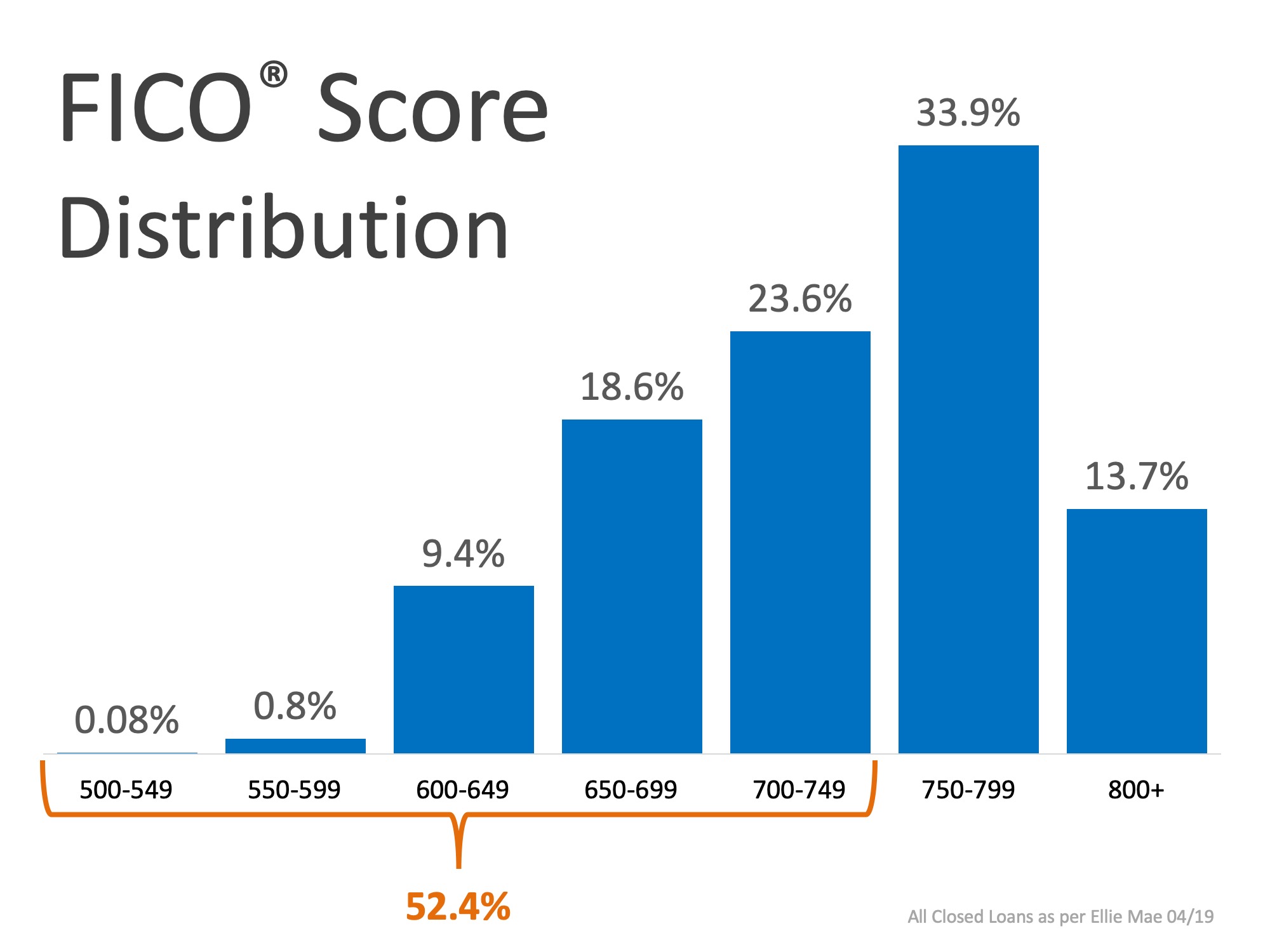
Myth #2: “I Need a 780 FICO® Score or Higher to Buy”
Many either don’t know or are misinformed concerning the FICO® score necessary to qualify, believing a ‘good’ credit score is 780 or higher.
To debunk this myth, let’s take a look at Ellie Mae’s latest Origination Insight Report, which focuses on recently closed (approved) loans. As indicated in the chart above, 52.4% of approved mortgages had a credit score of 600-749.
Bottom Line
Whether buying your first condo or moving up to your dream home, knowing your options will make the mortgage process easier. Your dream may already be within your reach! Contact us, the Ann Arbor Condo specialists to begin your new condo search at 734-761-3060 or info@condohotline.com.