
People Are Still Moving, Even with Today’s Affordability Challenges
People Are Still Moving, Even with Today’s Affordability Challenges

If you’re thinking about buying or selling a condo or home, you might have heard that it’s tough right now because mortgage rates are higher than they’ve been over the past few years, and home prices are rising. That much is true. Take a look at the graph below. It breaks down how the current affordability situation stacks up to recent years.

The National Association of Realtors (NAR) explains how to read the values on the graph:
“To interpret the indices, a value of 100 means that a family with the median income has exactly enough income to qualify for a mortgage on a median-priced home.”
The black dotted line represents that 100 value on the index. Essentially, the higher the bar, the more affordable homes are. As you can see, the orange bar for today shows higher mortgage rates and home prices have created a clear challenge. But, while affordability is definitely tighter right now, that doesn’t mean the housing market is at a standstill.
According to NAR, based on the pace of sales right now, just under 4 million homes will sell this year. With some simple math, let’s break down what that really means for you:
- 3.96 million homes divided by 365 days in a year = 10,849 houses sell each day
- 10,849 divided by 24 hours in a day = 452 houses sell per hour
- 452 divided by 60 minutes in an hour = about 8 houses sell each minute
So, on average, over 10,000 homes sell each day in this country. Whether you’re a buyer or a seller, this goes to show there are still ways to make your move possible, even at a time when affordability is tight.
An Agent Can Help You Make Your Move a Reality
You may be wondering how other homebuyers and sellers are making this happen now. One of the biggest game-changers in today’s market is working with a trusted local real estate agent. Great agents are helping other people just like you navigate today’s market and the current affordability situation, and their insight is invaluable right now. See what our clients have to say about us!
True professionals will be able to offer advice tailored to your specific wants, needs, budget, and more. Not to mention, they’ll also be able to draw on their experience of what’s working for other buyers and sellers right now. This could mean broadening your search, if needed, to include other housing types like condos, townhouses, or neighborhoods a bit further out to help offset some of the affordability challenges today.
Bottom Line
You might think there aren’t many people buying or selling condos or homes right now since affordability is tighter than it’s been in quite some time, but that’s not the case. It’s true that buying a home has become more expensive over the past couple of years, but people are still moving.
If you’re hoping to buy or sell a condo today, know that other people are still making their goals a reality – and that’s happening in large part because of the help and advice of skilled local real estate agents. Want to talk to a trusted professional about your own move? Let’s connect today at 734-761-3060 or info@condohotline.com and together we’ll find your best path to homeownership!
Are Higher Mortgage Rates Here To Stay?
Higher Mortgage Rates Are Affecting Purchase Power

Mortgage rates have been back on the rise recently and that’s getting a lot of attention from the press. If you’ve been following the headlines, you may have even seen rates recently reached their highest level in over two decades (see graph below):

That can feel like a little bit of a gut punch if you’re thinking about making a move. If you’re wondering whether or not you should delay your plans, here’s what you really need to know.
How Higher Mortgage Rates Impact You
There’s no denying rates are higher right now than they were in recent years. And, when rates are up, that affects overall home affordability. It works like this. The higher the rate, the more expensive it is to borrow money when you buy a home. That’s because, as rates trend up, your monthly mortgage payment for your future home loan also increases.
Urban Institute explains how this is impacting buyers and sellers right now:
“When mortgage rates go up, monthly housing payments on new purchases also increase. For potential buyers, increased monthly payments can reduce the share of available affordable homes . . . Additionally, higher interest rates mean fewer homes on the market, as existing homeowners have an incentive to hold on to their home to keep their low interest rate.”
Basically, some people are deciding to put their plans on hold because of where mortgage rates are right now. But what you want to know is: is that a good strategy?
Where Will Mortgage Rates Go From Here?
If you’re eager for rates to drop, you’re not alone. A lot of people are waiting for that to happen. But here’s the thing. No one knows when it will. Even the experts can’t say with certainty what’s going to happen next.
Forecasts project rates will fall in the months ahead, but what the latest data says is that rates have been climbing lately. This disconnect shows just how tricky mortgage rates are to project.
The best advice for your move is this: don’t try to control what you can’t control. This includes trying to time the market or guess what the future holds for mortgage rates. As CBS News states:
“If you’re in the market for a new home, experts typically recommend focusing your search on the right home purchase — not the interest rate environment.”
Instead, work on building a team of skilled professionals, including a trusted lender and real estate agent, who can explain what’s happening in the market and what it means for you. If you need to move because you’re changing jobs, want to be closer to family, or are in the middle of another big life change, the right team can help you achieve your goal, even now.
Bottom Line
The best advice for your move is: don’t try to control what you can’t control – especially mortgage rates. Even the experts can’t say for certain where they’ll go from here. Instead, focus on building a team of trusted professionals who can keep you informed. When you’re ready to get the process started, let’s connect today at 734-761-3060 or info@condohotline.com.
Gen Z: The Next Generation Is Making Moves in the Housing Market
Gen Z: The Next Generation Is Making Moves in the Housing Market

Gen Z (Generation Z) is eager to put down their own roots and achieve financial independence. As a result, they’re turning to homeownership. According to the latest Home Buyers and Sellers Generational Trends Report from the National Association of Realtors (NAR), 30% of Gen Z buyers transitioned straight from living under their parents’ roofs to owning their own homes.
If you’re a member of this generation, and you’re interested in pursuing your own dream of homeownership, here’s some information you may find helpful on why and where your peers are buying.
The Reasons Gen Z Want To Become Homeowners
A recent survey by Rocket Mortgage identifies some of the top motivators driving Gen Z buyers to purchase a home:
“Of those surveyed, 34% said that starting or growing their family was their main motivation to buy a home. . . . Along with growing a family comes establishing a home base.”
Another key reason the survey says Gen Z wants to buy is because homeownership can give them more stability (20.8%). That’s because buying a home allows you to stabilize what’s typically your biggest monthly expense: your housing cost.
When you have a fixed-rate mortgage on your home, you can lock in your monthly payment for the duration of your loan, often 15 to 30 years. If you keep renting, you don’t have that same benefit, and you won’t be protected from rising housing costs.
So, if you’re ready to start a new chapter in your life or if you’re craving more stability, know that your peers feel the same way, and those motivators are why they’re turning to homeownership.
Gen Z’s Next Stop: Where Are They Making Their Moves?
If those reasons have you feeling ready to buy, here’s some information on where your peers are finding their homes that could help you with your search. According to a recent Lending Tree survey, Gen Z buyers are focusing on more affordable areas to help boost their buying power and offset the challenges that come with today’s mortgage rates.
Many Gen Z buyers still want the convenience and excitement of city life, but also value the affordability, open air, and space more suburban areas offer. Jacob Channel, Senior Economist at LendingTree, explains:
“. . . they want to live in a city, but they also want to be close to nature.”
Locating a home that offers both of those things requires expertise. Working with a trusted real estate professional can help you find a home in your budget and desired area. Your agent will know the most affordable neighborhoods to search in. They can also highlight the amenities and features that the location offers and how those are aligned with your goals. They’ll also be able to walk you through how things like remote work can help you cast a broader net for your search.
Bottom Line
If you’re a member of Gen Z and are just getting started on your homebuying journey, or if you want to learn more about the process, let’s connect. That way, you have a guide to help you find a home that fits both your lifestyle and your budget. Contact us at The Bouma Group, Realtors today at 734-761-3060 or info@condohotline.com, and let’s get started!
How to Stop Renting and Become a First-Time Homebuyer
The First-Time Homebuyer Plan
Key Takeaways:
- Renting doesn’t help build a future
- Homeownership can be accessible
- Contact your trusted local agents for more on being a first-time homebuyer
Many renters discover a universal truth—renting can often feel like it lacks long-term benefits. However, each monthly rent payment potentially reduces a landlord’s mortgage while increasing their home equity. This revelation may inspire some to transition from renters to first-time homebuyers. If you’re contemplating this life-changing decision, now is an opportune time to consider buying a home.
The appeal of escaping ever-increasing rental rates motivates many first-time condo buyers. Ready to join this progressive march towards homeownership? We are here to guide you through each step of the process. Here’s a simple guide to get you started on your homeownership journey.
Identify Your Ideal Location

Do you enjoy your current neighborhood? If you do, don’t assume that you can’t afford to buy in the same area simply because rental rates may be rising. In many cases, owning a home can be more affordable than renting, potentially allowing you to consider areas previously thought to be beyond your reach.
Once you’ve identified your preferred locales, let us know your chosen zip codes and specific preferences. We’ll compile a list of suitable properties for your personal viewing.
Examine Your Finances
Before embarking on your homeownership journey, take a comprehensive look at your financial situation. Here are some key steps:
- Review your credit report and report any inaccuracies
- Calculate your debts
- Evaluate your savings and future saving capacity
Lenders consider your financial health when deciding on mortgage approval. Can you afford the mortgage payment and additional costs comfortably? Keeping a debt-to-income ratio of less than 40% is generally advisable, as it widens your opportunities.
Assemble Necessary Documents

While reviewing your finances, gather these important documents for potential lenders:
- W-2 and 1099 forms
- Monthly bank statements
- Asset statements
- 401(k), 403(b), mutual funds, stocks, bonds, and IRAs
- Last two tax returns
- Landlord reference
Choose the Right Lender
Securing a lender is a crucial step that should be undertaken early in the process. A lender can accurately determine what you can afford and offer valuable advice on improving your financial profile and selecting the best mortgage plan. Some lenders also offer specific incentives for first-time homebuyers.
If you need recommendations for lenders, we can provide you with a list. Give us a call at 734-761-3060, and we’ll provide you with a list of lenders that may suit your needs.
Time Your Purchase Perfectly

Even when transitioning to homeownership, remember to fulfill the terms of your current lease. If it requires a 30-day notice of non-renewal, try to time your purchase so that your lease ends around the time you close on your new home. If the timing doesn’t align, consider discussing a month-to-month rental option with your landlord.
Embrace the Excitement of Homeownership
Stepping into the role of a first-time homebuyer is a thrilling milestone, and we’re delighted to be part of your journey. If you’ve considered buying a condo or home, now is the time to act. Follow this guide and reach out to us for expert assistance in navigating the rewarding adventure of homeownership. Contact us today at info@condohotline.com or 734-761-3060.
Have You Considered Adding Condos to Your Home Search?
Reasons To Consider Condos in Your Home Search
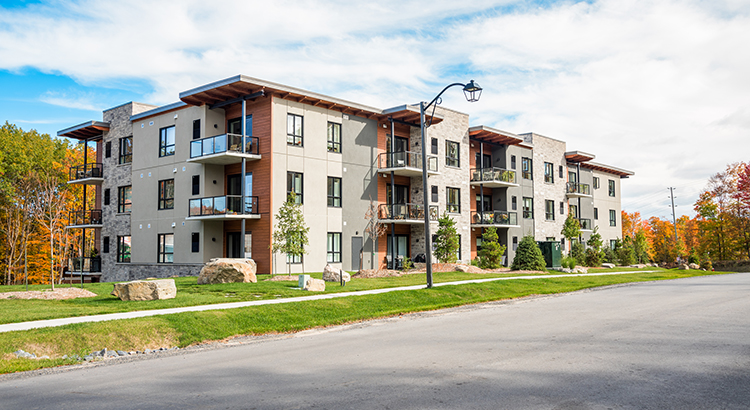
Are you having trouble finding a home that fits your needs and your budget? If so, you should know there’s an option worth considering – condominiums, also known as condos. According to Bankrate:
“A condo can be a more affordable entry point to homeownership than a single-family home. And as a homeowner, you’ll build equity over time and have access to tax benefits that a renter wouldn’t.”
That’s why expanding your search to include additional housing types, like condominiums, could help you accomplish your homeownership goals this spring, especially if you can be flexible about the space you need. Condos are typically smaller than a single-family home, but that’s part of what can make them more budget-friendly (see graph below):

In addition to providing more options in your home search and possibly your price point, there are several other benefits to condo living. They tend to require less upkeep and lower maintenance – and that can give you more time to spend doing the things you enjoy. Plus, since many condos are in or near city centers, they offer the added benefit of being in close proximity to work and leisure.
Condo Price vs. Home Price in the Ann Arbor Area
In the Ann Arbor Area, we are seeing the median sales price a bit lower than nationally. For sales in 2023 Year to Date, condos have a Median Sales Price of $269,500 vs. $350,000 for Single Family Homes.
Remember, your first home doesn’t have to be your forever home. The important thing is to get your foot in the door as a homeowner so you can start building wealth in the form of home equity. In time, the equity you develop can fuel a future purchase if your needs change.
Ultimately, owning and living in a condo can be a lifestyle choice. And if that appeals to you, they could provide the added options you need in today’s market.
Bottom Line
It could make a lot of sense to add condos to your home search. Let’s connect today at 734-761-3060 or info@condohotline.com if you’re ready to check out the options in the Ann Arbor area!
Taking the Fear out of Saving for a Condo or Home

If you’re planning to buy a condo or home, knowing what to budget for and how to save may sound scary at first. But it doesn’t have to be. One way to take the fear out of budgeting is to understand some of the costs you might encounter. And to do that, turn to trusted real estate professionals. They can help you plan your finances and prepare your budget.
Here are just a few costs experts say you can expect.
1. Down Payment
Saving for your down payment is likely top of mind as you set out to buy a condo or home. But do you know how much you’ll need to save? While each situation is different, there’s a common misconception that putting 20% down toward your purchase is required. An article from the Mortgage Reports explains why that’s not always the case:
“The idea that you have to put 20% down on a house is a myth. . . . The right amount depends on your current savings and your home buying goals.”
To understand your options, partner with a trusted real estate professional to go over the various loan types, down payment assistance programs, and what each one requires.
2. Closing Costs
Make sure you also budget for closing costs, which are a collection of fees and payments made to the various people involved in your transaction. Bankrate explains:
“Closing costs are the fees you pay when finalizing a real estate transaction, whether you’re refinancing a mortgage or buying a new home. These costs can amount to 2 to 5 percent of the mortgage so it’s important to be financially prepared for this expense.”
The best way to understand what you’ll need at the closing table is to work with a trusted lender. They can provide you with answers to the questions you might have.
3. Earnest Money Deposit
If you want to cover all your bases, you can also consider saving for an earnest money deposit (EMD). An EMD is money you pay as a show of good faith when you make an offer on a house. According to realtor.com, it’s usually between 1% and 2% of the total home price.
This deposit works like a credit. It’s not an added expense – it’s paying a portion of your costs upfront. You’re using some of the money you already saved for your purchase to show the seller you’re committed and serious about their house. Realtor.com describes how it works as part of your sale:
“It tells the real estate seller you’re in earnest as a buyer, . . . . Assuming that all goes well and the buyer’s good-faith offer is accepted by the seller, the earnest money funds go toward the down payment and closing costs. In effect, earnest money is just paying more of the down payment and closing costs upfront.”
Keep in mind, an EMD isn’t required, and it doesn’t guarantee your offer will be accepted. It’s important to work with a real estate advisor to understand what’s best for your situation and any specific requirements in your area. They’ll help you determine what moves you should make in the home-buying process to have the greatest success.
Bottom Line
Budgeting for your condo or home purchase doesn’t have to be scary! Let’s connect so you’ll have an expert on your side to answer any questions you have along the way. Contact us today at The Bouma Group, Realtors to learn more at 734-761-3060 or info@bouma.com.
What You Should Know About Closing Costs
How to Plan Ahead for Closing Costs

Before you buy a home, it’s important to plan ahead. While most buyers consider how much they need to save for a down payment, many are surprised by the extra fees they have to pay. To ensure you aren’t caught off guard when it’s time to close on your home, you need to understand what closing costs are and how much you should budget for.
What Are Closing Costs?
People are sometimes surprised by closing costs because they don’t know what they are. According to Bankrate:
“Closing costs are the fees and expenses you must pay before becoming the legal owner of a house, condo or townhome . . . Closing costs vary depending on the purchase price of the home and how it’s being financed . . .”
In other words, your closing costs are a collection of fees and payments involved with your transaction. According to Freddie Mac, while they can vary by location and situation, they typically include:
- Government recording costs
- Appraisal fees
- Credit report fees
- Lender origination fees
- Title services
- Tax service fees
- Survey fees
- Attorney fees
- Underwriting Fees
How Much Will You Need To Budget for Closing Costs?
Understanding what they include is important, but knowing what you’ll need to budget to cover them is critical, too. According to the Freddie Mac article mentioned above, the costs to close are typically between 2% and 5% of the total purchase price of your condo or home. With that in mind, here’s how you can get an idea of what you’ll need to cover your closing costs.
Let’s say you find a condo or home you want to purchase for the median price of $366,900. Based on the 2-5% Freddie Mac estimate, your closing fees could be between roughly $7,500 and $18,500.
Keep in mind, if you’re in the market for a condo or home above or below this price range, your closing costs will be higher or lower.
What’s the Best Way To Make Sure You’re Prepared at Closing Time?
Freddie Mac provides great advice for homebuyers, saying:
“As you start your homebuying journey, take the time to get a sense of all costs involved – from your down payment to closing costs.”
Work with a team of trusted real estate professionals to understand exactly how much you’ll need to budget for everything. We can help connect you with a trusted, local lender, and together we can answer any questions you might have.
Bottom Line
It’s important to plan for the fees and payments you’ll be responsible for at closing. Let’s connect so I can help you feel confident throughout the process. Contact us today at The Bouma Group, Realtors at 734-761-3060 or info@condohotline.com.
Mortgage Rates Are Dropping. What Does That Mean for You?
Mortgage Rates Are Dropping. What Does That Mean for You?

Mortgage rates have been a hot topic in the housing market over the past 12 months. Compared to the beginning of 2022, rates have risen dramatically. Now they’re dropping, and that has to do with everything happening in the economy.
Nadia Evangelou, Senior Economist and Director of Forecasting at the National Association of Realtors (NAR), explains it well by saying:
“Mortgage rates dropped even further this week as two main factors affecting today’s mortgage market became more favorable. Inflation continued to ease while the Federal Reserve switched to a smaller interest rate hike. As a result, according to Freddie Mac, the 30-year fixed mortgage rate fell to 6.31% from 6.33% the previous week.”
So, what does that mean for your homeownership plans? As mortgage rates fluctuate, they impact your purchasing power by influencing the cost of buying a home. Even a small dip can help boost your purchasing power. Here’s how it works.
The median-priced home according to the National Association of Realtors (NAR) is $379,100. So, let’s assume you want to buy a $400,000 home. If you’re trying to shop at that price point and keep your monthly payment about $2,500-2,600 or below, here’s how your purchasing power can change as mortgage rates move up or down (see chart below). The red shows payments above that threshold and the green indicates a payment within your target range.
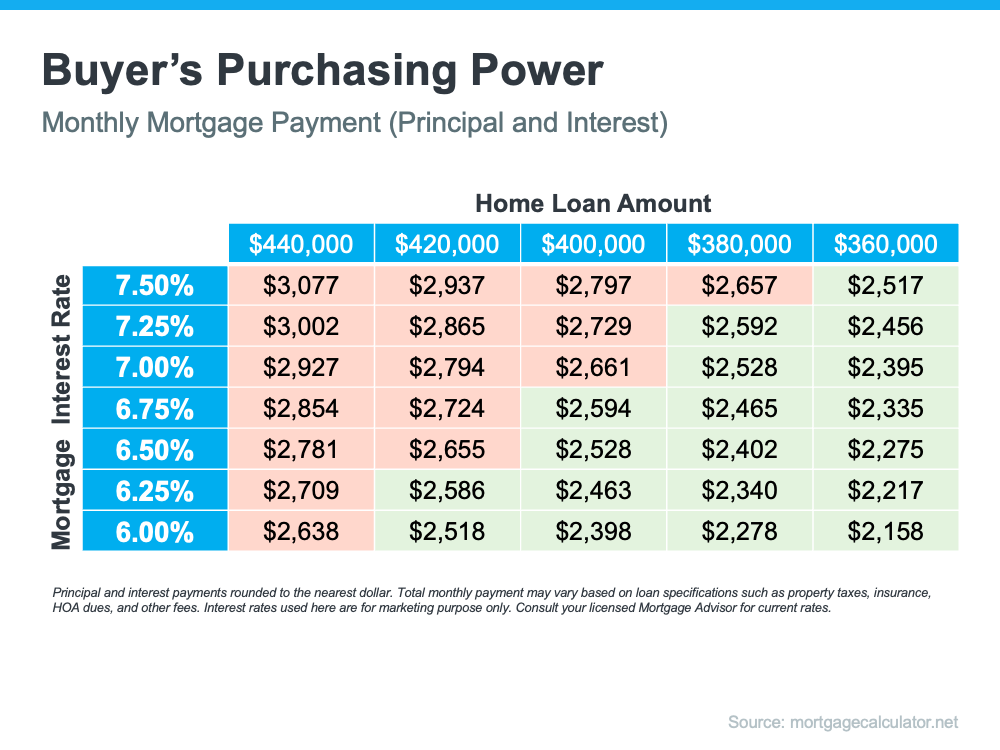
This goes to show, even a small quarter-point change in mortgage rates can impact your monthly mortgage payment. That’s why it’s important to work with a trusted real estate professional who follows what the experts are projecting for mortgage rates for the days, months, and year ahead.
Bottom Line
Mortgage rates are likely to fluctuate depending on what happens with inflation moving forward, but they have dropped slightly in recent weeks. If a 7% rate was too high for you, it may be time to contact a lender to see if the current rate is more in line with your goal for a monthly housing expense. Contact us today at 734-761-3060 to discuss your condo or home-owning plans and let our team of specialists help you achieve them! 734-761-3060 or info@condohotline.com.
You May Have More Negotiation Power in Today’s Condo Market

Did the frequency and intensity of bidding wars over the past two years make you put your home search on hold? If so, you should know the hyper-competitive market has cooled this year as buyer demand has moderated and housing supply has grown. Those two factors combined mean you may see less competition from other buyers leading to better negotiations.
And with less competition comes more opportunity. Here are two trends that may be the news you need to reenter the market.
1. The Return of Contingencies
Over the last two years, more buyers were willing to skip important steps in the homebuying process, like the appraisal or the inspection, in hopes of gaining an advantage in a bidding war. But now, things are different.
The latest data from the National Association of Realtors (NAR) shows the percentage of buyers waiving their home inspection or appraisal is down. And a recent article from realtor.com points out more sellers are accepting contingencies:
“A year ago, sellers were calling all the shots and buyers were launching legendary bidding wars, waiving contingencies, and paying for homes in cash. But now, the shoe is on the other foot, and 92% of home sellers are accepting some buyer-friendly terms (frequently related to home inspections, financing, or appraisals), . . .”
This doesn’t mean we’re in a buyers’ market now, but it does mean you have a bit more leverage when it comes time to negotiate with a seller. The days of feeling like you may need to waive contingencies or pay drastically over asking price to get your offer considered may be coming to a close.
2. Sellers Are More Willing To Help with Closing Costs
Before the pandemic, it was a common negotiation tactic for sellers to cover some of the buyer’s closing costs to sweeten the deal. This didn’t happen as much during the peak buyer frenzy over the past two years.
Today, data suggests this is making a comeback. A realtor.com survey shows 32% of sellers paid some or all of their buyer’s closing costs. This may be a negotiation tool you’ll see as you purchase a home. Just keep in mind, limits on closing cost credits are set by your lender and can vary by state and loan type. Work closely with your loan advisor to understand how much a seller can contribute to closing costs in your area.
Bottom Line
Despite the extremely competitive housing market of the past several years, today’s data suggests negotiations are starting to come back to the table. Let’s connect today to find out how the market is shifting in our area. Contact us, the Ann Arbor Condo Specialists at The Bouma Group at 734-761-3060 or info@condohotline.com.
3 Trends That Are Good News for Today’s Condo and Home Buyers

While higher mortgage rates are creating affordability challenges for condo and homebuyers this year, there is some good news for those people still looking to buy a home.
As the market has cooled this year, some of the intensity buyers faced during the peak frenzy of the pandemic has cooled too. Here are 3 trends that may benefit you when you buy a home today.
1. More Homes To Choose from
During the pandemic, housing supply hit a record low while buyer demand skyrocketed. This combination made finding a condo or home difficult because there just wasn’t enough to meet buyer demand. According to Calculated Risk, the supply of homes for sale increased by 39.5% for the week ending October 28 compared to the same week last year.
Even though it’s still a sellers’ market and supply is still lower than more normal levels, you have more to choose from in your home search. That makes finding your dream home a bit less difficult.
2. Bidding Wars Have Eased
One of the top stories in real estate over the past two years was the intensity and frequency of bidding wars. But today, things are different. With more options, you’ll likely see less competition from other buyers. According to the National Association of Realtors (NAR), the average number of offers on recently sold homes has declined. This September, the average was 2.5 offers per sale. In contrast, last September, the average was 3.7 offers per sale.
If you tried to buy a house or condo over the past two years, you probably experienced the bidding war frenzy firsthand and may have been outbid on several homes along the way. Now you have a chance to jump back into the market and enjoy searching with less competition.
3. More Negotiation Power
And when you have less competition, you also have more negotiating power as a buyer. Over the last two years, more buyers were willing to skip essential steps in the home buying process, like the appraisal or inspection, to try to win a bidding war. But the latest data from the National Association of Realtors (NAR) shows the percentage of buyers waiving those contingencies is going down.
As a buyer, this is good news. The appraisal and the inspection give you important information about the value and condition of the condo or home you’re buying. And if something turns up in the inspection, you have more power today to renegotiate with the seller.
A survey from realtor.com confirms more sellers are accepting offers that include contingencies today. According to that report, 95% of sellers said buyers requested a home inspection, and 67% negotiated with buyers on repairs as a result of the inspection findings.
Bottom Line
If you are on the fence about whether or not to begin your condo or home search, consider these 3 trends that favor the buyer! While buyers still face challenges today, they’re not necessarily the same ones you may have been up against just a year or so ago. If you were outbid or had trouble finding a condo or home in the past, now may be the moment you’ve been waiting for. Let’s connect to start the homebuying process today. Contact us at 734-761-3060 or info@condohotline.com to start your search!