
Why Pre-Approval Is More Important Than Ever This Spring

Spring is here, and so is the busiest season in real estate. More buyers are out looking for homes, which means more competition for you. If you want to put yourself in the best position to buy, there’s one step you can’t afford to skip, and that’s getting a pre-approval letter for a mortgage.
Some buyers think they can wait until they’ve found a home they love before talking to a lender. But in a season where homes can sell fast, that’s a risky move. Getting pre-approved before you start your search is a much better bet.
Here’s what you need to know about this early step in the buying process.
What Is a Pre-Approval Letter?
Pre-approval gives you a sense of how much a lender is willing to let you borrow for your home loan. To determine that number, a lender starts by looking at your financial history. Here are some of the things that can have an impact, according to Yahoo Finance:
- Your debt-to-income (DTI) ratio: This is how much money you owe divided by how much money you make. Usually, you can borrow more if you have a lower DTI.
- Your income and employment status: They’re looking to verify you have a steady income coming in – that way they feel confident in your ability to repay the loan.
- Your credit score: If your score is higher, you may qualify to borrow more.
- Your payment history: Do you consistently pay your bills on time? Lenders want to know you’re not a risky borrower.
After their review, you’ll get a pre-approval letter showing what you can borrow. Having this peace of mind is a big deal – it helps you feel a lot more confident in your ability to get a home loan. And the fringe benefit is it can also speed up the road to closing day because the lender will already have a lot of your information.
It Helps You Figure Out Your Budget
Spring is a competitive season, and emotions can run high if you find yourself up against other buyers. Having a firm budget in mind is so important. You don’t want to get too attached and end up maxing out what you can borrow. As Freddie Mac explains:
“Keep in mind that the loan amount in the pre-approval letter is the lender’s maximum offer. Ultimately, you should only borrow an amount you are comfortable repaying.”
So, use this time to really buckle down on your numbers. And be sure to factor in other homeownership costs – like property taxes, insurance, and maybe even homeowner’s association fees – so you know what you can comfortably afford.
Then, partner with your agent to tailor your search to homes that match your budget. That way, you don’t fall in love with a condo or house that’s out of your financial comfort zone.
It Helps Your Offer Stand Out During the Busy Season
Spring buyers aren’t just competing for homes. They’re competing for the seller’s attention, too. And a pre-approval letter can help you stand out by showing sellers you’ve already gone through a financial check. Zillow explains it like this:
“Having a pre-approval letter handy while you’re shopping for a home can also help you act quickly once you’ve found a home you love. The letter shows potential sellers that you’re a serious buyer who has the financial means to close on the home. In a competitive market, an offer with a pre-approval letter attached will stand out among other offers that don’t include one — increasing the chances of your offer being accepted.”
That means when sellers are choosing among multiple offers, yours could rise to the top simply because you’ve already taken this step.
And here’s one final tip for you. After you receive your letter, avoid switching jobs, applying for new credit cards or other loans, co-signing for loans, or moving money in or out of your savings. That’s because any changes to your finances can affect your pre-approval status.
Bottom Line
If you’re thinking about buying a home this spring, getting pre-approved should be your first move. It’ll help you understand your budget, show sellers you’re serious, and keep you from falling in love with a house that’s out of reach. Talk to a lender to get started, we have a list of trusted people we’ve worked with that we’d be happy to share. To get started on your condo or home buying journey, contact us today at The Bouma Group, Realtors at 734-761-3060 or info@condohotline.com. Search for Ann Arbor area condos here!
Time in the Market Beats Timing the Market
Timing the Market – Is it Possible?
Does it make more sense to buy a home now or wait? There’s a lot to consider, from what’s happening in the market to your changing needs. But generally speaking, timing the market isn’t a good strategy – there are too many factors at play for that to even be possible.
That’s why experts usually say time in the market is better than timing the market.
In other words, if you want to buy a home and you’re able to make the numbers work, doing it sooner rather than later is usually worth it. Bankrate explains why:
“No matter which way the real estate market is leaning, though, buying now means you can start building equity immediately.”
Benefits of Buying Now vs. Later
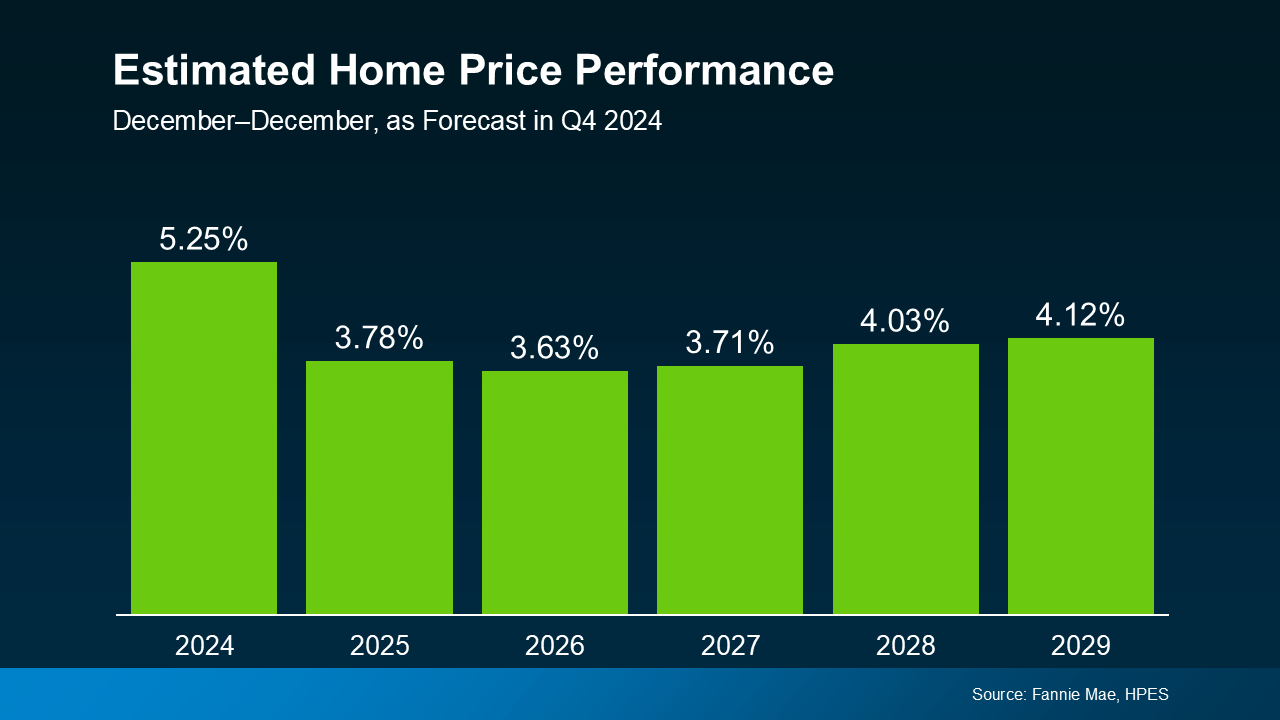
Here’s some data to break this down so you can really see the benefit of buying now versus later. Each quarter, Fannie Mae releases the Home Price Expectations Survey. It asks over one hundred economists, real estate experts, and investment and market strategists what they forecast for home prices over the next five years. In the latest release, experts are projecting home prices will continue to rise through at least 2029 – just at a slower, more normal pace than they did over the past few years (see the graph below):
But what does that really mean for you? To give these numbers context, the graph below uses a typical home value to show how it could appreciate over the next few years using those HPES projections. This is what you could start to earn in equity if you buy a home in early 2025.
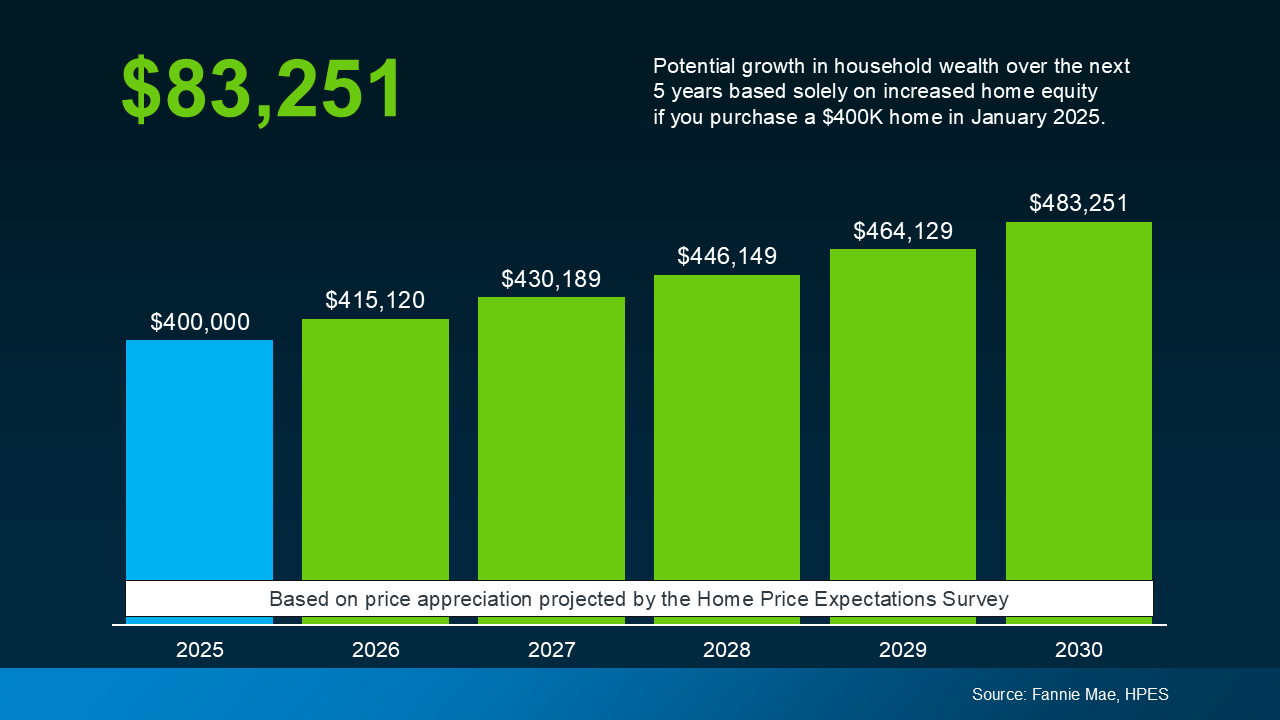
In this example, let’s say you go ahead and buy a $400,000 home this January. Based on the expert forecasts from the HPES, you could gain more than $83,000 in household wealth over the next five years. That’s not a small number. If you keep on renting, you’re losing out on this equity gain.
And while today’s market has its fair share of challenges, this is why buying is going to be worth it in the long run. If you want to buy a home, don’t give up. There are creative ways we can make your purchase possible. From looking at more affordable areas, to considering condos or townhomes, or even checking out down payment assistance programs, there are options to help you make it happen.
So sure, you could wait. But if you’re just waiting it out to perfectly time the market, this is what you’re missing out on. And that decision is up to you.
Bottom Line
If you’re torn between buying now or waiting, don’t forget that it’s time in the market, not timing the market that truly matters. Let’s connect if you want to talk about what you need to do to get the process started today. Contact us today at The Bouma Group, Realtors and let’s discuss what timing makes sense for your next move! 734-761-3060 or info@bouma.com.
What’s Behind Today’s Mortgage Rate Volatility?
If you’ve been keeping an eye on mortgage rates lately, you might feel like you’re on a roller coaster ride. One day rates are up; the next they dip down a bit. So, what’s driving this constant change? Let’s dive into just a few of the major reasons why we’re seeing so much volatility, and what it means for you.
The Market’s Reaction to the Election
A significant factor causing fluctuations in mortgage rates is the general reaction to the political landscape. Election seasons often bring uncertainty to financial markets, and this one is no different. Markets tend to respond not only to who won but also to the economic policies they are expected to implement. And when it comes to what’s been happening with mortgage rates over the past couple of weeks, as the National Association of Home Builders (NAHB) says:
“. . . the primary reason interest rates have been on the rise pertains to the uncertainty surrounding the presidential election. Although the election is now complete, there continue to be growing concerns over budget deficits.”
In the short term, this anticipation has caused a slight uptick in mortgage rates as the markets adjust and react. Additionally, factors like international tensions, supply chain disruptions, and trade policies can drive investor sentiment, causing them to seek safer assets like bonds, which can indirectly impact mortgage rates. Essentially, the more global or domestic uncertainty, the greater the chance that mortgage rates may shift.
The Economy and the Federal Reserve
Inflation and unemployment are two other big drivers of mortgage rates. The Federal Reserve (the Fed) has been working to bring inflation under control, and has been closely monitoring the economy as they do. And as long as inflation continues to moderate and the job market shows signs of maximum employment, the Fed will continue its plans to cut the Federal Funds Rate.
Although the Fed doesn’t set mortgage rates, their decisions do have an impact, and typically a cut leads to a mortgage rates response. And in their November 6-7th meeting, the Fed had the data they needed to make another cut to the Federal Funds Rate. And while that decision was expected and much of the mortgage rate movement happened prior to that meeting, there was a slight dip in rates.
What To Expect in the Coming Months
As we look ahead, mortgage rates will respond to changes in the Fed’s policies and other economic indicators. The markets will likely remain in a wait-and-see mode, reacting to each new development. And, with the transition of a new administration comes an element of unpredictability. A recent article from The Mortgage Reports explains:
“Today’s economic indicators come with mixed pressures on mortgage rates and we’re likely to be in for a good amount of volatility as markets adjust and respond to the election . . .”
The best way to navigate this landscape is to have a team of real estate experts by your side. Professionals will help you understand what’s happening and can provide you with the guidance you need to make informed housing market decisions along the way.
Bottom Line
The takeaway? Today’s mortgage rate volatility is going to continue to be driven by economic factors and political changes.
Now is the time to lean on experienced professionals. A trusted real estate agent and mortgage lender can help you navigate through it. And with the right guidance, you can make informed decisions. Contact us today at 734-761-3060 or info@condohotline.com.
This Is the Sweet Spot Homebuyers Have Been Waiting For
Today’s Market is a Sweet Spot for Condo and Homebuyers

After months of sitting on the sidelines, many condo and homebuyers who were priced out by high mortgage rates and affordability challenges finally have an opportunity to make their move. With rates trending down, today’s market is a sweet spot for buyers—and it may not last long.
So, if you’ve put your move on the back burner, here’s why maybe you shouldn’t delay your plans any longer.
As you weigh your options and decide if you should buy now or wait, ask yourself this: What do you think everyone else is going to do?
The truth is, if mortgage rates continue to ease, as experts project, more buyers will jump back into the market. A survey from Bankrate shows over half of homeowners would be motivated to buy this year if rates drop below 6% (see graph below):
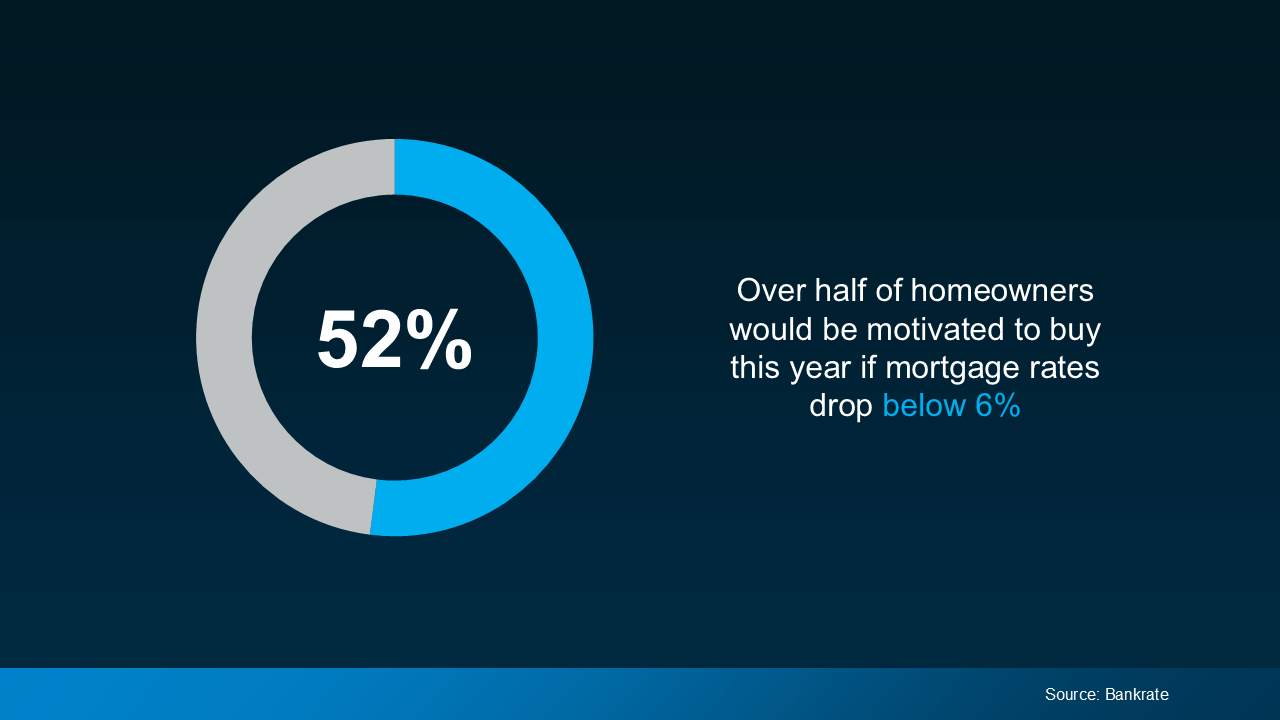
With rates already in the low 6% range, we’re not terribly far off from hitting that threshold. The bottom line is, that when they drop into the 5s, the number of buyers in the market is going to go up – and that means more competition for you.
That increased demand will likely push home prices up, which could potentially take away from some of the benefits you’d gain from a slightly lower interest rate. As Nadia Evangelou, Senior Economist and Director of Real Estate Research at the National Association of Realtors (NAR), explains:
“The downside of increased demand is that it puts upward pressure on home prices as multiple buyers compete for a limited number of homes. In markets with ongoing housing shortages, this price increase can offset some of the affordability gains from lower mortgage rates.”
So, while waiting to buy may seem like a smart move, it could backfire if rising prices outpace your savings from slightly lower rates.
What This Means for You
Right now, you’ve got the chance to get ahead of all of that. Today’s market is a buyer sweet spot. Why? Because a lot of other buyers are waiting – which means not as many people are actively looking for condos and homes. That means less competition for you.
At the same time, affordability has already improved quite a bit. Recent easing in mortgage rates has made homeownership more accessible. As Mike Simonsen, Founder of Altos Research, says:
“Mortgage payments on the typical-price home are 7% lower than last year and are 13% lower than the peak in May 2024.”
And while the supply of homes for sale is still low, it’s also higher than it’s been in years. According to Ralph McLaughlin, Senior Economist at Realtor.com:
“The number of homes actively for sale continues to be elevated compared with last year, growing by 35.8%, a 10th straight month of growth, and now sits at the highest since May 2020.”
This means you now have more options to choose from than you’ve had in quite a while.
With fewer buyers in the market, improving affordability, and more homes to choose from, you have the chance to find the right one before the competition heats up.
Why Waiting Could Cost You
If you’re waiting for the perfect time to buy, it’s important to understand that timing the market is nearly impossible. The longer you wait, the higher the risk that market conditions will shift—and not necessarily in your favor. As Greg McBride, Chief Financial Analyst at Bankrate, says:
“It’s one of those things where you should be careful what you wish for. A further drop in mortgage rates could bring a surge of demand that makes it tougher to actually buy a house.”
Bottom Line
Don’t wait until you have to deal with more competition and higher prices – you already have the chance to buy a condo or home while we’re in the sweet spot today. Let’s connect to make sure you’re taking advantage of it. 734-761-3060 or info@condohotline.com.
People Are Still Moving, Even with Today’s Affordability Challenges
People Are Still Moving, Even with Today’s Affordability Challenges

If you’re thinking about buying or selling a condo or home, you might have heard that it’s tough right now because mortgage rates are higher than they’ve been over the past few years, and home prices are rising. That much is true. Take a look at the graph below. It breaks down how the current affordability situation stacks up to recent years.

The National Association of Realtors (NAR) explains how to read the values on the graph:
“To interpret the indices, a value of 100 means that a family with the median income has exactly enough income to qualify for a mortgage on a median-priced home.”
The black dotted line represents that 100 value on the index. Essentially, the higher the bar, the more affordable homes are. As you can see, the orange bar for today shows higher mortgage rates and home prices have created a clear challenge. But, while affordability is definitely tighter right now, that doesn’t mean the housing market is at a standstill.
According to NAR, based on the pace of sales right now, just under 4 million homes will sell this year. With some simple math, let’s break down what that really means for you:
- 3.96 million homes divided by 365 days in a year = 10,849 houses sell each day
- 10,849 divided by 24 hours in a day = 452 houses sell per hour
- 452 divided by 60 minutes in an hour = about 8 houses sell each minute
So, on average, over 10,000 homes sell each day in this country. Whether you’re a buyer or a seller, this goes to show there are still ways to make your move possible, even at a time when affordability is tight.
An Agent Can Help You Make Your Move a Reality
You may be wondering how other homebuyers and sellers are making this happen now. One of the biggest game-changers in today’s market is working with a trusted local real estate agent. Great agents are helping other people just like you navigate today’s market and the current affordability situation, and their insight is invaluable right now. See what our clients have to say about us!
True professionals will be able to offer advice tailored to your specific wants, needs, budget, and more. Not to mention, they’ll also be able to draw on their experience of what’s working for other buyers and sellers right now. This could mean broadening your search, if needed, to include other housing types like condos, townhouses, or neighborhoods a bit further out to help offset some of the affordability challenges today.
Bottom Line
You might think there aren’t many people buying or selling condos or homes right now since affordability is tighter than it’s been in quite some time, but that’s not the case. It’s true that buying a home has become more expensive over the past couple of years, but people are still moving.
If you’re hoping to buy or sell a condo today, know that other people are still making their goals a reality – and that’s happening in large part because of the help and advice of skilled local real estate agents. Want to talk to a trusted professional about your own move? Let’s connect today at 734-761-3060 or info@condohotline.com and together we’ll find your best path to homeownership!
How Inflation Affects Mortgage Rates Explained
Exactly How Does Inflation Affect Mortgage Rates?

When you read about the housing market in the news, you might see something about a recent decision made by the Federal Reserve (the Fed). But how does this decision affect you and your plans to buy a home? Here’s what you need to know.
The Fed is trying hard to reduce inflation. And even though there have been 12 straight months where inflation has cooled (see graph below), the most recent data shows it’s still higher than the Fed’s target of 2%:

While you may have been hoping the Fed would stop their hikes since they’re making progress on their goal of bringing down inflation, they don’t want to stop too soon, and risk it climbing back up as a result. Because of this, the Fed decided to increase the Federal Funds Rate again last week. As Jerome Powell, Chairman of the Fed, says:
“We remain committed to bringing inflation back to our 2 percent goal and to keeping longer-term inflation expectations well anchored.”
Greg McBride, Senior VP, and Chief Financial Analyst at Bankrate, explains how high inflation and a strong economy play into the Fed’s recent decision:
“Inflation remains stubbornly high. The economy has been remarkably resilient, the labor market is still robust, but that may be contributing to the stubbornly high inflation. So, Fed has to pump the brakes a bit more.”
Even though a Federal Fund Rate hike by the Fed doesn’t directly dictate what happens with mortgage rates, it does have an impact. As a recent article from Fortune says:
“The federal funds rate is an interest rate that banks charge other banks when they lend one another money . . . When inflation is running high, the Fed will increase rates to increase the cost of borrowing and slow down the economy. When it’s too low, they’ll lower rates to stimulate the economy and get things moving again.”
How All of This Affects You
In the simplest sense, when inflation is high, mortgage rates are also high. But, if the Fed succeeds in bringing it down, it could ultimately lead to lower mortgage rates, making it more affordable for you to buy a home.
This graph helps illustrate that point by showing that when inflation decreases, mortgage rates typically go down, too (see graph below):

As the data above shows, inflation (shown in the blue trend line) is slowly coming down and, based on historical trends, mortgage rates (shown in the green trend line) are likely to follow. McBride says this about the future of mortgage rates:
“With the backdrop of easing inflation pressures, we should see more consistent declines in mortgage rates as the year progresses, particularly if the economy and labor market slow noticeably.”
Bottom Line
What happens to mortgage rates depends on inflation. If inflation cools down, mortgage rates should go down too. Let’s talk so you can get expert advice on housing market changes and what they mean for you. Contact us today at 734-761-3060 or info@condohotline.com to learn more.
What You Should Know About Closing Costs
How to Plan Ahead for Closing Costs

Before you buy a home, it’s important to plan ahead. While most buyers consider how much they need to save for a down payment, many are surprised by the extra fees they have to pay. To ensure you aren’t caught off guard when it’s time to close on your home, you need to understand what closing costs are and how much you should budget for.
What Are Closing Costs?
People are sometimes surprised by closing costs because they don’t know what they are. According to Bankrate:
“Closing costs are the fees and expenses you must pay before becoming the legal owner of a house, condo or townhome . . . Closing costs vary depending on the purchase price of the home and how it’s being financed . . .”
In other words, your closing costs are a collection of fees and payments involved with your transaction. According to Freddie Mac, while they can vary by location and situation, they typically include:
- Government recording costs
- Appraisal fees
- Credit report fees
- Lender origination fees
- Title services
- Tax service fees
- Survey fees
- Attorney fees
- Underwriting Fees
How Much Will You Need To Budget for Closing Costs?
Understanding what they include is important, but knowing what you’ll need to budget to cover them is critical, too. According to the Freddie Mac article mentioned above, the costs to close are typically between 2% and 5% of the total purchase price of your condo or home. With that in mind, here’s how you can get an idea of what you’ll need to cover your closing costs.
Let’s say you find a condo or home you want to purchase for the median price of $366,900. Based on the 2-5% Freddie Mac estimate, your closing fees could be between roughly $7,500 and $18,500.
Keep in mind, if you’re in the market for a condo or home above or below this price range, your closing costs will be higher or lower.
What’s the Best Way To Make Sure You’re Prepared at Closing Time?
Freddie Mac provides great advice for homebuyers, saying:
“As you start your homebuying journey, take the time to get a sense of all costs involved – from your down payment to closing costs.”
Work with a team of trusted real estate professionals to understand exactly how much you’ll need to budget for everything. We can help connect you with a trusted, local lender, and together we can answer any questions you might have.
Bottom Line
It’s important to plan for the fees and payments you’ll be responsible for at closing. Let’s connect so I can help you feel confident throughout the process. Contact us today at The Bouma Group, Realtors at 734-761-3060 or info@condohotline.com.
Do You Believe Homeownership Is Out of Reach? Maybe It Doesn’t Have To Be.

It turns out, millennials aren’t the renter generation after all. The 2022 Consumer Insights Report from Mynd says there’s a portion of millennial and Gen Z buyers who are pursuing homeownership as a way to build their wealth, but it may not be exactly the way previous generations have done it. The study explains how they’re breaking into the market:
“. . . younger generations of Americans are not buying into that dream in the same way that older generations have. A growing number of Americans are choosing to make their first real estate purchase as an investment property.”
Instead of buying a condo or home and moving into it themselves, some young buyers are purchasing so they can use it as a rental. This tactic may be gaining popularity, at least in part, because of the affordability challenges brought about by today’s higher mortgage rates. The report above mentions how many people in this group are considering this approach. It says:
“Almost half of Millennials and Gen Z (43%) are considering buying an investment property compared to only 9% of Baby Boomers and 27% of Gen X.”
Why Younger Buyers Are Buying a Condo or Home To Use as a Rental
This strategy allows buyers to continue living in their current location, like the bustle of a city apartment or a neighborhood that they know and love, where they couldn’t afford to buy. But instead of giving up on the idea of homeownership, they buy a condo or home in a more affordable area with the intention of renting it out.
In a way, they’re getting the best of both worlds. They live where they want, and they still own a home where they can afford it.
Their goal is to generate passive income and diversify their assets. It works like this: in addition to having a rental stream of income, the equity they build in their condo or house will also help grow their net worth over time.
Bottom Line
If you’re thinking about buying a condo or home as an investment strategy to build your wealth, let’s connect to explore your options and nearby areas that may have homes that fit what you’re looking for. Contact us today at 734-761-3060 or info@condohotline.com for an in-depth conversation about your particular needs!
More Young People Are Buying Condos and Homes

There’s a common misconception that younger generations aren’t interested in homeownership. Many people point to the fact that millennials put off purchasing their first home as a reason for this belief.
Odeta Kushi, Deputy Chief Economist for First American, explains why millennials have put off certain milestones linked to homeownership. Those delays led to their homeownership rates trailing slightly behind older generations:
“Historically, millennials have delayed the critical lifestyle choices often linked to buying a first home, including getting married and having children, in order to further their education. This is clear in cross-generational comparisons of homeownership rates which show millennials lagging their generational predecessors.”
So, it’s partially true that some millennials have waited on homeownership to focus on other things in their lives – and that’s impacting certain housing market trends.
Data from the National Association of Realtors (NAR) indicates the average age of a first-time homebuyer is higher today than it’s been over the past 40 years. As the graph below shows, homebuyers today are purchasing their first home an average of 4 years later than people in the 1980s and early 1990s: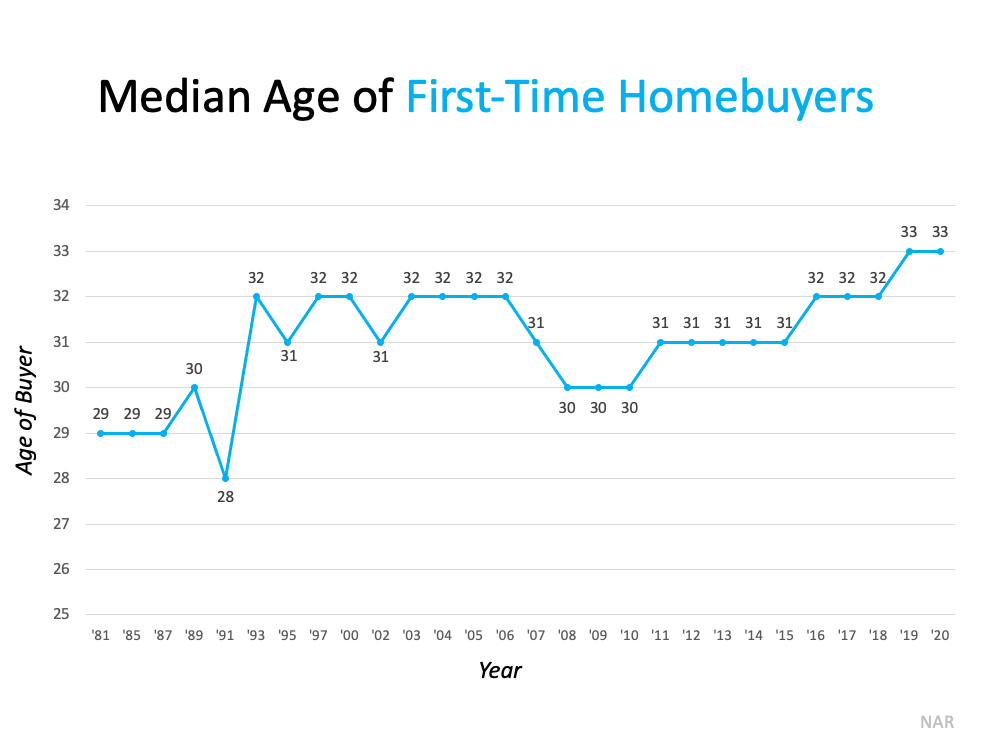
But just because millennials are hitting certain milestones later in life doesn’t mean they’re not interested in becoming homeowners. The recent U.S. Census reveals a significant increase in homeownership rates for millennials and other young homebuyers.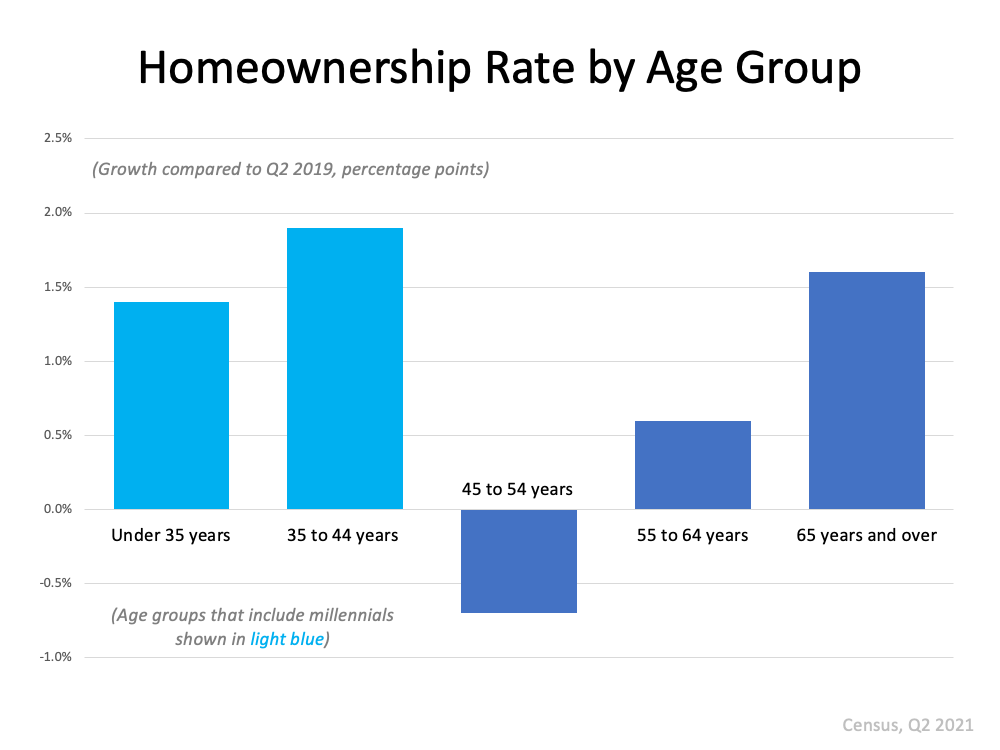
As the graph above shows, millennials are entering the market in full force, and their share of the market is growing. Based on the data, the belief that younger generations don’t want to buy homes is a misconception. In fact, the recent Capital Market Outlook report from Merrill-Lynch further drives home this point, as it specifically mentions the effect millennials are having on demand:
“Demand is very strong because the biggest demographic cohort in history is moving through the household-formation and peak home-buying stages of its life cycle.”
Kushi is following the trend of millennial homeownership and puts it more simply, saying:
“. . . it’s clear that younger households (millennials!) are driving homeownership growth.”
As the largest generation, millennials’ impact on the market is growing as more and more people from that generation reach homebuying age – and Generation Z isn’t far behind, either. That means younger generations will likely continue to drive demand in the housing market for years to come.
Bottom Line
If you’re a member of a younger generation and interested in purchasing a home, you’re not alone. Many of your peers are on their path to homeownership, too. Let’s connect today and discuss what you can do to accomplish your homebuying goals. 734-761-3060 or info@condohotline.com
Saving up for a New Home or Condo? Here Are All the Costs You Need to Know
Once you’ve found the perfect home or condo and secured the loan, all that’s left to do is start chipping away at those mortgage payments…right? In actuality, there are a handful of other, often-overlooked expenses that come with buying, but as long as you know what you’re getting into, they’re plenty manageable.
Take a look at our comprehensive list of all the costs of buying a home or condo.
One-Time Payments & Closing Costs

Closing Costs
For buyers, closing costs are typically low and range from 2-5% of your purchase price. A lot of these costs are one-time expenses, and totals can vary from state-to-state.
If you want a better idea of what closing costs could be for you, check out this helpful guide on the average payments for each state.
Miscellaneous Fees
There are quite a bit of one-time fees bundled into your closing costs, but most of them are pretty inexpensive. Some of the most common expenses include the home inspection, appraisal, credit report, deed recording, land survey, notary fees, title insurance, and document prep fees.
Recurring Payments

Mortgage Payments
Mortgage payments are the most obvious cost when buying a home. These are your predictable, monthly payments decided by both the final price of your home and your down payment—in addition to a few other bundled costs. A larger down payment means a smaller mortgage payment, and it’s a good idea to pay this off quickly, since it will accumulate interest.
Property Taxes
Property tax payments don’t go towards just one thing—they actually cover quite a bit, like road construction, community maintenance, public works, and local government salaries. The exact amount you’ll pay in property tax is calculated by the county based on your home’s value, and the rates tend to rise and fall over time. Many buyers pay their property taxes through an escrow account set up by the lender.
Homeowner’s Insurance
It’s better to have insurance and not need it than need insurance and not have it, so homeowner’s insurance is pretty crucial to home owning. While it’s almost always required when you get a mortgage and then bundled into your monthly payments, be sure to double-check that you’re covered.
Private Mortgage Insurance
If you can’t afford a 20% down payment on your home, you’ll have to pay PMI as a way to ensure that the lender won’t go under if you default on your loan. You don’t have to pay PMI forever—it ends once you pay off 78% or more of the principal amount—but until then, expect to pay up to 2% of your loan amount annually.
HOA Fees
Moving to a neighborhood with an HOA? Your dues can range anywhere from under a hundred dollars to over a thousand, but they come with perks like landscaping and exterior maintenance, and some even include added benefits like swimming pools and fitness centers. Not all neighborhoods have an HOA, but your agent can tell you what your payments will be if yours does.
Utilities
Lastly, utility fees can come as a surprise to new homeowners who are used to renting. Depending on the size of your home, you can expect to pay a few hundred dollars per month for water, electricity, heating and cooling, and trash services. If you’re curious what your utility bills might look like, just ask your agent, and they can likely secure a few statements from the past owners.
Ready to Make an Offer?

When it comes to buying a home, the most important thing you can do is be prepared. While there are a handful of costs to keep in mind, the satisfaction of calling a place your own is well-worth it in the end.
Are you ready to get started on your home-buying journey? With years of professional and local experience, our condo professionals at The Bouma Group knows all about navigating the expenses that come with buying. Give us a call today at 734-761-3060 or info@condohotline.com to get a better idea of your costs, and let’s get started!