
What Are Contingencies in a Condo Purchase?
Quick answer: Contingencies are conditions written into a Real Estate purchase agreement that must be met before the sale can close. They protect both buyers and sellers by creating defined exit points if specific circumstances, like a failed inspection or financing issue, arise during the transaction.
Buying a condo in Ann Arbor is an exciting step. But between signing the offer and getting the keys, there’s a lot that can happen. That’s where contingencies come in.
If you’ve been browsing listings on Condo Hotline or talking with a Realtor, you’ve probably heard the term thrown around. But what does it actually mean, and why does it matter so much when purchasing a condo specifically? This guide breaks it all down: what contingencies are, why they exist, which types apply to condo purchases, and how they protect everyone at the table.

What Does “Contingency” Mean in Real Estate?
A contingency is a clause in a purchase agreement that makes the sale conditional on certain events or criteria being met. Think of it as a built-in safety net. If the condition isn’t satisfied within the agreed timeframe, the buyer typically has the right to walk away from the deal. Often, their earnest money deposit will be returned.
Contingencies aren’t a sign of distrust. They’re standard practice. They simply acknowledge that real estate transactions are complex, and things don’t always go as expected.
Why Are Contingencies Necessary When Buying an Ann Arbor Condo?
Purchasing a condo differs from buying a single-family home in important ways. You’re not just buying the unit itself. You’re also buying into a homeowners association (HOA), shared amenities, and a collectively managed building or complex. That adds layers of due diligence that make contingencies especially valuable.
For example, a condo association might have underfunded reserves, pending special assessments, or restrictions that affect your ability to finance the purchase. Without contingencies in place, you could find yourself legally obligated to complete a purchase that no longer makes financial sense.
Contingencies give you time to uncover these issues, and an exit strategy if you find them.
What Are the Most Common Types of Contingencies in a Condo Transaction?
Financing Contingency
Also called a mortgage contingency. This clause gives you a set period, typically 21 to 30 business days, to secure financing for the purchase. If your loan falls through, the financing contingency allows you to cancel the contract without forfeiting your earnest money.
This is particularly relevant in condo transactions because lenders evaluate not just your financial profile, but also the condo association itself. Factors like the percentage of owner-occupied units, the association’s financial health, and pending litigation can all affect loan approval.
Inspection Contingency
A home inspection contingency gives you the right to have the property professionally inspected within a defined window, usually 5-7 business days after the offer is accepted. If the inspection reveals significant issues, you can negotiate repairs, request a price reduction, or back out of the deal entirely.
For condos, inspections typically cover the interior of the unit, including HVAC systems, plumbing, electrical, and appliances. Common areas and building structure are often the association’s responsibility, but that doesn’t mean you shouldn’t ask questions about their condition.
Condo Document Review Contingency
This one is unique to condo purchases and is among the most important. Michigan law entitles buyers to receive the condo association’s governing documents. This includes bylaws, rules and regulations, the master deed, and the most recent budget and meeting minutes. You then have a defined period, per the contract, to review them.
During this review, you’re looking for red flags such as:
- High delinquency rates among unit owners
- Inadequate reserve funds
- Pending or recent special assessments
- Restrictions on rentals, pets, or renovations
- Ongoing litigation involving the association
If you discover something that changes your decision, this contingency gives you a legal path to exit the contract.
Appraisal Contingency
If you’re financing your purchase, your lender will require an appraisal to confirm the property’s market value. An appraisal contingency protects you if the home appraises for less than the agreed purchase price. Without it, you’d be required to make up the difference in cash or risk losing your earnest money by walking away.
In a competitive Ann Arbor market, some buyers choose to waive this contingency to make their offer more attractive. That’s a decision best made with guidance from an experienced local Realtor who understands current market conditions.
Sale of Current Home Contingency
If you’re purchasing while simultaneously selling your current home, a home sale contingency allows you to back out if your existing property doesn’t sell within a specified timeframe. Sellers are generally less favorable to this type of contingency, especially in a hot market, so it’s important to discuss your options with your agent before including it.
Attorney Approval Contingency
The attorney review contingency gives you a set window of time, usually a few days after signing, to have a Real Estate Attorney review the contract. If your attorney spots something they don’t like, they can request changes or even cancel the deal. You’d walk away with your earnest money intact. It’s a smart layer of protection, especially for a big purchase. Not every buyer uses one, but it can give you real peace of mind. Your Realtor can help you decide if it’s the right move for your situation.
How Do Contingencies Protect the Buyer?
Contingencies are primarily designed with the buyer’s interests in mind. They create structured off-ramps that allow you to exit a transaction, without financial penalty, if something unexpected comes up. Whether that’s a lender declining your mortgage application, an inspector uncovering water damage, or the condo documents revealing a looming $15,000 special assessment, contingencies ensure you’re never trapped.
They also create negotiating leverage. If an inspection reveals needed repairs, for instance, you can use the inspection contingency to re-open discussions rather than simply accepting the property as-is.
How Do Contingencies Protect the Seller?
Sellers benefit from contingencies too, perhaps less obviously, but meaningfully. Clear contingency terms define exactly what conditions must be met and by when. This reduces ambiguity and the risk of a buyer backing out late in the process for reasons not outlined in the contract.
Sellers can also negotiate the terms of contingencies, including timeframes and what outcomes are acceptable, to minimize disruption to their sale timeline. A well-structured offer with defined contingencies is often more reliable than one with vague or open-ended conditions.
What Happens When a Contingency Isn’t Met?
So, what happens if a contingency isn’t met in time? Don’t worry, you’ve got options. You can ask for an extension, or you can walk away from the contract. If you choose to leave, you’ll usually get your full earnest money deposit back. Just be sure to follow the steps laid out in your contract.
But here’s the important part. If you try to back out for a reason your contingencies don’t cover, things get tricky. You could lose your earnest money. In some cases, you might even face legal trouble. That’s exactly why having a great Realtor in your corner matters so much. A knowledgeable Realtor makes sure your contingencies are written clearly and timed just right. It’s one more way we help you buy with confidence and peace of mind.
Start Your Ann Arbor Condo Search with Confidence
Understanding contingencies is one of the most important steps you can take before making an offer. They give you room to breathe, do your due diligence, and make a fully informed decision, without putting your earnest money or financial future at risk.
At The Bouma Group, Realtors, we’ve been the Ann Arbor condo experts for 41 years. We know the local market, the condo associations, and exactly how to structure an offer that protects your interests. Whether you’re buying your first condo or your fifth, we’re here to guide you through the entire process.
Ready to get started? Contact The Bouma Group today:
📞 734-761-3060
✉️ info@condohotline.com
🌐 condohotline.com
What Is an Escrow Account? A Condo Buyer’s Guide
Quick answer: An escrow account is a neutral, third-party account that holds money, documents, and instructions during a Real Estate transaction. It protects both buyers and sellers by making sure no funds or property change hands until every agreed-upon condition has been met. It gives everyone peace of mind on the way to closing day.
Buying a condo in Ann Arbor is exciting, but the paperwork and unfamiliar terms can make even the savviest buyer pause. One phrase you’ll hear early and often is “escrow account.” What is it, exactly? Who controls the money? And what happens to those funds when you finally get the keys?
The good news is that escrow accounts exist to protect you. They’re one of the most buyer-friendly parts of any real estate deal, designed to keep your money safe while every condition of the sale is checked off the list.
In this guide, we’ll break down what an escrow account is, why real estate brokers use them, how they work step by step, and how they connect to another term you’ll see in your purchase agreement: earnest money. By the end, you’ll feel confident navigating this part of your condo purchase like a pro.

What Is an Escrow Account?
An escrow account is a deposit of funds, a deed, or another asset that one party in a contract delivers to a neutral third party, who holds it until a specific condition or event is completed. That third party is independent, they don’t represent the buyer or the seller, which is exactly what makes the arrangement so fair.
In real estate, you’ll actually run into two different types of escrow accounts during the homebuying process:
- Real estate (pre-closing) escrow account: This account holds the funds, instructions, and paperwork needed to complete your condo sale, including your earnest money deposit and the deed to the property. It’s designed to protect both the buyer and the seller until the deal closes. This is the account most people mean when they talk about “being in escrow.”
- Mortgage escrow account: Sometimes called an impound account, this one is set up by your mortgage lender after you buy. It collects a portion of your monthly payment to cover property taxes and homeowners insurance, then pays those bills for you when they come due.
For this guide, we’re focusing on the first type: the pre-closing escrow account that plays a starring role in your condo purchase.
Why Do Real Estate Brokers Have Escrow Accounts?
Think about how much money moves during a condo sale. You’re not going to hand a personal check directly to a seller you just met and simply hope everything works out. That’s where escrow accounts come in.
A Real Estate escrow account provides protection for the buyer, the seller, and the lender. It guarantees that no funds or property will be transferred until every term and condition of the sale has been satisfied.
Here’s a real-world example. Say a condo inspection reveals that the plumbing needs repairs, and the seller agrees to fix it as a condition of the sale. If the seller doesn’t actually complete those repairs, the buyer can stop the process because the money is safely held in escrow rather than already in the seller’s pocket. Neither side can take advantage of the other.
Brokers are also held to strict standards when handling these funds. In Michigan, Real Estate brokers must keep client money in a dedicated trust or escrow account, kept separate from their own business funds. Under Michigan law (MCL 339.2512), a broker may deposit no more than $2,000 of its own money into a trust account, and only to cover bank service charges or minimum balance requirements. Mixing client money with business money, known as commingling, is strictly prohibited. These rules exist to keep your deposit secure and accounted for at all times.
How Escrow Accounts Work in a Real Estate Transaction
The escrow process might sound complicated, but it follows a clear, logical path. Here’s how it typically works when you buy a condo:
- The offer is accepted. Once the seller accepts your offer and you complete the purchase agreement, the wheels start turning.
- The escrow account is opened. Generally, the buyer’s or seller’s Realtor opens the escrow account. It’s typically held by the company Broker.
- The initial deposit goes in. Your agent places an initial deposit, usually your earnest money, often around 1% to 2% of the purchase price, into the escrow account.
- The terms are drafted and signed. The buyer, seller, and lender work together to draft the escrow agreement. Everyone signs it, and it’s sent to the escrow agent, who is separate from your lender.
- Conditions are met one by one. The escrow officer processes funds and documents according to the agreed-upon instructions. Inspections happen, repairs get made, title insurance is issued, and financing is finalized.
- Funds are released only when conditions are satisfied. The escrow officer releases funds only after all conditions are met, title insurance is issued, and the seller’s deed is signed.
Escrow isn’t complete until every term has been fully satisfied and all parties have signed the appropriate paperwork. That’s the whole point, nothing moves forward until everything checks out.
How Escrow Accounts and Earnest Money Work Together
If escrow accounts and earnest money feel closely linked, that’s because they are. Your earnest money is one of the very first deposits to land in your escrow account, and it sets the tone for the rest of the transaction.
Earnest money is a “good faith” deposit that signals to the seller you’re serious about buying. Instead of going straight to the seller, that money sits safely in the escrow account while the deal moves forward. A larger earnest money deposit can even strengthen your offer in a competitive market. It shows the seller you’re committed and unlikely to walk away without reason.
Read our companion post, What Is Earnest Money and Why Do I Need It?, for a full breakdown of how much to offer and how it protects you.
Your earnest money typically gets applied toward your down payment or closing costs. It’s not an extra expense, just an early piece of the puzzle. If the deal falls through, what happens to that money depends on the terms of your purchase agreement. This is one more reason to read it carefully.
What Happens to the Escrow Account at Closing?
Disbursing the funds and closing the escrow account is one of the final steps in buying your condo. In fact, this is why the meeting where you sign the last of the paperwork is called the “closing.”
Here’s how it wraps up. After both parties sign all the necessary instructions and documents, the escrow officer returns your loan paperwork to the lender for a final review. Once that’s done, the lender grants permission to fund your mortgage. The funds are then transferred from buyer to seller, and the now-empty escrow account is closed.
That closing marks the official end of your real estate transaction and the legal transfer of the title from the seller to you. All documents and funds have been collected and properly distributed. Now, you own your condo!
But what if the sale doesn’t close? A deal can fall out of escrow for several reasons, such as a buyer not qualifying for a mortgage or a home inspection turning up serious issues. When that happens:
- If the buyer backs out without a valid reason (like an inspection contingency), the earnest money in escrow may go to the seller.
- If the seller cancels the sale or causes the deal to collapse, the buyer’s funds are typically returned.
Because outcomes vary, most purchase agreements spell out exactly what happens to the escrow funds in different situations. Always read yours closely so there are no surprises.

Frequently Asked Questions
Is an escrow account required when buying a condo?
A pre-closing escrow account is standard practice in nearly every real estate transaction. It protects both the buyer and the seller. Using a neutral third party to hold funds is considered essential for a safe, smooth purchase, while exact requirements can vary.
Who holds the money in a real estate escrow account?
A neutral, independent third party, often an escrow officer or title company, holds the money. They don’t represent the buyer or the seller, which keeps the process fair. In Michigan, brokers must keep these funds in a dedicated trust account, fully separate from their own business money.
How much earnest money should I put in escrow?
Earnest money typically runs about 1% to 2% of the purchase price, though it can vary by market and how competitive your offer needs to be. A larger deposit can make your offer stand out. For a deeper look, see our guide, What Is Earnest Money and Why Do I Need It?
Can I get my escrow money back if the deal falls through?
It depends on why the deal collapsed. If you back out for a reason covered by a contingency in your contract, you’ll usually get your earnest money back. If you walk away without a valid reason, the seller may keep it. Your purchase agreement holds the specifics.
What’s the difference between a real estate escrow account and a mortgage escrow account?
A real estate (pre-closing) escrow account holds funds and documents during the purchase itself. A mortgage escrow account is set up afterward by your lender to collect and pay your property taxes and insurance over time. They serve two completely different purposes.
Ready to Buy Your Ann Arbor Condo?
Escrow accounts are one of the smartest safeguards in real estate. It quietly works behind the scenes to keep your money protected from offer to closing. Once you understand how they connect to your earnest money, the whole process feels far less intimidating.
You don’t have to navigate it alone. The Bouma Group, Realtors brings expert guidance, local market insight, and a friendly, hands-on approach to every condo purchase in the Ann Arbor area. Whether you’re downsizing, relocating, or buying your very first place, we’re here to help every step of the way.
Have questions about escrow, earnest money, or finding the right condo? Reach out to The Bouma Group, Realtors today at 734-761-3060 or email info@condohotline.com. Let’s find your perfect home.
New Ann Arbor Condo? The Challenge of a Quick Resale
Selling a New Condo in Ann Arbor? How to Compete & Win
That feeling of stepping into a brand-new condo is unbeatable. Everything is fresh, modern, and perfectly yours. In a vibrant city like Ann Arbor, new construction communities offer the latest amenities and a low-maintenance lifestyle that’s hard to resist. But what happens if life throws you a curveball and you need to sell sooner than you planned?
When you buy into a community where the builder is still active, selling your nearly new Ann Arbor condo can present some unique challenges. You might find yourself in direct competition with the very builder you bought from. We believe in empowering you with insightful knowledge, so let’s explore the dynamics of this situation and how you can navigate it smartly.

Why Buying New is So Appealing
First, let’s look at why so many people are drawn to new construction condos in Ann Arbor. These properties often come with a premium price tag, but for good reason.
- Modern Amenities: New builds feature contemporary designs, open floor plans, and the latest smart home technology.
- Energy Efficiency: With new appliances, windows, and insulation, you can expect lower utility bills.
- Builder Incentives: Developers often offer attractive perks to the first wave of buyers. These can include closing cost assistance, interest rate buy-downs, or free upgrades, making the deal even sweeter.
These benefits create a wonderful living experience. The challenge only arises when an unexpected job transfer, family change, or new opportunity means you have to put your new home on the market while the community is still being built out.

The Seller’s Dilemma: Competing with the Builder
When you decide to sell your recently purchased condo, you’re no longer just another listing on the market. You are now in direct competition with the developer, who has some significant advantages.
The Builder’s Edge
Developers have deep pockets and a singular goal: to sell their remaining units. They can offer incentives that are difficult for an individual seller to match. A potential buyer looking at your condo might also be looking at a brand-new, never-lived-in unit down the street, which comes with builder-backed promotions.
This can put you in a tough spot. Buyers may prefer to go directly to the builder to get those perks, even if your condo is nearly identical.
The “Brand-New” Premium Fades
There’s a certain magic to being the very first person to live in a home. Once you’ve lived in it, even for a short time, the unit is no longer “brand new.” It’s now a resale property. Like driving a new car off the lot, some of the initial premium value can diminish. Buyers comparing your home to an untouched unit from the builder may perceive yours as slightly less desirable, which could impact the price they’re willing to pay.
Added Costs for Sellers
As a seller, you’ll have costs that the builder doesn’t. The most significant of these is the real estate agent’s commission. While this investment provides you with expert marketing and negotiation, it’s a line item that affects your net proceeds. Builders have their own sales teams and don’t factor in commissions in the same way, allowing them to be more flexible on their final price.

Strategies for Standing Out in a Saturated Market
Facing these challenges doesn’t mean you can’t achieve a successful sale. It just means you need a smart, targeted strategy. We’re here to provide expert guidance every step of the way, and these tips can help you position your new Ann Arbor condo for success.
1. Price Competitively and Intelligently
Pricing is your most powerful tool. Work with your Realtor to conduct a detailed comparative market analysis. This isn’t just about looking at other resales; it’s about understanding what the builder is offering. You may need to price your unit slightly below the builder’s current offerings to capture the attention of savvy buyers. The goal is to present a clear value proposition: a nearly identical home for a more attractive price.
2. Highlight Your Unique Upgrades
Did you install custom closets after you moved in? Upgrade the light fixtures or add high-end window treatments? These are your secret weapons. The builder’s model units are often staged, but the base units may be quite plain. Your thoughtful, high-quality upgrades can make your condo feel more complete and luxurious than what the builder offers as standard.
Create a feature sheet that lists every upgrade and its value. This helps buyers see that they are getting more for their money with your home.
3. Emphasize the “Move-In Ready” Advantage
One of the biggest pain points for buyers of new construction is the potential for delays. Construction timelines can be unpredictable, and waiting months for a unit to be finished isn’t ideal for everyone.
You can offer something the builder can’t: immediate occupancy. Market your condo as a move-in-ready solution for buyers who need to relocate quickly. This is a powerful selling point for professionals moving to Ann Arbor for a new job or anyone on a tight timeline.
4. Consider Offering Your Own Incentives
If the builder is offering to cover closing costs, you might consider doing the same. While it impacts your bottom line, it can make your listing competitive and attract serious offers. You could also offer to include certain appliances or pieces of furniture that you’ve added, sweetening the deal for a buyer who wants a turnkey home.
5. Leverage Professional Staging and Marketing
Your condo needs to look its best. Professional photos, a high-quality virtual tour, and impeccable staging will make your listing pop. While the builder has a model home, you have a real, warm, and inviting home. Showcasing that lived-in charm can create an emotional connection with buyers that a sterile, empty unit cannot. Your Realtor’s expertise in marketing will be crucial here.
Your Partner in the Ann Arbor Market
Navigating the Ann Arbor condo market requires local knowledge and a steady hand. Selling a new construction condo in a developing community adds another layer of complexity, but it’s a challenge that can be successfully met with the right approach.
By pricing smartly, highlighting your unique advantages, and working with an expert team, you can confidently position your property to attract the right buyer. If you find yourself in this situation, know that you have options and a partner ready to help you navigate the market. Contact us today at The Bouma Group, Realtors at 734-761-3060 or info@condohotline.com.
Downtown Ann Arbor Condo Market Update – Q2 2025
Second Quarter Stats for Downtown Condos

The second quarter of 2025 has brought noteworthy changes to the downtown Ann Arbor condo market, presenting both opportunities and challenges for buyers and sellers. With a sharp 90% increase in inventory, longer average Days on Market (DOM), and exciting new developments in the Kerrytown area, the market is buzzing with activity. Whether you’re looking to buy or sell, understanding these shifts and knowing how to navigate them can make all the difference.
Key Market Trends for the Second Quarter
1. Inventory Expansion
The number of active condo listings in downtown Ann Arbor surged by 90% compared to Q2 2024. Last year, only 11 units were available; this year, that number rose to 21.
For buyers, this increase means more options and stronger negotiating power. For sellers, however, it creates a more competitive environment, making pricing strategy and property presentation critical to standing out.
2. Longer Days on Market (DOM)
The average DOM for active listings has climbed to 76 days, up significantly from the 22-day average of recently sold properties. This trend suggests that higher inventory is giving buyers more time to weigh their options.
Sellers should take note: pricing accurately, investing in professional staging, and leveraging targeted marketing are key to capturing buyer interest and reducing time on the market.

N Fourth Condo building in the Kerrytown district
3. Noteworthy Sales Highlights
Despite market challenges, Q2 2025 saw some remarkable sales activity:
- A total of 19 condos were sold during the quarter.
- Ashley Terrace led the way with five sales, though all closed below their listed prices.
- The highest sale of the quarter occurred at 401 N. 4th Avenue, selling for $2.15 million—$165,000 above list price.
This shows that while competition is fierce, unique and desirable properties can still command premium prices and strong buyer interest.
4. Increase in Price Reductions
Price reductions rose by 86% in June compared to the same month in 2024. Furthermore, only 25% of condos sold above list price—a notable drop from 38% in 2024 and 66% in 2023.
For buyers, this cooling trend signals opportunities to negotiate, especially for properties that have been on the market longer or require updates. Sellers, on the other hand, must adapt with competitive pricing and appealing home presentation to attract today’s more cautious buyers.

Detroit Street Condos Under Construction in the Kerrytown District
Exciting Developments in Kerrytown
Kerrytown continues to thrive as a vibrant urban neighborhood, with two exciting new condo projects on the horizon:
- The Market Place building at 303 Detroit Street is being transformed into 14 modern condos.
- Braun Court is set to become a seven-story building featuring 36 condos.
These developments will not only add inventory but also reinforce Kerrytown’s reputation as a sought-after location for urban living.
Advice for Sellers
Adapting to the evolving market is essential for sellers. Here’s how to stay ahead:
- Price competitively: Overpricing can lead to longer DOM, which dampens buyer interest. Use real-time market data to set an accurate price.
- Invest in presentation: Professional staging can enhance your property’s appeal, showcasing its best features to potential buyers.
- Market strategically: Partner with an experienced Realtor to craft targeted marketing campaigns that highlight your property’s strengths and attract serious buyers.
Keep in mind, securing an offer within the first 7–10 days is crucial. Homes that sit on the market longer may struggle to maintain buyer interest or achieve full-price offers.
Opportunities for Buyers
For buyers, the current market offers enticing possibilities:
- More options: The expanded inventory provides a wider range of properties to choose from, with varying layouts, price points, and locations.
- Greater negotiating power: Longer DOM and increased listings give buyers leverage to negotiate favorable deals or request updates as part of the purchase.
- Act quickly for top properties: Turnkey condos in prime locations are still selling quickly, often above list price. Knowing what you want and acting decisively is key.
The Value of Expert Representation
Navigating a dynamic market requires expertise. Working with a knowledgeable Realtor can give you a significant advantage:
- In-depth market insight: Expert Realtors understand the downtown Ann Arbor and Kerrytown markets, providing the data and trends you need to make informed decisions.
- Strategic planning: Realtors help sellers position their properties for success and guide buyers toward the best opportunities and deals.
At The Bouma Group, we specialize in the downtown Ann Arbor condo market. From accurate market analysis to strategic marketing and skilled negotiation, we provide the tools and expertise you need to achieve your goals.
Looking Ahead
Whether you’re preparing to sell or exploring buying opportunities, staying informed about Ann Arbor’s shifting condo market is essential. With more inventory, new developments, and changing buyer behavior, the landscape is evolving rapidly. With the right strategies and expert guidance, you can seize these opportunities and succeed in Q2 2025 and beyond.
When you’re ready to make your move, reach out to The Bouma Group for personalized support. We’re here to help you navigate every step of your condo journey.
Now is the perfect time to take advantage of the downtown Ann Arbor market—connect with us today at 734-761-3060 or info@condohotline.com!
Mastering the Ann Arbor Condo Market: Seller Strategies for 2025
Ann Arbor Condo Seller Strategies to Use Now
The Ann Arbor condo market, once a hotbed of activity, has entered a phase of transformation. Sellers are navigating a more nuanced landscape shaped by changing buyer behavior, economic pressures, and evolving priorities. If you’re looking to sell your condo in 2025, understanding these challenges—and knowing how to tackle them—can make all the difference. Here, we’ll break down the key hurdles sellers are facing and share actionable seller strategies to help you succeed in today’s shifting market.

Challenge #1: Cooling Market & Price Reductions
The Ann Arbor condo market has slowed after years of rapid growth. Elevated interest rates, currently between 6–7%, have increased borrowing costs, limiting buyer budgets and dampening demand. At the same time, new developments, particularly around campus, have driven a rise in inventory—June 2025 listings are up about 14.5% compared to the same time last year. The rise of student apartments, combined with the above factors, have slowed the purchasing of condos by parents for their college students.
This combination of factors is leading many sellers to reduce prices to attract buyers in a competitive market.
How to Tackle This
- Price Strategically: Start with a realistic comparison of recent sales in your neighborhood to set a competitive price. Buyers are hyper-aware of value in the current climate, so pricing right from the beginning can reduce the need for reductions later on.
- Leverage Expertise: Work with a reliable real estate agent who understands Ann Arbor’s micro-markets. They can guide you on pricing trends and help maximize your condo’s appeal.
Challenge #2: Longer Time on Market
Gone are the days when condos would sell within hours of listing. Today, properties are sitting longer as buyers take their time exploring their options. With more inventory available, buyers feel less urgency to make impulsive offers. Active listings in Ann Arbor are averaging 76 days on market, compared with 22 days this spring.
How to Tackle This
- Stand Out With Staging: A well-staged condo can leave a lasting impression. Modern, inviting spaces that appeal to buyer preferences—such as neutral tones, tidy layouts, and up-to-date fixtures—can make your property shine.
- Invest in Marketing: Professional photography and a strong online presence are crucial for grabbing attention. Aggressive, tailored marketing campaigns can also help set your listing apart from the competition.
Challenge #3: Affordability and Economic Pressure
High interest rates aren’t the only financial hurdle in Ann Arbor. The city’s property taxes remain a significant factor for buyers. Combined with economic uncertainty, these costs are pushing many buyers to prioritize affordability, even at the expense of luxury features.
How to Tackle This
- Highlight Cost-Saving Features: Showcase aspects of your condo that reduce long-term expenses, such as energy-efficient appliances or updated insulation. Small upgrades like thesecan appeal to budget-conscious buyers.
- Stay Flexible: Be prepared for negotiations, whether it’s adjusting your price or offering concessions like covering part of the buyer’s closing costs. Flexibility communicates a willingness to work with potential buyers, which can help move a sale forward.
Challenge #4: Michigan-Specific Disincentives
Michigan sellers face unique financial hurdles, including the state’s “pop-up” tax policy. This rule reassesses property taxes at the time of sale, often resulting in a steep increase for new buyers. This may influence a buyer’s offer and negotiations, possibly affecting the seller’s final sale price. Additionally, Realtor commissions in Ann Arbor can eat into sellers’ profits.
How to Tackle This
- Plan for Tax Impacts: Consult with a local real estate expert to fully understand how taxes might affect your sale. Timing can be crucial—it might make sense to sell during periods of peak buyer interest when competition intensifies.
- Maximize Your Proceeds: Every dollar counts when dealing with costs like commissions. Skilled agents can help position your home to sell faster and at a better price, mitigating these concerns.
Challenge #5: Shifting Buyer Priorities
Today’s buyers are putting an emphasis on turnkey properties. Features like flexible layouts, modern finishes, and energy efficiency are top of mind. Condos that require updates or renovations are often overlooked in favor of move-in-ready homes.
How to Tackle This
- Upgrade Strategically: Focus on affordable yet impactful updates, such as modern lighting, fresh paint, or stainless-steel appliances. Even small changes can enhance buyer interest.
- Highlight Walkability: Proximity to walkable amenities, such as restaurants, retail spaces, and parks, remains a key driver in Ann Arbor. Play up these features in your listing and marketing efforts.
Final Thoughts
The Ann Arbor condo market in 2025 is complex, but it’s not without opportunity. Sellers willing to approach this evolving landscape with strategy, flexibility, and the guidance of local experts can still achieve success. Understanding the factors shaping the market—rising inventory, shifting buyer preferences, and financial hurdles—will help you prepare and adapt.
Whether it’s pricing competitively, staging effectively, or upgrading intelligently, taking deliberate action using these seller strategies is key to standing out in this highly selective market. Partnering with professionals who understand Ann Arbor’s real estate dynamics can also make the process less daunting and more rewarding. Remember, with the right focus and adaptability, the right buyer is out there for your condo.
Looking to list your Ann Arbor condo? The Bouma Group is here to help you succeed every step of the way. Reach out today for advice tailored to your specific goals at 734-761-3060 or info@condohotline.com.
Why Ann Arbor Condos Are Experiencing Price Reductions this Spring
Price Reductions for Ann Arbor Condos

If you’re following the Ann Arbor housing market, you’ve likely noticed a curious trend this Spring—price reductions on condos are becoming more common. For homebuyers and sellers alike, this shift raises a lot of questions. Why are prices being lowered? What does it say about the market? And most importantly, how should you respond, whether you’re buying or selling?
This blog will break down the key reasons behind these price adjustments, the economic factors at play, and what this market trend means for both buyers and sellers. We’ll also share tips for navigating these changes.
What’s Causing the Price Drops?
Several factors are driving the recent wave of condo price reductions in Ann Arbor. While changes like this are rarely the result of one issue alone, the following may help explain the bigger picture.
1. Shifting Market Conditions
Over the past year, the real estate market in the U.S. has cooled after a frenzied post-pandemic housing boom. Ann Arbor, like many cities, is experiencing the effects of this market recalibration. Gone are the days when sellers could list their properties at inflated prices and expect competing offers within hours. Today, homes—including condos—are sitting on the market longer, forcing sellers to reconsider their pricing strategies.
2. Economic Influences
National and local economic factors also play a critical role. As of June 2025, interest rates remain elevated compared to their historical lows. Higher mortgage rates directly impact affordability for buyers. With borrowing costs rising, many prospective buyers are scaling down their budgets or opting to rent instead. This ultimately reduces demand for condos, putting downward pressure on prices.
Additionally, uncertainties in the broader economy, such as concerns about inflation or possible recessionary trends, may be making buyers more cautious. Economic uncertainty often translates to softer real estate markets.
3. Increase in Inventory
Another part of the equation is an increase in condo inventory. Over the last few years, Ann Arbor has seen a rise in new condo developments catering to its growing population of students, professionals, and retirees. In May 2025, Ann Arbor saw a 28% increase in listings compared with May 2024. While this increase in supply is great for buyers, it means sellers now face more competition. When buyers have more options, sellers must be willing to negotiate or lower their asking prices to make their listings stand out.
4. Potential Overpricing
Some sellers in Ann Arbor may have initially priced their condos too high. This might be due to lingering expectations from the seller-friendly market of recent years or a misunderstanding of current conditions. When a home sits on the market without generating enough interest, sellers often opt for price reductions to attract a new buyer pool, get offers, and avoid prolonged market exposure.
The Impact on Buyers and Sellers
Price reductions affect buyers and sellers in different ways, and understanding these impacts can help you make informed decisions.
For Buyers
Price reductions present an opportunity, especially for those who have been struggling to break into the competitive housing market. Here’s what buyers can expect:
- More Negotiating Power: Buyers may find they have an edge when making offers, as sellers are more motivated to close deals.
- Wider Choices: Since inventory levels are higher, buyers can take their time to explore more options and make decisions that align with both their preferences and budgets.
- Affordability Considerations: Although sellers are reducing prices, higher mortgage rates may still make monthly payments a challenge. Ensure you run the numbers carefully before committing.
For Sellers
If you’re selling your condo in Ann Arbor, this environment can feel more challenging. However, understanding the reality of today’s market can help you adjust your approach:
- Pricing Strategically: Setting a realistic price from the beginning is critical to attracting buyers. Consider consulting with a local real estate professional who understands current market trends.
- Considering Pre-Listing Improvements: Enhancing your condo’s appeal through small upgrades or staging can help it sell faster, even in a cooling market.
- Being Patient and Flexible: Be prepared for the possibility of longer listing times and the need to negotiate with buyers.
Navigating the Current Market
Whether you’re a prospective buyer or a seller, here are some tips for navigating today’s Ann Arbor condo market:
Advice for Buyers
- Know Your Budget: With changing market conditions and higher mortgage rates, determine what you can comfortably afford before starting your search.
- Be Prepared to Compromise: While inventory is higher, the perfect property may still come at a premium. Know your non-negotiables and be willing to compromise on other aspects.
- Time Your Offers Strategically: Staying informed about price reductions and market dynamics can help you make well-timed offers, potentially securing a great deal.
Advice for Sellers
- Work with a Pro: An experienced real estate agent familiar with Ann Arbor’s unique market can provide pricing strategies that help your condo remain competitive.
- Focus on Presentation: Ensure your condo makes a strong first impression with prospective buyers. This could include staging, professional photos, or hosting open houses.
- Adjust Quickly: If your condo isn’t generating interest after a couple of weeks, reevaluate your strategy. This might mean a price adjustment or additional marketing efforts. Typically, if you’ve had 10-12 showings and no offers, you’re 4-6% over list price, and if you’ve had no showings, you’re 10% over.
Looking Ahead
The Ann Arbor market is undergoing a period of recalibration, which may continue through 2025. While this isn’t ideal for every seller, it’s a necessary part of balancing supply and demand, paving the way for more sustainable market conditions in the long term. If you’re planning to buy or sell a condo, staying informed and adapting to these changes will help you make the most of today’s real estate landscape.
Whether you’re a first-time homebuyer or a seasoned property owner, preparing for these shifts is key. Taking proactive steps now can lead to better opportunities in the months ahead. Contact us today at The Bouma Group, Realtors at 734-761-3060 or info@condohotline.com and let’s get your condo priced correctly to sell!
Buyers, start your Ann Arbor Condo search here!
Ann Arbor Condo Market Update – Fall 2024
A Deep Dive into Ann Arbor Condo Market Trends in 2024

Ann Arbor’s condo market is bustling with activity as we move through 2024. In the first three quarters alone, the data shows interesting patterns and trends that both current condo owners and potential buyers should consider. Here’s a detailed look at what you need to know.
Overview of the Ann Arbor Condo Market
- New Listings: 604 new listings have been recorded, representing a modest increase of 1.7% compared to the same period last year.
- Pending Sales: There have been 482 pending sales, showing a slight dip of 1%.
- Closed Sales: 470, marking a decrease of 2.5%.
- Days on Market: Condos are selling faster, with an average of just 35 days on the market, an impressive drop of 35%.
Pricing Trends
- Median Sales Price: The median sales price has increased by 13%, now standing at $356,000.
- Average Sales Price: This year, the average sales price has risen to $416,563, which is a 7% increase.
- Percent of List Price Received: Sellers are receiving on average 100.8% of their asking prices, a slight decrease of 0.5%.
Downtown Ann Arbor Condo Market
- Currently Active: There are 36 active listings in downtown Ann Arbor.
- Pending Listings: 26 condos are currently under contract.
- Sales Activity: There have been 77 closed sales. Notably, seven of these sales have been over $1,000,000, including four new construction units.
- Affordable Options: For those seeking more affordable options, 30 units sold under $300,000, predominantly located in Tower Plaza.
- Median and Average Sales Prices: The median sales price is $451,000, and the average sales price is $534,562.
Spotlight on Notable Sales
Most Expensive Condo Sold

101 N. Main St. #906, Downtown Ann Arbor
One North Main Condos
2,316 square feet with 3 bedrooms and 2 baths
Listed for $1,195,000
Sold for $1,625,000
13 days on market
The top-tier properties in Ann Arbor’s market continue to command significant attention. One of the most expensive condos sold this year was a luxurious unit in the heart of downtown, fetching well over $1,000,000 and showcasing the continued demand for high-end urban living.
Average Condo Sale

111 N. Ashley St. #604, Downtown Ann Arbor
Ashley Terrace Condos
863 square feet with 1 bedroom and 1 bath
Listed for $439,900
Sold for $420,000
27 days on market
The average condo sale in Ann Arbor reflects the broader trends of increasing prices, with typical units selling at around $416,563. These average-priced condos often offer a balanced mix of location, amenities, and value, making them appealing to a wide range of buyers.
Least Expensive Condo Sold

555 E. William St. #5L, Downtown Ann Arbor
Tower Plaza
430 square feet, studio with 1 full bath
Listed for $185,000
Sold for $185,000
1 Day on Market
At the other end of the spectrum, some of the least expensive condos, particularly in areas like Tower Plaza, provide affordable entry points into the Ann Arbor real estate market. These units, selling for under $300,000, offer great opportunities for first-time buyers or those looking for investment properties.
Key Takeaways for Buyers and Sellers
For buyers, the Ann Arbor condo market remains competitive, but opportunities exist across various price points. It’s essential to move quickly, given the reduced days on market. Sellers, meanwhile, can take advantage of the appreciating prices and quick sales, although it’s important to price realistically to ensure swift transactions.
Whether you’re considering buying or selling a condo in Ann Arbor, understanding these trends can help you make informed decisions. Stay tuned for more updates as the year progresses, and don’t hesitate to reach out if you’re ready to explore the Ann Arbor condo market further. Contact us today at The Bouma Group at 734-761-3060 or info@condohotline.com.
The Most and Least Expensive Condos Sold in Ann Arbor this Year
Ann Arbor Condo Market Analysis 2024
The Ann Arbor condo market has been bustling this year with diverse offerings catering to various budgets and preferences. Whether you’re a buyer looking for the perfect investment or a seller interested in market trends, this comprehensive analysis will provide you with valuable insights into the current state of the market.

Key Market Statistics
Average Sale Price
The average sale price for condos in Ann Arbor this year is $417,065. This figure provides a general benchmark for both buyers and sellers to understand the financial landscape of the market.
Average Price Per Square Foot
At $304.00 per square foot, the average price per square foot offers a detailed perspective on property values relative to their size. This metric is particularly useful for comparing different properties and determining the value proposition of each unit.
Average Days on Market
Condos in Ann Arbor spent an average of 28 days on the market before being sold. This duration suggests a reasonably brisk market, where well-priced properties are attracting interest and closing deals relatively quickly.
Highlighted Sales

The Most Expensive Unit Sold
- Address: 410 N. First St. #401, Ann Arbor MI 48103
- Sale Price: $1,400,000
- Stats: 2,233 square feet, 3 bedrooms, 2.1 baths, 2 car parking in secure garage
This luxury condo at 410 N. First stands out not just for its price, but also for its prime downtown Ann Arbor location and high-end amenities. It’s a testament to the premium market segment in Ann Arbor, offering potential buyers a glimpse into the upper echelon of local real estate. Listed by us, The Bouma Group!
The Average Priced Unit Sold

- Address: 3034 Barclay Way, Ann Arbor MI 48105
- Sale Price: $417,000
- Stats: 1,416 square feet, 3 bedrooms, 2.1 baths, 1-car attached garage
Falling right at the average sale price, this unit at Barclay Park exemplifies what a mid-market condo looks like. Buyers interested in this price range can expect a balanced mix of quality, location, and features.
The Least Expensive Condo Sold

- Address: 4218 Packard St. #1, Ann Arbor MI 48108
- Sale Price: $130,000
- Stats: 768 square feet, 2 bedrooms, 1 bath, dedicated spot for parking
For budget-conscious buyers or investors seeking entry-level opportunities, this condo at Arbor Heights represents the more accessible end of the market. It offers a starting point for those entering the Ann Arbor real estate scene.
Conclusion
The Ann Arbor condo market in 2024 offers something for everyone, from luxury high-end units to more budget-friendly options. With an average sale price of $417,065 and properties spending an average of 28 days on the market, it’s clear that demand remains strong and opportunities abound.
Whether you’re considering buying or selling, keeping an eye on these trends can help you make informed decisions. For personalized advice and to explore available listings, reach out to us today at 734-761-3060 or info@condohotline.com to connect with one of our experienced real estate professionals. Your dream condo in Ann Arbor might just be a call away!
The 5 Biggest Mistakes Sellers Are Making Right Now
5 Mistakes Sellers Are Making

The housing market is going through a transition. Higher mortgage rates are causing more moderate buyer activity at the same time the supply of condos and homes for sale is growing.
And if you aren’t working with an agent, you may not realize that. Here’s the downside. You can’t adjust your strategy or expectations to today’s market if you’re not informed. And that can lead to a number of costly mistakes.
Here’s a look at some of the most common mistakes sellers are making – and how an agent will help you avoid them when you sell.
1. Overpricing Your Condo or House
Many sellers set their asking price too high and that’s why there’s an uptick in homes with price reductions today. An unrealistic price will deter potential buyers, cause an appraisal issue, or lead to your property sitting on the market longer. An article from the National Association of Realtors (NAR) explains:
“Some sellers are pricing their homes higher than ever just because they can, but this may drive away serious buyers and result in unapproved appraisals . . .”
To avoid falling into this trap, partner with a pro. An agent uses recent sales of similar properties, the condition of your property, local market trends, and so much more to find the price that’ll attract more buyers and open the door for multiple offers and a faster sale.
2. Skipping the Small Stuff

You may try to skip important repairs, thinking you can pass the task on to your buyer. But visible issues (even if they’re small) can turn off potential buyers and result in lower offers or demands for concessions. As Money Talks News says:
“Home shoppers like to turn on lights, flush toilets and run the water. If these basic things don’t work, they may assume you’ve skipped other maintenance. Homes that appear neglected aren’t likely to fetch top price.”
If you want to get your place ready to sell, the best place to turn to for advice is your agent. They’ll be able to do a walk-through with you and point out anything you’ll need to tackle before the photographer comes in.
3. Not Looking at Things Objectively
Buyers today are feeling the pinch of high prices and mortgage rates. With affordability that tight, they may come in with an offer that’s lower than you’d want to see – especially if you didn’t stage, price, or market the house well.
It’s important you don’t take this personally. Getting overly emotional can put the sale at risk. As an article from Ramsey Solutions says:
“Remember, a buyer’s offer is not a reflection of their opinion of your home or your housekeeping abilities. . . The sale of your home is strictly a business transaction. If they start out with a low offer, don’t take it personally and get emotional. Instead, channel that energy toward negotiating. Work with your agent and make a counteroffer.”
4. Being Unwilling To Negotiate
The supply of condos and homes for sale has grown. That means buyers have more options, and with that comes more negotiation power. As a seller, you may see more buyers getting an inspection, requesting repairs, or asking for help with closing costs today. You need to be prepared to have those conversations. As U.S. News Real Estate explains:
“If you’ve received an offer for your house that isn’t quite what you’d hoped it would be, expect to negotiate . . . the only way to come to a successful deal is to make sure the buyer also feels like he or she benefits . . . consider offering to cover some of the buyer’s closing costs or agree to a credit for a minor repair the inspector found.”
An agent will walk you through what levers you may want to pull based on your own goals, budget, and timeframe.
5. Not Using a Real Estate Agent
Notice anything? For each of these mistakes, partnering with an agent helps prevent them from happening in the first place. That makes trying to sell your condo or house without an agent’s help the biggest mistake of all.
Real estate agents have experience and expertise in pricing, marketing, negotiating, and more. That knowledge streamlines the selling process and usually results in drumming up more interest and ultimately can get you a higher final price.

Bottom Line
If you want to avoid these mistakes sellers are making, let’s connect to make sure you’re set up for success. Contact us at The Bouma Group at 734-761-3060 or info@condohotline.com today! We can help you navigate this ever-changing market and personalize a plan for you.
Should I Move with Today’s Mortgage Rates?
Should I Move with Today’s Mortgage Rates?

When mortgage rates spiked up over the last few years, some would-be condo and home buyers put their plans to move on pause. Maybe you did too because you didn’t want to move and take on a higher mortgage rate for your next place. But is that still the right strategy for you?
In today’s market, data shows more homeowners are getting used to where rates are and thinking it may be time to move. As Mark Zandi, Chief Economist at Moody’s Analytics, explains:
“Listings are up a bit as life events and job changes are putting increasing pressure on locked-in homeowners to sell their homes. Homeowners may also be slowly coming to the realization that mortgage rates aren’t going back anywhere near the rate on their existing mortgage.”
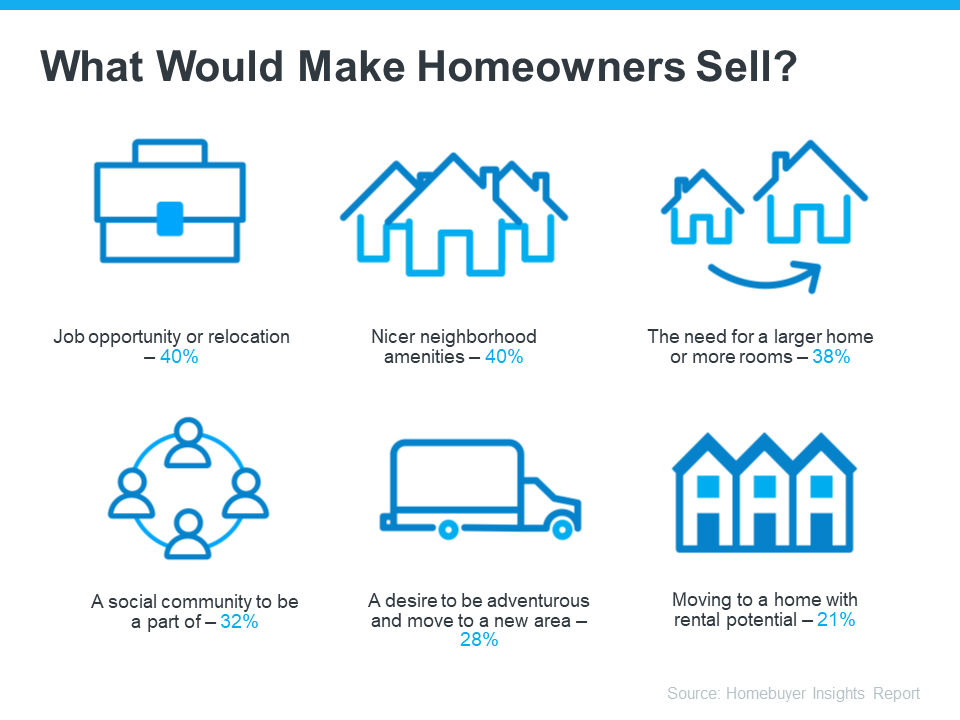
A recent study from Bank of America sheds light on some of the things homeowners say would make them sell, even with rates where they are right now (see visual below):
What Would Motivate You To Move?
Now that you know why other people would move, take a minute to think about what would make a move worth it for you. Is it time to take a chance and go for your dream job, even though it’s not local? Are you looking for a neighborhood with more to offer and a close-knit sense of community? Maybe you need more space, you’re looking for your next great adventure, or you want a condo or house that opens up rental opportunities to pad your income.
And here’s something else to consider. Mortgage rates are still expected to go down over the course of the year. Once that happens, there will be a big rush of buyers jumping back into the market. While you could delay your plans until rates drop, you’ll only have more competition with those buyers if you do.
So, does that mean it’s worth moving now, even with rates where they are? The answer is: that it depends.
You’ll want to consider today’s mortgage rates, where they’re expected to go from here, and what would prompt you to want to make a change as you decide on your next steps. An expert can help with that.
Bottom Line
Other homeowners are getting used to rates and deciding to move. Let’s chat about what matters most and if it’s time for you to jump back into the market too. Contact us today at 734-761-3060 or info@condohotline.com and let’s discuss your options! Check out some different Ann Arbor condo communities here!