
Why Ann Arbor Condos Are Experiencing Price Reductions this Spring
Price Reductions for Ann Arbor Condos

If you’re following the Ann Arbor housing market, you’ve likely noticed a curious trend this Spring—price reductions on condos are becoming more common. For homebuyers and sellers alike, this shift raises a lot of questions. Why are prices being lowered? What does it say about the market? And most importantly, how should you respond, whether you’re buying or selling?
This blog will break down the key reasons behind these price adjustments, the economic factors at play, and what this market trend means for both buyers and sellers. We’ll also share tips for navigating these changes.
What’s Causing the Price Drops?
Several factors are driving the recent wave of condo price reductions in Ann Arbor. While changes like this are rarely the result of one issue alone, the following may help explain the bigger picture.
1. Shifting Market Conditions
Over the past year, the real estate market in the U.S. has cooled after a frenzied post-pandemic housing boom. Ann Arbor, like many cities, is experiencing the effects of this market recalibration. Gone are the days when sellers could list their properties at inflated prices and expect competing offers within hours. Today, homes—including condos—are sitting on the market longer, forcing sellers to reconsider their pricing strategies.
2. Economic Influences
National and local economic factors also play a critical role. As of June 2025, interest rates remain elevated compared to their historical lows. Higher mortgage rates directly impact affordability for buyers. With borrowing costs rising, many prospective buyers are scaling down their budgets or opting to rent instead. This ultimately reduces demand for condos, putting downward pressure on prices.
Additionally, uncertainties in the broader economy, such as concerns about inflation or possible recessionary trends, may be making buyers more cautious. Economic uncertainty often translates to softer real estate markets.
3. Increase in Inventory
Another part of the equation is an increase in condo inventory. Over the last few years, Ann Arbor has seen a rise in new condo developments catering to its growing population of students, professionals, and retirees. In May 2025, Ann Arbor saw a 28% increase in listings compared with May 2024. While this increase in supply is great for buyers, it means sellers now face more competition. When buyers have more options, sellers must be willing to negotiate or lower their asking prices to make their listings stand out.
4. Potential Overpricing
Some sellers in Ann Arbor may have initially priced their condos too high. This might be due to lingering expectations from the seller-friendly market of recent years or a misunderstanding of current conditions. When a home sits on the market without generating enough interest, sellers often opt for price reductions to attract a new buyer pool, get offers, and avoid prolonged market exposure.
The Impact on Buyers and Sellers
Price reductions affect buyers and sellers in different ways, and understanding these impacts can help you make informed decisions.
For Buyers
Price reductions present an opportunity, especially for those who have been struggling to break into the competitive housing market. Here’s what buyers can expect:
- More Negotiating Power: Buyers may find they have an edge when making offers, as sellers are more motivated to close deals.
- Wider Choices: Since inventory levels are higher, buyers can take their time to explore more options and make decisions that align with both their preferences and budgets.
- Affordability Considerations: Although sellers are reducing prices, higher mortgage rates may still make monthly payments a challenge. Ensure you run the numbers carefully before committing.
For Sellers
If you’re selling your condo in Ann Arbor, this environment can feel more challenging. However, understanding the reality of today’s market can help you adjust your approach:
- Pricing Strategically: Setting a realistic price from the beginning is critical to attracting buyers. Consider consulting with a local real estate professional who understands current market trends.
- Considering Pre-Listing Improvements: Enhancing your condo’s appeal through small upgrades or staging can help it sell faster, even in a cooling market.
- Being Patient and Flexible: Be prepared for the possibility of longer listing times and the need to negotiate with buyers.
Navigating the Current Market
Whether you’re a prospective buyer or a seller, here are some tips for navigating today’s Ann Arbor condo market:
Advice for Buyers
- Know Your Budget: With changing market conditions and higher mortgage rates, determine what you can comfortably afford before starting your search.
- Be Prepared to Compromise: While inventory is higher, the perfect property may still come at a premium. Know your non-negotiables and be willing to compromise on other aspects.
- Time Your Offers Strategically: Staying informed about price reductions and market dynamics can help you make well-timed offers, potentially securing a great deal.
Advice for Sellers
- Work with a Pro: An experienced real estate agent familiar with Ann Arbor’s unique market can provide pricing strategies that help your condo remain competitive.
- Focus on Presentation: Ensure your condo makes a strong first impression with prospective buyers. This could include staging, professional photos, or hosting open houses.
- Adjust Quickly: If your condo isn’t generating interest after a couple of weeks, reevaluate your strategy. This might mean a price adjustment or additional marketing efforts. Typically, if you’ve had 10-12 showings and no offers, you’re 4-6% over list price, and if you’ve had no showings, you’re 10% over.
Looking Ahead
The Ann Arbor market is undergoing a period of recalibration, which may continue through 2025. While this isn’t ideal for every seller, it’s a necessary part of balancing supply and demand, paving the way for more sustainable market conditions in the long term. If you’re planning to buy or sell a condo, staying informed and adapting to these changes will help you make the most of today’s real estate landscape.
Whether you’re a first-time homebuyer or a seasoned property owner, preparing for these shifts is key. Taking proactive steps now can lead to better opportunities in the months ahead. Contact us today at The Bouma Group, Realtors at 734-761-3060 or info@condohotline.com and let’s get your condo priced correctly to sell!
Buyers, start your Ann Arbor Condo search here!
Townhomes: A Smart Solution for Today’s Buyers
Townhomes: A Smart Solution for Today’s Buyers – Especially First Time!

Buying your first home in today’s market can feel tough. Between high home prices and mortgage rates, affordability is still a big challenge. And some buyers are making one simple trade-off that’s getting them in the door faster: square footage.
According to the National Association of Home Builders (NAHB), 35% of buyers are willing to purchase something smaller to make homeownership happen. One place you can usually find a smaller footprint— and sometimes better affordability —is in townhomes.
Why Townhomes Are Gaining Popularity
Townhomes typically cost less than single-family homes due to their more limited size. And that’s a big plus for today’s budget-conscious buyer. As Realtor.com says:
“In today’s market, affordability remains a key priority for homebuyers, making townhomes an attractive option because they are often priced more reasonably than single-family homes. It makes them especially appealing to first-time homebuyers on a tighter budget . . .”
So, if you’re trying to buy but feeling stuck because of rising prices, shifting your focus to townhomes could be one way to get into homeownership without maxing out your budget.
Builders Are Responding to the Demand
Builders have seen buyers’ appetite shift to smaller homes, and they’re adjusting to meet the demand. As Joel Berner, Senior Economist at Realtor.com, explains:
“Builders are making a concerted effort to provide smaller, more affordable inventory to the market in a way that the existing-home market cannot. Townhomes are a significant portion of that effort.”
And the numbers back it up. According to data from Realtor.com, townhomes now make up a bigger share of new construction listings than they did just a couple of years ago (see graph below):
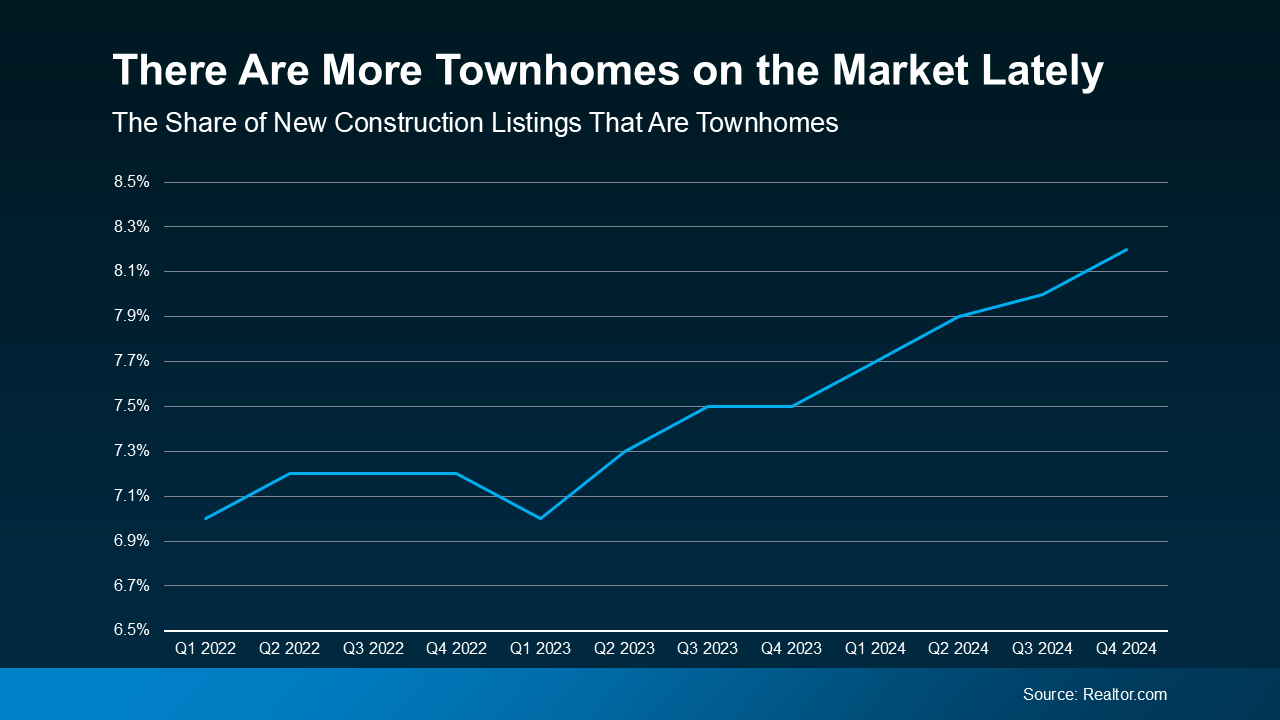
That means, if you’re interested in this type of house, you have more choices than you would have had over the last few years. And more options that are potentially more affordable are definitely a good thing. It should make your search for your first home a bit easier.
Townhomes in Ann Arbor

From entry-level to luxury, Ann Arbor has a variety of townhomes to match every budget and lifestyle. Here are a few of the most popular in order of median sale price:
- Wellesley Gardens $287,500
- Alpine Condos $290,000
- Chapel Hill $292,500
- Georgetown Condos $305,000
- Geddes Lake $307,500
- Brentwood Square $322,500
- Barclay Park $394,000
- North Oaks $697,495
- Ashley Mews $925,000
- Main on the Park $1,700,000
Is a Townhome Right for You?
If you’ve been focused only on more traditional homes with their own yards, an agent can help you explore whether a townhome could work for you. Who knows, you may find out you love the lifestyle. A lot of people do. As an article from the National Association of Realtors (NAR) explains:
“Townhomes tend to cost less than single-family detached homes and can be appealing to young professionals who may desire medium-density, walkable neighborhoods.”
That’s because they’re lower maintenance, they can provide a sense of community with other residents, and they have their own unique amenities. Not to mention, they give you the chance to start building wealth through homeownership without the upkeep that comes with having your own detached, single-family home. And that can be great for first-time buyers who are a bit worried about the maintenance anyway.
But they also come with some other considerations, like dealing with noise through shared walls. If you’re a renter right now, maybe you’re used to that already. But these are the types of things you’ll want to think about. And that’s where an agent’s expertise comes in. They’ll help you weigh the pros and cons, so you understand how a townhome fits into your lifestyle and long-term goals before making your decision.
Bottom Line
If you’re struggling to find a home within your budget, it may be time to expand your search and consider options you haven’t before, like townhomes. Sometimes, compromising a little bit on space is worth it to get your foot in the door.
What matters most to you — space, location, or budget? Let’s figure out where you can flex to make homeownership happen. Contact us today at The Bouma Group, Realtors at 734-761-3060 or info@condohotline.com.
Buying Your First Home? It’s Okay to Feel Nervous

Buying your first home or condo is exciting, but let’s be real – it can also feel overwhelming. It’s a big step, and with that comes plenty of questions. Am I making the right decision? Can I really afford this right now? Will I be able to make ends meet if I have unexpected repairs? What if I lose my job?
Here’s the thing: every first-time homebuyer has these thoughts.
The homebuying process has always been a mix of excitement and nerves, and that’s completely normal. Here’s some information that can give you a bit of perspective, so you don’t have these concerns.
Focus on What You Can Control
Since homeownership is new to you, you’re probably feeling like it’s hard to know what to budget for. And that can be a bit scary. You’ll have the mortgage, home insurance, and maintenance to think about – maybe even lawn care or homeowner’s association (HOA) fees. It’s easy to let the dollar signs be overwhelming. As Zillow says:
“Buying a house is a big decision, and you might feel confused and indecisive as you assess your current financial situation and try to work through whether or not the timing is right. Making big life choices might come with some self-doubt, but crunching the numbers and thinking about what you want your life to look like will help guide you down the right path.”
The important thing is to focus on what you can control. By partnering with a local agent and a trusted lender, you can get a clear understanding of what you can borrow for your home loan, what your monthly payment would be, and how your mortgage rate can impact it. And since that payment will likely be your biggest recurring expense, the key is to make sure the number works for you.
Don’t Stress About Repairs
The maintenance and repairs? Those can be a little bit harder to anticipate. But don’t forget you’ll get an inspection during the homebuying process to give you a better look at the condition of your future house. And with your inspection report in hand, you’ll have a good idea of what needs work. This way, you can start saving up so that you’re ready if and when something breaks.
But even then, if this is something that’s still really nagging at you, talk to your agent about asking the seller to throw in a home warranty. Those can cover repairs for some of the bigger systems in the house, like the HVAC, if they break within a specific time frame. While this isn’t a huge expense for the seller, the likelihood of a seller agreeing to one depends on what’s happening in your local market and how competitive it is right now.
It’s Okay To Stretch – Just Not Too Far
And remember, chances are that money will be a little tight – at least at first. And that’s kind of to be expected. A lot of times when someone buys their first home, they cut down on things like shopping and eating out for a while until they get a better idea of how their expenses will shake out in the new home.
But if you’re crunching the numbers and you won’t have enough money left for things like gas, food, etc. – it’s a sign you’d be stretching yourself too far. The last thing you want is to take on a payment that’s too much to handle. But stretching a little? That’s different. That’s normal.
Your Job Will Probably Change – And That’s Okay
And don’t forget, you’ll likely earn more down the road, so that slight stretch now won’t seem so bad as time wears on. As you advance in your career, you’ll probably start to make more money too. So, as your paycheck grows, the payments will get easier. Renting is a short-term option – and it’s one you deserve to get out of. Buying a home is a long-term play.
And just in case you’re worried about what happens if you do lose your job, you should know there are options, like forbearance, designed to help you temporarily pause payments on your home loan due to hardship.
Bottom Line
Buying your first home or condo is a big decision, and it’s okay to feel a little nervous about it. But if you’re financially ready, don’t let fear keep you from moving forward. These emotions are normal, and great agents help their buyers get through them.
What makes you nervous when you think about buying your first home?
Let’s connect so you have an expert on your side to explain everything along the way. From finding the perfect community for your needs to guiding you through the process, we’re here to help! Contact us today at The Bouma Group, Realtors at 734-761-3060 or info@condohotline.com.
The Benefits of Downsizing for Homeowners
The Benefits of Downsizing for Homeowners
There may come a time in your life when a variety of circumstances make it necessary to downsize your living space. Here are a few of the benefits of downsizing from your current condo or home.

Some Highlights
- Downsizing is a popular choice for homeowners when they retire or when their needs change, but with inflation still high, it’s also a way to reduce costs.
- Downsizing could help cut down on your expenses and your equity can fuel your move.
- A condo is a great option if the upkeep of your current home, yard, etc. is just too much.
If you’re thinking about moving to a condo or smaller home, let’s connect today at 734-761-3060 or info@condohotline.com to go over your housing goals and look at your options on our local market.
You May Have More Negotiation Power in Today’s Condo Market

Did the frequency and intensity of bidding wars over the past two years make you put your home search on hold? If so, you should know the hyper-competitive market has cooled this year as buyer demand has moderated and housing supply has grown. Those two factors combined mean you may see less competition from other buyers leading to better negotiations.
And with less competition comes more opportunity. Here are two trends that may be the news you need to reenter the market.
1. The Return of Contingencies
Over the last two years, more buyers were willing to skip important steps in the homebuying process, like the appraisal or the inspection, in hopes of gaining an advantage in a bidding war. But now, things are different.
The latest data from the National Association of Realtors (NAR) shows the percentage of buyers waiving their home inspection or appraisal is down. And a recent article from realtor.com points out more sellers are accepting contingencies:
“A year ago, sellers were calling all the shots and buyers were launching legendary bidding wars, waiving contingencies, and paying for homes in cash. But now, the shoe is on the other foot, and 92% of home sellers are accepting some buyer-friendly terms (frequently related to home inspections, financing, or appraisals), . . .”
This doesn’t mean we’re in a buyers’ market now, but it does mean you have a bit more leverage when it comes time to negotiate with a seller. The days of feeling like you may need to waive contingencies or pay drastically over asking price to get your offer considered may be coming to a close.
2. Sellers Are More Willing To Help with Closing Costs
Before the pandemic, it was a common negotiation tactic for sellers to cover some of the buyer’s closing costs to sweeten the deal. This didn’t happen as much during the peak buyer frenzy over the past two years.
Today, data suggests this is making a comeback. A realtor.com survey shows 32% of sellers paid some or all of their buyer’s closing costs. This may be a negotiation tool you’ll see as you purchase a home. Just keep in mind, limits on closing cost credits are set by your lender and can vary by state and loan type. Work closely with your loan advisor to understand how much a seller can contribute to closing costs in your area.
Bottom Line
Despite the extremely competitive housing market of the past several years, today’s data suggests negotiations are starting to come back to the table. Let’s connect today to find out how the market is shifting in our area. Contact us, the Ann Arbor Condo Specialists at The Bouma Group at 734-761-3060 or info@condohotline.com.
Do You Believe Homeownership Is Out of Reach? Maybe It Doesn’t Have To Be.

It turns out, millennials aren’t the renter generation after all. The 2022 Consumer Insights Report from Mynd says there’s a portion of millennial and Gen Z buyers who are pursuing homeownership as a way to build their wealth, but it may not be exactly the way previous generations have done it. The study explains how they’re breaking into the market:
“. . . younger generations of Americans are not buying into that dream in the same way that older generations have. A growing number of Americans are choosing to make their first real estate purchase as an investment property.”
Instead of buying a condo or home and moving into it themselves, some young buyers are purchasing so they can use it as a rental. This tactic may be gaining popularity, at least in part, because of the affordability challenges brought about by today’s higher mortgage rates. The report above mentions how many people in this group are considering this approach. It says:
“Almost half of Millennials and Gen Z (43%) are considering buying an investment property compared to only 9% of Baby Boomers and 27% of Gen X.”
Why Younger Buyers Are Buying a Condo or Home To Use as a Rental
This strategy allows buyers to continue living in their current location, like the bustle of a city apartment or a neighborhood that they know and love, where they couldn’t afford to buy. But instead of giving up on the idea of homeownership, they buy a condo or home in a more affordable area with the intention of renting it out.
In a way, they’re getting the best of both worlds. They live where they want, and they still own a home where they can afford it.
Their goal is to generate passive income and diversify their assets. It works like this: in addition to having a rental stream of income, the equity they build in their condo or house will also help grow their net worth over time.
Bottom Line
If you’re thinking about buying a condo or home as an investment strategy to build your wealth, let’s connect to explore your options and nearby areas that may have homes that fit what you’re looking for. Contact us today at 734-761-3060 or info@condohotline.com for an in-depth conversation about your particular needs!
How Much Do You Need for Your Down Payment?
As you set out on your home or condo buying journey, you likely have a plan in place, and you’re working on saving for your purchase. But do you know how much you actually need for your down payment?
If you think you have to put 20% down, you may have set your goal based on a common misconception. Freddie Mac says:
“The most damaging down payment myth—since it stops the homebuying process before it can start—is the belief that 20% is necessary.”
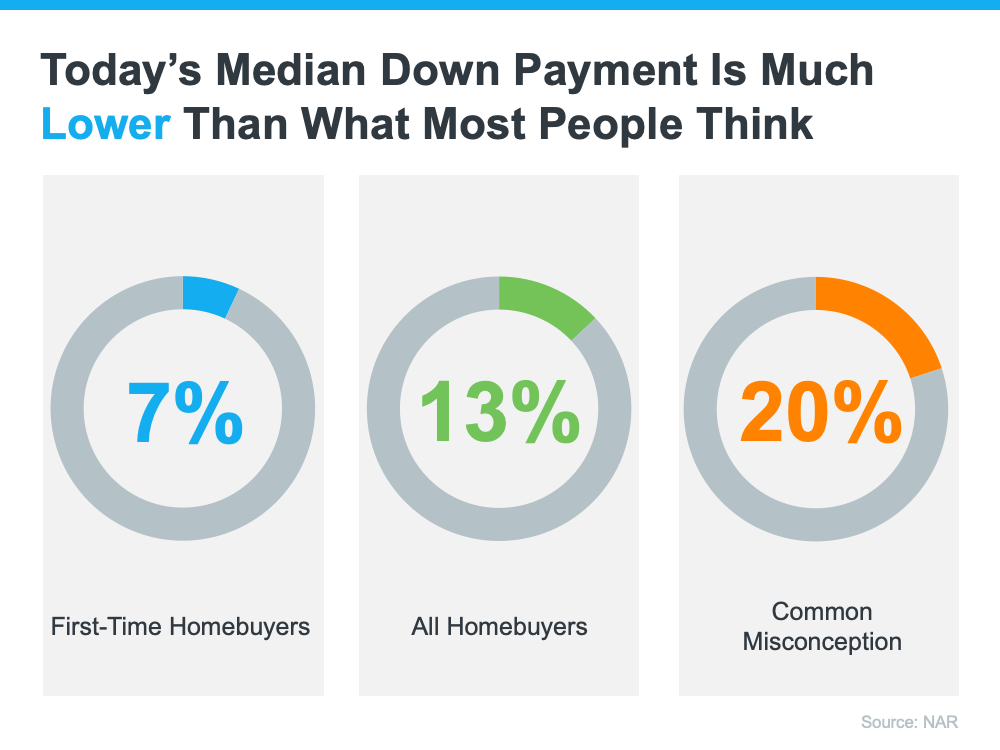
Unless specified by your loan type or lender, it’s typically not required to put 20% down. According to the Profile of Home Buyers and Sellers from the National Association of Realtors (NAR), the median down payment hasn’t been over 20% since 2005. It may sound surprising, but today, that number is only 13%. And it’s even lower for first-time homebuyers, whose median down payment is only 7% (see graph below):
What Does This Mean for You?
While a down payment of 20% or more does have benefits, the typical buyer is putting far less down. That’s good news for you because it means you could be closer to your home or condo buying dream than you realize.
If you’re interested in learning more about low down payment options, there are several places to go. There are programs for qualified buyers with down payments as low as 3.5%. There are also options like VA loans and USDA loans with no down payment requirements for qualified applicants.
To understand your options, you need to do your homework. If you’re interested in learning more about down payment assistance programs, information is available through sites like downpaymentresource.com. Be sure to also work with a real estate advisor from the start to learn what you may qualify for in the homebuying process.
Bottom Line
Remember: a 20% down payment isn’t always required. If you want to purchase a condo this year, let’s connect to start the conversation and explore your down payment options. Contact us today at 734-761-3060 or info@condohotline.com, we’re here to help!
Turn to an Expert for the Best Advice, Especially in 2021

As we approach the anniversary of the hardships we’ve faced through this pandemic and the subsequent recession, it’s normal to reflect on everything that’s changed and wonder what’s ahead for 2021. While there are signs of economic recovery as vaccines are being issued, we still have a long way to go. It’s at times like these we want exact information about anything we’re doing. That information brings knowledge, and this gives us a sense of relief and comfort in uncertain times.
If you’re thinking about buying or selling a condo or home today, the same need for information is very real. But, because it’s such a big step in our lives, that desire for clear information is even greater in the buying or selling process. Given the current level of overall anxiety, we want that advice to be truly perfect. The challenge is, no one can give you “perfect” advice. Experts can, however, give you the best advice possible.
Let’s say you need an attorney, so you seek out an expert in the type of law required for your case. When you go to her office, she won’t immediately tell you how the case is going to end or how the judge or jury will rule. If she could, that would be perfect advice. What a good attorney can do, however, is discuss with you the most effective strategies you can take. She may recommend one or two approaches she believes will be best for your case.
She’ll then leave you to make the decision on which option you want to pursue. Once you decide, she can help you put a plan together based on the facts at hand. She’ll help you achieve the best possible resolution and make whatever modifications in the strategy are necessary to guarantee that outcome. That’s an example of the best advice possible.
The role of a real estate professional is just like the role of a lawyer. An agent can’t give you perfect advice because it’s impossible to know exactly what’s going to happen throughout the transaction – especially in this market.
An agent can, however, give you the best advice possible based on the information and situation at hand, guiding you through the process to help you make the necessary adjustments and best decisions along the way. An agent will lead you to the best offer available. That’s exactly what you want and deserve.
Bottom Line
If you’re thinking of buying or selling a condo or home this year, let’s connect to make sure you get the best advice possible. We have access to all of the real estate data out there and are constantly analyzing it so we can give our clients the best advice possible. Contact us today at The Bouma Group at info@bouma.com or 734-761-3060 and we’ll help make your real estate goals a reality.