
Understanding Working Capital Fees for Condo Buyers
Understanding Working Capital Fees: A Guide for New Condo Buyers
When buying a new condo, you’re often introduced to various fees and costs that can sometimes leave you puzzled. One of these lesser-known charges is the working capital fee. Understanding what this fee entails and how it impacts your purchase can make the buying process smoother and more transparent. Here’s everything you need to know about working capital fees.

What is a Working Capital Fee?
It is a one-time charge that new condo buyers might encounter upon the purchase of their property. This fee is typically collected by the condo association or homeowners association (HOA). It’s used to ensure there are adequate funds in the association’s reserve to cover operating expenses and any unexpected costs.
Unlike monthly HOA dues, which are recurring payments, the working capital fee is usually paid just once at the time of closing.
Key Components of the Working Capital Fee:
- Initial Funding: The primary purpose is to provide initial funding to the condo association. This helps the association operate smoothly from day one without financial strain.
- Financial Cushion: It creates a financial cushion to address any unforeseen expenses that might arise, such as emergency repairs or legal fees.
- Operational Costs: These funds can also be used for everyday operational costs, including maintenance of common areas, utilities, and other routine expenses.
- Stability: Ensures the condo association doesn’t have to levy special assessments or increase monthly dues significantly right after residents move in.
How Does the Working Capital Fee Affect Condo Buyers?
As a prospective condo buyer, knowing about the working capital fee and understanding its implications is crucial. Here’s how it can affect you:
Financial Planning
The working capital fee adds to the overall cost of purchasing your condo. This means you’ll need to account for it in your budget. While it’s typically a one-time fee, it can range from a few hundred to a few thousand dollars, depending on the size and scope of the condo development.
Closing Costs
Since it is due at closing, it will be part of your closing costs. This is an essential detail to remember when preparing for your condo purchase’s financial aspects. Make sure to ask your real estate agent or the sales team about the exact amount so you can plan accordingly.
Long-term Benefits
While the upfront cost can be a bit daunting, paying a working capital fee can be beneficial in the long run. By contributing to the association’s reserves, you’re helping ensure the financial health of the community. This can lead to fewer special assessments and stable monthly HOA fees, saving you money and hassle over time.
Transparency
Understanding this fee provides transparency in the condo-buying process. When you, as a condo buyer, are aware of all costs associated with your purchase, you make informed decisions and prevent any last-minute surprises.
Conclusion
In summary, the working capital fee is an important aspect of buying a new condo that helps provide financial stability to the condo association. It’s a one-time payment designed to fund initial operational costs and create a financial buffer for unforeseen expenses. By understanding what this fee is and how it impacts your purchase, you can better prepare for this investment and enjoy peace of mind knowing that your new community is on solid financial footing.
If you’re in the market for a new condo, ask about the working capital fee early in the buying process. This will help you plan your finances more effectively and ensure there are no surprises at closing.
Have questions about other fees related to condo buying? Feel free to reach out at 734-761-3060 or info@condohotline.com or leave a comment below. We’re here to help guide you through every step of the process!
Buying a Condo vs. Renting in Ann Arbor, MI: What’s Best for You?
Buying a Condo vs. Renting in Ann Arbor
In the vibrant city of Ann Arbor, Michigan, making a decision between buying a condo or renting can seem daunting at first. However, the prospect of buying becomes increasingly attractive when you look at the long-term benefits of homeownership, particularly in a city as promising as Ann Arbor. If you’re sitting on the fence, wondering if buying a condo is the right move for you, consider the following benefits and how they address common concerns.

Key Benefits of Buying a Condo in Ann Arbor
- Gain Equity Over Time: Unlike rent, which is an expense, each mortgage payment on your condo increases your equity, essentially investing in your future.
- Create Your Ideal Living Space: Owning a condo means you have the freedom to decorate, renovate, and modify your space to match your personal style and needs without needing landlord approval.
- Stable Payments: Fixed-rate mortgages mean your payment remains consistent throughout the life of the loan, unlike rent, which can increase unexpectedly.
- First Step Towards Future Homeownership: Buying a condo can be an excellent entry point into the housing market, allowing you to build equity and credit that can help you purchase a larger home later on.
- Avoid Making Your Landlord’s Mortgage Payment: Why contribute to someone else’s investment when you could be building your own wealth?
- Shield Yourself From Rent Increases: In Ann Arbor, as in many places, rent prices are on the rise. Purchasing a condo locks in your housing costs.
- Security of Tenure: Owning your home means not having to worry about lease renewals or being asked to vacate on short notice.
Addressing Common Concerns
Despite these benefits, many potential buyers remain hesitant, often due to a few common concerns:
- Affordability: Although the initial costs of buying a condo can be higher than entering a rental agreement, numerous financing options are available. Programs exist to help first-time buyers with down payments or to secure loans even with less-than-perfect credit. See the Top 10 Most Affordable Condos in Ann Arbor.
- Credit and Down Payment: Organizations and lenders in Ann Arbor offer support for those with credit issues or down payment concerns. Furthermore, investing time to repair credit and explore loan options tailored for differing finances can reveal surprising opportunities.
- Flexibility: If you’re unsure how long you’ll be in Ann Arbor, remember that owning a condo doesn’t mean you’re stuck there forever. The equity you build can be turned into a profit if you decide to sell down the line. If you move elsewhere you can rent it out and turn it into an income-generating asset.
- Mortgage Commitment: Entering into a mortgage is a significant commitment and an investment in your future. Plus, if your financial situation improves, you can make additional payments to shorten your loan’s term or reduce the total interest paid.
Conclusion
For many, the dream of homeownership seems just out of reach. However, when considering the long-term financial and personal benefits, buying a condo in Ann Arbor can be a smart investment that outweighs the perceived convenience of renting. By addressing common concerns upfront and exploring all options, you may find that owning a home is more achievable than you initially thought. In a city as dynamic and growth-oriented as Ann Arbor, investing in your own piece of property could be the decision that sets you up for a bright future. View the many different types of condo communities Ann Arbor has to offer here! To request a private showing or receive instant notification when a new condo comes to the market, contact us at The Bouma Group today at 734-761-3060 or info@condohotline.com.
Should I Move with Today’s Mortgage Rates?
Should I Move with Today’s Mortgage Rates?

When mortgage rates spiked up over the last few years, some would-be condo and home buyers put their plans to move on pause. Maybe you did too because you didn’t want to move and take on a higher mortgage rate for your next place. But is that still the right strategy for you?
In today’s market, data shows more homeowners are getting used to where rates are and thinking it may be time to move. As Mark Zandi, Chief Economist at Moody’s Analytics, explains:
“Listings are up a bit as life events and job changes are putting increasing pressure on locked-in homeowners to sell their homes. Homeowners may also be slowly coming to the realization that mortgage rates aren’t going back anywhere near the rate on their existing mortgage.”
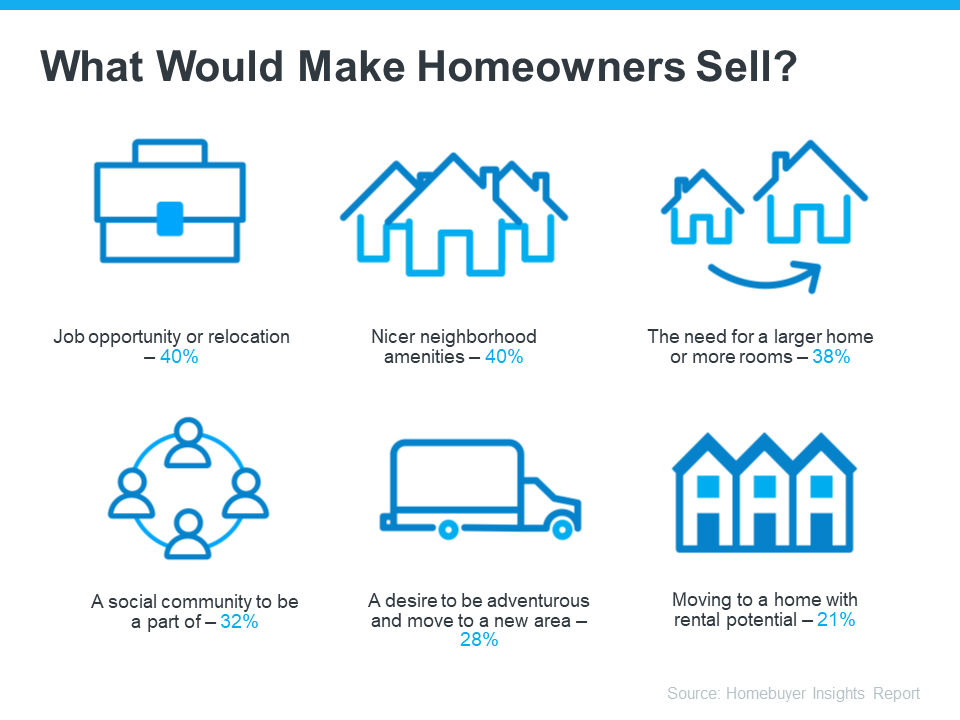
A recent study from Bank of America sheds light on some of the things homeowners say would make them sell, even with rates where they are right now (see visual below):
What Would Motivate You To Move?
Now that you know why other people would move, take a minute to think about what would make a move worth it for you. Is it time to take a chance and go for your dream job, even though it’s not local? Are you looking for a neighborhood with more to offer and a close-knit sense of community? Maybe you need more space, you’re looking for your next great adventure, or you want a condo or house that opens up rental opportunities to pad your income.
And here’s something else to consider. Mortgage rates are still expected to go down over the course of the year. Once that happens, there will be a big rush of buyers jumping back into the market. While you could delay your plans until rates drop, you’ll only have more competition with those buyers if you do.
So, does that mean it’s worth moving now, even with rates where they are? The answer is: that it depends.
You’ll want to consider today’s mortgage rates, where they’re expected to go from here, and what would prompt you to want to make a change as you decide on your next steps. An expert can help with that.
Bottom Line
Other homeowners are getting used to rates and deciding to move. Let’s chat about what matters most and if it’s time for you to jump back into the market too. Contact us today at 734-761-3060 or info@condohotline.com and let’s discuss your options! Check out some different Ann Arbor condo communities here!
Joining Your Condo HOA Board: Empower Your Community Involvement
Taking an Active Role in Your Homeowners Association
When you purchase a condo, you’re not just buying a unit; you’re investing in a community. How do you ensure that your homeowner’s association (HOA) fees are utilized to benefit you and your neighbors? Joining the condo HOA board is one of the most effective ways to influence your community’s operations.
Benefits of Serving on the HOA Board

Make Your HOA Fees Work for You
Every condo owner pays HOA fees, but not every owner has a say in how those funds are allocated. By joining your condo’s HOA board, you gain insight into the financial decisions being made on behalf of your community. You also have the power to advocate for expenditures that align with your priorities.
Vote on Key Association Decisions
HOA board members play a crucial role in making decisions that impact every aspect of condominium living, from maintenance issues to community policies. Your vote can influence the quality of life in your condo complex and ensure that the board remains representative of its diverse residents.
Insight into the Community’s Financial Health
Financial transparency is crucial in any well-run HOA, and board members are privy to detailed financial reports. This allows you to understand how the association’s money is managed. You can offer input on potential cost-saving measures or necessary investments.
Stay Informed About Community Affairs
Being on the condo board gives you a behind-the-scenes look at the inner workings of your community. Whether it’s upcoming maintenance projects, disputes between neighbors, or discussions about policy changes, you’ll be among the first to know.

How to Become an HOA Board Member
- Express your interest: Reach out to the current board or management company and attend board meetings to learn more about the role and current needs.
- Be an active member of the community: Engage with your neighbors, attend community events, and demonstrate your commitment to the community’s well-being.
- Stand for election: Most condo boards are elected by the community, so prepare to campaign for your candidacy when board positions open up.
Conclusion
Joining your condo’s HOA board can be a rewarding experience. It allows you to use your voice and skills for the betterment of your community. While it is a commitment, the opportunity to guide the future of your community, protect your investment, and meet fellow homeowners is invaluable. If you’re willing to dedicate the time, consider running for a position on your HOA board.
Remember, a strong community requires the participation of all its members. Serving on your condo board is one of the most direct ways to contribute to the long-term well-being and vibrancy of your collective home. Want to know more about your condo purchasing options? Contact us today at 734-761-3060 or info@condohotline.com.
Unpacking the Real Cost of Condo Living: A Guide to Understanding Condo HOA Fees
A Condo Buyers Guide to HOA Fees
For potential condo buyers, the allure of low-maintenance luxury living often comes with a not-so-glamorous caveat—monthly condo association fees, otherwise known as HOA (Homeowners’ Association) fees. Beyond the catchy “lock-and-leave” lifestyle advertised, these fees can significantly impact your financial obligations and the value you receive from your investment. In this comprehensive guide, we’ll demystify the sometimes murky waters of HOA fees so you can make the most informed decisions about your future condo purchase.

The ABCs of Condo HOA Fees
Defining the Terms
Before you can truly grasp the implications of HOA fees, it’s essential to understand what they are. These fees are recurring payments made by condo or single-family home owners within a particular community or building. The fees cover shared expenses, from maintenance and repairs to community amenities and even insurance for common areas.
The Financial Breakdown
Condo fees can vary significantly based on various factors such as the location, age, and building amenities. The key is transparency—potential buyers should be provided with a detailed breakdown of these costs before closing day. Remember, not all HOA fees are created equal. Some may seem hefty at first glance, but if they include utilities and significant community perks, they could actually offer a better deal than seemingly lower fees that hide additional costs.

Understanding the Purpose
What exactly are you paying for with your HOA fees? Typically, these funds are allocated to address the following:
- Maintenance: Routine upkeep of the building’s exterior, common areas, and shared amenities is a non-negotiable component of HOA fees.
- Utilities: Heating, water, waste removal, and electricity for common areas may be covered, reducing individual expenses.
- Reserve Funds: For future repairs and major projects, the association should set aside a portion of fees to avoid special assessments.
- Amenities: Pools, gyms, community rooms, and other facilities often require ongoing maintenance and insurance.
The Condo Association: Your Fee Guardians
The Role of the Association Board
The condo association board is a critical player in the management of your HOA fees. Elected by unit owners, the board establishes the annual budget, enforces community rules, and makes both minor and major decisions about the building’s operations. Engage with the board and attend meetings to ensure that your financial contributions are being used effectively and reflect your needs and desires as a member of the community.
Decoding the Association Documents
Before you even start calculating your budget with HOA fees in mind, it’s essential to review the association’s financial documents. The master deed and bylaws will detail how fees are determined, any limitations on increasing fees, and what rights and responsibilities the association has in spending these funds.
Special Assessments and Your Pocket
In some instances, HOA fees won’t be enough to cover significant unforeseen expenses, or the association may decide to undertake a large-scale improvement project. This is where special assessments come in, extra fees charged to unit owners to cover these costs. To protect your finances, ensure the association maintains a solid reserve fund and has a clear policy on when special assessments may be levied.
Additional Considerations for Prospective Condo Buyers
Planning for Future HOA Fee Hikes
HOA fees are not stagnant. They can—and often do—increase over time. It’s crucial to understand the underlying reasons for increases and budget for these changes. Factors that may lead to fee hikes include rising insurance costs, aging building infrastructure, or new amenities.
The Fine Print on Pet Policies and Parking
Some fees may not be explicitly labeled as HOA fees and can contribute significantly to your living expenses. Non-refundable pet deposits, monthly pet rent, or charges for dedicated parking spaces can add up quickly and should be factored into your housing budget.
The Social and Lifestyle Value of HOA Fees
While the financial aspects of these fees are critical, don’t overlook the social and lifestyle benefits they can offer. Access to well-maintained amenities and the community’s shared environment are significant perks. They can enhance your quality of life and often justify the associated costs.
In conclusion, condo HOA fees can be a source of contention or a ticket to a fulfilling housing experience. It all comes down to knowledge and participation. You can turn what might seem like a financial burden into a wise investment in your future home by understanding what HOA fees encompass, being well-informed about your association’s practices, and making choices that align with your financial and lifestyle goals. Take the time to dig deep and when the time comes to commit, do so with confidence and a complete understanding of what you’re getting into. Your dream condo may be waiting for you – HOA fees and all. So, carefully consider all aspects before making a decision. To learn more about the condo-buying process, contact us at 734-761-3060 or info@condohotline.com. Search for your dream condo here!
The Condo Buyer’s Guide to Ann Arbor, Michigan
The Condo Buyer’s Guide – Why Ann Arbor?

Ann Arbor, affectionately known as “Tree Town,” is more than just a college town; it’s a vibrant community with a rich tapestry of culture, arts, parks, and education. Nestled in the heart of Southeast Michigan, it offers an eclectic mix of urban living and nature. Whether you’re a young professional, a small family, or someone looking to enjoy the golden years in style, finding the perfect condo in Ann Arbor promises a combination of comfort, convenience, and access to the city’s lively spirit.

Determining Your Ideal Condo
Before you begin your search, it’s crucial to understand what type of condo suits your lifestyle and preferences. Ann Arbor presents a variety of options including:
- Downtown Condos: Perfect for those who love to be in the heart of the action, close to restaurants, theaters, and cultural events.
- Large Complexes or Detached Condos: These offer more space and often come with amenities like swimming pools, fitness centers, and community spaces.
- Ranch-Style Condos: Great for individuals seeking one-level living without the hassle of stairs.
- Luxury or Penthouse Style: If upscale living is what you’re after, Ann Arbor has condos that offer premium finishes, breathtaking views, and exclusive amenities.
- Proximity to the University of Michigan: Ideal for faculty, students, medical center employees, or anyone who wants to stay connected to the vibrant university community.
Beginning Your Search
- Define Your Must-Haves: Make a list of non-negotiable features your condo needs to have — think about parking, pet policies, outdoor space, and accessibility features.
- Research the Market: Get a feel for the current condo market in Ann Arbor. Use online real estate platforms and connect with local realtors who specialize in condos.
- Visit the Neighborhoods: Spend time in the neighborhoods you’re considering. Visit local cafes, parks, and shops to get a real sense of the community vibe.
- Consider the Commute: If you’re working or studying, make sure to factor in your daily commute. Ann Arbor has excellent public transportation options, but it’s always a good idea to see what your travel time would be like.
- Review Homeowners Associations (HOAs): Before making a decision, understand what is covered by the condo’s HOA fees. This can include everything from maintenance to amenities, and it’s crucial to ensure it aligns with your expectations.
- Inspections and Appraisals: Make sure to have the condo inspected and appraised. This will uncover any potential issues and ensure you’re investing in a property that’s worth your hard-earned money.
Finding Your Dream Condo
Condo living in Ann Arbor isn’t always about finding a cheaper alternative to a detached single-family home. It’s about embracing a smart way to live, especially if it’s your first time in the real estate market. This condo buyer’s guide will help you find the ideal condo that matches your lifestyle with the diverse offerings of this dynamic city. Whether you desire the bustle of city life, the tranquility of suburban comfort, or something in between, your perfect condo awaits. To get immediate notification of condos for sale in your desired community, contact us at 734-761-3060 or info@condohotline.com. We’ll get you set up right away!
A First-Time Buyer’s Guide to Affordable Condos in Ann Arbor, MI
For many, navigating the real estate market in Ann Arbor, Michigan is like stepping into an arena packed with excitement and trepidation. It’s a city renowned for its prestigious university, charming downtown area, and vibrant arts and culture scene. However, amidst this urban tapestry, lies the tricky challenge of finding a place to call your own, especially for first-time homebuyers. Fear not, as the Ann Arbor condo specialists we know the most affordable condos that marry comfort with cost-effectiveness. Ann Arbor is ready to welcome you if you’re ready to take the first crucial step into homeownership. Here’s your definitive guide to the most budget-savvy condominiums in the city.

Affordability Meets Quality in Ann Arbor
Ann Arbor might be known for its prestige as the home of the University of Michigan, but it’s also a beacon for those seeking affordability without sacrificing amenities. You don’t have to compromise on quality to find a place that feels like home. The secret is in knowing where to look and what to look for.
When it comes to value, many affordable condos in Ann Arbor offer conveniences such as proximity to the city center, public transit, and communal services that make your everyday lifestyle not just comfortable, but also financially sensible. The key is to understand the non-negotiables versus the “nice-to-haves” and align them with your budget. Check out these complexes with an average sale price of under $250,000.

Top 10 Most Affordable Condos in Ann Arbor
- Arbor Heights. Located off Packard Rd., just east of Carpenter Rd., Arbor Heights offers ranch-style studio, 1, and 2-bedroom options. Average sale price $107,500.
- Walden Hills. A larger community on Ann Arbor’s west side featuring ranch-style units with 1 and 2 bedrooms. Carport parking and excellent on-site fitness amenities are included at Walden Hills. Average sale price $182,793.
- Pattengill. Convenient central Ann Arbor location for these ranch-style condos. Carport parking and an outdoor pool are highlights of this cozy community. Average sale price $190,000.
- Independence. Situated next to Pattengill Condos, the focal point of Independence is the sparkling pool surrounded by lush landscaping. Units come with 1-3 bedrooms and 1-2 baths. Average sale price $191,437.
- Pittsfield Village. A beloved community on Ann Arbor’s southeast side with easy access to US-23. Community amenities include an inground pool, tennis and volleyball courts, playgrounds, and picnic areas. Average sale price $200,520.
- Tower Plaza. With a prime downtown Ann Arbor location, Tower Plaza is a favorite among young professionals and graduate students. Condos come in studio and 1-bedroom units with a handful of 2 bedrooms. Average sale price $220,472.
- Briarcrest. Located in central Ann Arbor close to Briarwood Mall, Briarcrest is a mix of ranch and townhouse-style condos with carport parking. Residents enjoy the fitness center, pool, and clubhouse. Average sale price $223,912.
- Arlington Place. Walk to Starbucks and Whole Foods from Arlington Place conveniently located on Huron Parkway just south of Washtenaw Ave. Units offer 2-3 bedrooms with garage parking and separate storage space. Average sale price $231,300.
- Woodland Mews. With a luxury clubhouse, outdoor pool, and fitness center, Woodland Mews is a desirable complex located near the University of Michigan’s sports complexes, grocery stores, and shopping. The 11 different floor plans offer 1-3 bedrooms in mainly ranch-style units with a few townhomes. Average sale price $235,300.
- Crossings of Ann Arbor. This moderately sized community is situated on the north side of town close to the University of Michigan Medical campus and downtown. These townhomes feature 1 and 2-bedroom units, plus carport parking and storage space. Average sale price $244,823.
Final Thoughts Before You Buy
Remember, while price is a major factor, it’s not the only thing that should determine your decision. Consider the long-term investment value, the condo community’s atmosphere, and any association fees that come with condo ownership to enhance the quality of your decision-making process.
First-time homebuying should be an adventure, not a chore. Ann Arbor’s condos offer not just a place to live, but a lifestyle that’s within your means. Embrace the search, and you’ll soon find a space to call your own in this dynamic city. Choosing to invest in an affordable condo in Ann Arbor is an exciting step towards financial independence and creating a home base in a vibrant community. As with any significant life decision, take your time, do your research, and consult with professionals who can guide you. To learn more about condo buying options or to be set up on an alert for when your favorite community has a new listing, contact us today at 734-761-3060 or info@condohotline.com.
What Is Pre-Approval And Why Is It So Important?
Why Pre-Approval Is Your Homebuying Game Changer

If you’re thinking about buying a condo or home, pre-approval is a crucial part of the process you definitely don’t want to skip. So, before you start picturing yourself in your new living room or dining on your future all-season patio, be sure you’re working with a trusted lender to prioritize this essential step. Here’s why.
While home price growth is moderating and mortgage rates have been coming down in recent weeks, affordability is still tight. At the same time, there’s a limited number of homes and condos for sale right now, and that means ongoing competition among hopeful buyers. But, if you’re strategic, there are ways to navigate these waters – and pre-approval is the game changer.
What Pre-Approval Does for You
To understand why it’s such an important step, you need to know more about pre-approval. As part of the homebuying process, a lender looks at your finances to determine what they’re willing to loan you. From there, your lender will give you a pre-approval letter to help you understand how much money you can borrow. Freddie Mac explains it like this:
“A pre-approval is an indication from your lender that they are willing to lend you a certain amount of money to buy your future home. . . . Keep in mind that the loan amount in the pre-approval letter is the lender’s maximum offer. Ultimately, you should only borrow an amount you are comfortable repaying.”
Getting pre-approved starts to put you in the mindset of seeing the bigger financial picture, one step at a time. And the key is actually more than just getting a pre-approval letter from your lender. The combination of pre-approval and strategic budgeting is your golden ticket to understanding what you can actually afford. It saves you from painful heartaches down the road so you don’t fall in love with a place that might be out of reach.
Pre-Approval Helps Show Sellers You’re a Serious Buyer
But that’s just the beginning. Let’s face it, there are more people looking to buy than there are homes available for sale, and that creates competition among homebuyers. That means you could see yourself in a multiple-offer scenario when you get ready to make your move. However, getting pre-approved for a mortgage can help you stand out from other buyers.
In today’s fast-moving housing market, having that pre-approval in your back pocket can be your secret weapon. When sellers see you’re pre-approved, it tells them you’re a strategic and serious buyer. In a world of multiple offers, that’s a big deal. As an article from the Wall Street Journal (WSJ) says:
“If you plan to use a mortgage for your home purchase, preapproval should be among the first steps in your search process. Not only can getting preapproved help you zero in on the right price range, but it can give you a leg up on other buyers, too.”
Pre-approval shows sellers you’re more than just a window shopper. You’re a buyer who’s already undergone a credit and financial check, making it more likely that the sale will move forward without unexpected delays or issues. Sellers love that because they see your offer as a reliable one. A win-win, right?
Bottom Line
So, before you start mentally arranging furniture in your dream home or condo, work with a trusted lender to get your pre-approval set. It’ll save you time, stress, and a lot of headaches that could come up along the way without it. The reality is, that the more prepared you are, the more likely you are to land the property you’re longing for. Not sure how to find a trusted lender? We work with many and can give you a list of the best in the area. Contact us today at 734-761-3060 or info@condohotline.com.
People Are Still Moving, Even with Today’s Affordability Challenges
People Are Still Moving, Even with Today’s Affordability Challenges

If you’re thinking about buying or selling a condo or home, you might have heard that it’s tough right now because mortgage rates are higher than they’ve been over the past few years, and home prices are rising. That much is true. Take a look at the graph below. It breaks down how the current affordability situation stacks up to recent years.

The National Association of Realtors (NAR) explains how to read the values on the graph:
“To interpret the indices, a value of 100 means that a family with the median income has exactly enough income to qualify for a mortgage on a median-priced home.”
The black dotted line represents that 100 value on the index. Essentially, the higher the bar, the more affordable homes are. As you can see, the orange bar for today shows higher mortgage rates and home prices have created a clear challenge. But, while affordability is definitely tighter right now, that doesn’t mean the housing market is at a standstill.
According to NAR, based on the pace of sales right now, just under 4 million homes will sell this year. With some simple math, let’s break down what that really means for you:
- 3.96 million homes divided by 365 days in a year = 10,849 houses sell each day
- 10,849 divided by 24 hours in a day = 452 houses sell per hour
- 452 divided by 60 minutes in an hour = about 8 houses sell each minute
So, on average, over 10,000 homes sell each day in this country. Whether you’re a buyer or a seller, this goes to show there are still ways to make your move possible, even at a time when affordability is tight.
An Agent Can Help You Make Your Move a Reality
You may be wondering how other homebuyers and sellers are making this happen now. One of the biggest game-changers in today’s market is working with a trusted local real estate agent. Great agents are helping other people just like you navigate today’s market and the current affordability situation, and their insight is invaluable right now. See what our clients have to say about us!
True professionals will be able to offer advice tailored to your specific wants, needs, budget, and more. Not to mention, they’ll also be able to draw on their experience of what’s working for other buyers and sellers right now. This could mean broadening your search, if needed, to include other housing types like condos, townhouses, or neighborhoods a bit further out to help offset some of the affordability challenges today.
Bottom Line
You might think there aren’t many people buying or selling condos or homes right now since affordability is tighter than it’s been in quite some time, but that’s not the case. It’s true that buying a home has become more expensive over the past couple of years, but people are still moving.
If you’re hoping to buy or sell a condo today, know that other people are still making their goals a reality – and that’s happening in large part because of the help and advice of skilled local real estate agents. Want to talk to a trusted professional about your own move? Let’s connect today at 734-761-3060 or info@condohotline.com and together we’ll find your best path to homeownership!
Foreclosures and Bankruptcies Won’t Crash the Housing Market
Foreclosures and Bankruptcies Won’t Crash the Housing Market

If you’ve been following the news recently, you might have seen articles about an increase in foreclosures and bankruptcies. That could make you feel uneasy, especially if you’re thinking about buying or selling a condo or house.
But the truth is, even though the numbers are going up, the data shows the housing market isn’t headed for a crisis.
Foreclosure Activity Rising, but Less Than Headlines Suggest
In recent years, the number of foreclosures has been very low. That’s because, in 2020 and 2021, the forbearance program and other relief options were put in place. Many homeowners were able to stay in their condos or homes during that tough time.
When the moratorium ended, there was an expected rise in foreclosures. But just because they’re up, that doesn’t mean the housing market is in trouble.
To help you see how much things have changed since the housing crash in 2008, check out the graph below using research from ATTOM, a property data provider. It looks at properties with a foreclosure filing going back to 2005 to show that there have been fewer foreclosures since the crash.

As you can see, foreclosure filings are inching back up to pre-pandemic numbers, but they’re still way lower than when the housing market crashed in 2008. Today, the tremendous amount of equity American homeowners have in their homes can help people sell and avoid foreclosure.
The Increase in Bankruptcies Isn’t Dramatic Either
As you can see below, the financial trouble many industries and small businesses felt during the pandemic didn’t cause a dramatic increase in bankruptcies. Still, the number of bankruptcies has gone up slightly since last year, nearly returning to 2021 levels. But that isn’t cause for alarm.

The numbers for 2021 and 2022 were lower than more typical years. That’s in part because the government provided trillions of dollars in aid to individuals and businesses during the pandemic. So, let’s instead focus on the bar for this year and compare it to the bar on the far left (2019). It shows the number of bankruptcies today is still nowhere near where it was before the pandemic when the housing market was considered booming. Both of these two factors are reasons why the housing market isn’t in danger of crashing.
Bottom Line
Right now, it’s crucial to understand the data. Foreclosures and bankruptcies are rising, but these leading indicators aren’t signaling trouble that would cause another crash. To learn more about this and get the data for your particular area, contact us today at 734-761-3060 or info@condohotline.com.